





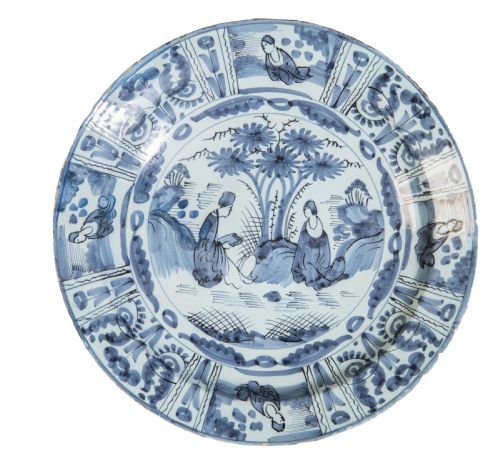

Vintage Delft Pottery Charger
A vintage delft pottery charger brings hand-painted blue and white tin-glazed earthenware to a wall or table.
Vintage Delft Pottery Charger
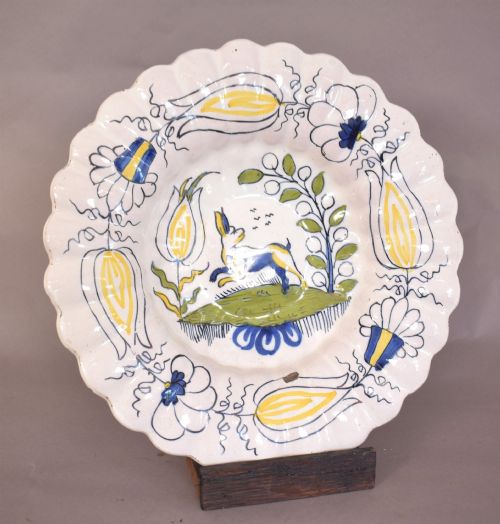
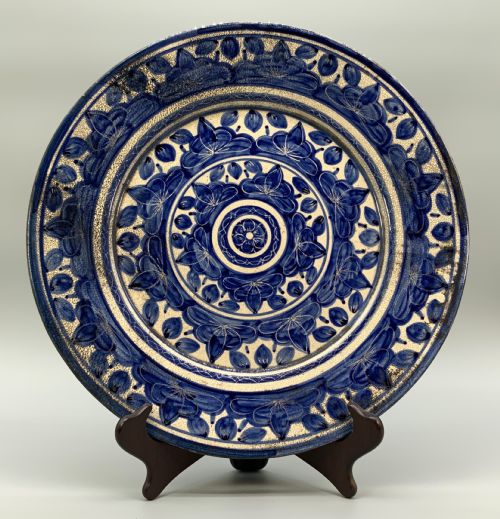
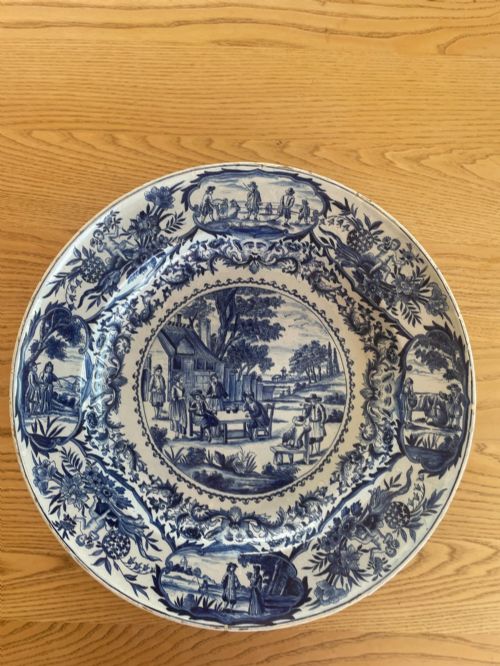
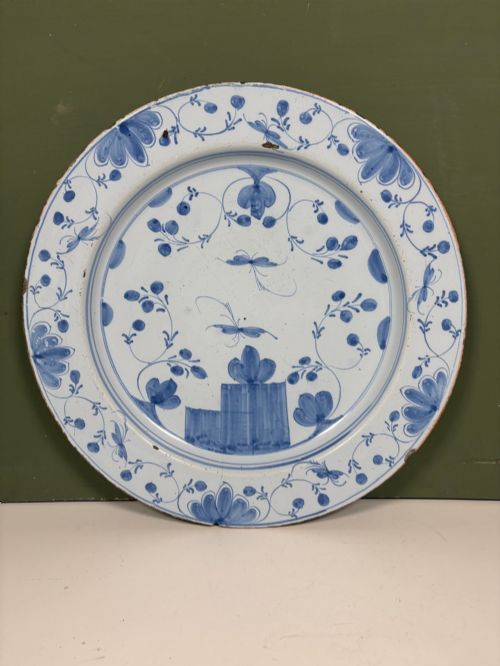
When you search for a vintage delft pottery charger, you examine tin-glazed earthenware plates and dishes spanning the seventeenth, eighteenth, and nineteenth centuries. These pieces take the form of large charger plates, shallow bowls, and decorative plates displaying Dutch Baroque and Moorish styles. Most examples feature classic blue and white painting, alongside occasional manganese and polychrome variations.
The objects on this page range from late seventeenth-century plates to mid-twentieth-century Continental interpretations. Buyers encounter substantial wall chargers alongside smaller decorative plates intended for display. Each piece preserves the traditional form of historic earthenware production.
How they were made
Potters formed these pieces using earthenware clay, finished with a white tin glaze that created an opaque surface for painting. Artisans applied cobalt oxide and cobalt pigment directly onto the unfired or fired glaze, producing the characteristic blue and white decoration.
Grand feu techniques allowed pigments to fuse into the glaze during high-temperature firing, while polychrome and manganese variants expanded the palette. The resulting ceramic body combines traditional potting methods with hand-painted artistry.
Vintage Delft Pottery Charger Retail Price Guide 2026
Typical asking prices for vintage delft pottery charger among the pieces listed under this phrase on Sellingantiques today, from the lower quarter to the upper quarter. They describe what is for sale here now, not the wider market.
Some historic chargers feature painted tulips that outlived actual Dutch financial crazes by centuries.
What varies in quality
Quality rests in the crispness of the hand-painted cobalt pigment and the evenness of the tin glaze across the earthenware body. Superior examples display confident brushwork within Dutch Baroque or Moorish designs, whereas simpler pieces show stiffer execution.
The depth of the colour and the complexity of the polychrome or manganese palette distinguish standard plates from finer grand feu chargers. Overall visual balance on large charger plates dictates the distinction between ordinary domestic wares and superior decorative pieces.
The Vintage Delft Pottery Charger Glossary
- Tin-Glazed Earthenware
- Earthenware pottery covered with a white tin-oxide glaze that provides an opaque background for painted decoration. This material defines the core of historic delft production.
- Cobalt Oxide
- A metallic pigment used to create the deep blue colour seen on traditional delft pottery. Artisans painted directly onto the glaze before firing.
- Grand Feu
- A high-temperature firing technique that fuses the painted pigments into the tin glaze. This method creates a durable and integrated surface finish.
- Manganese
- A metallic colourant producing purple, brown, or plum tones on ceramic pieces. It appears alongside or instead of standard blue pigment.
- Dutch Baroque
- An artistic style characterised by dramatic curves and ornate motifs found on seventeenth and eighteenth-century pieces. It influences the painted borders of many chargers.
Vintage Delft Pottery Charger: Frequently Asked Questions
How were delft chargers displayed?
Historic delft chargers were primarily hung on walls or stood on sideboards for decorative display in homes. Their large diameter and painted scenes made them suitable focal points in reception rooms.
Today, collectors continue to mount these plates on walls using appropriate plate hangers or display them upright on stable shelves.
What is the difference between a charger and a plate?
A charger is a substantially larger decorative or service plate, typically measuring well over twelve inches across. Standard plates are smaller and historically served functional dining purposes.
In delft pottery, chargers provide a wider canvas for complex painted scenes and floral motifs compared to standard plates.
How do I identify a seventeenth-century piece?
Seventeenth-century delft pieces often show specific tin-glaze characteristics, heavier earthenware bodies, and distinct Dutch Baroque painting styles. Hand-painted blue pigments on these early items tend to have a soft, diffused quality.
Examining the foot ring and the glaze pooling on the reverse helps determine the age and manufacturing period of the ceramic.
Can I use these chargers for serving food?
Vintage and antique tin-glazed earthenware possesses delicate glaze surfaces that can flake or absorb moisture over time. Historic pieces function best as decorative objects rather than active tableware.
Gentle dusting with a dry cloth is sufficient for ongoing care, avoiding immersion in water or modern dishwashers.