
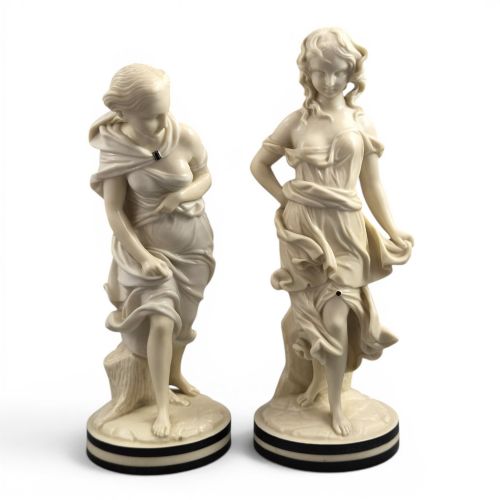


Draped Female Figurines
These draped female figurines span the nineteenth century through the early twentieth century, offering classical forms and graceful drapery that anchor a room.
Draped Female Figurines
When you search for draped female figurines, you encounter a selection of sculptures and statuettes drawn predominantly from the nineteenth century. These pieces take the form of classical figures, allegorical subjects, and ladies styled in neoclassical or Art Nouveau designs.
The versions you are most likely to meet on this page include bronze castings, carved alabaster and marble works, and delicate porcelain figures. Originating from English, French, and Italian workshops, they capture female subjects wrapped in flowing garments and classical robes.
The materials range from parcel-gilt bronze and parian ware to bisque porcelain and white marble. They function primarily as decorative cabinet sculptures and mantel ornaments, preserving the sculptural tastes of the Victorian and Edwardian eras.
What varies in quality
The crispness of the casting or carving determines the visual success of the piece, particularly where the fabric meets the body. Superior examples maintain sharp definition in the folds of the drapery and subtle modelling in the hands and face.
The choice of medium and the prestige of the foundry or carver dictate the standing of the work. Signed bronzes by established makers or finely carved Italian alabaster command greater attention than standard commercial productions.
Surface preservation affects the overall integrity of the sculpture. Untouched patination on bronzes or clean, undamaged marble and porcelain indicate careful stewardship over the decades.
The design influences visible across these sculptures range from French Baroque and Regency styles to Victorian Neoclassical and Art Nouveau.
Barbedienne·Ernst Barrias·René Lalique·Pugi·Ernst Wahliss·Georges Van Der Straeten·Antoine Coysevox
The Draped Female Figurines Glossary
- Parian ware
- A fine-grained, unglazed porcelain resembling white marble, developed in the nineteenth century for portrait busts and classical figures. It gained popularity for its smooth, matte finish that mimics carved stone.
- Parcel-gilt bronze
- Bronze sculpture finished with selective application of gold leaf or gilding to specific areas, such as borders of garments or accessories. This technique creates a striking contrast against dark patinated metal.
- Alabaster
- A soft, translucent stone used for carving decorative sculptures and figures. Its natural opacity allows light to penetrate the surface, giving carved drapery a lifelike glow.
- Neoclassical
- A style inspired by the art and culture of ancient Greece and Rome, dominant in nineteenth-century sculpture. It emphasises balanced proportions, classical drapery, and mythological subjects.
Draped Female Figurines: Frequently Asked Questions
How do I identify a Victorian piece?
Victorian examples often rely on parian ware, bisque porcelain, or neoclassical bronze casting techniques popular during the mid-to-late nineteenth century. They frequently depict allegorical subjects or classical figures with detailed, traditional drapery.
Makers' marks, registry numbers, or foundry stamps stamped into the base or reverse provide concrete evidence of nineteenth-century production dates.
Where should I display a marble sculpture?
Marble and alabaster figures require stable placement away from direct heat sources and strong sunlight, which can dry out or discolour the stone over time. A sturdy console table or mantelpiece provides a secure foundation for heavier pieces.
Ensure the display area allows adequate clearance so the carved details and flowing drapery can be appreciated from multiple angles.
What is the difference between parian ware and bisque?
Parian ware is a specific type of hard-paste porcelain developed to imitate carved marble, possessing a slightly denser weight and subtle sheen. Bisque porcelain is unglazed and fired to a purely matte, chalky finish.
Both were used extensively for nineteenth-century figures, but parian ware typically shows a smoother, more marble-like surface texture.