





Double Series Twist Stem
A double series twist stem brings eighteenth-century glassmaking straight to your table, offering tactile complexity in every pour.
Double Series Twist Stem
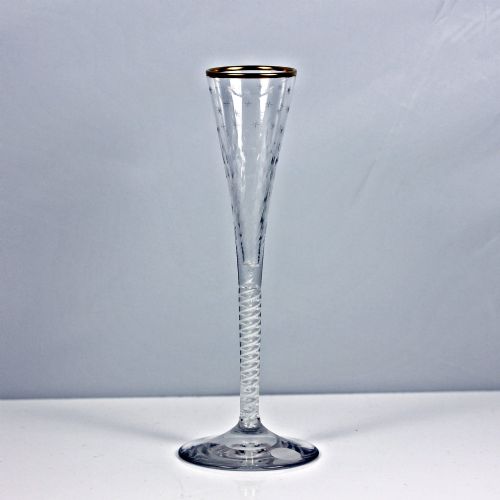
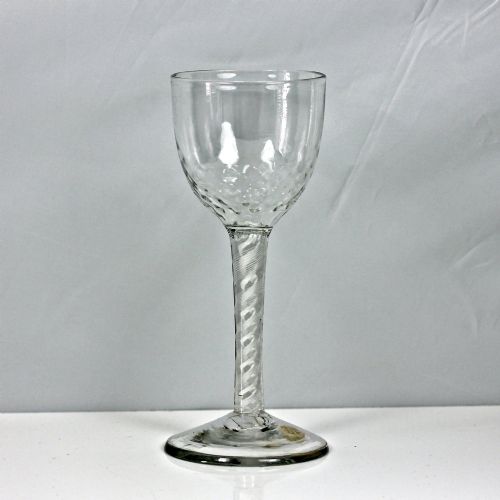
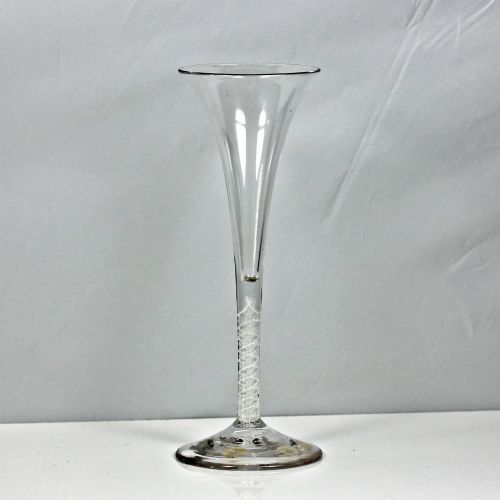
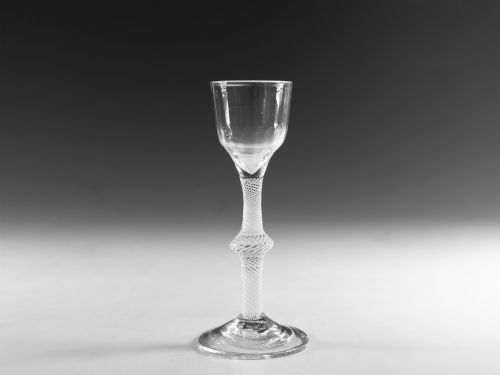
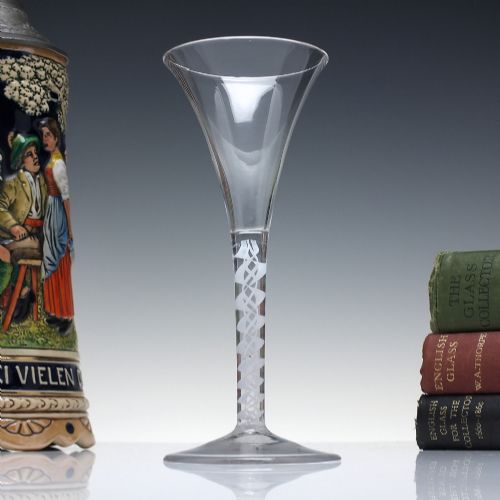
A double series twist stem refers to eighteenth-century Georgian glassware featuring intricate internal threads within the stem. Buyers exploring this phrase find authentic pieces predominantly originating from the Georgian period.
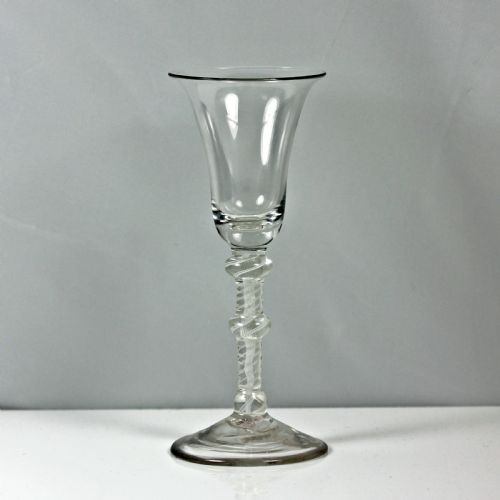
The assortment on this page centres on drinking vessels such as wine glasses, ale glasses, champagne or sweetmeat glasses, and cordials. These items display various bowl forms including trumpet, ogee, and conical configurations supported by traditional footed bases.
Most specimens employ white enamel inside the stem to form complex optical patterns beneath lead glass bowls. The historical origin is firmly English craftsmanship from the seventeen-hundreds.
Construction and materials
Maker operations utilised lead glass and flint glass to form clear bowls and feet with substantial weight. Skilled hands manipulated molten material to incorporate delicate internal structures without surface disruption.
Enamel and white enamel threads were drawn through the core of the stem during fabrication to create the characteristic double series twists. Subsequent cooling and polishing completed the transparent vessel walls.
Evaluating craftsmanship and detail
Superior examples showcase precise alignment within the double series twists, where white enamel elements maintain exact spacing and sharpness through the entire stem. Lesser items exhibit blurred lines or irregular densities inside the glass.
Refinement extends to the bowl and foot formation, where flute-moulded ogee contours or triple knop additions demonstrate advanced glasshouse competency. The clarity of the lead crystal and symmetry of the conical foot further distinguish finer specimens from standard production.
The Double Series Twist Stem Glossary
- Double series twist stem
- A glass stem enclosing two distinct sets of internal filaments or threads. These configurations often combine opaque white enamel elements within clear lead glass.
- Ogee bowl
- An S-curve profile curving out at the rim and in towards the base. This shape appears frequently on eighteenth-century drinking vessels.
- Trumpet bowl
- A conical vessel profile expanding steadily from the stem to the rim. It is a common form seen across Georgian glassware.
- Ale glass
- A tall drinking vessel traditionally utilised for serving ale or beer. These examples occasionally feature engraved hop and barley motifs.
- Knop
- A decorative swelling or protuberance on the stem of a glass. Multiple knops provide enhanced grip and visual division.
Double Series Twist Stem: Frequently Asked Questions
What is a double series twist stem?
A double series twist stem contains two distinct internal patterns formed from white enamel threads encased in clear glass. These intricate threads create complex visual depth beneath the bowl.
Craftsmen produced these eighteenth-century stems by manipulating molten lead glass before the material cooled completely.
How were these glasses used originally?
Georgian households utilised these vessels for serving wine, ale, champagne, and cordials during formal dining and social gatherings. Their specific capacities and bowl shapes catered to different alcoholic beverages of the period.
Today, collectors appreciate them both as historical artefacts and as functional tableware for special occasions.
How do I identify an eighteenth-century piece?
Authentication relies on examining the material composition, such as heavy lead glass and flint glass, alongside manufacturing characteristics like pontil marks on the base. Eighteenth-century examples display specific bowl forms like flute-moulded ogee or trumpet shapes.
Comparing the twist formations and weight against established Georgian standards helps confirm the era of origin.
How should I care for antique glass?
Antique glass requires gentle hand washing in lukewarm water using mild detergent. Avoid sudden temperature changes to protect the fragile lead crystal structure.
Store pieces securely on stable surfaces away from direct sunlight and heavy vibrations to preserve their condition.