



Desktop Vanity Mirror
A desktop vanity mirror brings practical elegance to a dressing space, offering a clear reflection and period character.
Desktop Vanity Mirror
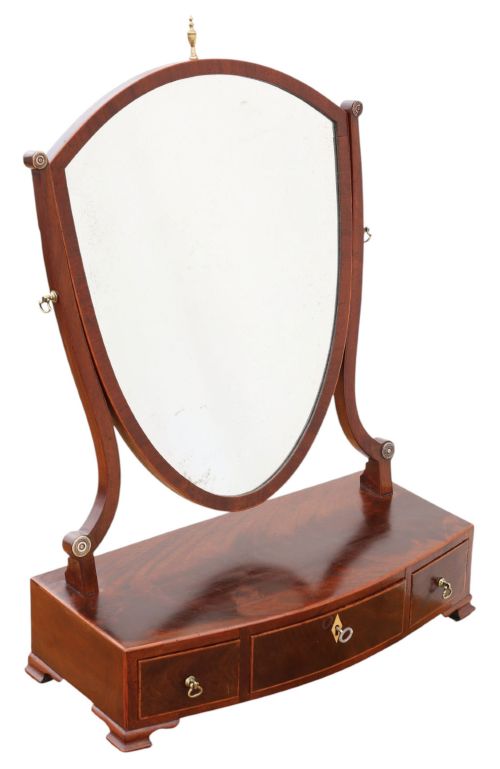
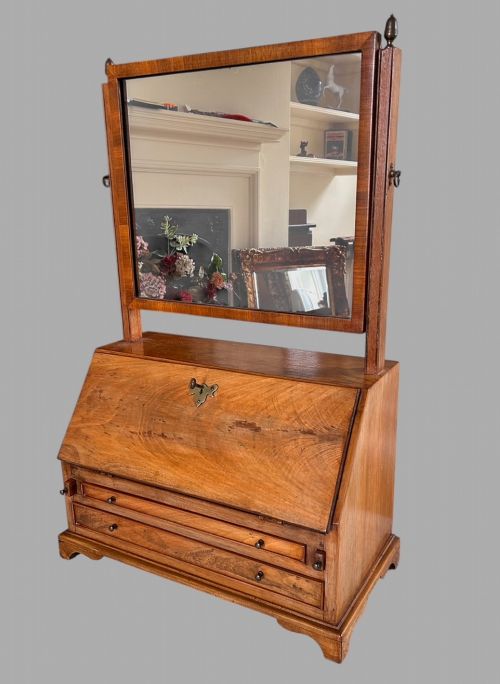
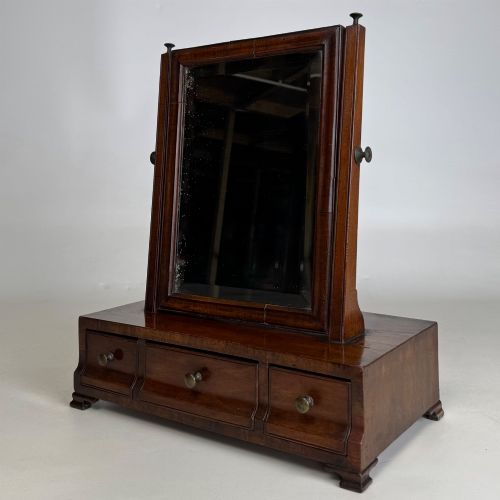
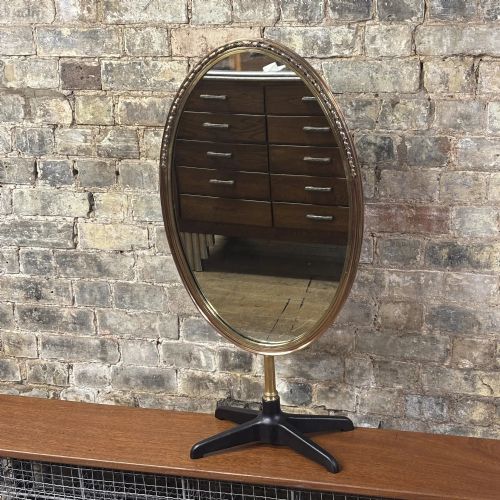
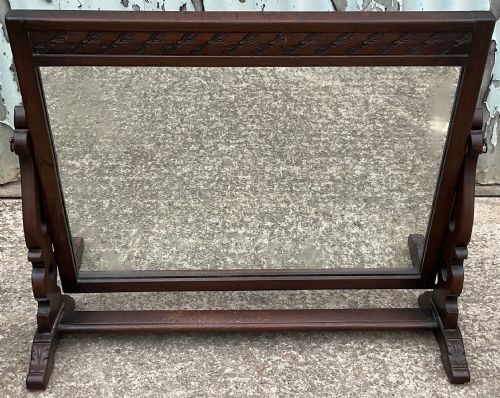
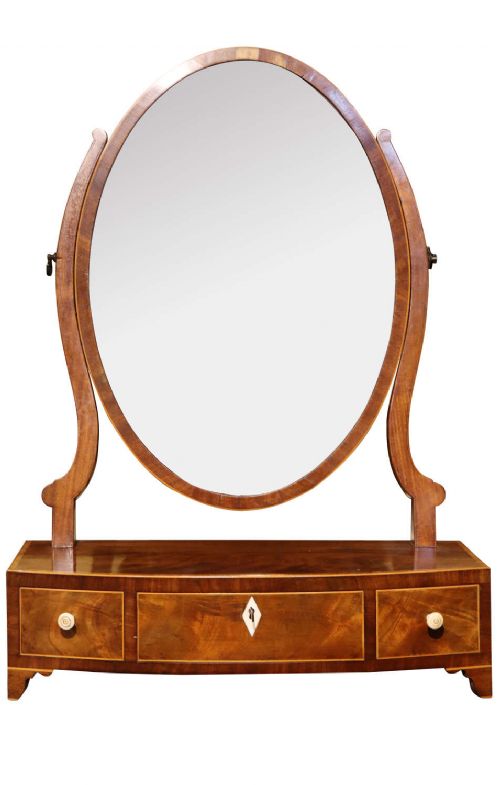
When you search for a desktop vanity mirror, you encounter a selection of dressing, table, and toilet mirrors designed to sit upon furniture. These pieces span from the eighteenth century into the early twentieth century, showing periods such as Georgian, Victorian, and Edwardian.
The most common forms on this page utilise traditional timber frames housing pivoting glass plates. Many incorporate small drawer bases for storage, while others take the form of tabletop bureaux or scientific optical instruments.
Origins include English, Dutch, and Italian craftsmanship, utilising styles from Queen Anne and Chippendale to Dutch Neo-Classical and Arts and Crafts.
How they were made
Cabinetmakers constructed the frames using dense timbers such as mahogany, walnut, and satinwood, frequently employing crossbanding and marquetry inlay for decorative effect. Brass hinges, brackets, and adjusters secure the swing mirrors to their upright supports.
Mirror glass sits within rebated frames, often accompanied by secondary woods in the construction of the small drawers situated in the base boxes.
Listings feature mahogany, walnut, and satinwood alongside brass, bone, and glass across Georgian and Victorian periods.
What varies in quality
The distinction between tiers rests upon the choice of timber figure, the crispness of any carved or inlaid detail, and the retention of original mirror glass and brass hardware. Finer examples display meticulous dovetailing in the drawer construction and well-proportioned serpentine or shield-shaped frames.
Subtleties in proportion and the harmony between the upright supports and the base box separate standard utilitarian pieces from superior workshop productions.
Thomas Rubergall
The Desktop Vanity Mirror Glossary
- Swing mirror
- A glass plate mounted on pivots between two upright arms allowing the angle of reflection to alter. This mechanism defines the majority of dressing table mirrors.
- Toilet mirror
- A historical term for a table mirror used during grooming and dressing routines. These often incorporate small drawer bases for storage.
- Crossbanding
- A strip of veneer applied across the grain of the primary wood to create a decorative border. It frequently frames the edges of dressing mirror bases.
- Marquetry
- Inlaid patterns formed from different coloured woods fitted into a veneer ground. Dutch walnut examples often display this technique.
- Serpentine
- A gently undulating curved shape often seen along the base fronts of eighteenth-century mirrors. This contour adds visual movement to the piece.
Desktop Vanity Mirror: Frequently Asked Questions
How do I date a dressing mirror?
Dating relies on timber choices, construction methods like dovetailing, and the overall style of the frame and base box. Earlier pieces often utilise walnut or early mahogany with hand-cut joints.
Later Victorian and Edwardian examples show machine-sawn elements and differing brass hardware styles which help narrow the period of manufacture.
What is the difference between a toilet mirror and a dressing mirror?
Historically, the terms are largely interchangeable, though toilet mirror often specifically denotes a smaller glass resting on a box with drawers. Both sat upon tables to assist with personal grooming.
Today, listings use both descriptions for the same category of table-standing swing mirrors.
Are the mirror plates original?
Many older pieces retain their original silvered glass, which can exhibit light foxing and oxidation. Replacement glass does occur due to the fragile nature of mirrors over centuries.
Examining the backboards and the fit within the rebate helps determine the originality of the glass plate.
Where should I place a table mirror?
These mirrors function well atop chest of drawers, sideboards, or dedicated dressing tables where the height allows comfortable use. They provide both a reflective surface and a focal point for a room.
Ensure the furniture piece supporting the mirror is deep and stable enough to hold the base securely.