
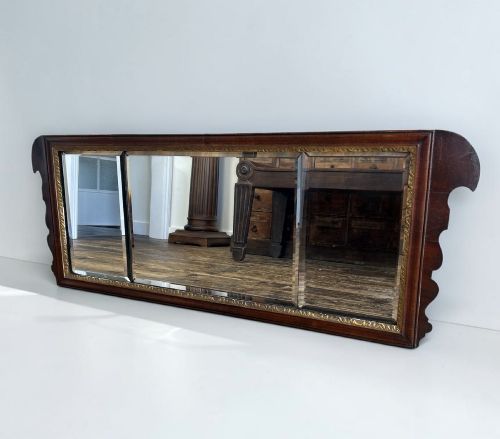
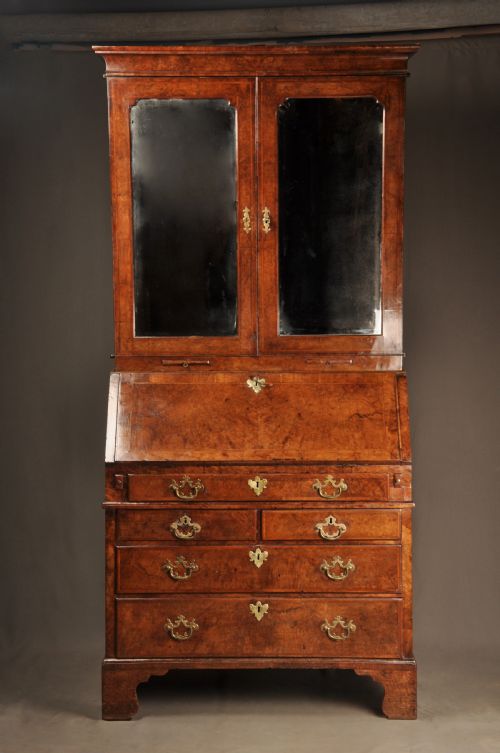
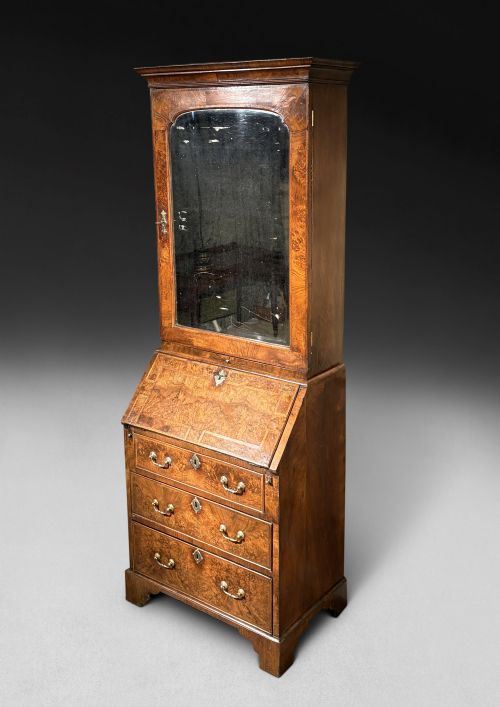


Early 18th Century Mirror
An early 18th century mirror brings the subtle grain of walnut and the bright flash of antique mercury glass into a room.
Early 18th Century Mirror
When you search for an early 18th century mirror, you encounter wall mirrors, pier mirrors, and smaller dressing or toilet mirrors designed for desks and tables. The most frequent versions on this page are walnut and giltwood wall pieces originating from the Queen Anne and George I periods, often showing the tall, narrow proportions suited to hang between windows.
The materials recorded across these listings point directly to the workshop practices of the reigns of Queen Anne and the early Georges. Walnut, burr walnut, and giltwood dominate, alongside gesso, gold leaf, and brass hardware, while older examples rely on cushion mouldings and carved wood frames.
Beyond standalone hanging frames, the category frequently incorporates mirrored bureau bookcases and cabinet pieces where looking glasses form part of a larger fitted furniture design. These dual-purpose objects combine writing compartments and storage with reflective glass plates set into doors or fall-fronts.
How they were made
Makers built these frames using solid timbers and decorative veneers applied to secondary woods, utilising burr walnut, olive wood, and laburnum to create rich, figured surfaces. Giltwood and gesso frames relied on carved softwood foundations built up with layers of plaster and gold leaf.
Glass plates of this era were hand-blown or cast and then silvered using a mercury amalgam, creating the characteristic uneven thickness, tiny air bubbles, and soft, mottled reflection known as original mercury plate. Frames frequently employed cushion mouldings, parcel gilding, and intricate carved details to accent the reflective glass.
Listings feature Queen Anne, George I, and Georgian periods, utilising walnut, burr walnut, gesso, and original mercury glass plates.
What varies in quality
The distinction between ordinary and exceptional examples rests in the depth of the timber figuring and the integrity of the original surfaces. Furniture fashioned from highly figured burr walnut or enriched with crisp, hand-carved parcel gilding stands apart from plainer, simpler constructions.
Survival of original components dictates much of the value, specifically retaining the early mercury glass plate and the original backboards without later alterations. Pieces that maintain their untouched gilding layers and authentic wood patination command greater attention than those subjected to heavy restoration.
The Early 18th Century Mirror Glossary
- Mercury plate
- A reflective glass panel silvered using a tin and mercury amalgam rather than modern chemical solutions. This technique produces a characteristic warm, speckled reflection.
- Gesso
- A plaster-like mixture applied to wooden frames as a smooth base for subsequent gilding with gold leaf. It allows for crisp, intricate moulding and carving.
- Pier mirror
- A tall, narrow hanging glass designed specifically to be positioned on the wall space between two windows. These items often matched console tables placed directly beneath them.
- Cushion frame
- A broad, rounded frame profile shaped like a bolster or cushion that slopes inward toward the glass plate. It is frequently decorated with oyster veneers of walnut or olive wood.
- Parcel gilt
- A decorative finish where selected carved details or mouldings are highlighted with gold leaf against a contrasting wood background.
Early 18th Century Mirror: Frequently Asked Questions
How do I identify an authentic mercury glass plate?
Original mercury glass reveals a softer, darker reflection compared to modern silvered mirrors, often showing tiny trapped air bubbles and minor dark foxing spots within the glass.
Inspect the back of the plate for the characteristic greyish backing and the uneven thickness typical of early hand-manufactured glass production.
What is the difference between a pier mirror and a wall mirror?
Pier mirrors are specifically proportioned to hang on the narrow strip of wall between windows, making them noticeably taller and narrower than standard wall mirrors.
Standard wall mirrors were designed for wider wall expanses above mantelpieces or furniture, following broader architectural proportions of the period.
Where should I hang an antique walnut mirror?
These mirrors suit spaces with stable humidity levels, away from direct sunlight and strong heat sources that could dry out and crack old wood veneers.
Pair them with period furniture or use them as a textural contrast in a contemporary room, ensuring the wall fixings safely support the weight of the heavy wooden frame.
How do I care for 18th century giltwood frames?
Dust the carved surfaces very gently with a soft, dry brush, avoiding any moisture, commercial cleaning sprays, or abrasive cloths that can strip delicate gold leaf.
Keep the frame away from damp walls and direct heat to prevent the gesso base from cracking or lifting away from the carved wooden foundation.