

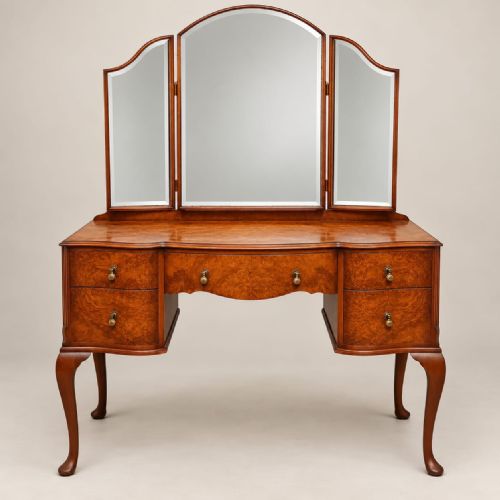


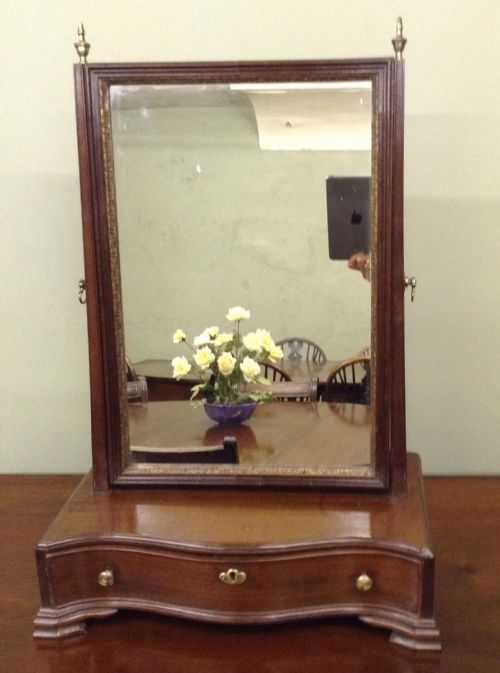


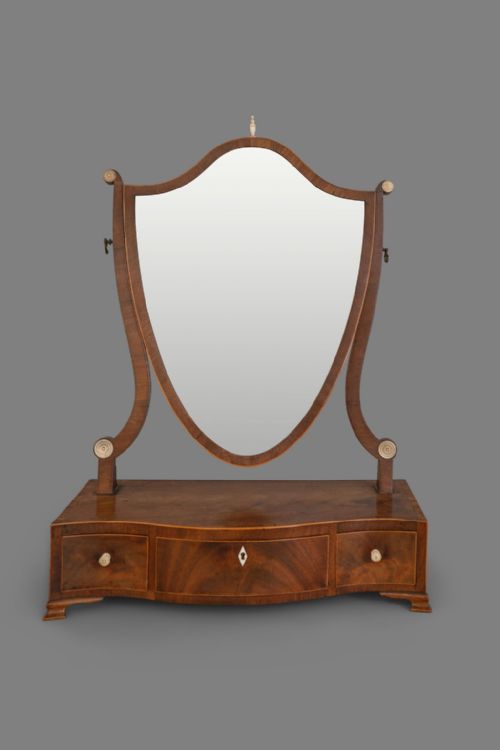
Serpentine Fronted Toilet Mirror
A serpentine fronted toilet mirror brings a subtle, flowing curve to a dressing table, combining refined woodwork with practical utility.
Serpentine Fronted Toilet Mirror
The defining characteristic of these pieces is the undulating, S-shaped curve of the wooden base, which houses small drawers beneath the upright frame.
You are most likely to meet mahogany examples on this page, alongside occasional pieces in walnut and flame mahogany dating from the eighteenth and nineteenth centuries.
How they were made
Cabinet makers constructed the distinctive curved bases from solid or veneered mahogany and walnut, carefully shaping the timber to create the characteristic serpentine outline.
Fittings such as small knobs, escutcheons, and pivot arms utilised brass, while bone often formed the small decorative inlay escutcheon keyholes on the drawer fronts.
The upright frames held clear glass plates, sometimes shaped in an oval or rectangular profile, supported by side posts fixed directly to the stepped or box base.
Serpentine Fronted Toilet Mirror Retail Price Guide 2026
Typical asking prices for serpentine fronted toilet mirror among the pieces listed under this phrase on Sellingantiques today, from the lower quarter to the upper quarter. They describe what is for sale here now, not the wider market.
The listings here span the Georgian, Regency, and Victorian periods, with mahogany and walnut as the primary timbers used for the serpentine bases.
What varies in quality
The refinement of the cabinet work dictates the standing of the piece, particularly the tightness and symmetry of the serpentine curve across the front of the drawer section.
Choice of timber plays a significant role, with figured flame mahogany and richly grained walnut marking out the superior examples from plainer stock.
Originality of the brass hardware, the retention of the original glass plate, and the precise dovetailing of the miniature drawers all distinguish the finer pieces.
The Serpentine Fronted Toilet Mirror Glossary
- Serpentine
- A furniture front characterised by a double-curved line that arches outward in the centre and recesses at the sides. This contour requires precise woodworking skill.
- Toilet mirror
- A smaller dressing glass designed to sit upon a table or chest rather than stand on the floor. These pieces became popular for personal grooming in bedchambers.
- Box base
- A stepped plinth or shallow compartment forming the lower portion of a tabletop mirror. It usually incorporates one or more small drawers.
- Flame mahogany
- A decorative veneer cut from timber where the branch meets the trunk, producing a rippling, flame-like pattern. It was favoured for high-status cabinet work.
- Escutcheon
- A small protective plate surrounding a keyhole, often made from bone or brass on these mirrors. It prevents the wood from wearing around the opening.
Serpentine Fronted Toilet Mirror: Frequently Asked Questions
Where were these mirrors placed?
They were designed for the bedroom or dressing chamber, resting upon a dedicated dressing table, chest of drawers, or washstand. Their portable nature allowed them to catch the best morning light.
Because they were tabletop items, they could be moved easily around the room as needed.
How do I identify a Georgian piece?
Georgian and George III examples often display dense mahogany timbers, hand-cut dovetails within the small drawers, and simpler brass pivot hardware. The proportions tend to be robust yet elegant.
Later Victorian versions may utilise flame mahogany veneers and sometimes feature oval glass plates rather than traditional rectangular ones.
What materials should I expect?
Mahogany and walnut form the primary woods, frequently enhanced by figured flame mahogany veneers. Small details often incorporate brass pivots and bone keyhole escutcheons.
The glass itself is housed within a pivoting wooden frame attached to the curved base.