
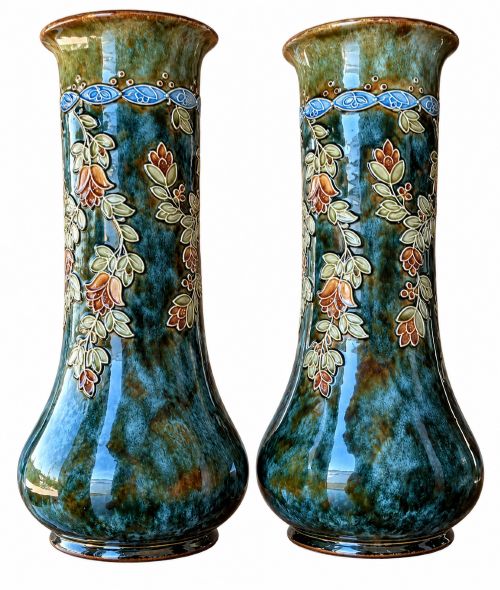
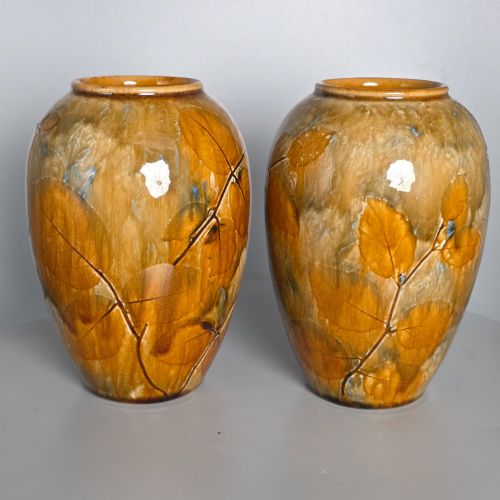
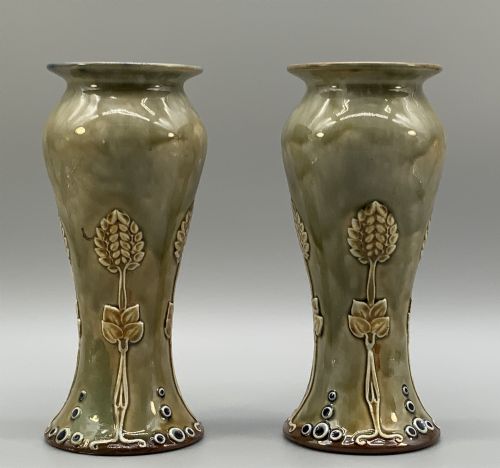
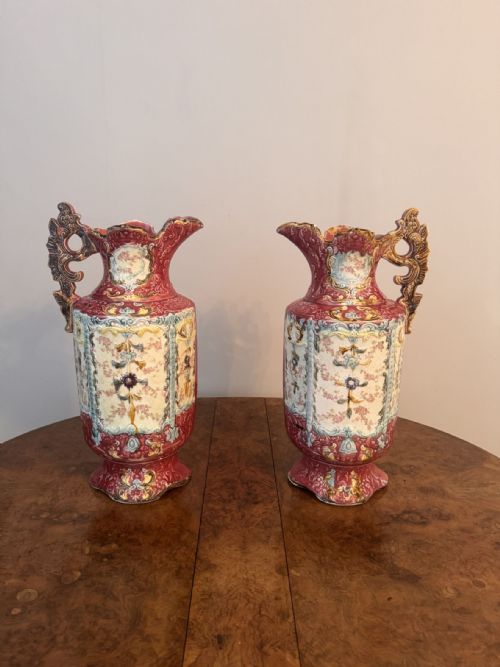
Decorative Ceramic Urn Pair
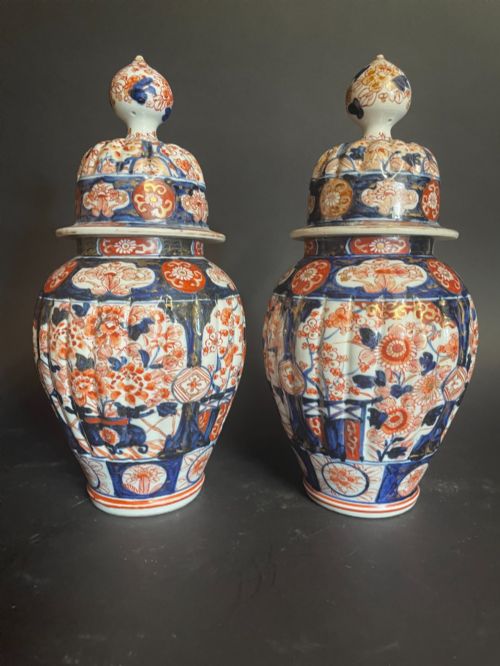
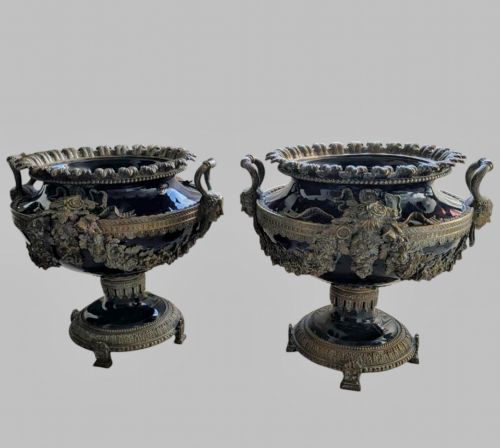
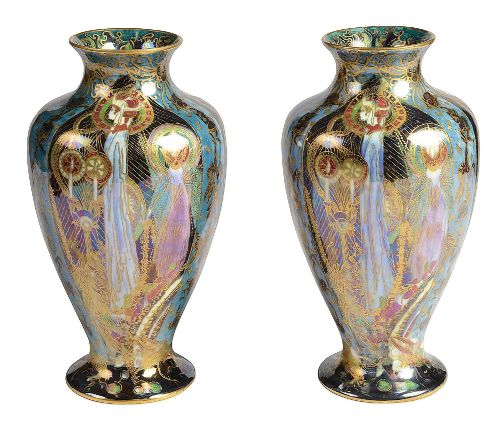
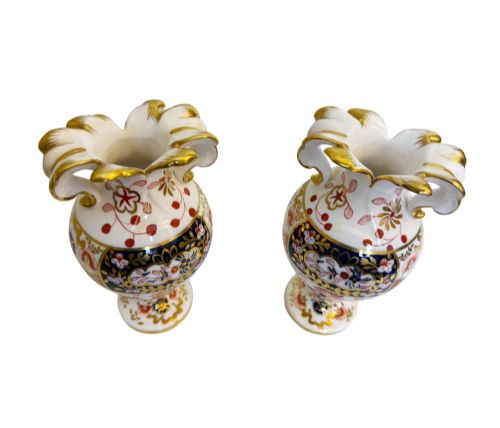
A decorative ceramic urn pair brings symmetry and balanced form to a mantelpiece or side table.
Decorative Ceramic Urn Pair
A decorative ceramic urn pair consists of matching vessels designed primarily for display rather than functional storage, appearing frequently across nineteenth-century and early twentieth-century periods.
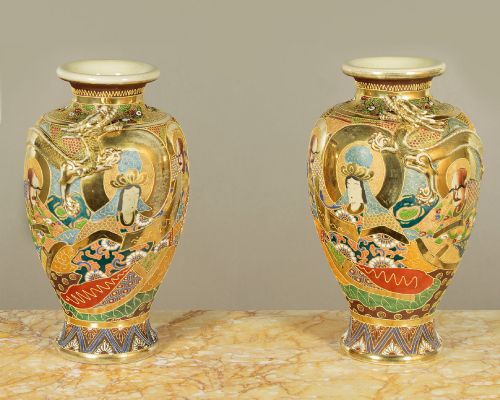
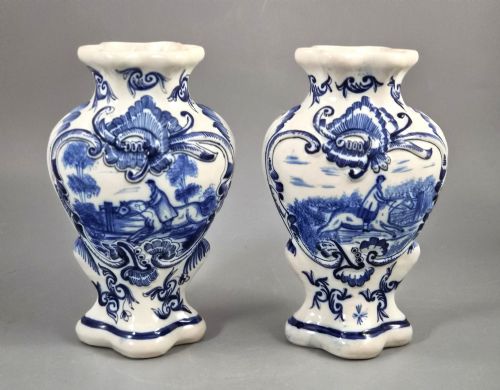
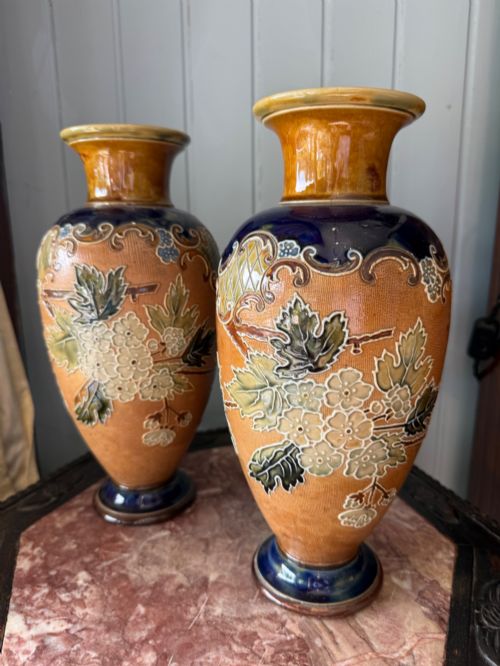
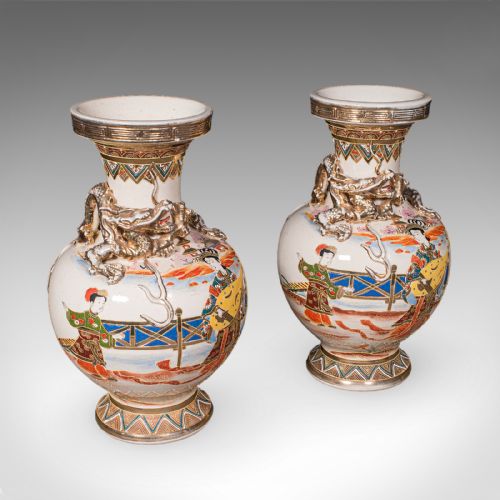
Buyers seeking a decorative ceramic urn pair encounter diverse regional traditions, ranging from English stoneware and earthenware to Japanese Satsuma and Kutani ceramics.
Materials and production methods
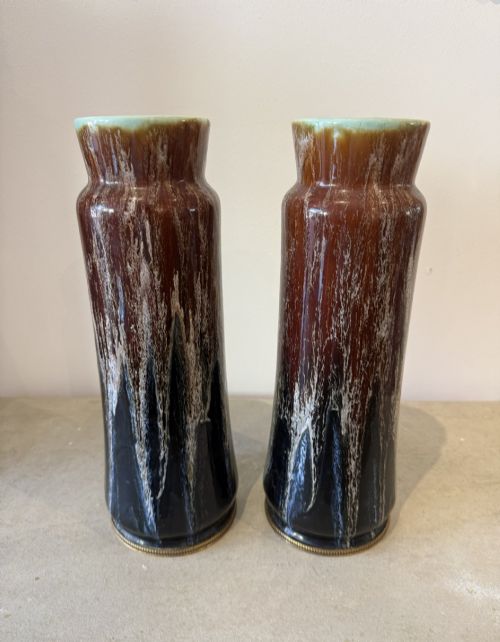
Potters utilised earthenware, porcelain, stoneware, and ironstone, shaping them into sturdy bodies before applying detailed glazes and enamel decoration.
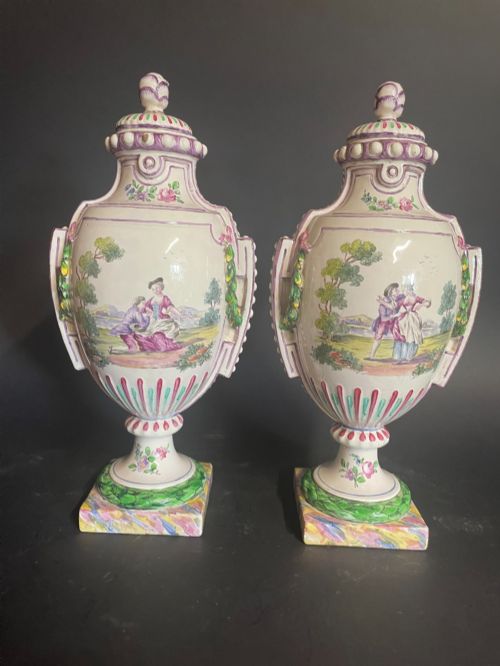
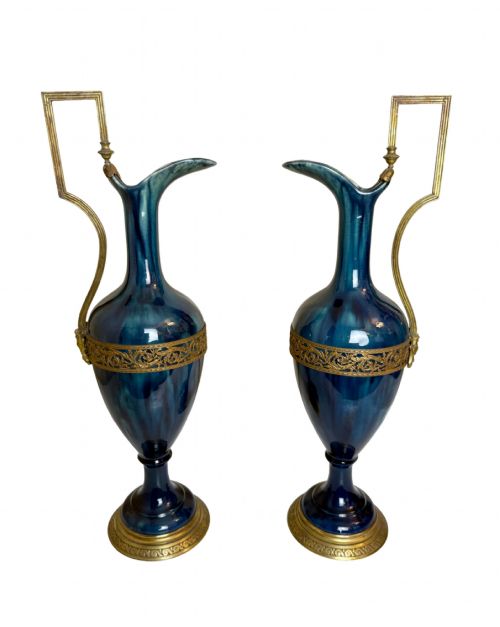
Surface ornamentation frequently incorporates gold leaf, gilt bronze trim, or hand-painted motifs, sometimes complemented by moulded bas-reliefs or lacquer panels.
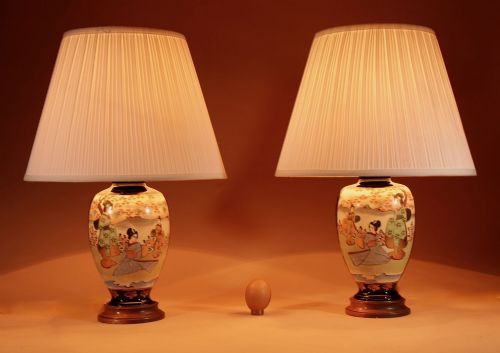
Some industrious Victorian decorators decided that fine ceramic vases made ideal lamp bases, wiring them up for evening illumination.
Assessing craftsmanship and execution
The distinction between standard production and exceptional work rests on the crispness of moulded detail and the precision of hand-painted brushwork.
Consistency in glaze application and the harmonious alignment of the two vessels dictate the visual success of the pair.
Royal Doulton·Royal Worcester·Wedgwood·Spode·Boch Freres
The Decorative Ceramic Urn Pair Glossary
- Campana
- A bell-shaped urn with a flared lip and a footed base, frequently seen in nineteenth-century decorative pottery.
- Baluster
- A vase form with a rounded body that tapers toward the neck, providing a stable and classic silhouette.
- Earthenware
- Porous pottery fired at lower temperatures, typically finished with an opaque glaze or enamel.
- Stoneware
- A dense, vitreous ceramic fired at high temperatures, known for its durability and resistance to liquids.
- Jasperware
- A fine-grained, unglazed stoneware developed by Wedgwood, characterised by contrasting white bas-relief figures against a coloured ground.
Decorative Ceramic Urn Pair: Frequently Asked Questions
How were decorative urns used historically?
These vessels served primarily as ornamental centrepieces in grand rooms, placed upon mantelpieces, pedestals, or console tables to display artistic craftsmanship.
They were rarely used for cut flowers, functioning instead as architectural punctuation marks that created visual balance within a furnished interior.
Can converted urns still function as lamps?
Many urns and vases from the nineteenth and early twentieth centuries were later wired for electricity to serve as table lamps, a common adaptation for period interiors.
This conversion allows collectors to integrate antique ceramics into modern lighting schemes without losing the decorative impact of the original pair.
How do I distinguish Japanese Satsuma from European porcelain?
Japanese Satsuma ware is typically characterised by an earthenware body with a fine crackle glaze, heavily decorated with enamels and raised gold.
European porcelain and stoneware pieces, by contrast, usually exhibit smoother, vitreous surfaces and adhere to Western stylistic revivals such as Rococo or Art Nouveau.
What is the best way to display a pair?
Placing the two pieces symmetrically on either side of a focal point, such as a mirror or fireplace, highlights their matching design and creates a formal arrangement.
Ensure the supporting surface is stable and deep enough to accommodate the base dimensions safely without crowding the surrounding space.