

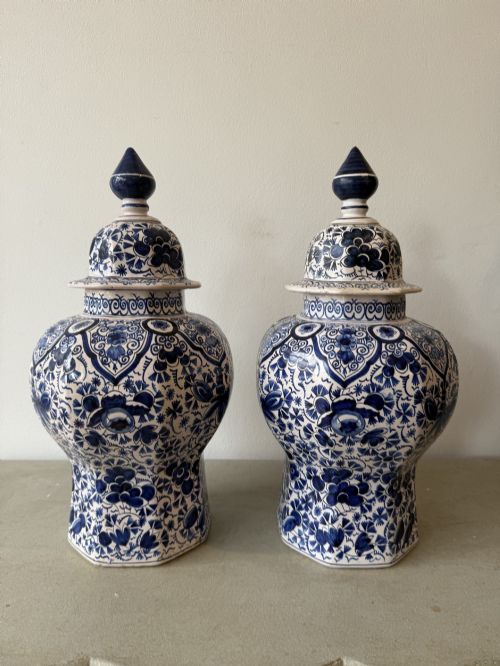


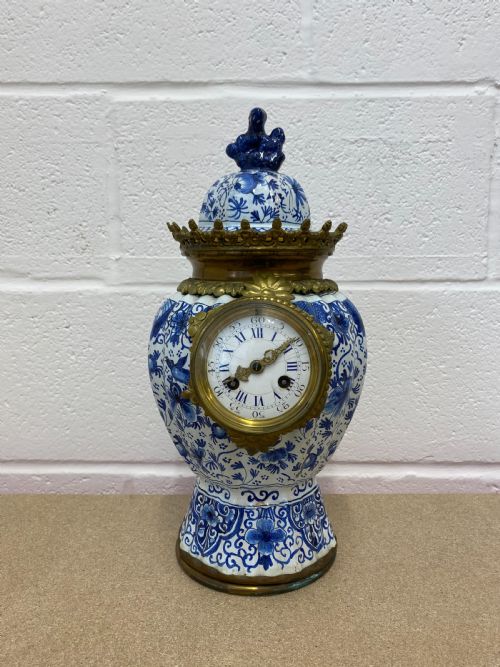

Earthenware Lidded Vase
An earthenware lidded vase brings substance and colour to a room, holding centuries of ceramic skill in a single vessel.
Earthenware Lidded Vase
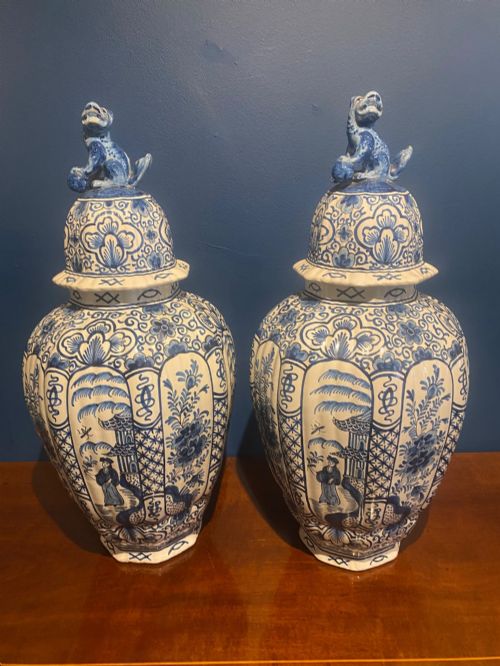
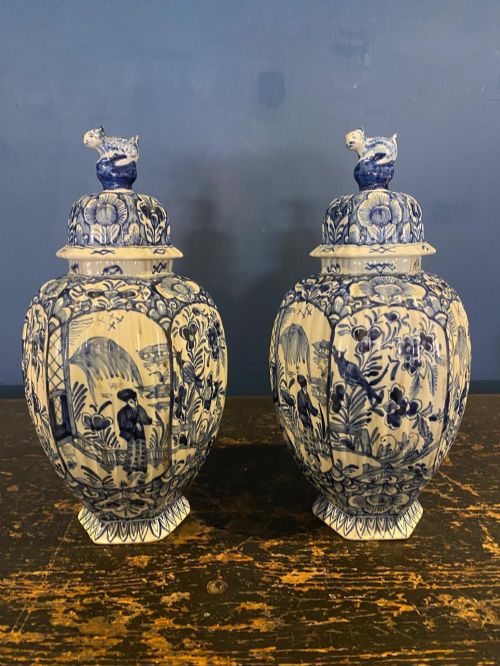
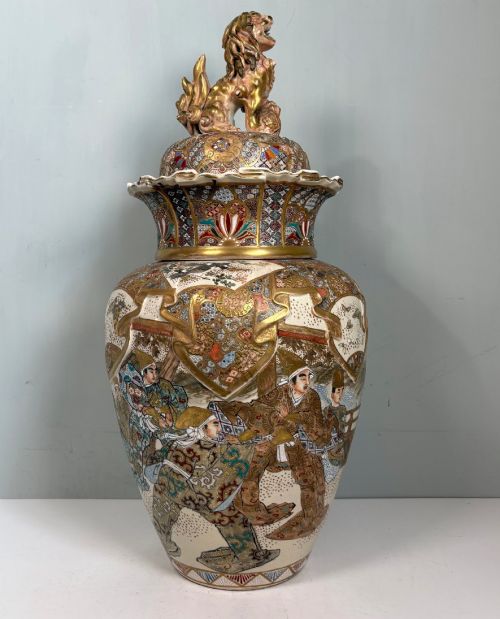
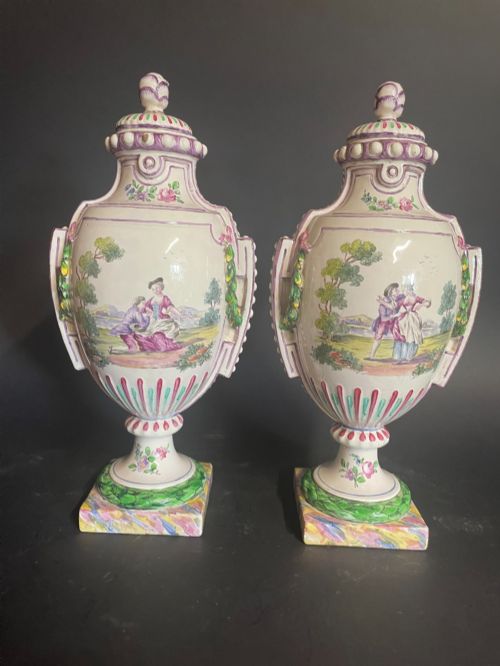
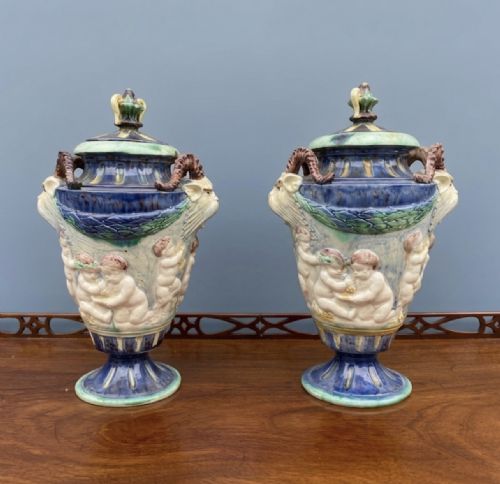
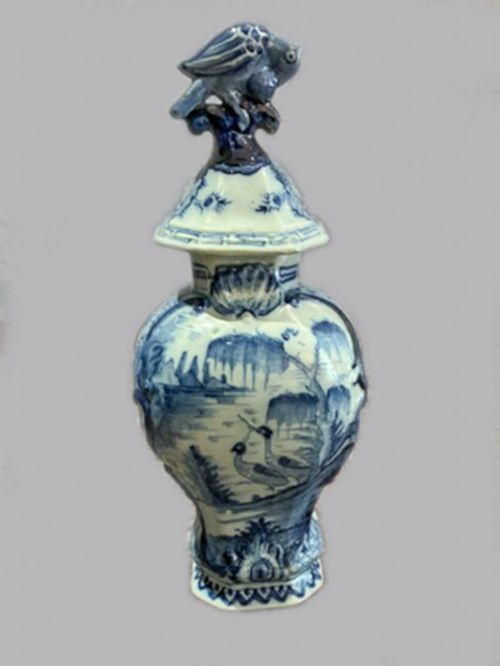
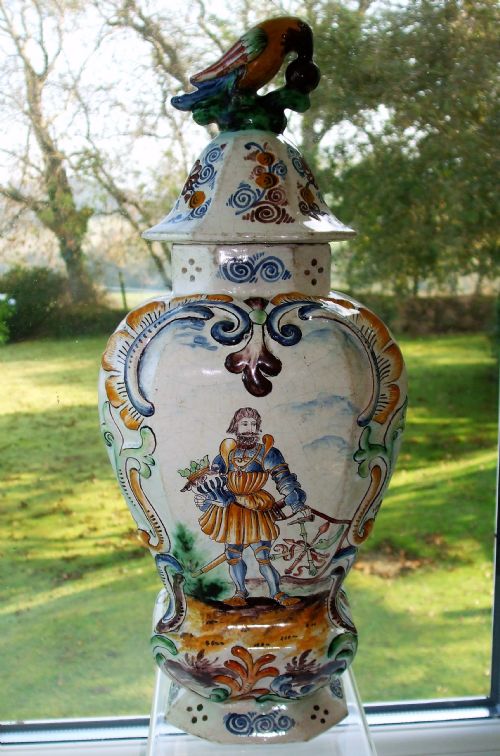
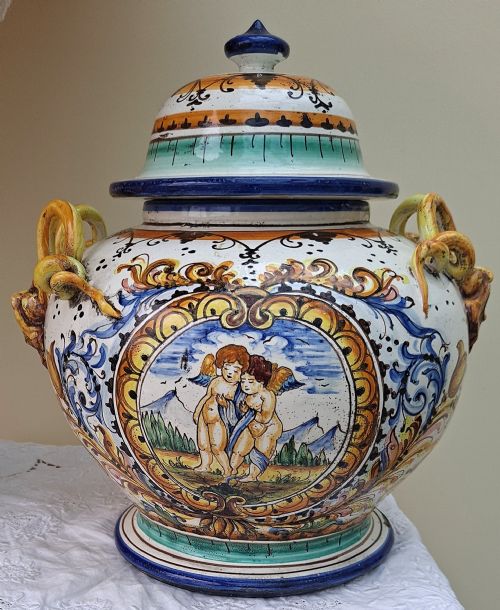
An earthenware lidded vase represents a tradition of ceramic containers formed with covered tops across the eighteenth and nineteenth centuries. These vessels appear in diverse regional forms, ranging from Dutch delftware and French faience to Italian maiolica and Japanese satsuma.
Buyers will most frequently encounter earthenware lidded vase examples dating from the nineteenth century alongside eighteenth-century Dutch and Italian pieces. Forms span simple lidded jars to grand decorative urns with handles and matching covers.
What varies in quality
Quality rests upon the crispness of the painted detail and the balance of the form between the vessel body and its matching cover. Satsuma pieces show distinction in the precision of their enamel work, whereas delftware relies on the fluidity of the blue and white or polychrome brushwork.
The ambition of the original design dictates the overall standing of a piece, separating standard production wares from large decorative urns executed in Renaissance Revival or French Rococo styles.
Earthenware Lidded Vase Retail Price Guide 2026
Typical asking prices for earthenware lidded vase among the pieces listed under this phrase on Sellingantiques today, from the lower quarter to the upper quarter. They describe what is for sale here now, not the wider market.
Listings feature earthenware lidded vase examples spanning the eighteenth and nineteenth centuries, incorporating Dutch, Italian, French, and Japanese origins.
Sceaux Faience·Losol·Royal Winton·Carlton Ware
The Earthenware Lidded Vase Glossary
- Earthenware
- Porous pottery fired at lower temperatures than stoneware or porcelain. It forms the structural base for most tin-glazed and maiolica vessels.
- Faience
- European tin-glazed earthenware, notably produced in France and associated with decorative urns and lidded jars.
- Maiolica
- Italian tin-glazed pottery noted for colourful painted surfaces and Renaissance revival motifs.
- Satsuma
- Japanese earthenware featuring intricate enamel and gilt decoration over a crackle-glaze body.
- Delftware
- Tin-glazed earthenware originating in the Netherlands, traditionally finished in blue and white or polychrome palettes.
Earthenware Lidded Vase: Frequently Asked Questions
What is an earthenware lidded vase?
An earthenware lidded vase is a ceramic vessel with a removable cover, produced across various European and Asian traditions during the eighteenth and nineteenth centuries.
These pieces served as ornamental containers or display items, utilising materials such as tin-glazed earthenware, faience, and maiolica.
How do I identify eighteenth century delft?
Eighteenth-century delft pieces typically display tin-glazed earthenware bodies with hand-painted blue and white or polychrome decoration. Stylistic traits often align with Dutch baroque or traditional delftware aesthetics.
Examine the weight, glaze opacity, and brushwork characteristics to distinguish these earlier vessels from later nineteenth-century revivals.
Where were Satsuma lidded vases made?
Satsuma lidded vases originated in Japan, emerging strongly in the nineteenth century with characteristic crackle-glaze earthenware bodies.
These vessels are distinguished by dense hand-painted enamel decoration, frequently incorporating gold leaf accents.
How should I display a lidded urn?
Display a lidded urn on a stable surface where its height and decorative form can be appreciated without risk of accidental displacement. Ensure the cover sits naturally with the vessel body.
Keep these ceramic pieces away from direct heat sources and excessive moisture fluctuations to protect the earthenware glaze.