
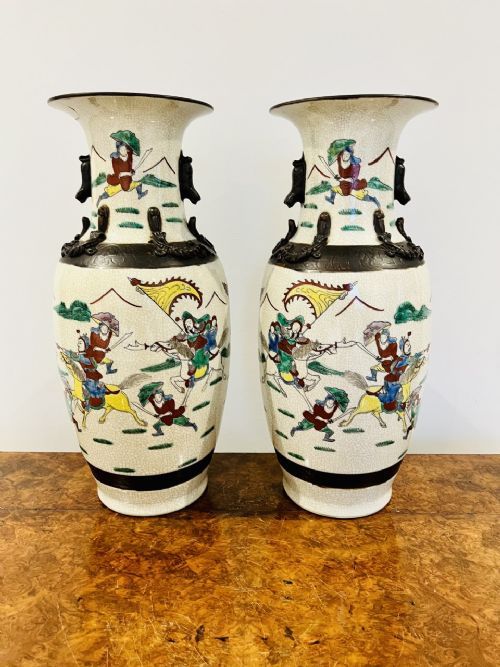


Victorian Ceramic Urn Pair
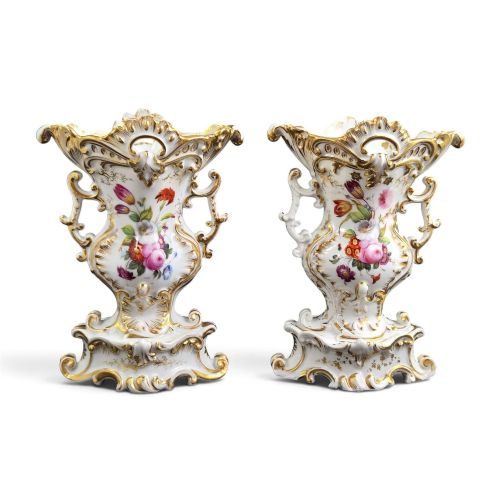
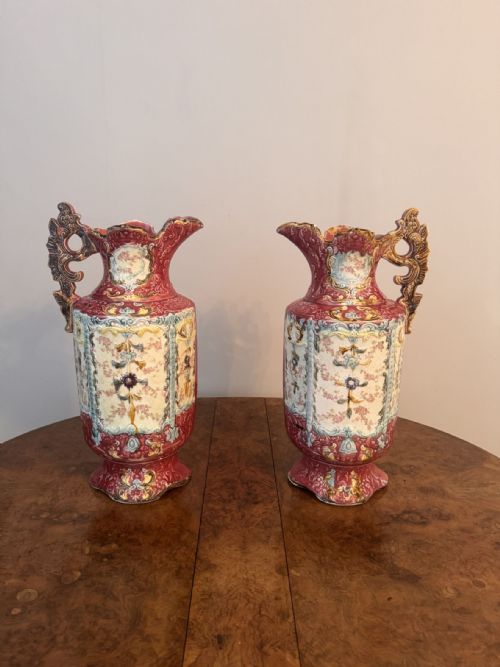
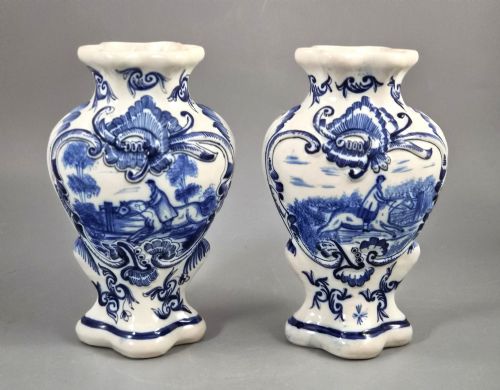
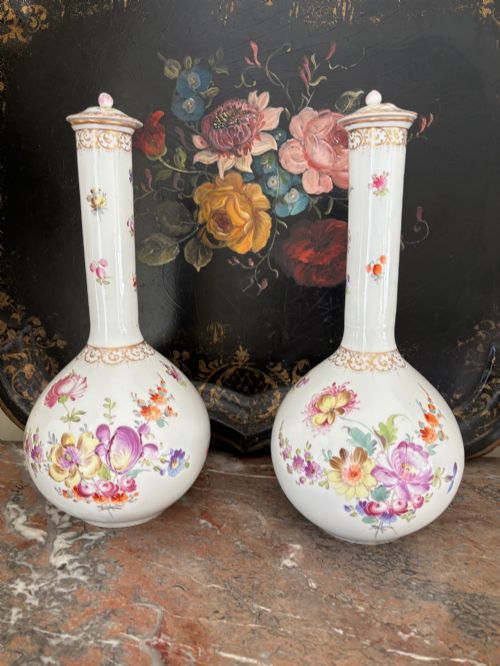
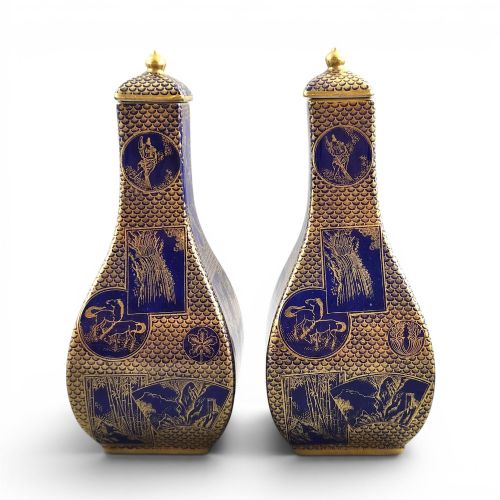
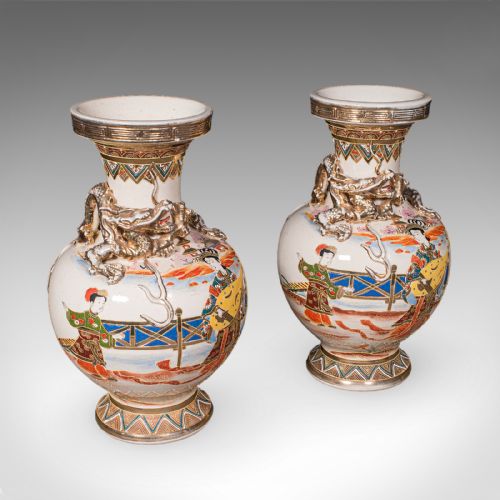
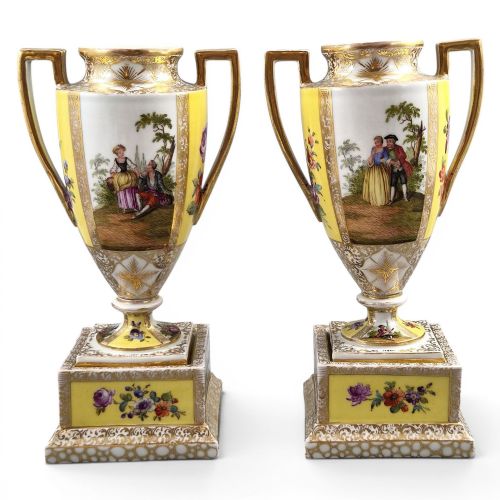
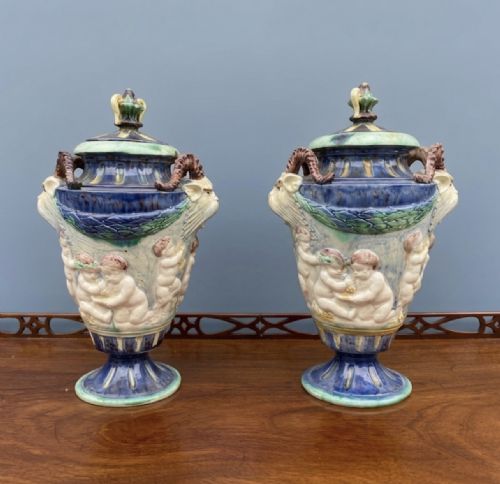
A victorian ceramic urn pair brings symmetry and ornamental weight to a mantelpiece, combining 19th-century manufacturing skill with varied continental and domestic decorative traditions.
Victorian Ceramic Urn Pair
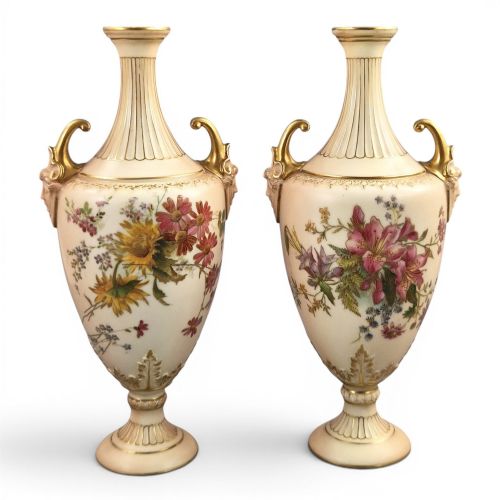
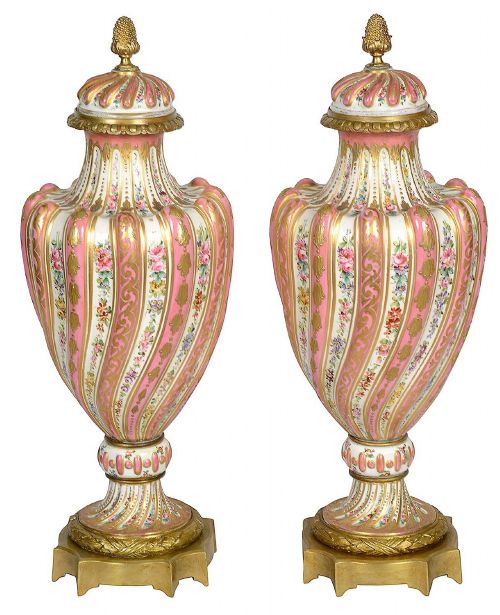
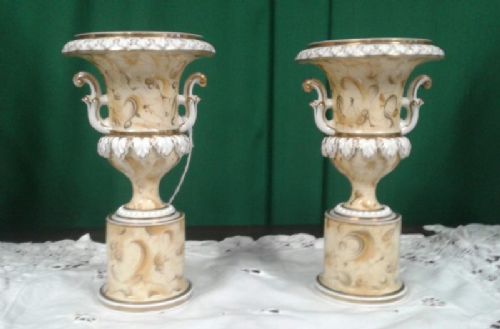
A victorian ceramic urn pair consists of matching symmetrical vessels designed primarily for decorative display rather than utility, often taking the form of campana shapes, lidded urns, or baluster vases. These objects emerge from the nineteenth century across British, continental European, and Asian workshops, spanning periods from the 1830s through to the Edwardian era.
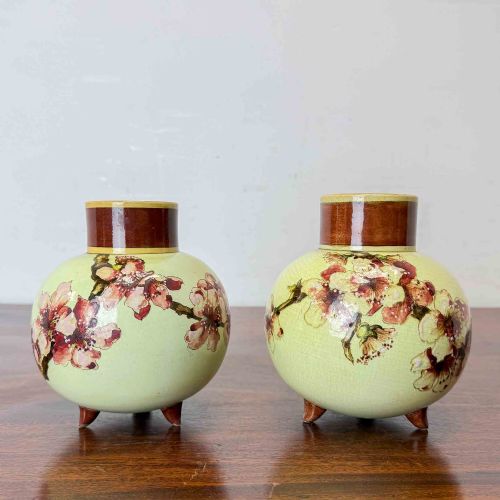
The buyer meets various ceramic bodies on this page, including earthenware, stoneware, and porcelain, alongside forms styled after French Rococo, Art Nouveau, and Aesthetic Movement tastes. Many examples incorporate hand-painted floral decoration, applied gilding, or cobalt blue grounds, reflecting the diverse aesthetic impulses of the Victorian period.
While catalogued broadly under the search phrase, these pairs often cross boundaries into vases, ewers, and potpourri jars with covers. The common thread uniting them is their matched production as decorative pairs intended for prominent domestic display.
Materials and production techniques
Potters shaped these vessels using traditional throwing, moulding, and slip-casting techniques before applying diverse ceramic bodies such as ironstone, earthenware, or porcelain. Once formed, pieces received glazes, enamels, or gold leaf to build rich surface textures and coloured grounds.
Many items underwent multiple kiln firings to set hand-painted floral motifs, transfer prints, or raised white bas-reliefs. Workshops frequently combined fine porcelain with elaborate gilding and hand-painted details signed by individual decorators to achieve a finished ornamental effect.
Some nineteenth-century makers modelled three-dolphin bases to support dainty beaker-form vases.
Distinguishing quality in matched pairs
Quality rests heavily on the crispness of the modelling and the precision of the hand-painted decoration across both matched vessels. Superior examples display consistent glaze application, finely detailed hand-painted scenes or floral work, and well-preserved gilding without rubbing.
The reputation of the pottery or the specific decorator adds distinct merit, separating standard mass-produced items from signed pieces originating in established European and British factories. Proportion, balance, and the preservation of original lids or pedestals complete the distinction between ordinary and exceptional pairs.
Jacob Petit·Fourmaintraux-Courquin·Sitzendorf·Mason's Patent Ironstone·Helena Wolfsohn·Royal Worcester·Doulton Lambeth·Wedgwood·Kinkozan·Ernst Wahliss·Bernhard Bloch·Royal Crown Derby
The Victorian Ceramic Urn Pair Glossary
- Campana urn
- A bell-shaped vessel with a flaring rim and a footed base, frequently utilised for classical revival display. This form derives from ancient Roman marble urns.
- Majolica
- A type of earthenware coated with an opaque tin glaze and painted with brightly coloured metallic oxides. It became popular in the nineteenth century for vibrant ornamental wares.
- Jasperware
- A fine-grained, unglazed stoneware developed with coloured bodies and applied white ceramic bas-reliefs. Wedgwood remains the primary maker associated with this technique.
- Ewers
- Pitcher-like vessels featuring a spouted lip and a curved handle, often produced as ornamental decorative pairs rather than functional tableware. They mirror historical metalwork forms.
- Imari
- A style of Japanese export ceramics characterised by a palette of underglaze blue, iron red, and added gold. Victorian buyers favoured these striking decorative patterns for interior display.
Victorian Ceramic Urn Pair: Frequently Asked Questions
How were ceramic urns used?
These vessels served primarily as decorative ornamental pieces placed upon mantelpieces, console tables, or pedestals within nineteenth-century domestic interiors. They were designed to provide symmetry and visual interest rather than to hold cut flowers or liquids.
Larger lidded versions sometimes functioned as potpourri jars to scent drawing rooms. Their presence signalled taste, refinement, and an appreciation for classical or contemporary artistic styles.
How do I spot a matched pair?
A true pair shares identical dimensions, body weight, clay composition, and hand-painted or transferred decorative motifs across both pieces. Minor variations in hand-painting often confirm genuine nineteenth-century artisan production rather than uniform modern manufacturing.
Examining the base markings, pattern numbers, and wear patterns helps verify that both vessels originated together in the same workshop at the same time.
How do I date these pieces?
Dating relies on factory backstamps, impressed maker marks, registered design numbers, and stylistic shifts such as the transition from Regency and Rococo Revival to Art Nouveau. Specific colour palettes, like blush ivory or mazarine blue grounds, also correspond to distinct decades within the Victorian era.
Comparing the potting technique and glaze composition against documented factory production years narrows the period of origin.
How should I clean them?
Dust ceramic urns gently with a soft, dry brush to prevent the accumulation of dirt within recessed details or applied bas-reliefs. Avoid harsh chemical cleaners or submersion in water, particularly on pieces with delicate overglaze gilding, enamel work, or exposed earthenware.
Handle lidded pieces separately, lifting covers with both hands to prevent accidental chipping along the delicate rims.