



Blue Majolica Urn
These blue majolica urn vessels bring vibrant tin-glazed earthenware and faience form to interiors through historic revival styles.
Blue Majolica Urn
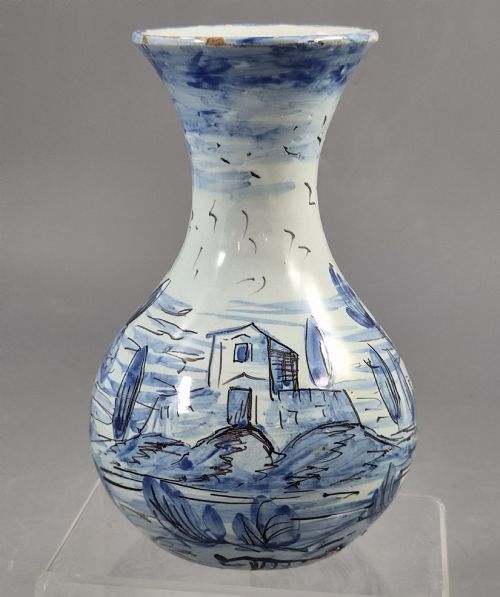
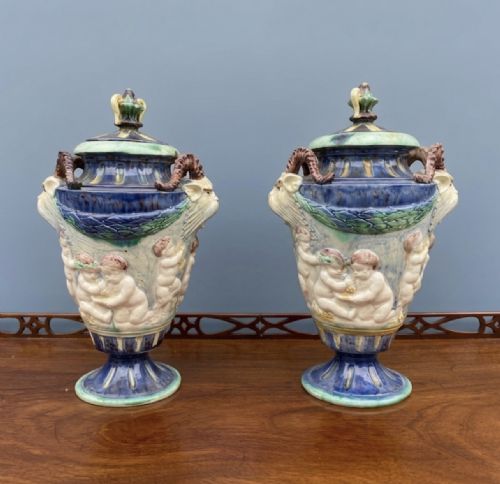
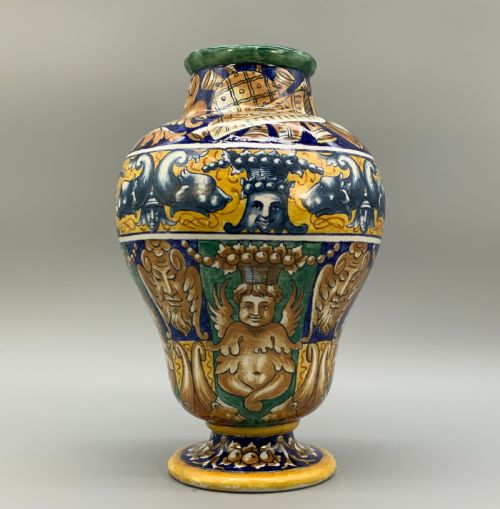
When you search for blue majolica urn, you are looking at decorative vessels shaped as urns, vases, and lidded jars produced in earthenware and ceramic. The pieces you meet on this page span the eighteenth and nineteenth centuries, originating from English, French, and Italian workshops.
Most examples demonstrate historic revival movements, drawing inspiration from Italian Renaissance, baroque, and classical French designs. Forms include monumental lidded vases, cabinet pieces, and jardiniere vessels on stands.
The dominant colour palette relies on tin glaze and lead glaze finishes, frequently combining rich blue tones with white grounds or polychrome highlights. These vessels served primarily as decorative ornaments within period interiors rather than utilitarian containers.
Materials and production methods
Potters shaped these vessels from earthenware and ceramic bodies before applying tin glaze or lead glaze to create a smooth surface for painting. Tin-glazed earthenware and faience techniques allowed makers to achieve opaque white grounds that held vibrant blue pigments.
Makers utilised moulded ceramic components alongside hand-thrown elements to construct large-scale vases, urns, and jardinieres with complex handles and covers. Kiln firing fixed the glaze and pigments, sometimes incorporating lustre glaze effects or metallic ormolu mounts.
Blue Majolica Urn Retail Price Guide 2026
Typical asking prices for blue majolica urn among the pieces listed under this phrase on Sellingantiques today, from the lower quarter to the upper quarter. They describe what is for sale here now, not the wider market.
Materials recorded across the inventory include tin-glazed earthenware, faience, lead glaze, and lustre glaze ceramic bodies.
Distinctions in quality and execution
Quality in these ceramics rests upon the crispness of the moulded form and the precision of the painted tin glaze surface. Superior examples display controlled brushwork in the blue pigments and careful management of the glaze during firing.
The sophistication of the historical revival style dictates the standing of a piece, from simple earthenware vessels to monumental works with integrated stands and ormolu mounts. Finer productions show sharper detail in relief elements and greater harmony between glaze and ceramic body.
Cantagalli·Clement Massier·Minton
The Blue Majolica Urn Glossary
- Majolica
- A type of earthenware decorated with opaque tin glaze, also historically termed maiolica. It forms the primary category for these glazed ceramic vessels.
- Faience
- European tin-glazed earthenware, often associated with French and Italian production. The technique produces a smooth, white absorbent ground suitable for painted decoration.
- Tin Glaze
- A ceramic glaze made opaque by the addition of tin oxide. It provides the white or off-white background characteristic of majolica and faience.
- Lustre Glaze
- A metallic film applied to pottery and fired to produce an iridescent sheen. This finish appears on specific nineteenth-century earthenware pieces.
- Ormolu
- Gilt-bronze mounts applied to decorative objects and furniture. French nineteenth-century urns occasionally incorporate these metal mounts.
Blue Majolica Urn: Frequently Asked Questions
How do I clean my majolica urn?
Dust these glazed ceramic surfaces gently with a dry, soft cloth. Avoid using water, soap, or abrasive cleaners on historic tin glaze.
Protect the earthenware body from moisture, as old ceramic bodies can absorb liquid through microscopic craquelure in the glaze.
Are these urns waterproof?
Most historic tin-glazed earthenware and faience urns are porous beneath the glaze. Placing water directly inside risks damaging the ceramic body.
Utilise a concealed glass or plastic liner inside the vase if you intend to display fresh floral arrangements.
What is the difference between majolica and faience?
Majolica typically refers to Italian tin-glazed earthenware traditions and their nineteenth-century revivals. Faience generally describes the equivalent French or continental European tin-glazed ceramic production.
Both employ similar earthenware bodies and opaque tin glaze techniques, differing mainly in regional stylistic conventions.
How can I tell the period of an urn?
Examine the character of the ceramic body, the consistency of the glaze, and the specific revival style employed. Eighteenth-century pieces differ from nineteenth-century Renaissance revival works in their pigment handling and manufacturing marks.
Look closely at the footring and interior surfaces for clues regarding kiln technology and period production methods.