

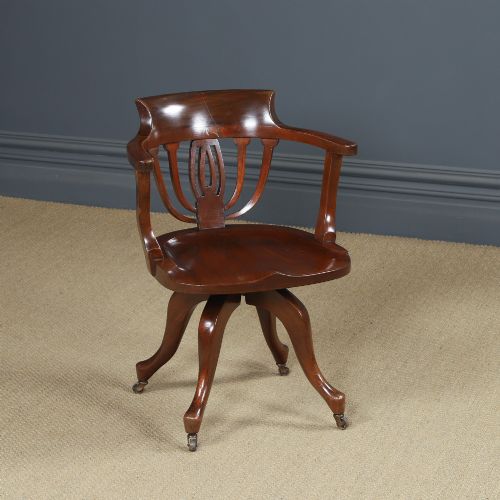
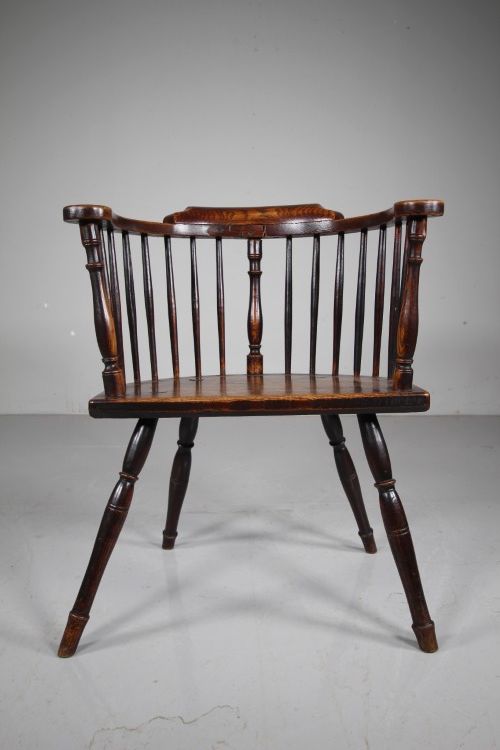
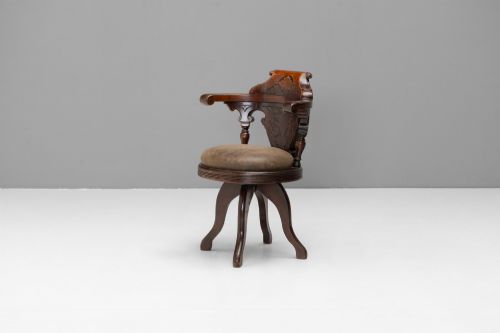


Dark Wood Office Chair
A dark wood office chair is a sturdy workspace seat built from timber like mahogany, offering practical swivel and desk utility for traditional studies.
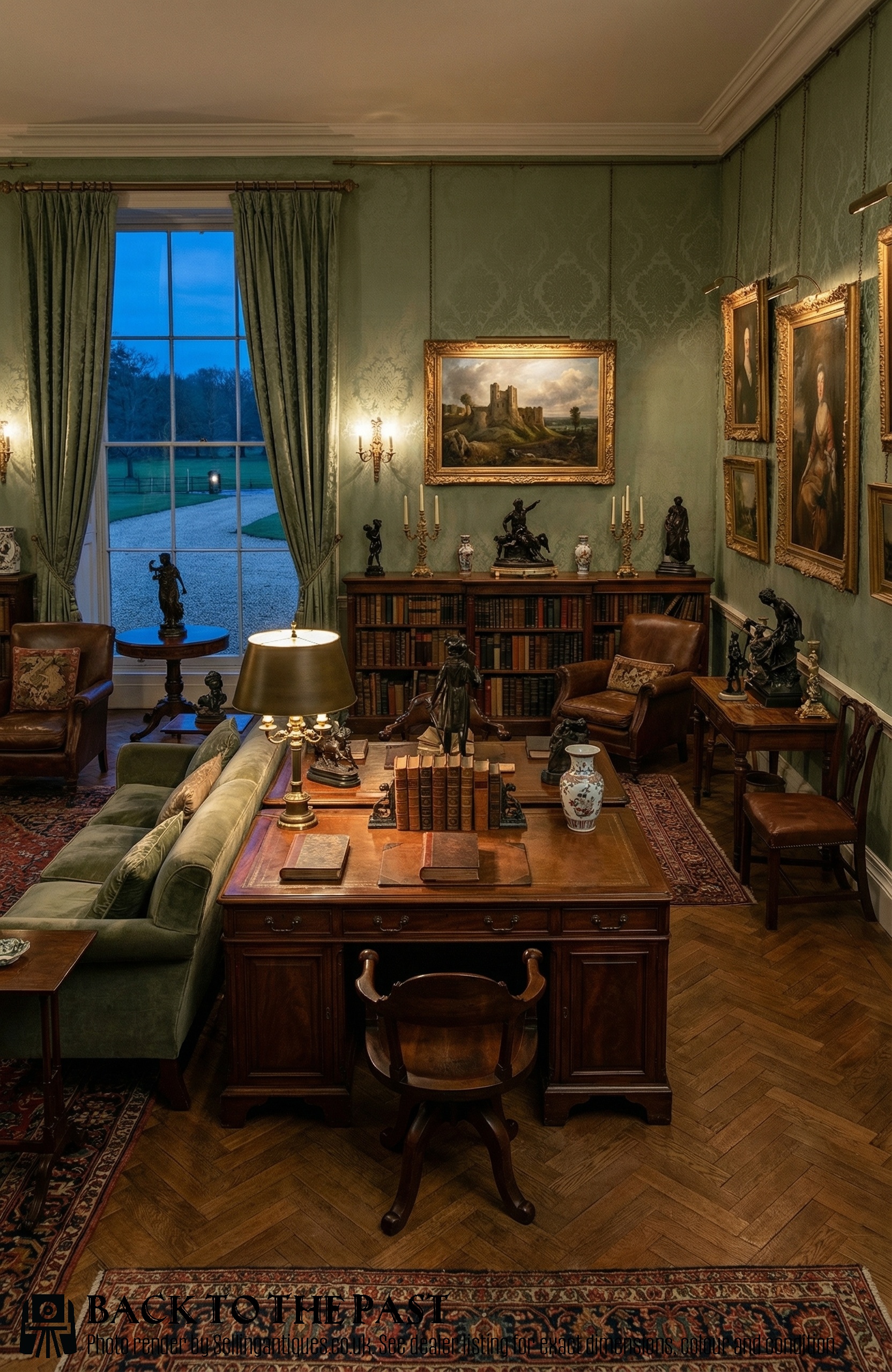
What a dark wood office chair is
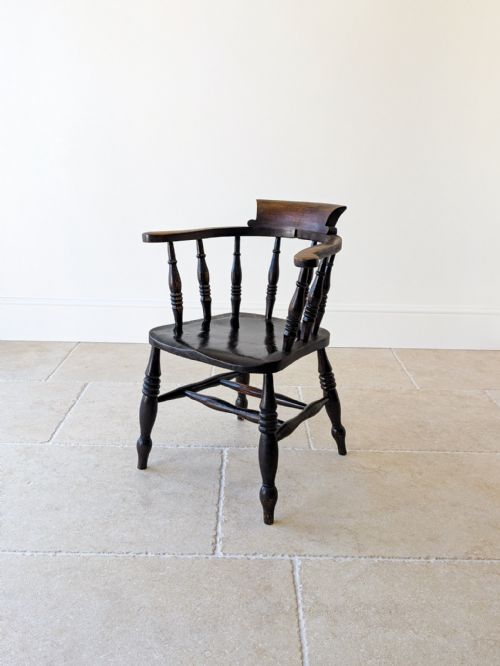
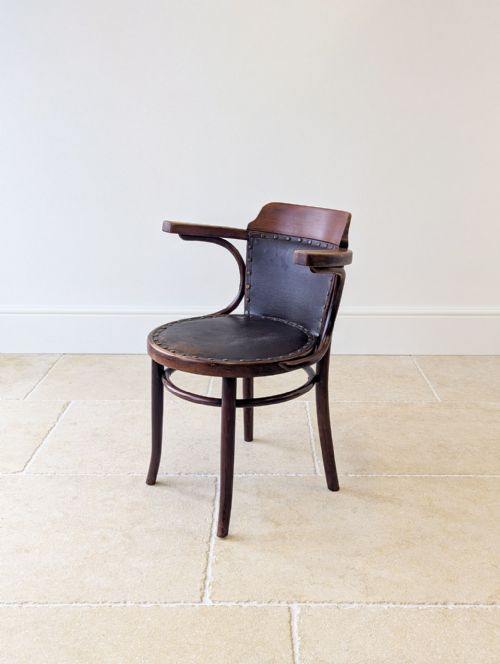
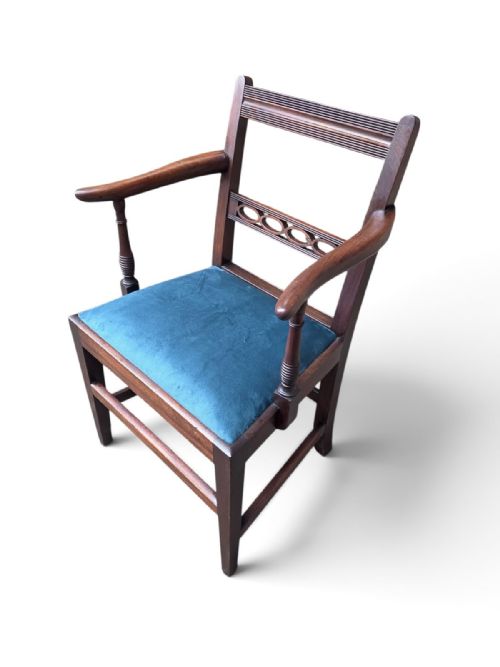
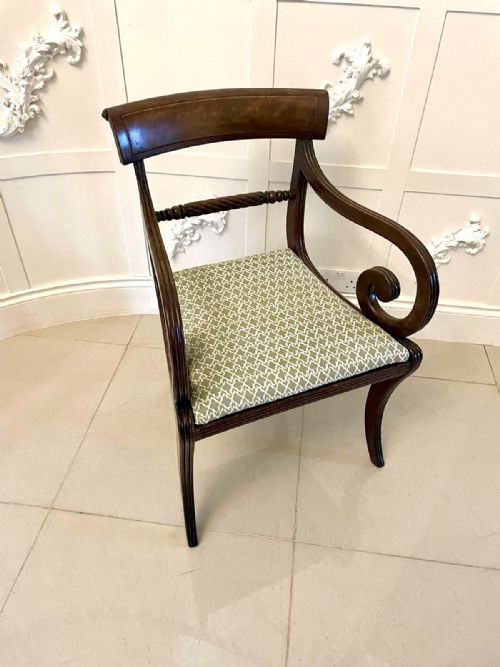
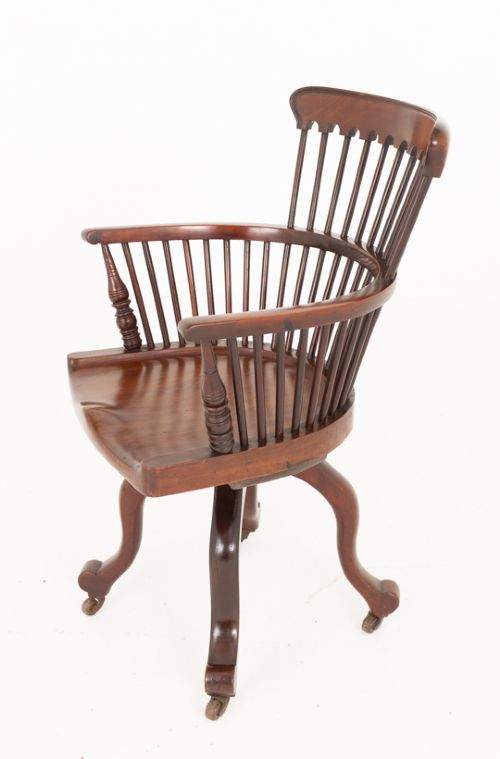
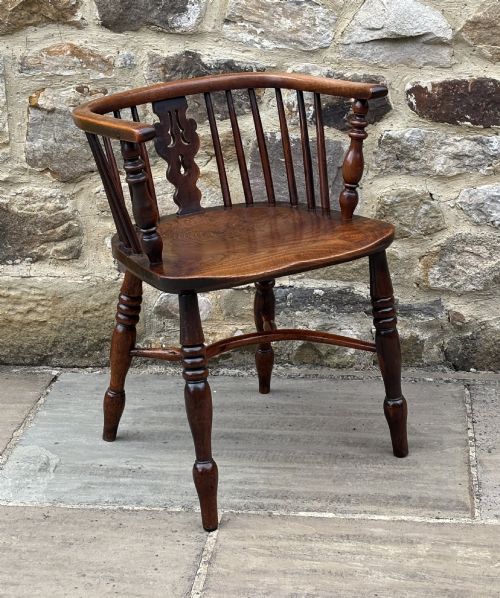
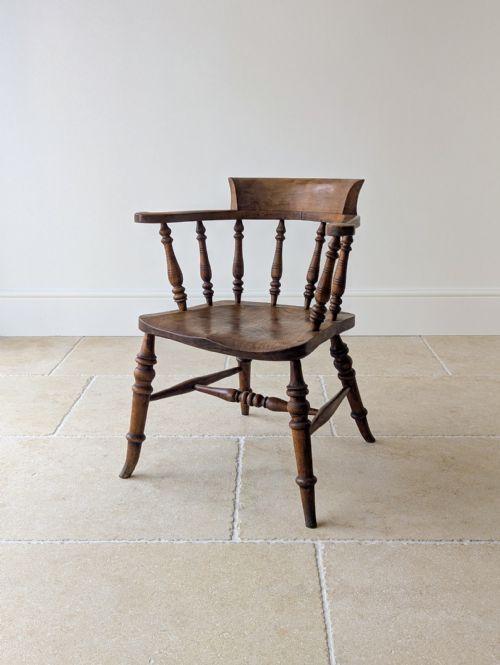
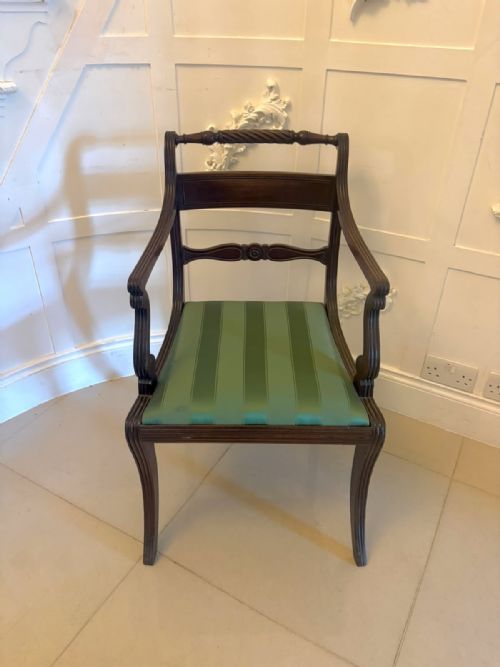
A dark wood office chair brings together functional desk seating and deep timber tones, appearing across periods from the Regency era through to Edwardian times. These pieces serve as working furniture designed for studies, offices and libraries, combining timber frames with practical elements like revolving mechanisms.
The versions most commonly met on this page span the nineteenth century, including mid-century examples from around eighteen fifty, late nineteenth-century revolving desk chairs, and Arts and Crafts pieces. They take the form of desk chairs built to accommodate regular use while maintaining the appearance of period cabinet work.
How they were made
Construction relies primarily on mahogany, a dense and durable timber selected for its rich colour and capacity to hold carved or turned detail. Workshops paired this timber with metal, iron, cast iron and steel components to create mechanical swivel actions and structural support.
Upholstery materials such as leather and velvet appear alongside the wooden frameworks, providing padded seats for prolonged use at a desk. These materials are fixed to the timber structures using traditional joinery and hardware appropriate to each period.
Retail Price Guide 2026
Typical UK retail prices for dark wood office chair, calculated from the Sellingantiques database of over a million retail prices indexed since 2003. This retail price guide relies exclusively on Sellingantiques data; no external sources or auction records are used, so the figures do not describe the wider market.
The documented periods span the Regency era, eighteen fifty, eighteen eighty, eighteen ninety, and the Edwardian period.
What varies in quality
Quality in a dark wood office chair rests on the integration of the revolving mechanism with the timber frame, where smooth operation without excessive play marks superior manufacturing. The selection of solid mahogany rather than secondary woods dictates the visual depth of the piece.
The refinement of the turning, the joinery at the stress points of the arms and back, and the original pairing of leather or velvet upholstery separate standard utility seating from finer examples produced by established makers.
SHOOLBRED
The Dark Wood Office Chair Glossary
- Mahogany
- A durable tropical hardwood valued for its reddish-brown colour and stability in furniture construction. It forms the primary structure of many period desk chairs.
- Revolving mechanism
- The internal iron or steel assembly allowing the chair to turn through a full circle. Early versions rely on threaded spindles and iron spiders.
- Arts and Crafts
- A design movement prioritising honest construction, visible materials and traditional craftsmanship over mass-produced ornamentation. Shoolbred pieces often reflect these principles.
- Regency
- A style period spanning the early nineteenth century defined by classical restraint and architectural lines. Chairs from this era utilise clean mahogany frames.
Frequently Asked Questions
What is a dark wood office chair?
A dark wood office chair is a timber-framed seat designed for a desk, incorporating materials like mahogany, iron, leather and velvet across periods from the Regency era to the Edwardian years.
These pieces function as working furniture, often featuring swivel mechanisms and revolving actions suited to studies and libraries.
How do I date a dark wood office chair?
Dating relies on observing structural characteristics, materials and mechanical components such as cast iron and steel framing. Pieces span specific eras from around eighteen fifty through to Edwardian designs.
Stylistic markers like Arts and Crafts influences or Regency proportions further help place the chair within its historical period.
Are these chairs comfortable for daily use?
Many examples include upholstered seats in leather or velvet, providing padding for regular sitting at a desk. The inclusion of swivel actions also aids movement in a workspace.
Buyers should examine the height and mechanical action to ensure the piece suits modern desk configurations.
What metals were used in these chairs?
Makers utilised iron, cast iron and steel to construct the internal revolving mechanisms and support columns beneath the wooden seats. These metals provided the necessary strength for swiveling.
Visible metal components often feature patination accumulated through decades of use in offices.