

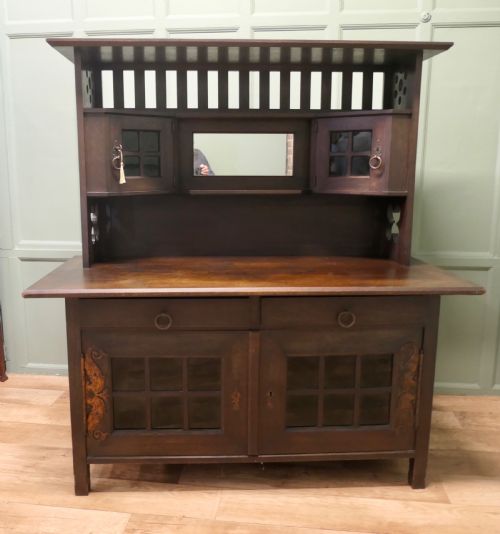
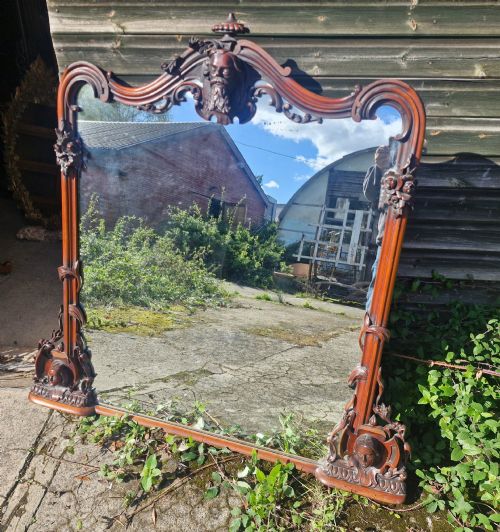
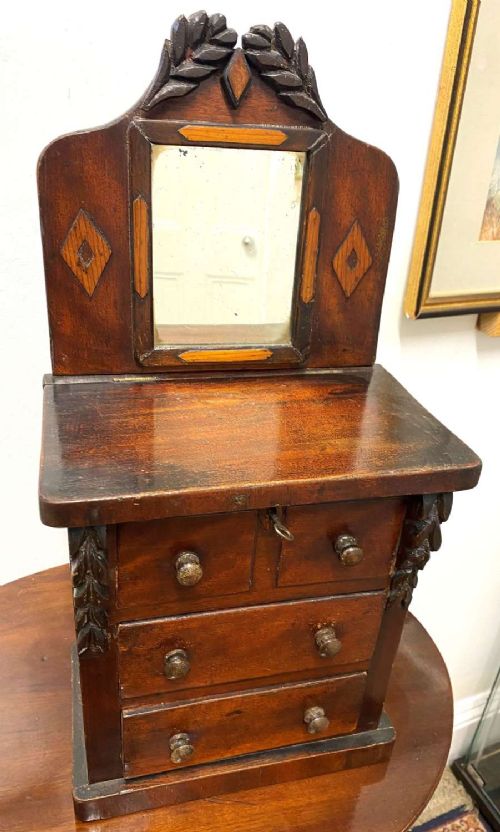
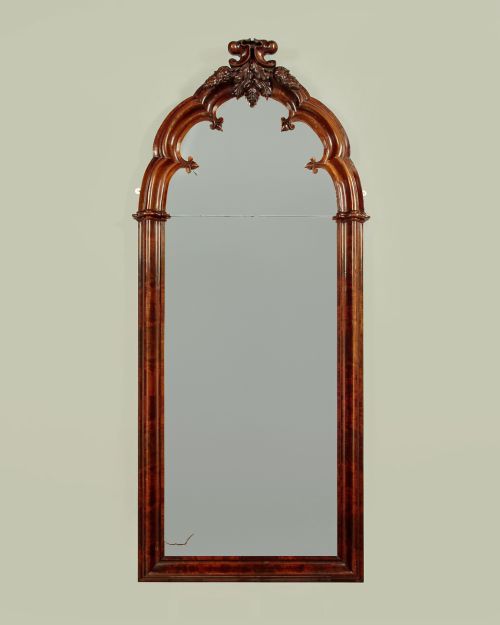
Dark Wood Carved Mirror
A dark wood carved mirror brings depth and tactile weight to a room through dense timber frames and hand-carved detail.
Dark Wood Carved Mirror
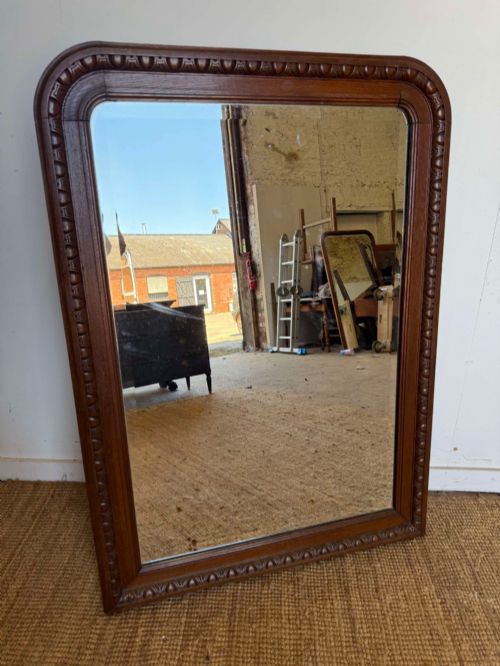
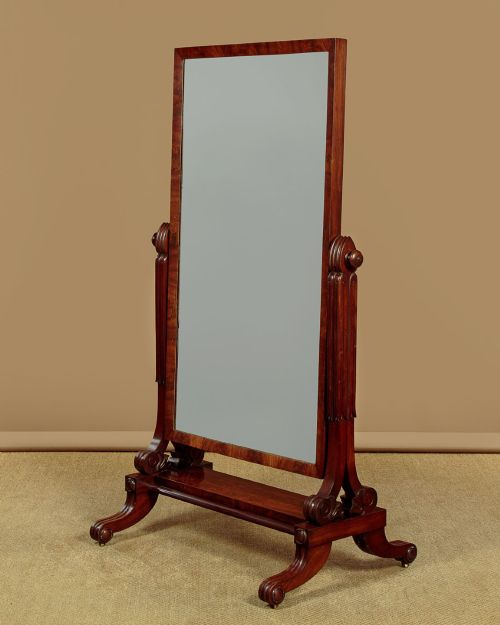
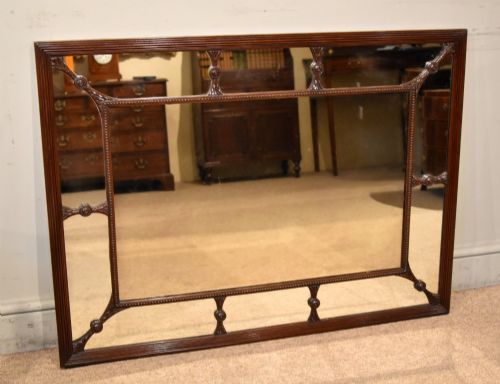
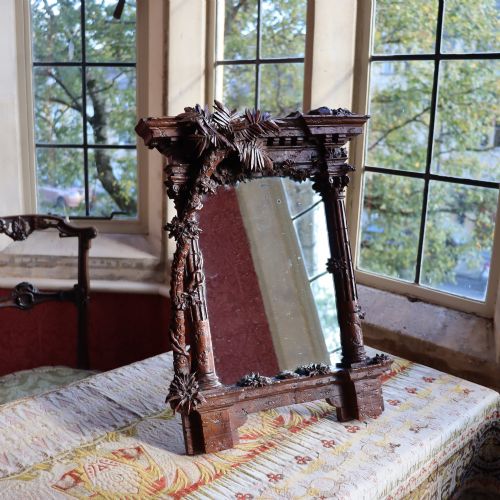
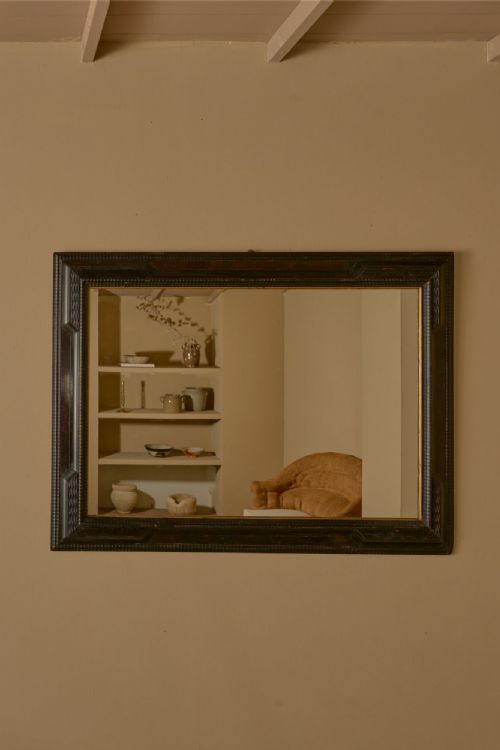
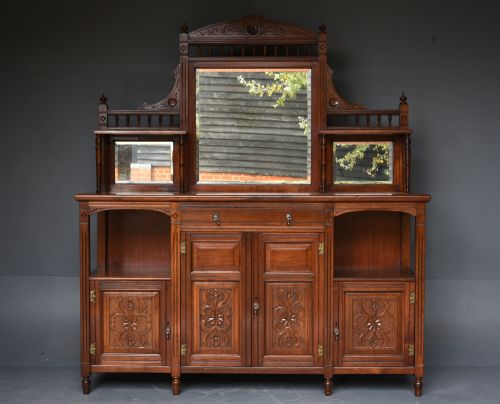
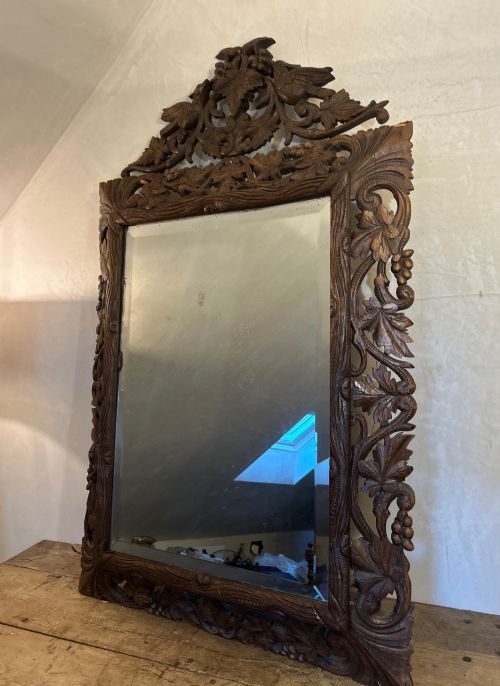
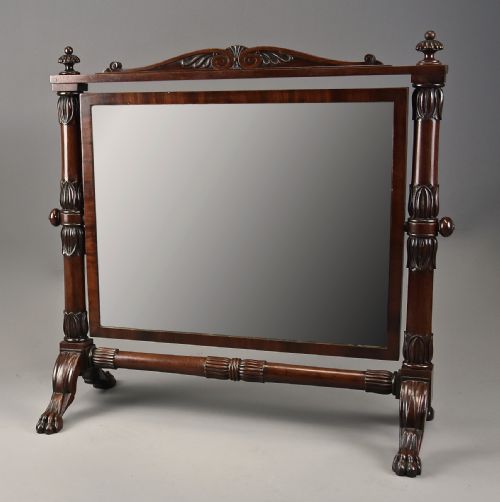
A dark wood carved mirror encompasses wall-hanging pieces, overmantels, and cheval glasses produced largely during the nineteenth century. Buyers seeking a dark wood carved mirror encounter substantial frames shaped in oak, mahogany, and walnut, often reflecting Victorian, Georgian, or Edwardian aesthetics.
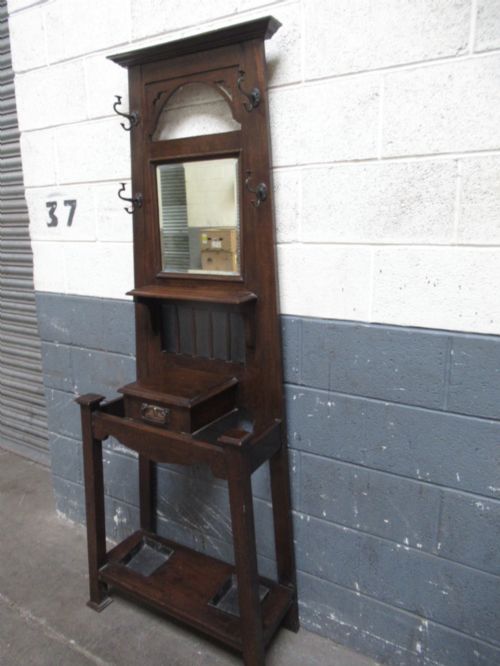
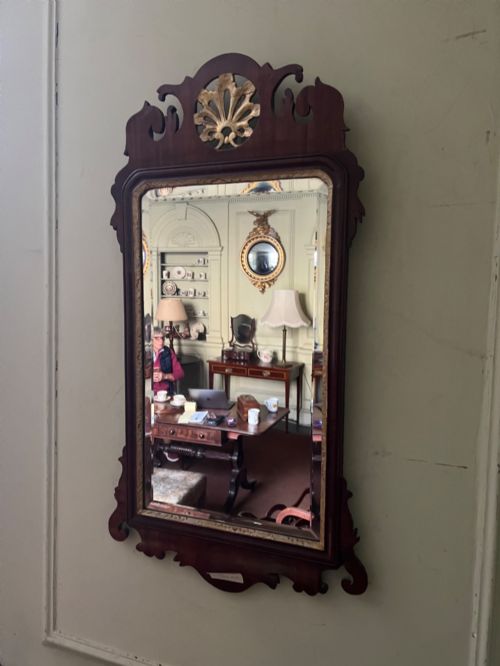
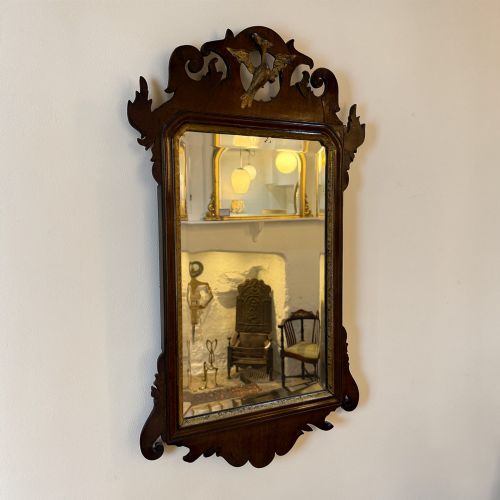
The selection ranges from compact hall mirrors with small shelves to large country house and overmantel mirrors designed for principal reception rooms. Many examples incorporate traditional motifs such as the Ho-Ho bird or foliate carving rooted in Chippendale and Regency revival styles.
Materials and Technique
Frames are constructed from dense hardwoods like mahogany, oak, walnut, and rosewood, chosen for their rich natural grain and ability to hold crisp chisel work. Carvers utilised hand tools to render deep relief foliage, scrolls, and crestings directly into the timber.
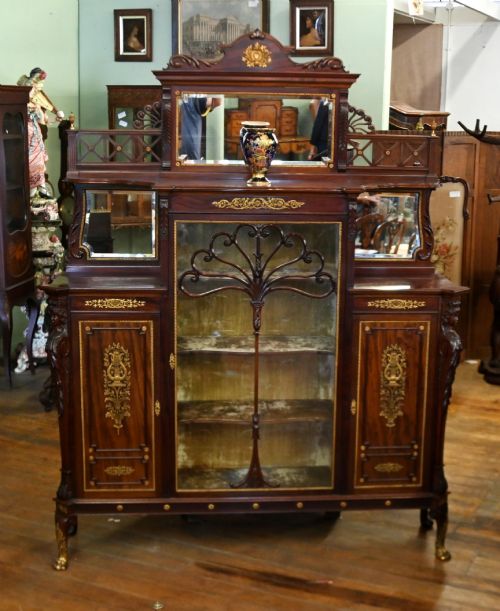
Glass plates are set within rebated frames, sometimes accompanied by brass fixings, mother-of-pearl inlay, or ebonised and parcel-gilt finishes. Structural integrity relied on traditional joinery, securing heavy timber frames around original mirror glass.
Dark Wood Carved Mirror Retail Price Guide 2026
Typical asking prices for dark wood carved mirror among the pieces listed under this phrase on Sellingantiques today, from the lower quarter to the upper quarter. They describe what is for sale here now, not the wider market.
Listings feature oak, mahogany, walnut, and rosewood frames spanning the Georgian, Victorian, and Edwardian eras.
Evaluating Depth and Execution
The standard of a carved frame rests on the crispness and depth of the chisel work, distinguishing flat mechanical cutting from confident hand-modelled relief. Superior pieces display thoughtful proportion between the mirror plate and the surrounding timber moulding.
The selection of the wood itself defines the upper tier, where rich grain, consistent colour, and substantial timber scantlings elevate the piece beyond standard production. Original surfaces, whether polished mahogany or dark oak, carry patination that lesser replacements lack.
P and MA Nicholson
The Dark Wood Carved Mirror Glossary
- Overmantel mirror
- A large horizontal mirror designed to sit directly above a fireplace mantelpiece. These pieces often feature elaborate crestings and extensive carved wooden frames.
- Cheval mirror
- A full-length dressing mirror suspended in a frame on pivots, allowing the glass to tilt. They commonly stand on four legs with supporting uprights.
- Fretwork
- Thin wood cut with decorative open patterns using a fretsaw. This technique is frequently seen on Chippendale revival frames from the Victorian period.
- Parcel-gilt
- A decorative treatment where selected portions of a dark wooden frame are partially gilded with gold leaf. This technique highlights specific carved details against the dark timber.
Dark Wood Carved Mirror: Frequently Asked Questions
Where should I hang a heavy wooden mirror?
Heavy carved mirrors require secure fixing directly into solid masonry or substantial wall studs to support the combined weight of dense timber and glass. Placing them above a fireplace or a console table provides natural architectural anchoring in a room.
Ensure the hanging wire or brackets specified for the frame match the load capacity required for Victorian hardwoods.
How do I clean an antique dark wood frame?
Dust the carved recesses regularly with a soft, dry brush to prevent dirt accumulation in the intricate wooden details. Avoid modern silicone polishes and instead apply a traditional beeswax sparingly to nourish the timber.
Buff the surface gently with a clean cloth to maintain the natural sheen of the dark wood without stripping the historic finish.
Can I replace the original glass in these mirrors?
Original mirror glass often exhibits characteristic silvering degradation, minor foxing, and slight waviness that confirms its age. Preserving the original plate maintains the historical integrity and visual authenticity of the piece.
Replacement should remain a last resort reserved only for shattered or entirely non-reflective glass plates.
How do I identify a Victorian Chippendale style mirror?
Victorian Chippendale revival mirrors typically feature characteristic fretwork frames, scrolling ears, and prominent carved crests such as the Ho-Ho bird. They utilise dense mahogany and echo eighteenth-century proportions while bearing nineteenth-century construction methods.
Examining the backboards and fixings usually clarifies whether a piece dates to the original Georgian era or the later Victorian revival.