



Gothic Revival Wall Mirror
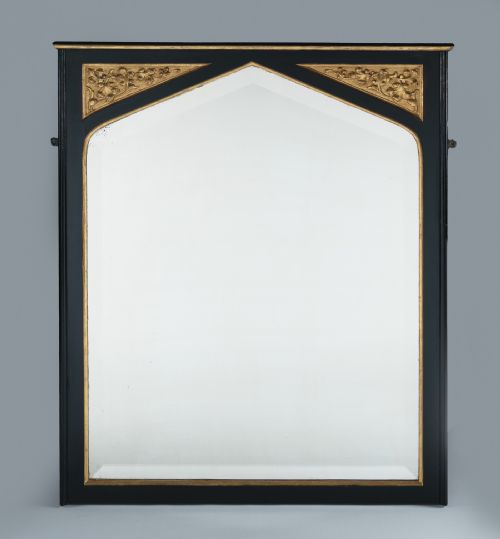
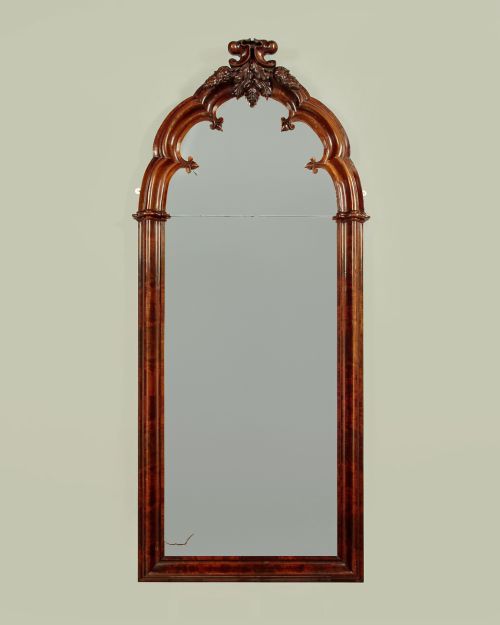
A gothic revival wall mirror brings architectural weight and pointed arches into a room, offering both practical reflection and dark, carved drama.

How they were made
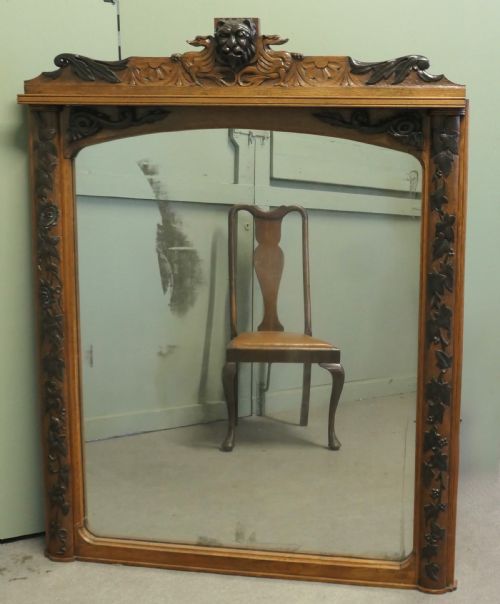
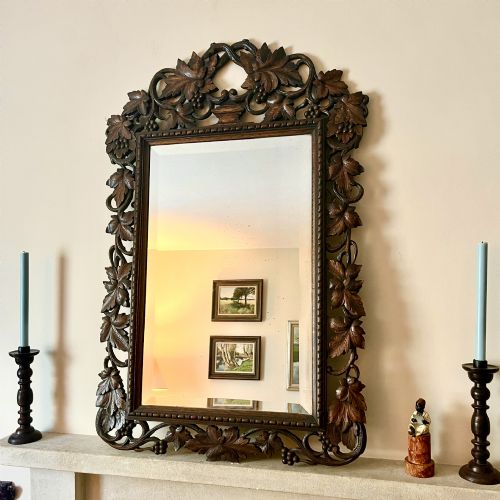
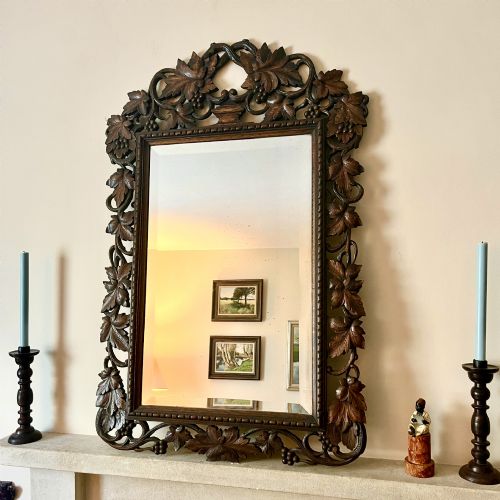
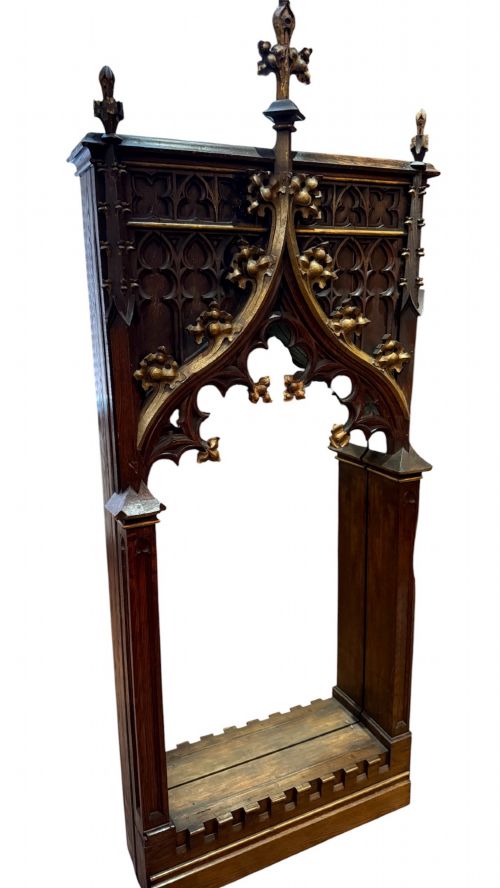
Makers relied heavily on solid oak, walnut, and mahogany, carving deep linenfold patterns, tracery, and dragon motifs straight into the dense timber. Giltwood and gesso appear where a lighter touch or reflective brilliance was required, occasionally supplemented by brass detailing.
Glass plates within these frames often feature bevelled edges, fitted securely behind heavy wooden backboards. Joinery utilised traditional pegged and dowelled construction to support the considerable weight of the larger overmantel and wall formats.
What varies in quality
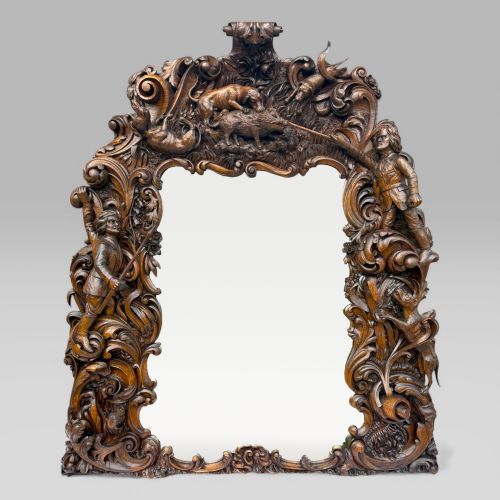
Quality rests in the depth and crispness of the carving, distinguishing master workshop execution from repetitive commercial output. Sharp undercutting in oak foliage and well-proportioned tracery separate superior examples from flat, mechanical work.
The integrity of the original mirror glass and the harmony of the frame's proportions dictate the standing of a piece. Finer examples retain their original gilding or polished surfaces without heavy intervention, preserving the intended architectural presence.
Gothic Revival Wall Mirror Retail Price Guide 2026
Typical asking prices for gothic revival wall mirror among the pieces listed under this phrase on Sellingantiques today, from the lower quarter to the upper quarter. They describe what is for sale here now, not the wider market.
An unexpected dragon stares out from the woodwork, keeping a watchful eye over the room.
Cottier and Co·L Blondie
The Gothic Revival Wall Mirror Glossary
- Tracery
- Openwork stonework patterns translated into woodwork, forming the characteristic pointed arches and geometric shapes seen across the frame borders.
- Gesso
- A plaster-like mixture applied to wood surfaces as a smooth base for subsequent gilding, allowing for ornate moulded decorative details.
- Overmantel mirror
- A large mirror specifically designed to hang above a fireplace mantel, often dominating the wall space with extensive carved crests.
- Armorial crest
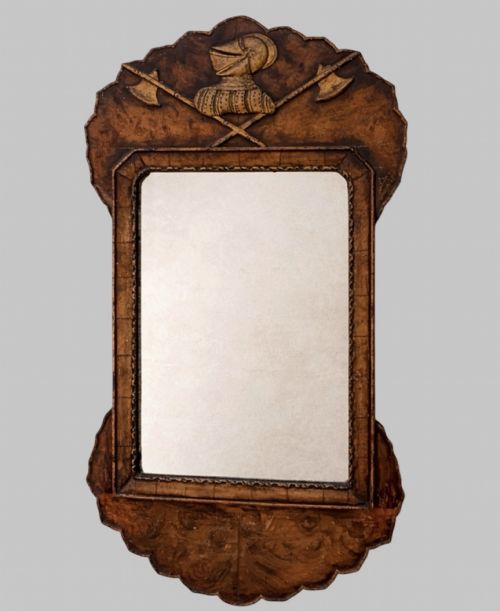
- A heraldic design carved into the woodwork, displaying familial or institutional coats of arms atop the mirror frame.
- Puginesque
- A design style inspired by the architectural theories of Augustus Pugin, championing strict gothic revival authenticity in form and ornament.
Gothic Revival Wall Mirror: Frequently Asked Questions
Where should I hang a heavy oak overmantel mirror?
These large timber frames require secure fixing directly into masonry or heavy wall studs to support their substantial weight safely.
Position them above a fireplace or low sideboard where the architectural scale can anchor the surrounding furniture.
How do I distinguish Victorian gothic from later Edwardian pieces?
Victorian examples tend to display heavier, deeper carving with uncompromising architectural motifs derived directly from medieval sources.
Edwardian and early twentieth-century interpretations often lighten the timber treatment or introduce simpler geometric framing while retaining the core revival aesthetic.
Are original mirror plates usually bevelled?
Many nineteenth-century plates feature distinct bevels around the perimeter, catching the light and adding depth to the reflection.
Plain flat glass also appears, particularly on earlier or more austere monastic-style oak frames.
How do I care for antique carved oak frames?
Dust the deep recesses of the carving regularly with a soft brush to prevent dirt accumulation in the intricate tracery.
Feed the dry timber occasionally with a quality wax, avoiding modern aerosol polishes that leave artificial buildup on the wood.