
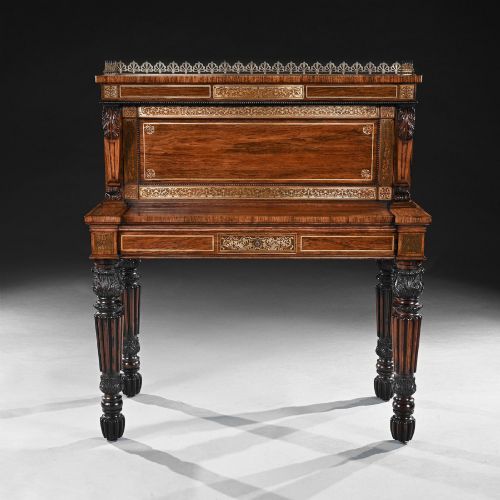
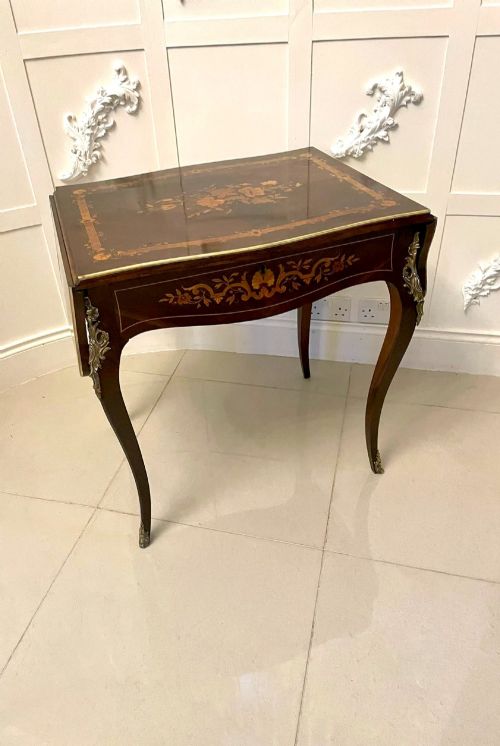
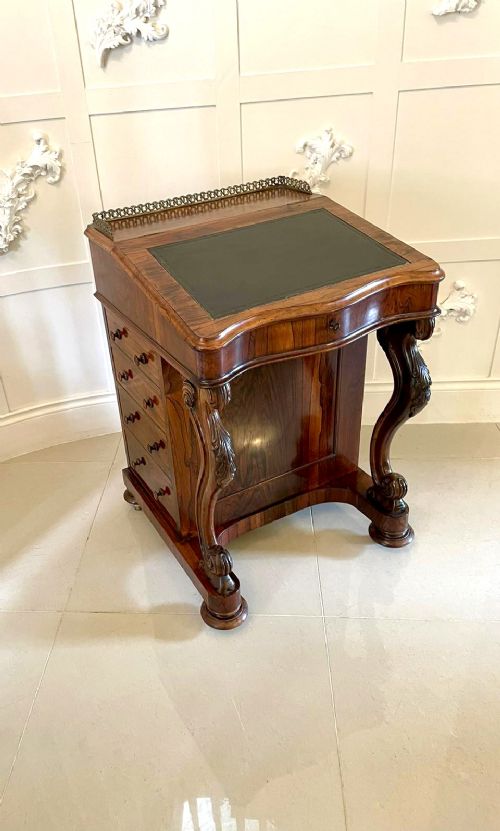


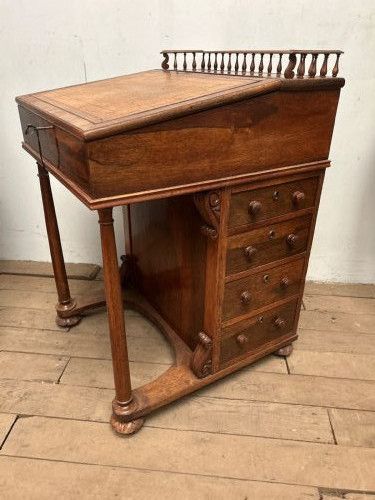
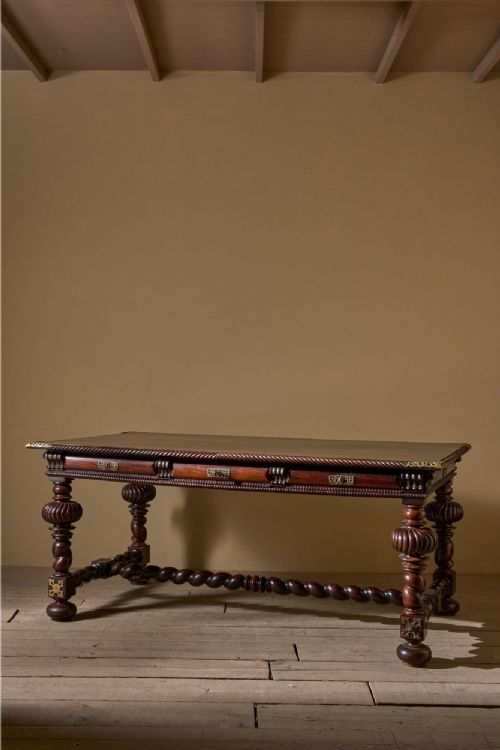
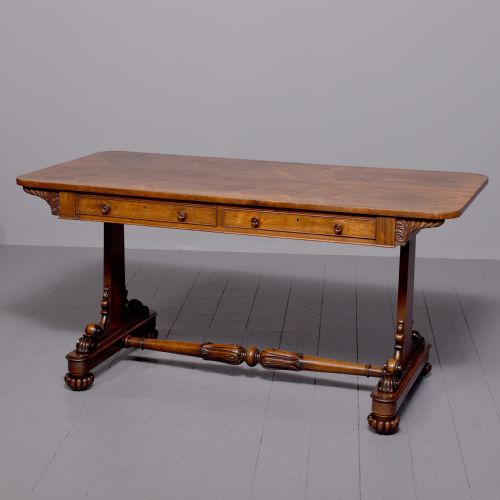
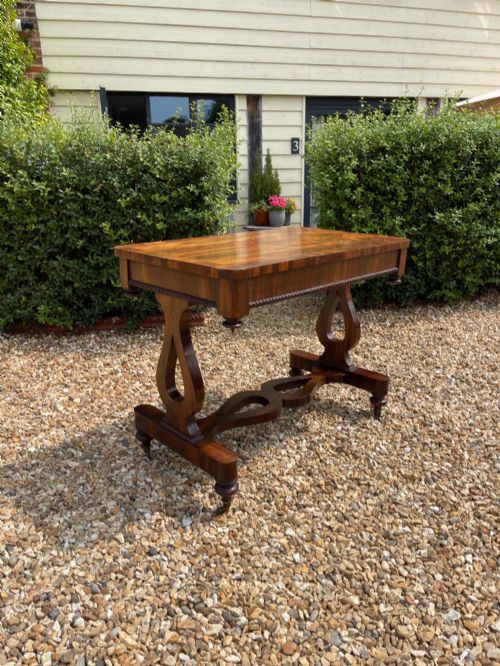
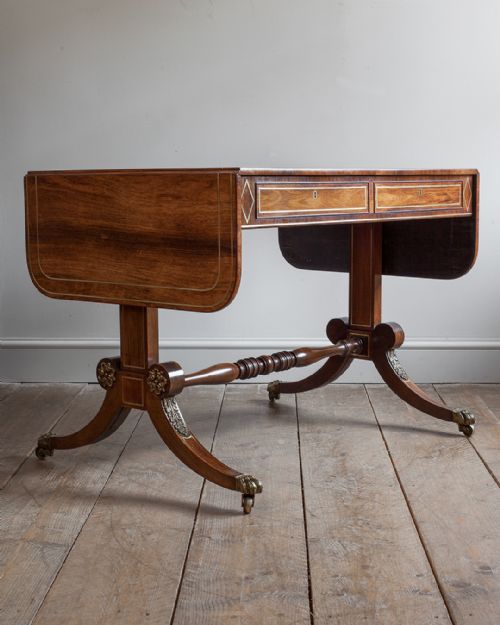
Dark Rosewood Writing Desk
A dark rosewood writing desk offers a rich, dense surface and classic proportions suited to traditional studies and modern rooms alike.
Dark Rosewood Writing Desk
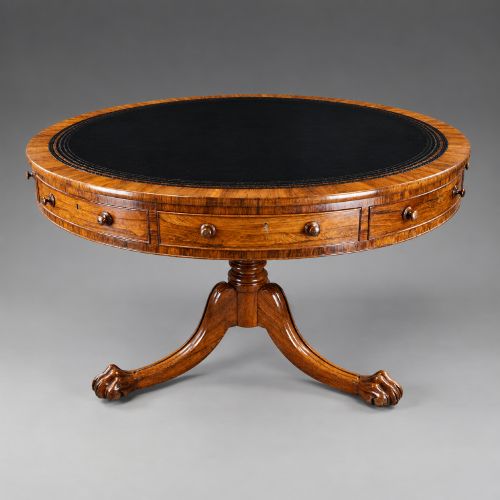
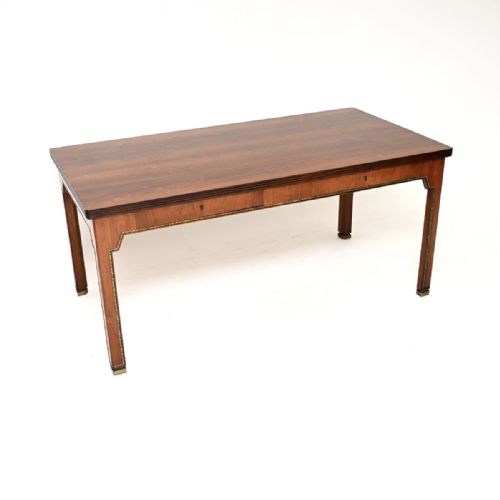
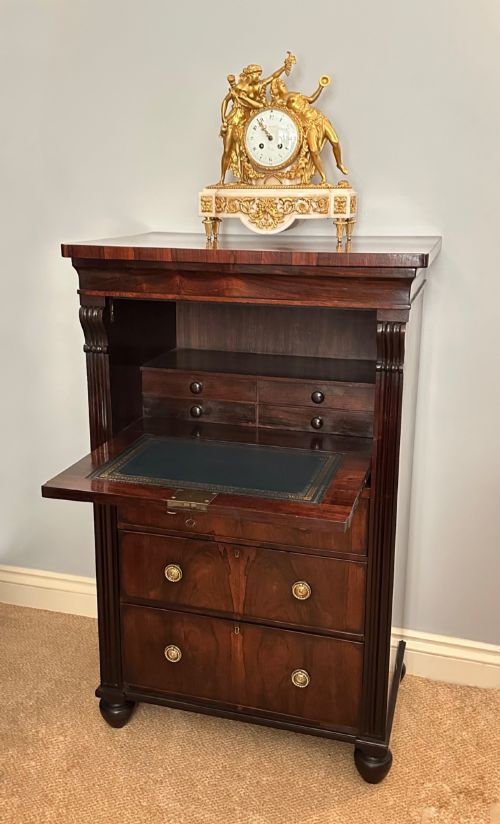
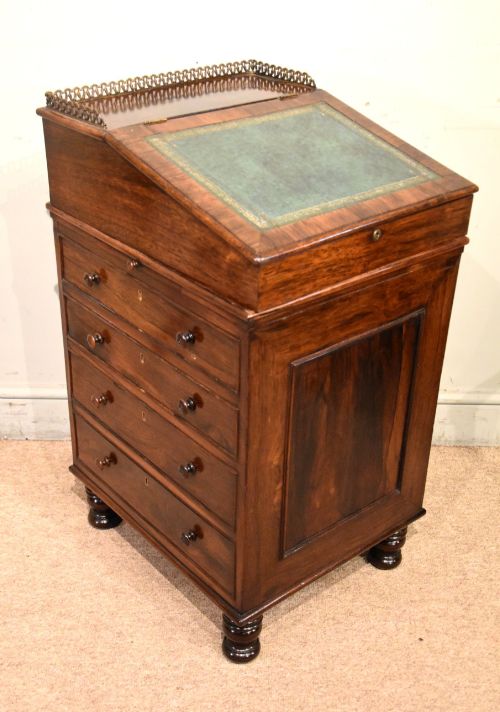
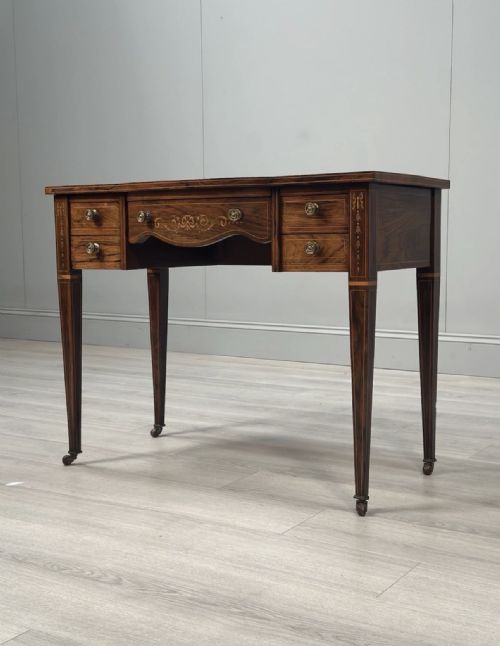
A dark rosewood writing desk brings together heavy tropical timbers and practical workspaces designed for correspondence and study. When searching for a dark rosewood writing desk, a buyer typically encounters freestanding library tables, compact davenports, and hinged writing slopes dating from the Georgian, Regency, and Victorian periods.
Forms span from large pedestal models to delicate sofa tables and writing cabinets. Pieces frequently originate from English workshops or continental makers, utilising rich timbers alongside secondary woods.
The selection ranges from elaborate brass-inlaid Regency examples to simple mid-nineteenth-century library tables. Buyers find functional writing furniture adapted for domestic use across several centuries.
How they were made
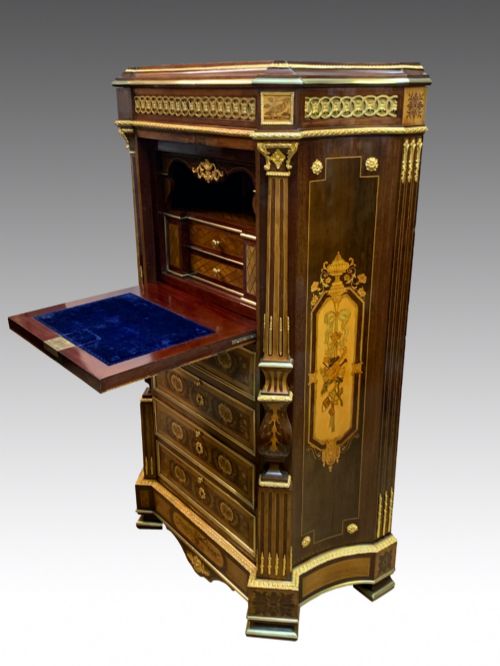
Cabinetmakers utilised dense rosewood veneers and solid timbers applied to carcases of mahogany or fruitwood. Surfaces frequently incorporate brass stringing, boxwood inlay, or marquetry details.
Writing surfaces are lined with leather or hide, while structural mounts in ormlou or cast metal provide support and decoration. Drawers and internal compartments utilise traditional dovetail joinery.
Periods represented span from the eighteenth century through the Georgian, Regency, and Victorian eras into early twentieth-century Art Deco.
What varies in quality
Quality depends upon the depth of the timber grain, the precision of brass inlay, and the crispness of carved elements like lion paw feet. Superior examples display careful timber selection that matches grain patterns across secondary surfaces and drawer fronts.
Construction methods also distinguish standard production from exceptional cabinet work, seen in smoothly operating drawers and well-fitted internal stationery compartments.
Gillows Oxford Street Workshop·Maison Krieger·Mein of Kelso
The Dark Rosewood Writing Desk Glossary
- Davenport
- A compact desk featuring a sloping writing top above a pedestal of side drawers. This form became popular during the Regency and Victorian eras for small studies.
- Writing slope
- A portable box with a hinged sloping lid that opens to reveal a velvet or leather writing surface and inkwell compartments. These pieces rest on tables or desks during use.
- Library table
- A large freestanding table designed to sit in the centre of a room with finished sides all around. They often include drawers beneath the top.
- Marquetry
- Decorative patterns formed by fitting together thin pieces of coloured wood veneer into floral or geometric designs. Craftsmen apply this technique to cabinet doors and table tops.
- Ormlou
- Gilded bronze ornamentation applied to furniture mounts and feet during the eighteenth and nineteenth centuries. This material adds metallic contrast to dark timber surfaces.
Dark Rosewood Writing Desk: Frequently Asked Questions
Where do I put a freestanding desk?
A freestanding desk works best positioned away from walls in the centre of a study or living room. Because these pieces feature finished timber on all sides, they can be viewed from any angle.
Ensure adequate natural light falls across the writing surface from the side. Leave sufficient clearance around the desk for chairs and movement.
How do I care for rosewood?
Protect rosewood surfaces by keeping them away from direct sunlight and heat sources that cause timber to dry out. Dust regularly with a soft, dry cloth to prevent accumulation.
Apply high-quality beeswax sparingly when the wood appears dry. Buff gently with a clean cloth to maintain the natural sheen.
What is a writing slope used for?
A writing slope provides a portable angled surface for writing letters and storing stationery documents. The hinged lid opens to reveal compartments for ink, pens, and paper.
Victorian travellers and homeowners utilised these boxes on dining tables or laps. They close securely with locks for transport.
How do I identify a Regency desk?
Regency desks display classical restraint with clean architectural lines, sabre legs, and brass inlay. Cabinetmakers working in this period drew inspiration from ancient Greek and Roman designs.
Look for contrasting brass stringing against dark rosewood and restrained carved details. Proportions remain balanced and functional.