



Rosewood Captain Desk
A rosewood captain desk brings dense tropical grain and compact writing storage together, offering a stately workspace designed for tight quarters.
Rosewood Captain Desk
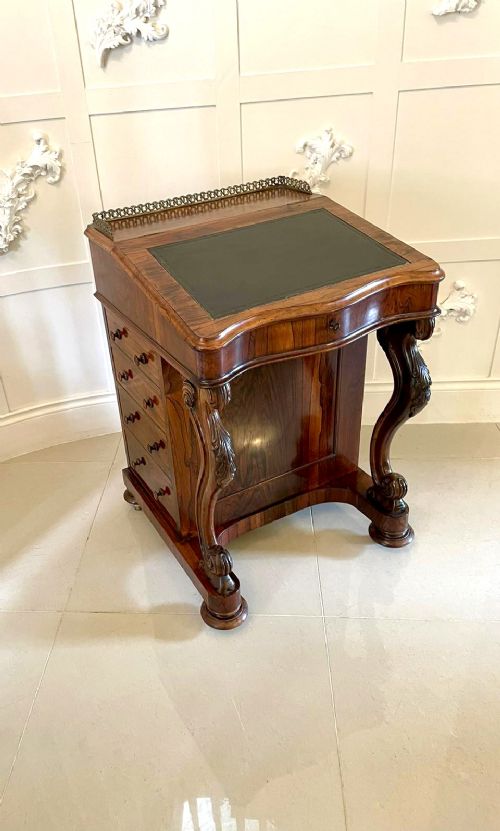
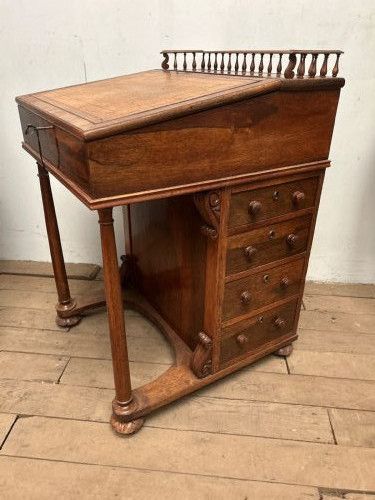
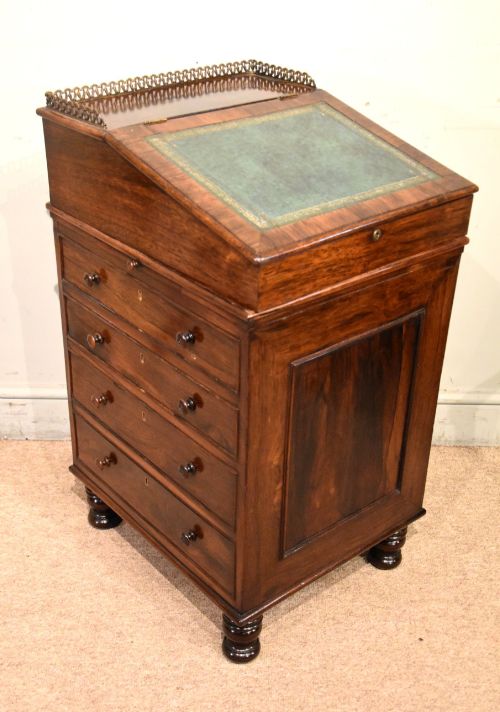
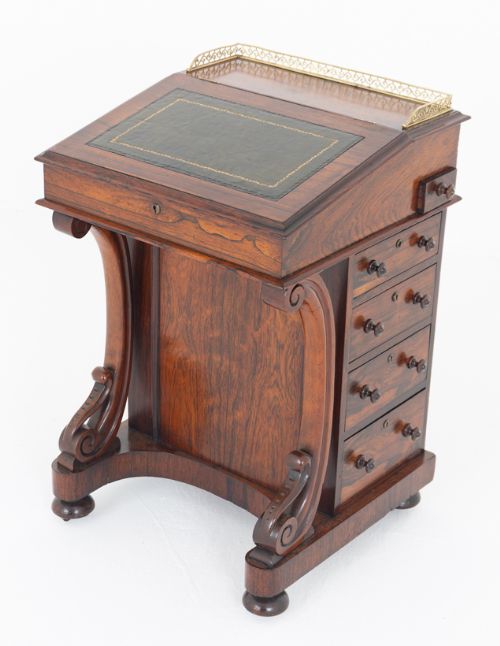
When you search for a rosewood captain desk, you are looking at compact slope-front writing furniture designed for efficient use of space. The examples appearing here predominantly take the form of davenport desks and associated seating from the nineteenth century.
The selection spans periods from the Regency era through to the late Victorian years, encompassing styles such as William IV, Sheraton Revival, and Louis Philippe. These pieces combine small footprints with integrated drawer storage and sloping writing surfaces.
How they were made
Cabinet makers utilised dense tropical timber as the primary carcase material, often selecting rosewood for its rich grain patterns and deep colour. This timber was frequently embellished with contrasting stringing and decorative motifs.
Surfaces intended for writing incorporate inset panels of leather to provide a suitable texture for handwriting. Structural integrity is maintained through brass hardware and internal framing that supports sliding tops and pivoting compartments.
Rosewood Captain Desk Retail Price Guide 2026
Typical asking prices for rosewood captain desk among the pieces listed under this phrase on Sellingantiques today, from the lower quarter to the upper quarter. They describe what is for sale here now, not the wider market.
Listings span the Regency, William IV, and Victorian periods, alongside Sheraton Revival and Louis Philippe styles.
What varies in quality
The standard of execution depends on the crispness of the timber selection and the precision of any inlaid detailing, such as boxwood or satinwood stringing. Finer pieces demonstrate careful matching of the grain across multiple drawer fronts and writing slopes.
Mechanisms governing sliding tops and internal compartments separate standard examples from more ambitious productions. The integration of secondary timbers and the stability of the overall construction further define the tier of the piece.
The Rosewood Captain Desk Glossary
- Davenport
- A small compact writing desk featuring a sloping lid that lifts to reveal storage, typically set above a pedestal of drawers.
- Stringing
- A thin inlay of contrasting wood, such as boxwood or satinwood, used to outline panels and drawers on antique furniture.
- Palisander
- A historical trade term often applied to richly figured rosewood timber imported during the nineteenth century.
- Secretaire
- A desk or cabinet containing a concealed writing drawer or fold-down writing flap with interior pigeonholes.
Rosewood Captain Desk: Frequently Asked Questions
What is a rosewood captain desk?
It is a compact, nineteenth-century writing cabinet built with a sloping top and built-in drawer storage beneath.
These compact desks were originally designed for use in confined spaces, offering a stable surface for correspondence alongside integrated storage.
How do I identify Regency pieces?
Regency items date from the early part of the nineteenth century and typically display classical proportions and restrained ornament.
Such examples often rely on the natural figure of the timber and subtle brass details rather than heavy carving.
What are sliding top desks?
A sliding top allows the writing surface to move forward, creating extra knee room or revealing hidden compartments.
This mechanism demonstrates clever carpentry designed to maximise comfort and utility within a small footprint.
Where should I place it?
Freestanding models are finished on all sides, allowing them to sit away from walls in the centre of a room.
Their modest dimensions make them suitable for studies, living rooms, or bedrooms where floor space is limited.