


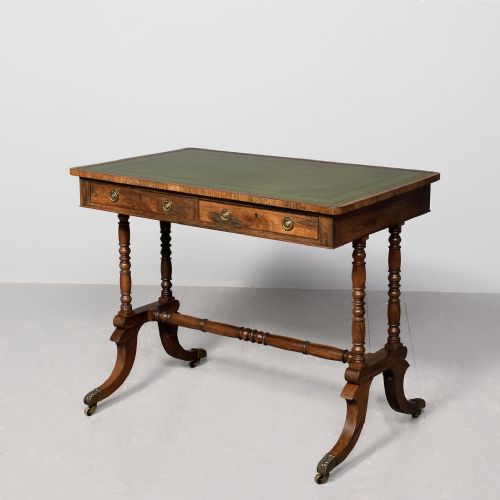


Rosewood Executive Desk
A rosewood executive desk brings rich timber grain and classic authority to any study, offering a commanding surface for daily writing and serious work.
What these pieces are
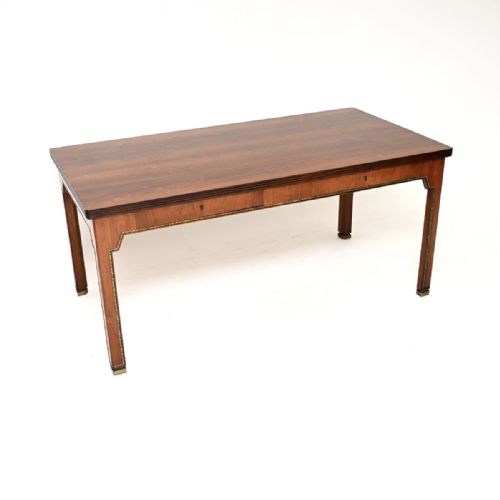
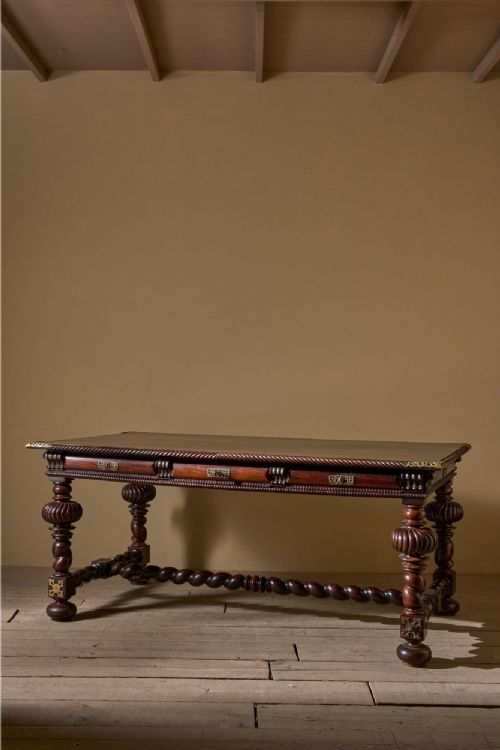
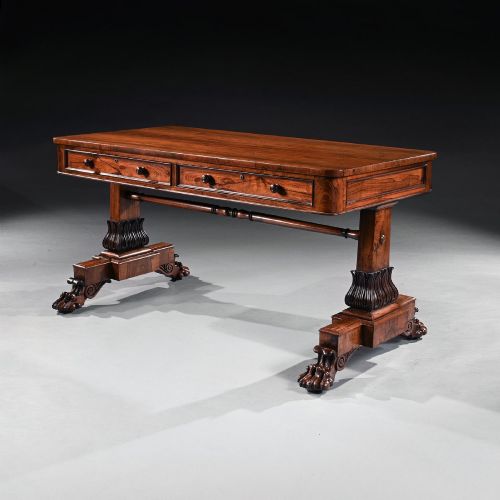
A rosewood executive desk search brings up substantial writing tables and library tables from the nineteenth century, including pieces built during the Regency and William IV periods. These examples serve as freestanding desks, designed to sit proudly in the centre of a room rather than against a wall.
The forms found in this category span both library tables and writing desks, reflecting the robust proportions typical of 1800 to the late nineteenth century. Such items combine deep timber colour with functional proportions suited to executive tasks.
How they were made
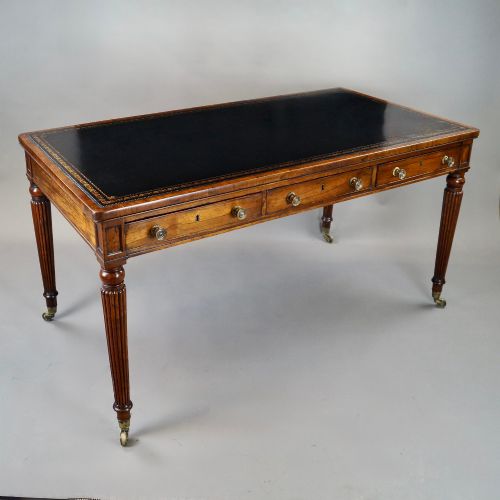
Maker construction relies heavily on figured rosewood veneers and solid timbers, frequently accented with contrasting brass mounts or details. Writing surfaces often incorporate inset leather panels to provide a durable writing plane.
Cabinet makers utilised dense exotic timbers, including goncalo alves alongside traditional rosewood, to achieve striking grain patterns across large tabletops and frieze drawers.
Retail Price Guide 2026
Typical UK retail prices for rosewood executive desk, calculated from the Sellingantiques database of over a million retail prices indexed since 2003. This retail price guide relies exclusively on Sellingantiques data; no external sources or auction records are used, so the figures do not describe the wider market.
What varies in quality
Quality differences emerge in the choice of secondary timbers and the intricacy of the brass or turned woodwork details. The depth of the timber figuring and the crispness of the carving distinguish standard production from finer cabinet work.
The integration of the leather writing surface and the smoothness of drawer construction separate high-status library tables from more utilitarian nineteenth-century examples.
The Rosewood Executive Desk Glossary
- Rosewood
- A dense, heavily figured timber prized for its dark grain and polished finish. It forms the primary visual identity of these nineteenth-century desks.
- Goncalo alves
- A striking exotic hardwood also known as zebrawood, utilised in specific nineteenth-century writing tables for its dramatic contrasting stripes.
- Library table
- A large freestanding table designed for central room placement, featuring finished sides and often incorporating frieze drawers for storage.
- Regency
- An English design period spanning the early nineteenth century, characterised by classical revival motifs and refined proportions.
Frequently Asked Questions
Where should a freestanding desk go?
These tables are built to be viewed from all sides, making them ideal for placement in the middle of a study or office space.
Positioning the piece away from walls allows the polished rosewood back and sides to remain fully visible.
How do I care for rosewood?
Maintain the timber by keeping the surface away from direct sunlight and sudden temperature shifts that might affect the wood and veneer.
Dust regularly with a soft cloth and occasionally apply appropriate wax polish to preserve the rich grain.
What periods do these desks cover?
The available selection spans the nineteenth century, encompassing Regency and William IV styles from around 1800 onwards.
Each period brings distinct stylistic flourishes while maintaining the heavy rosewood construction.
Can these tables function daily?
The sturdy proportions and integrated leather writing inserts make these historical tables well-suited for contemporary executive use.
Generous surface areas provide ample space for modern writing materials and working equipment.