
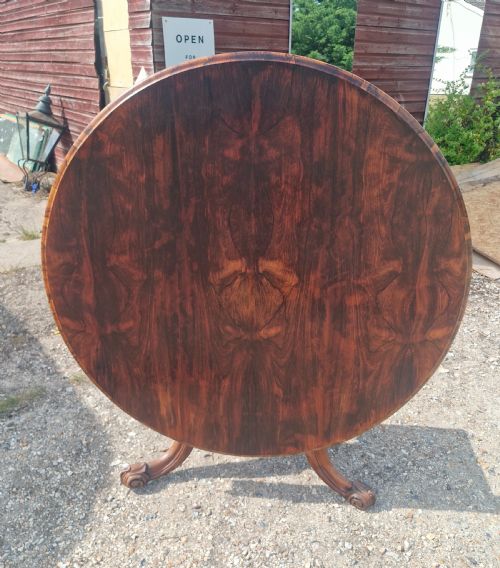
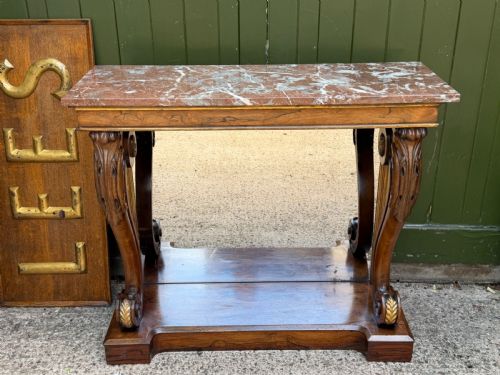


Figured Rosewood Table
A figured rosewood table brings dense, rippling grain and deep reddish-brown tones into a room, offering a commanding centrepiece for dining, writing or card games.
Figured Rosewood Table
A figured rosewood table showcases the distinctive, swirling grain patterns of exotic timber across forms that span the Regency, William IV, George IV and Victorian periods. Buyers search for these pieces to anchor a room with substantial nineteenth-century presence, whether choosing a large circular dining table, a pedestal breakfast table or a fold-over card table.
The selection ranges widely in function, encompassing centre tables, occasional tables, writing desks, console tables and occasional coffee tables. Most examples date from the nineteenth century, emerging from workshops that utilised the rich natural figures of the timber for maximum visual impact in country houses and town residences alike.
What varies in quality
The visual intensity of the wood grain dictates the primary tier of quality, with exceptionally rich, unbroken figuring separating superior examples from plain timber surfaces. Cabinet-making finesse also separates standard output from finer commissions, visible in the precision of edge moulding, turnings and the crispness of brass inlay.
Structural integrity and the retention of original mechanisms, such as tilt-top catches or card table hinges, define the enduring utility of each piece. Tables that maintain their original polished finish and deep colour without excessive restoration hold greater visual harmony.
Figured Rosewood Table Retail Price Guide 2026
Typical asking prices for figured rosewood table among the pieces listed under this phrase on Sellingantiques today, from the lower quarter to the upper quarter. They describe what is for sale here now, not the wider market.
Several tables include hidden wells beneath folding tops, once reserved for counters and playing cards.
Gillows of Lancaster
The Figured Rosewood Table Glossary
- Figured rosewood
- Timber selected for its swirling, highly decorative grain patterns rather than straight lines. This variation creates distinctive optical movement across large surfaces.
- Tilt-top
- A mechanism allowing the table top to pivot to a vertical position when not in use. This design saved floor space in nineteenth-century drawing rooms.
- Card table
- A folding table with a baize-lined interior designed for evening games. These pieces often feature swivel tops that reveal a concealed storage well beneath.
- Console table
- A table designed to stand flat against a wall, frequently paired with an architectural mirror. They often feature shaped bases or front supports.
Figured Rosewood Table: Frequently Asked Questions
How do I date a rosewood table?
Dating relies on stylistic shifts between the Regency, William IV and Victorian periods, observed through leg shapes, pedestal designs and edge moulding.
Earlier pieces from the early nineteenth century often display classical brass inlays and parcel-gilt mounts, whereas later Victorian examples lean towards heavier pedestal supports or inlaid decoration.
Where should I place a centre table?
A centre table belongs in the middle of a spacious room where it can be approached from all sides. These pieces function well as freestanding display surfaces or informal gathering points.
Ensure there is adequate clearance around the perimeter so the piece commands the space without obstructing movement through the room.
How do I care for rosewood furniture?
Rosewood requires stable indoor humidity and protection from direct sunlight to prevent the timber from drying or fading. Regular dusting with a soft, dry cloth preserves the polished finish.
Avoid placing hot or damp objects directly on the wood surface to protect the historic polish and underlying veneer from moisture rings.