
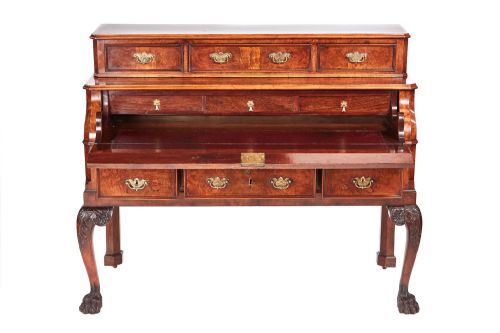
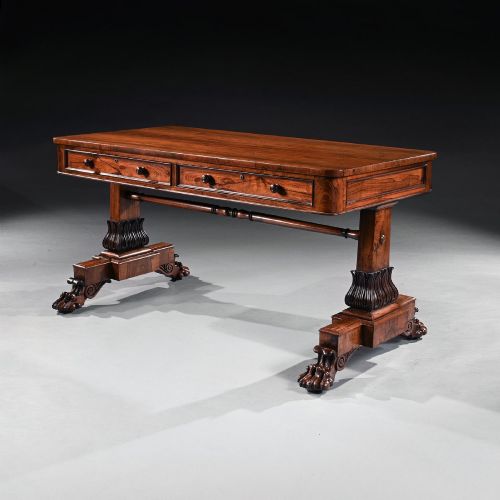
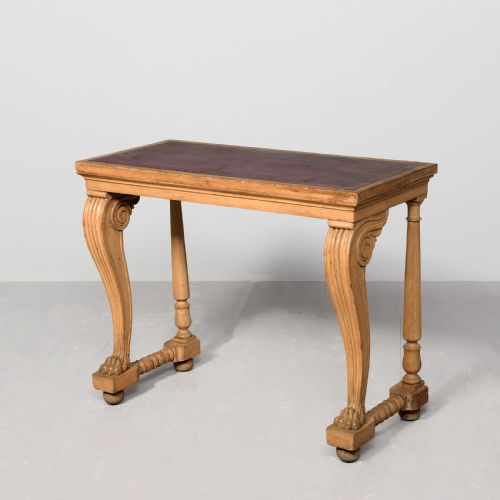
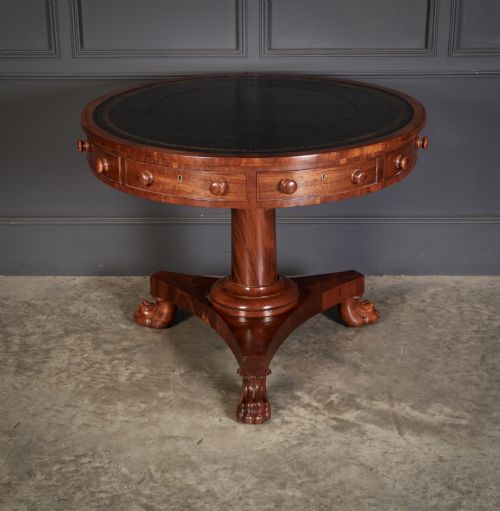


Carved Paw Foot Desk
These carved paw foot desk options offer remarkable nineteenth-century cabinet work, bringing distinct Regency and Victorian character into your study.
Carved Paw Foot Desk
A carved paw foot desk brings together nineteenth-century writing furniture and console tables featuring animal foot motifs. You encounter various forms here, including bureau writing desks, library tables, and sofa tables originating from Georgian, Regency, and Victorian periods.
The selection on this page leans heavily toward nineteenth-century examples in mahogany, rosewood, and burr walnut. Makers applied carved paw feet to support diverse writing surfaces, centre tables, and secretaire bookcases.
Makers from the 1800s onward utilised specific timber grains and heavy pedestal bases to anchor these carved forms. You find pieces spanning French Empire, Biedermeier, and William IV aesthetic traditions.
How they were made
Cabinet makers constructed these tables and desks using solid hardwoods like mahogany, rosewood, and oak for structural integrity. They applied fine veneers such as burr walnut, burr birch, and flame mahogany over secondary woods to create rich surface patterns.
Craftsmen carved the distinctive paw feet directly from solid timber blocks or attached them to heavy pedestals and legs. They integrated brass castors, ormolu mounts, and fitted leather inserts into the writing surfaces.
Listings feature items from the Georgian, Regency, William IV, and Victorian periods, constructed in mahogany, rosewood, burr walnut, and oak.
What varies in quality
The refinement of the timber grain and the crispness of the carved paw feet dictate the standing of each piece. Superior examples display carefully chosen veneers, such as flame mahogany or burr walnut, matched symmetrically across the writing surface or top.
Construction details distinguish workshop standards, particularly the depth of relief in the wood carving and the integration of secondary timbers. Pieces attributed to notable makers or specific firms demonstrate superior joinery and sophisticated proportioning.
James Mein of Kelso·Jean-Joseph Chapuis·Thomas Hope
The Carved Paw Foot Desk Glossary
- Biedermeier
- A Central European style from the nineteenth century emphasising clean lines and domestic comfort. This style favoured native woods over exotic imports.
- Ormolu
- Gilt bronze ornamentation applied to furniture mounts and details. It provides a bright metallic contrast against dark woods like mahogany and rosewood.
- Secretaire
- A desk or cabinet featuring a pull-down writing flap concealing small drawers and pigeonholes. It combines storage capacity with a concealed writing surface.
- Sofa table
- A rectangular occasional table designed to stand in front of a sofa. These pieces typically feature drop leaves on either end and twin pedestal supports.
- Gonçalo Alves
- A dense tropical American hardwood utilised for cabinet making. It exhibits striking dark brown and blonde figuring.
Carved Paw Foot Desk: Frequently Asked Questions
What periods do these carved paw foot desks come from?
The pieces originate primarily from the nineteenth century, encompassing Georgian, Regency, William IV, and Victorian eras. You also find specific stylistic influences from French Empire and Biedermeier design.
Dates span from around 1800 through to the mid-Victorian period of 1860. The timber selection and carving styles reflect the prevailing tastes of these distinct decades.
How do I identify a Regency desk?
Regency desks and tables typically feature classical architectural proportions inspired by Greek and Roman antiquity. They frequently utilise dark mahogany or rosewood with restrained brass or ormolu mounts.
Carved details on Regency pieces are crisp and disciplined, often incorporating animal paw feet to anchor heavy pedestal bases. The overall aesthetic prioritizes symmetry and balanced form.
What woods were used for these desks?
Cabinet makers utilised a range of solid timbers including mahogany, rosewood, oak, and gonçalo Alves. They frequently applied decorative veneers such as burr walnut, burr birch, and birdseye maple to prominent surfaces.
Contrasting dark woods were sometimes paired with lighter inlay or brass details. The choice of timber largely depended on the specific period and the workshop of origin.
How should I care for a nineteenth-century desk?
Protect antique wood surfaces from direct sunlight and maintain stable room humidity to prevent veneer splitting. Regular dusting with a soft, dry cloth preserves the finish.
Avoid placing hot or wet items directly on the leather writing surfaces or polished wood tops. Professional wax application helps maintain the patina of nineteenth-century timber.