





Victorian Cylinder Writing Desk
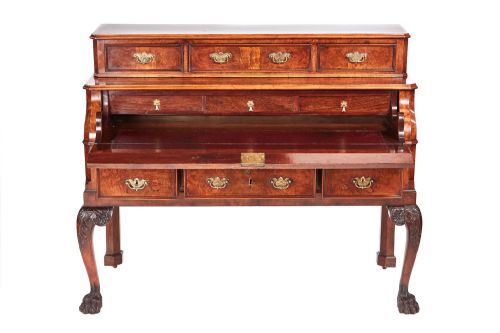
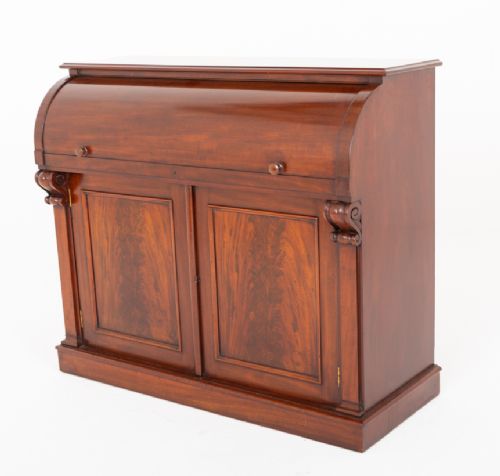
A victorian cylinder writing desk is a substantial nineteenth-century workspace featuring a curved roll top that conceals drawers and a pull-out writing surface.
Victorian Cylinder Writing Desk
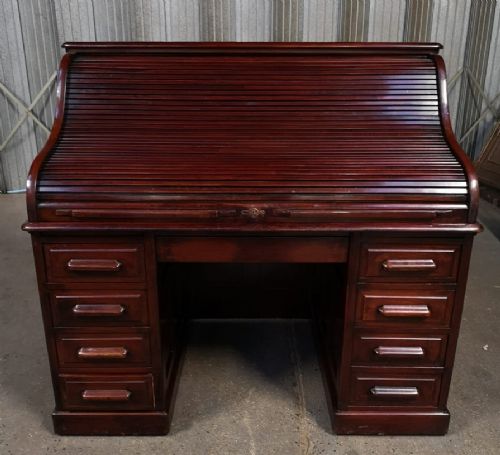
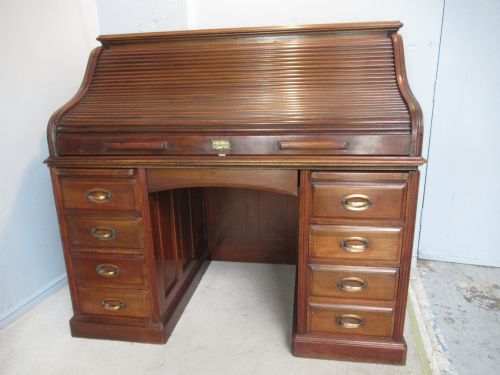
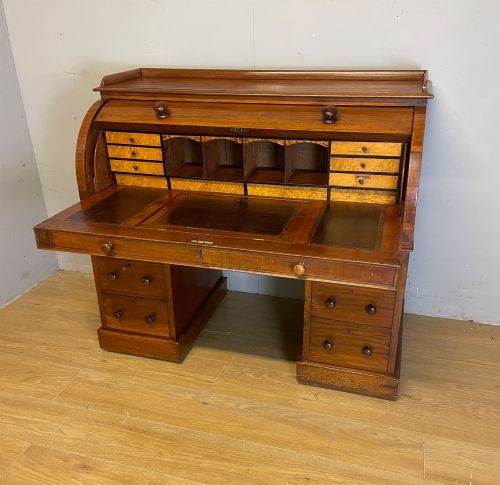
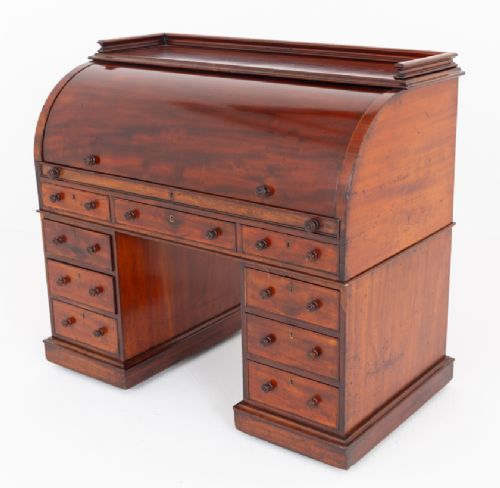
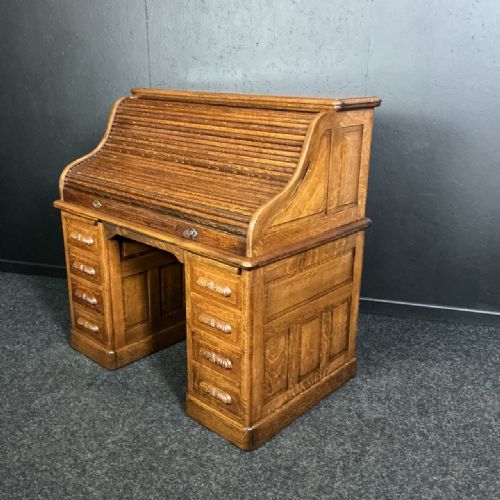
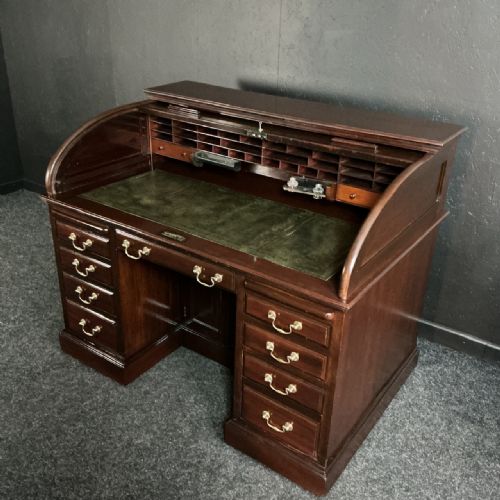
Buyers seeking a victorian cylinder writing desk typically encounter substantial mahogany, walnut, or oak pedestal pieces designed for domestic studies and libraries. The form uses a curved wooden shutter that slides vertically or horizontally to enclose the writing surface and interior pigeonholes.
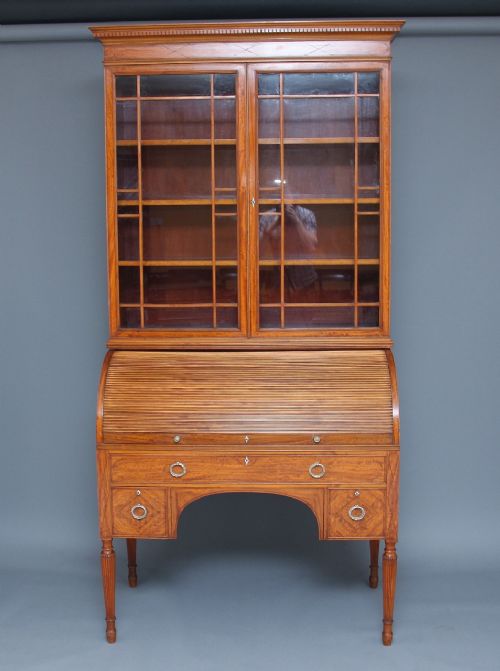
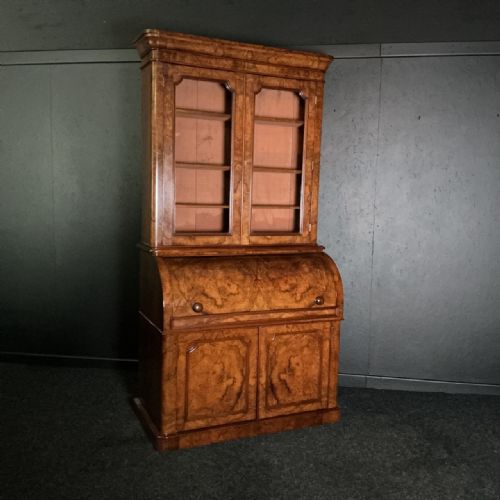
Most examples date from the nineteenth century, spanning Victorian and Edwardian periods, with variations including glazed bookcase tops and marquetry inlay. Pieces range from large twin pedestal formats to compact kneehole layouts.
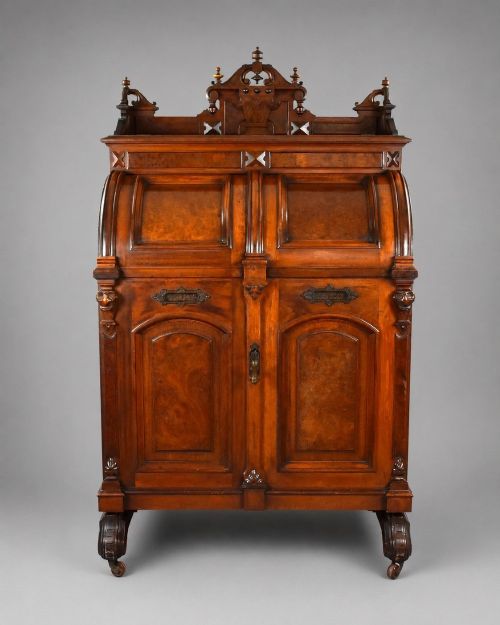
The selection includes variations with satinwood or burr walnut veneers, alongside specialised forms such as Wooton desks and bureau bookcases. These furniture items served as secure, private writing cabinets for Victorian households.
Judging quality and execution
Quality rests in the precision of the cylinder mechanism and the selection of timber veneers. Superior examples display figured mahogany or burr walnut matching across the entire roll top and drawer fronts.
Hand-carved details, intact original leather inserts, and internal cabinetry complexity separate standard utilitarian office furniture from fine drawing-room pieces by notable makers.
Secret compartments inside the pigeonholes often required pulling hidden pins to release concealed spring-loaded shallow drawers.
Edwards & Roberts·Boston Chair Company·Wiggers
The Victorian Cylinder Writing Desk Glossary
- Cylinder desk
- A form of writing furniture featuring a quarter-circle rotating wooden shutter that covers the writing surface and internal pigeonholes. When closed, it conceals all working papers.
- Pedestal desk
- A heavy freestanding writing table supported by two vertical banks of drawers reaching the floor. The central kneehole provides space for the user.
- Tambour top
- A flexible rolling shutter constructed from narrow strips of wood glued to canvas or leather backing. It operates on a grooved track similar to a cylinder action.
- Bureau bookcase
- A tall cabinet combining a lower writing desk section with an upper glazed shelving unit for books. These pieces often feature adjustable wooden shelving.
- Marquetry
- Decorative woodwork where pieces of various coloured veneers are fitted into a background panel to form pictorial designs or geometric patterns. It appears on finer Victorian surfaces.
Victorian Cylinder Writing Desk: Frequently Asked Questions
How does a cylinder desk work?
The curved wooden shutter slides along a recessed track in the desk body, rotating upward to reveal the writing surface and internal compartments.
Pulling the writing slide forward often unlocks the cylinder mechanism automatically, allowing the roll top to open smoothly.
Where were these desks placed in a Victorian home?
These desks belonged primarily in private studies, libraries, or gentleman's smoking rooms where correspondence and household accounts were managed.
Finer satinwood or burr walnut versions occasionally sat in ladies' boudoirs or drawing rooms for personal letter writing.
How do I care for the leather writing surface?
Keep the leather insert clean by dusting it gently with a dry, soft cloth to prevent abrasive particles from scratching the surface.
Avoid using harsh chemical cleaners or excess water, treating the hide instead with specialised leather balms if drying occurs.