


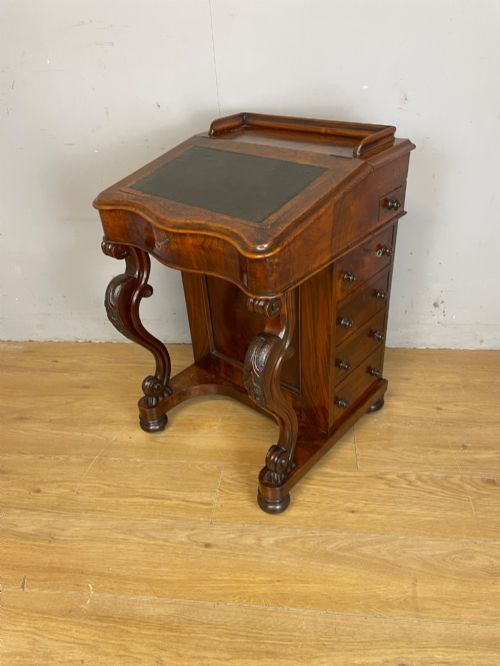
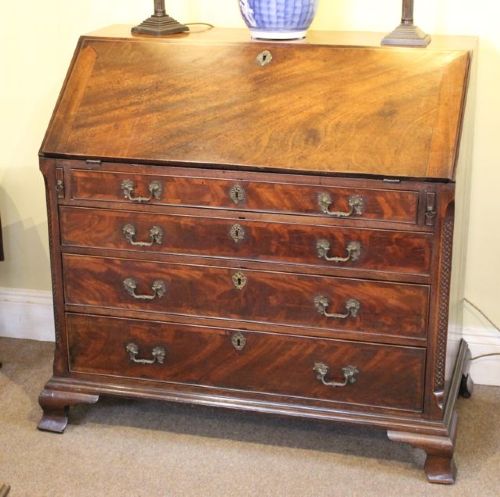
Slanted Writing Slope Desk
Slanted writing slope desk pieces combine practical writing surfaces with fitted compartments, offering enduring utility for home correspondence.
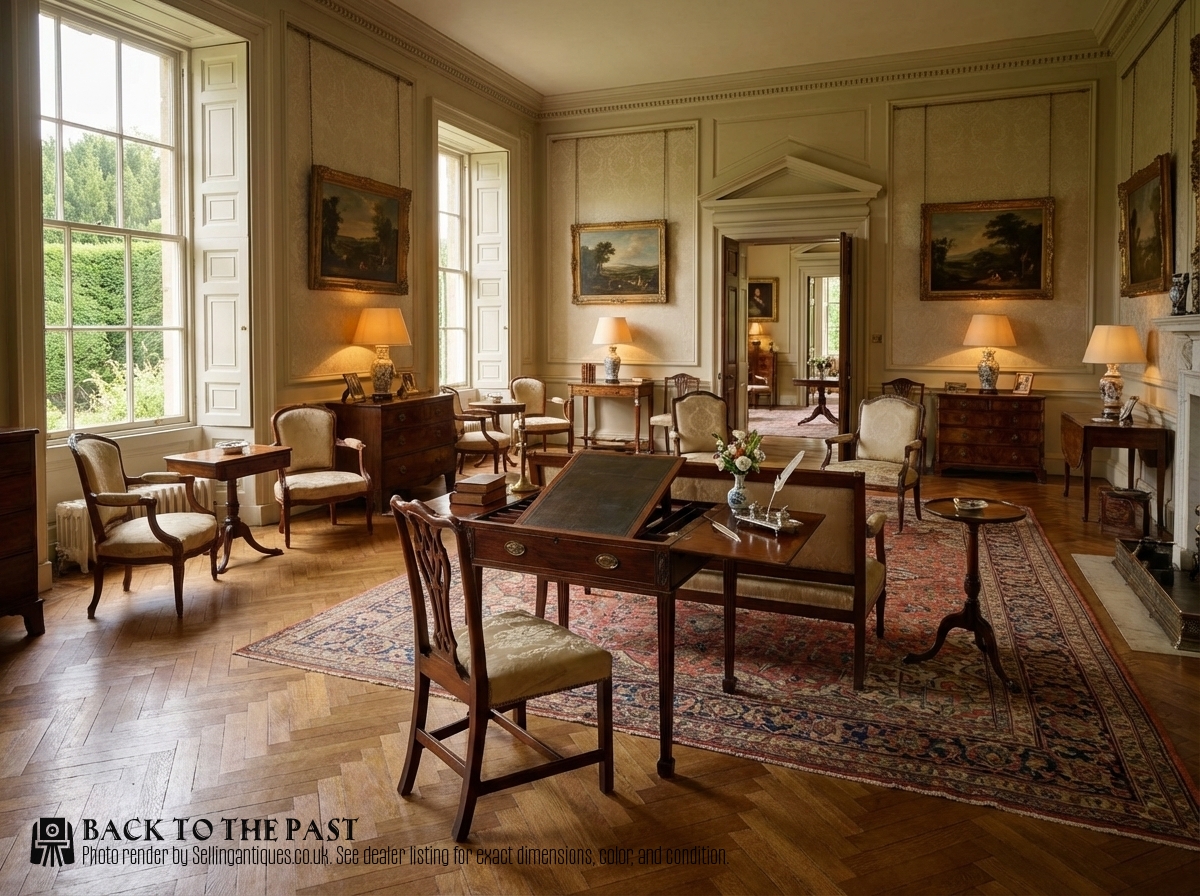
Slanted Writing Slope Desk
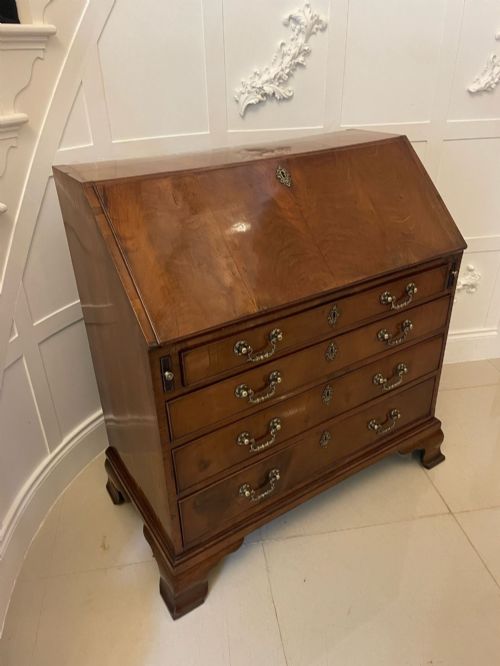
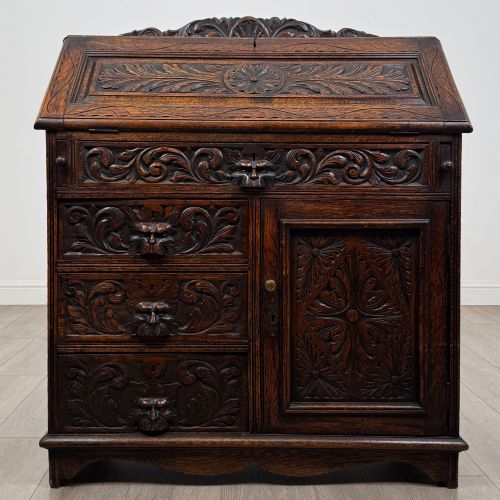
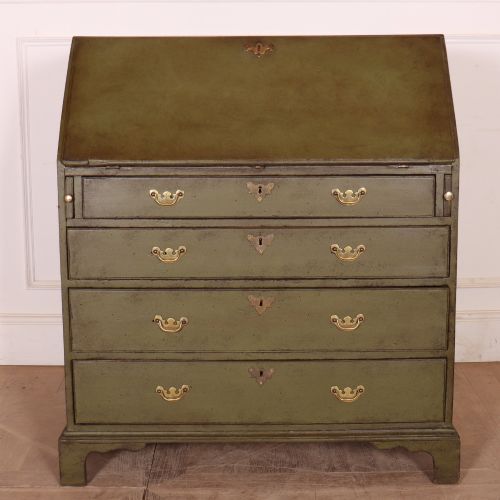
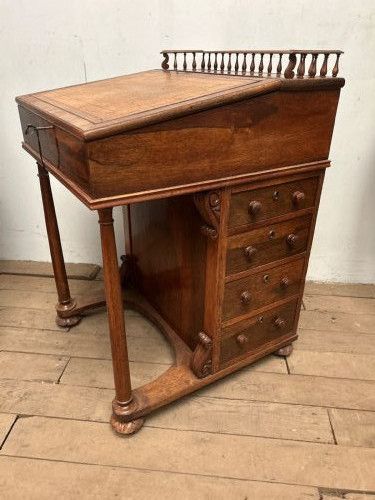
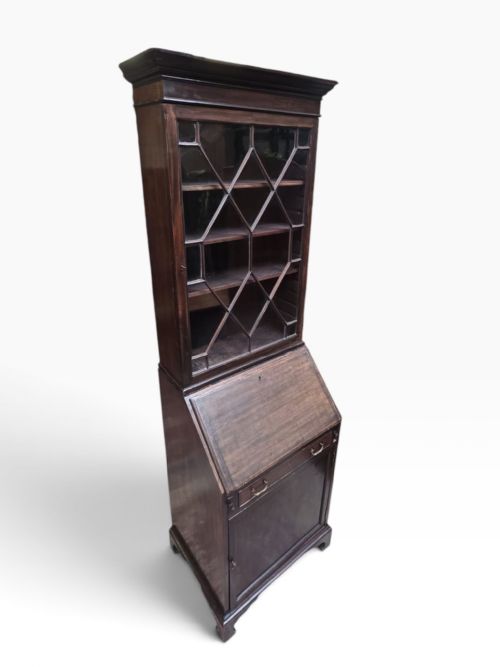
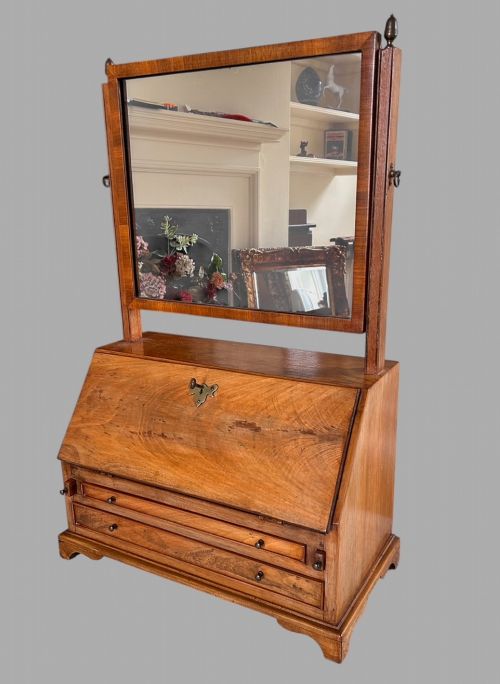
A slanted writing slope desk encompasses a variety of forms designed for correspondence, including standard bureaux, Davenport desks, bureau bookcases, and compact desk boxes. These pieces emerge from periods spanning the seventeenth century through the Edwardian era.
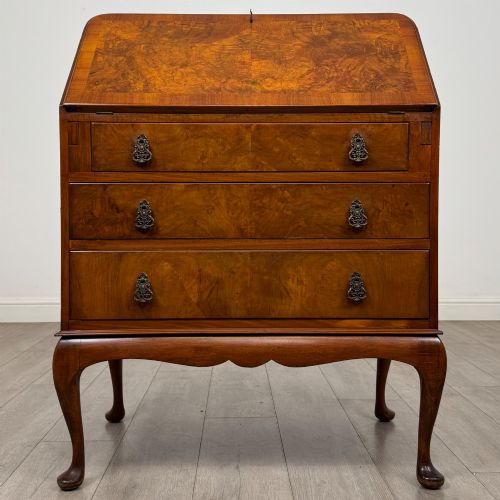
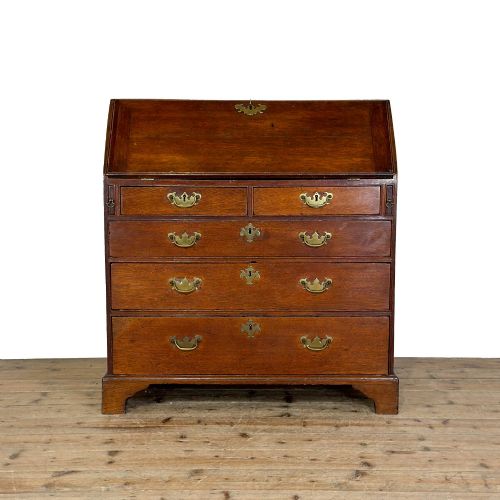
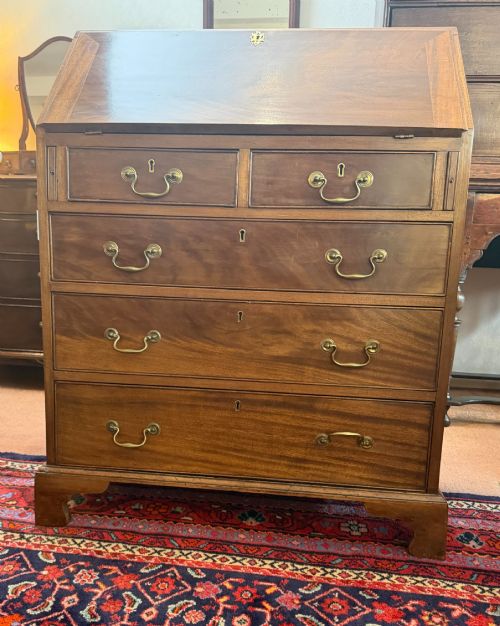
The most frequent examples encountered on this page include mahogany and oak bureaux from the eighteenth and nineteenth centuries, alongside Edwardian walnut variations and compact writing slope boxes.
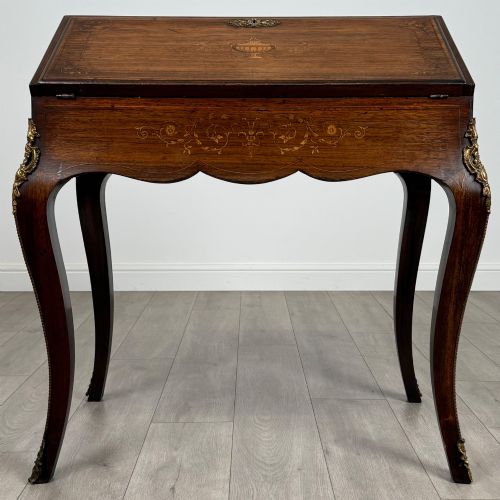
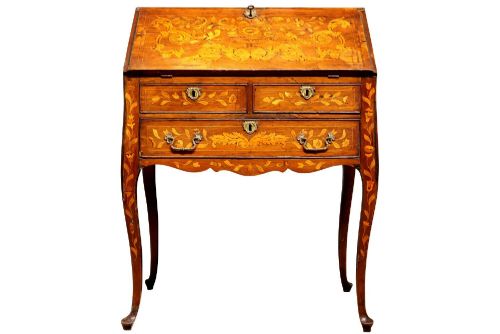
Origins range across English workshops, regional provincial makers, and continental European examples featuring marquetry or painted finishes.
Materials and Technique
Cabinet makers utilised a range of timber including solid mahogany, oak, walnut, and exotic veneers such as rosewood and amboyna applied over secondary woods. Surfaces frequently incorporate fitted leather writing inserts and brass hardware like hinges, handles, and escutcheons.
Construction techniques combine dovetailed drawer construction with framed fall-front lids and internal partitions designed to support writing implements and stationery.
Slanted Writing Slope Desk Retail Price Guide 2026
Typical asking prices for slanted writing slope desk among the pieces listed under this phrase on Sellingantiques today, from the lower quarter to the upper quarter. They describe what is for sale here now, not the wider market.
The listings demonstrate craftsmanship spanning the 17th century to the Edwardian era, utilising oak, mahogany, walnut, and rosewood.
Judging Quality
The standard of a slanted writing slope desk rests upon the selection of timber, such as highly figured burr walnut or dense mahogany, and the precision of the cabinet work in the interior drawers and pigeonholes. Superior examples display restrained, harmonious proportions and matching wood grain across the fall front.
Lesser pieces often rely on simpler secondary timbers and heavier, less refined decorative carving or later alterations to the fitted interior.
Heals of London
The Slanted Writing Slope Desk Glossary
- Bureau
- A desk featuring an angled hinged flap or fall front that opens to reveal a fitted interior of small drawers and pigeonholes.
- Davenport desk
- A compact pedestal desk with a slanted writing surface, typically featuring drawers opening to one side.
- Fall front
- The hinged panel on a bureau or slope that lowers to create a horizontal writing surface.
- Marquetry
- Decorative inlay work using various coloured woods and other materials to form pictorial or floral patterns on furniture surfaces.
- Linenfold
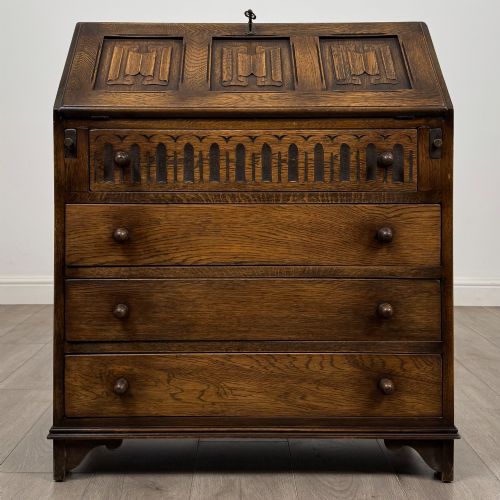
- A style of wood carving that imitates folded linen, commonly found on oak panels from earlier periods.
Slanted Writing Slope Desk: Frequently Asked Questions
What is a slanted writing slope desk?
A slanted writing slope desk is a piece of furniture designed for sitting or standing to write, featuring an angled top that supports paper at a comfortable reading and writing angle.
Many forms include a hinged fall front that conceals internal compartments for inkwells, quails, and letters.
How were these desks used?
These desks served as private writing stations for correspondence, bookkeeping, and storing important documents in domestic and professional settings.
The internal compartments kept stationery and writing tools organised away from the main writing surface.
Where should I place one?
These pieces suit living rooms, studies, or bedrooms where their compact footprints allow them to function as working desks or display surfaces.
Positioning them away from direct sunlight and heat sources protects sensitive timber veneers and leather inserts.
How do I identify the period?
Dating relies on examining construction methods, timber choices, and stylistic details such as brass hardware, bracket feet, and interior drawer arrangement.
Earlier eighteenth-century pieces often feature solid mahogany or walnut, while Edwardian examples frequently display lighter satinwood or golden oak.