
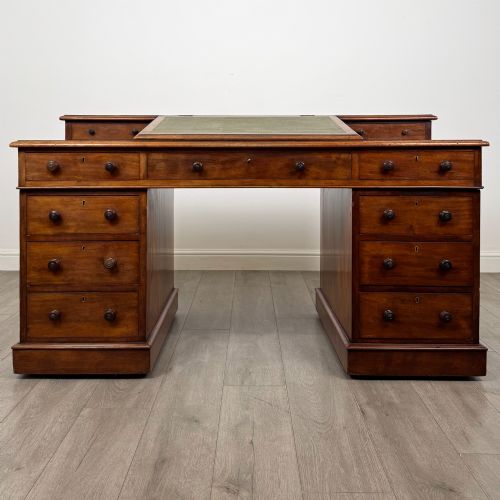


Antique Dickens Desk
An antique dickens desk offers a commanding pedestal writing station with a raised letter bank, designed for serious correspondence.
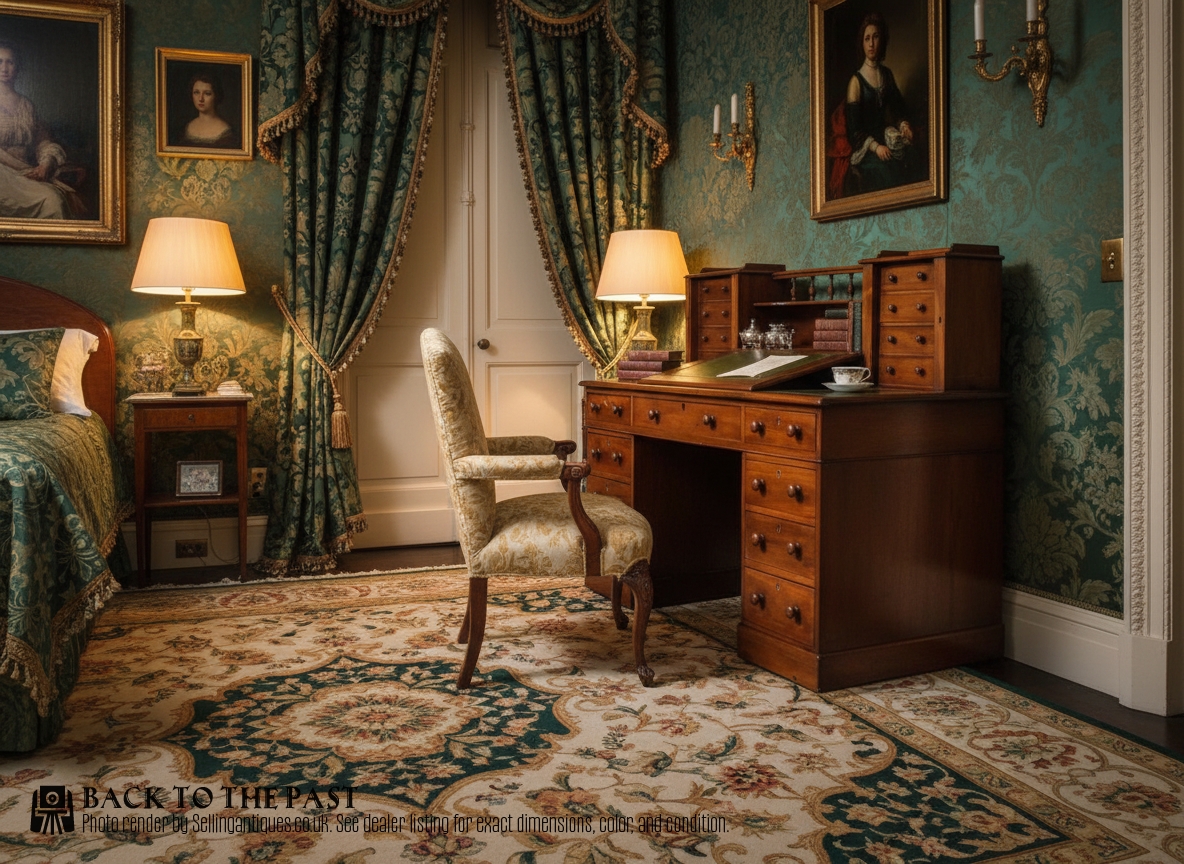
What an antique dickens desk is
An antique dickens desk takes its form from the Victorian period, appearing primarily in rich timbers like mahogany, walnut, and oak. These twin pedestal writing desks feature a tiered superstructure of small drawers and pigeonholes above the main writing surface.
The layout provides deep surface space flanked by banks of drawers, making these pieces substantial items for a study or library. Most examples date from the mid to late nineteenth century, reflecting the rigorous administrative life of the era.
How they were made
Cabinet makers constructed these desks using dense hardwoods such as mahogany and walnut, frequently incorporating inset writing surfaces of leather or baize. Drawer pulls and handles utilise cast brass, while internal carcases rely on secondary timbers.
Joinery techniques from the Victorian period ensure robust pedestal construction, supporting heavy banks of drawers and the elevated stationery compartments above.
Retail Price Guide 2026
Typical UK retail prices for dickens desk, calculated from the Sellingantiques database of over a million retail prices indexed since 2003. This retail price guide relies exclusively on Sellingantiques data; no external sources or auction records are used, so the figures do not describe the wider market.
What varies in quality
The distinction between standard and superior pieces rests on the choice of timber figure, such as golden walnut or figured mahogany, and the complexity of the internal compartment layout. Named makers or documented retailers elevate the standing of a desk through finer carving and superior brass hardware.
Overall proportions and the integration of the raised letter bank dictate the visual balance of the piece, separating utilitarian workshop output from master cabinet work.
Maple and Co
The Antique Dickens Desk Glossary
- Pedestal desk
- A heavy writing table supported by two vertical banks of drawers rather than simple legs. This configuration provides substantial storage beneath the main top.
- Superstructure
- The tiered arrangement of small drawers and pigeonholes positioned at the back of the writing surface. It creates the distinctive profile associated with this form.
- Baize
- A coarse woolen material often used to line the writing surface before the widespread adoption of leather. It provides a soft, durable pad for pen work.
- Mahogany
- A durable tropical hardwood prized for its deep reddish-brown tone and stable grain. Cabinet makers relied on it heavily throughout the nineteenth century.
Frequently Asked Questions
What is a dickens desk?
A dickens desk is a pedestal writing table featuring a raised back tier of small drawers and pigeonholes. This configuration provides dedicated storage for correspondence directly on the writing surface.
The style originates from the Victorian era, designed to meet the administrative demands of offices and private libraries.
How do I date an antique desk?
Dating relies on timber selection, construction methods, and hardware styles. Victorian pieces frequently utilise mahogany or walnut alongside brass drawer pulls.
Examining the secondary woods inside the drawers helps confirm the nineteenth-century origins of the piece.
Are these desks suitable for daily use?
The large writing surface and numerous drawers make these desks practical for modern workspaces. Many retain their original leather or baize writing inserts.
Placing the desk away from direct heat sources helps protect the polished hardwood and historical timber.
What woods were used?
Cabinet makers built these desks in mahogany, walnut, oak, and golden walnut. These hardwoods offered the structural strength required for heavy pedestal frames.
Secondary timbers inside the drawers often included pine or oak.