
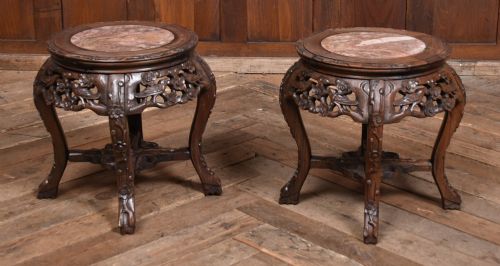
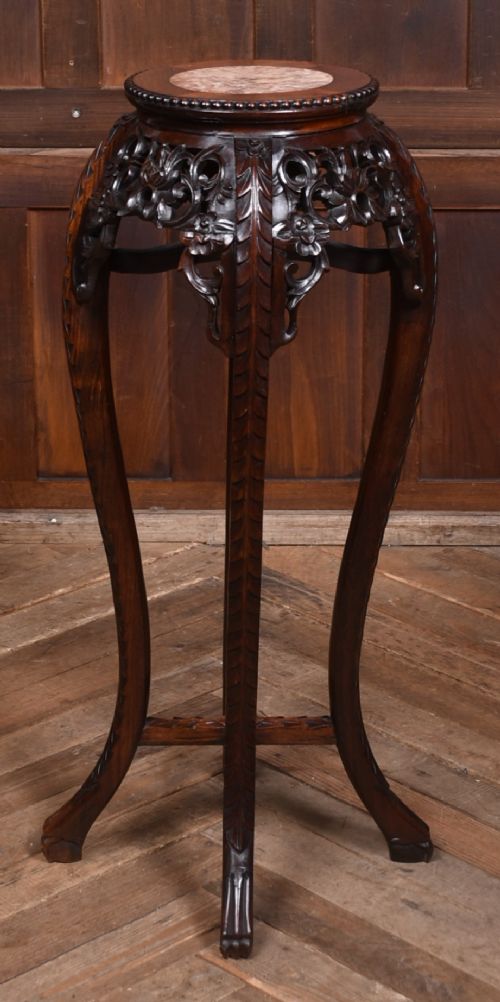


Dark Rosewood Plant Table
These dark rosewood plant tables combine dense tropical hardwoods with intricate carving, offering a sturdy surface designed to elevate ornamental flora.
Dark Rosewood Plant Table
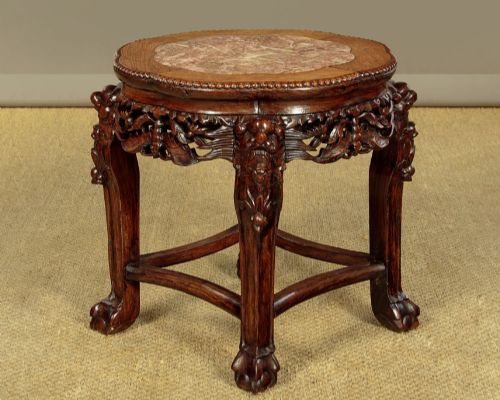
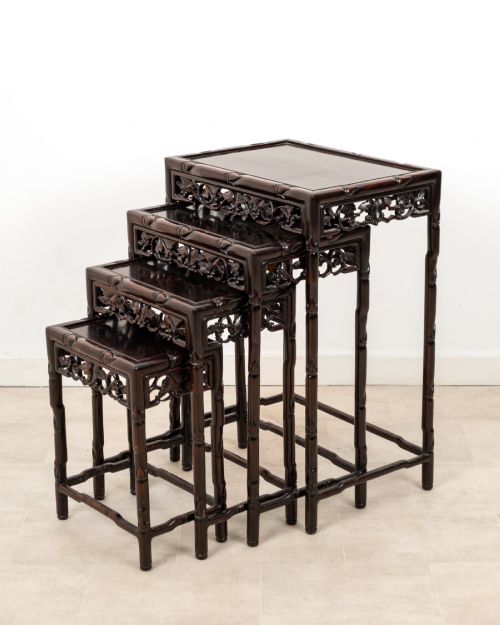
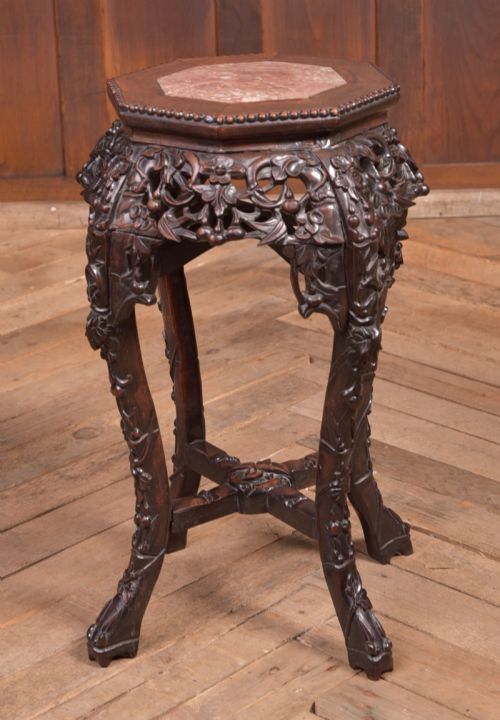
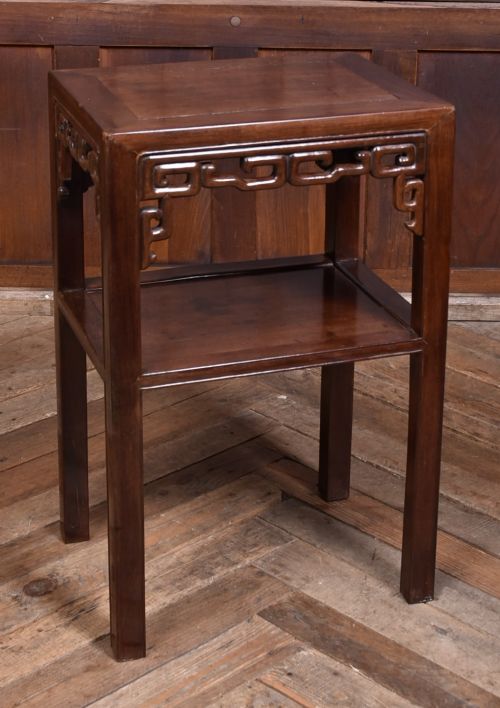
A dark rosewood plant table is primarily encountered in forms such as pot stands, jardiniere stands, and low occasional tables originating from the nineteenth and early twentieth centuries. These pieces serve to elevate plants, vases, and decorative objects within a room.
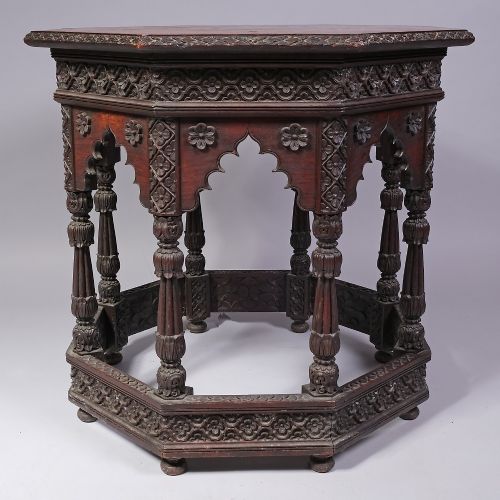
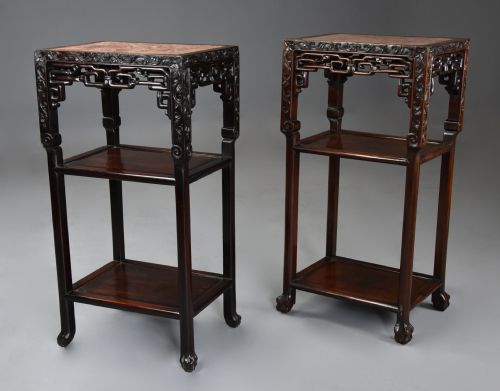
The selections span Chinese export and Qing dynasty workshops alongside Anglo-Indian production, reflecting distinct regional carving traditions. Forms vary from tall pedestals and circular stands to octagonal side tables and nests.
Makers utilised dense timbers to support heavy marble inserts and carved aprons, resulting in robust furniture designed for domestic display.
Materials and construction methods
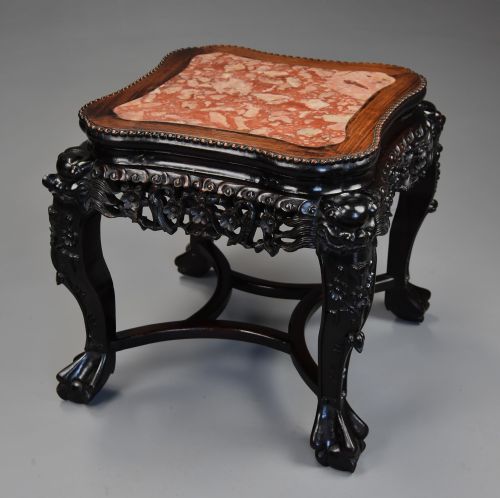
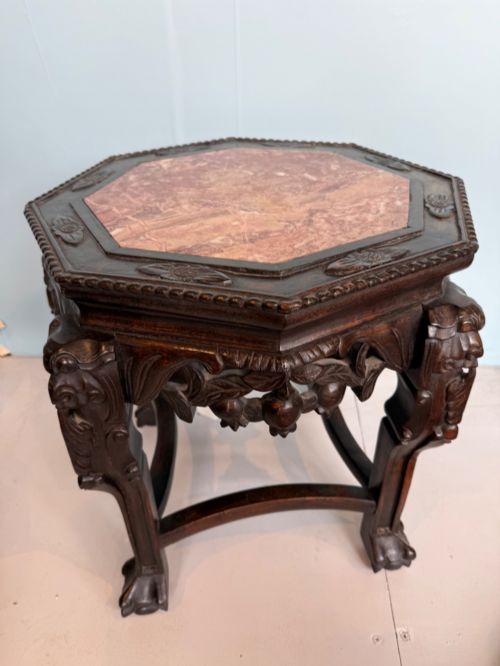
Cabinetmakers worked with heavy tropical timbers including rosewood, padouk, hongmu, and teak, which provided the structural density required for intricate openwork carving. These dark woods were frequently paired with inset rouge or white marble tops to safely accommodate damp plant pots.
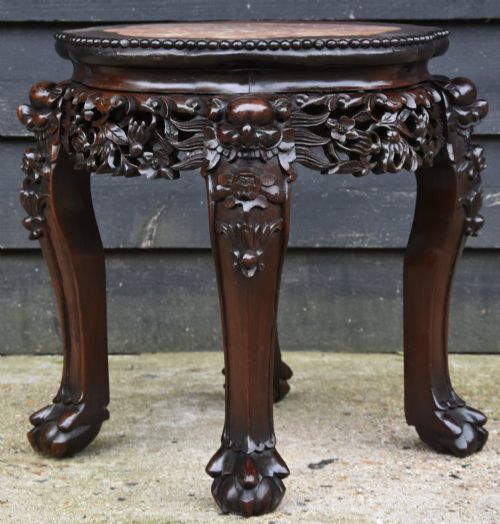
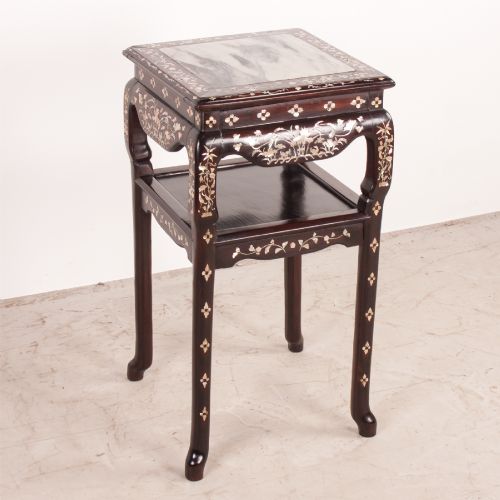
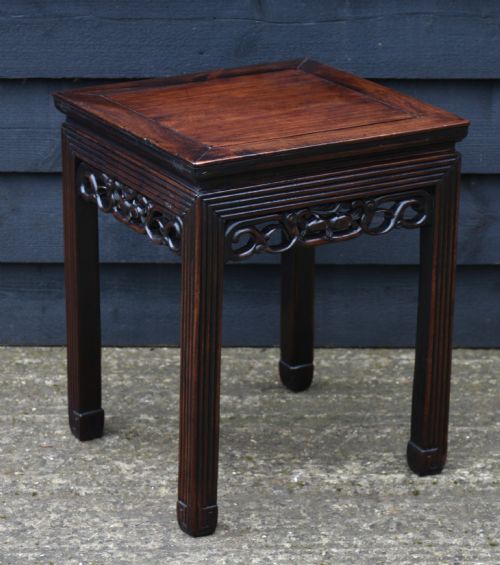
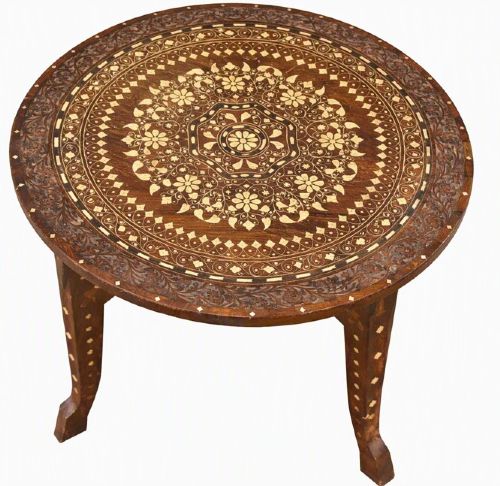
Decoration relied on hand carving, piercing, and occasional inlay using bone, mother-of-pearl, or brass. Joinery methods prioritised stability, allowing heavy hardwood stands to bear weight without warping.
Materials documented across the selection include teak, padouk, hongmu, marble, and bone.
Distinctions in execution and material
Quality separates along the depth and crispness of the hand carving and the selection of the primary timber. Pieces featuring deeply undercut foliage, dragons, or figures demonstrate superior craftsmanship compared to shallow, mechanical incisions.
The integration of secondary materials also alters the character of a piece, such as the snugness of a fitted marble insert or the precision of bone and brass stringing. Substantial gauge timber and heavy gauge brass or mother-of-pearl mark the upper tier of production.
Liberty & Co
The Dark Rosewood Plant Table Glossary
- Jardiniere stand
- A tall table or pedestal specifically built to hold a decorative ceramic plant container. It often incorporates a waterproof marble top.
- Hongmu
- A translation meaning red wood, applied to dense, dark hardwoods used in traditional Chinese cabinetmaking. It is prized for its weight and fine grain.
- Hongmu
- A translation meaning red wood, applied to dense, dark hardwoods used in traditional Chinese cabinetmaking. It is prized for its weight and fine grain.
- Padouk
- A heavy, durable tropical hardwood with a reddish tint that darkens significantly with age. It holds fine detail in carving exceptionally well.
- Anglo-Indian
- A descriptive term for furniture made in India by local artisans using British forms combined with traditional regional ornamentation. These pieces frequently feature intricate bone inlay.
- Crossbanded
- A method of veneering where the grain runs perpendicular to the border, framing the central panel. This technique appears on nineteenth-century European tables.
Dark Rosewood Plant Table: Frequently Asked Questions
How do I care for marble top tables?
Marble inserts require simple wiping with a damp cloth and should be protected from acidic liquids that can etch the polished stone surface.
Conditioning the surrounding rosewood with appropriate furniture wax maintains the timber's natural moisture without building up residue.
Where were these tables made?
The listings show origins primarily in China and India, created for both domestic use and the nineteenth-century export market.
European interpretations also emerge from the Victorian and Edwardian periods, reflecting a widespread taste for exotic plant display.
How are Chinese and Indian stands different?
Chinese stands often feature structured geometric aprons, shaped marble panels, and deep relief carving depicting flora or mythical beasts.
Indian examples frequently utilise octagonal geometries, intricate bone or brass inlay, and figural motifs such as elephants.