

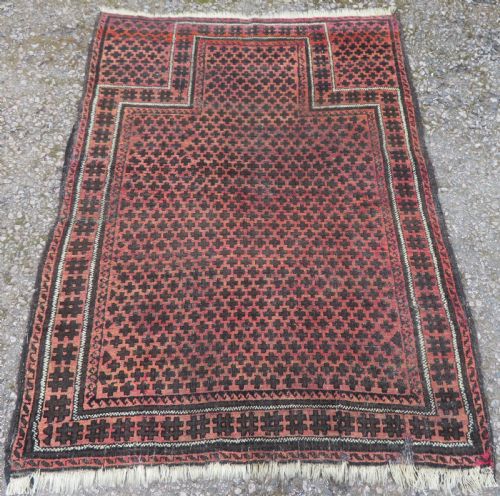


Dark Red Woven Rug
A dark red woven rug brings rich tribal texture and deep natural madder tones into a room.
Dark Red Woven Rug
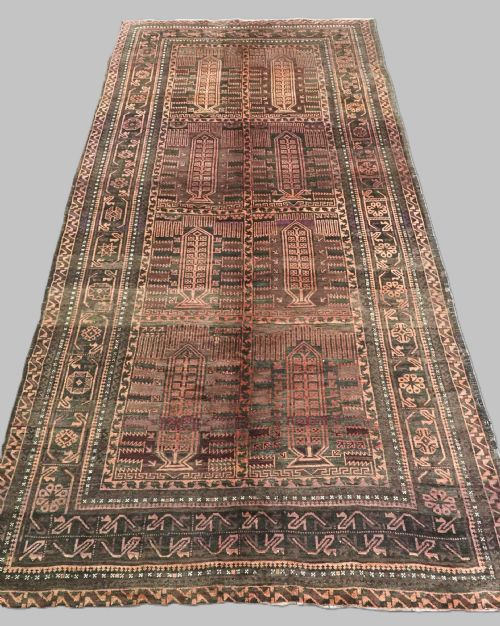
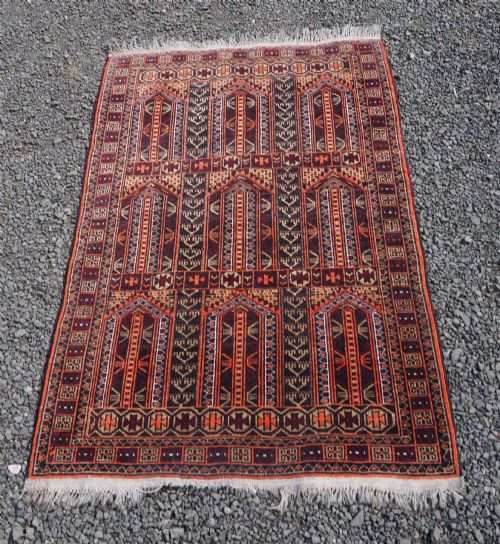
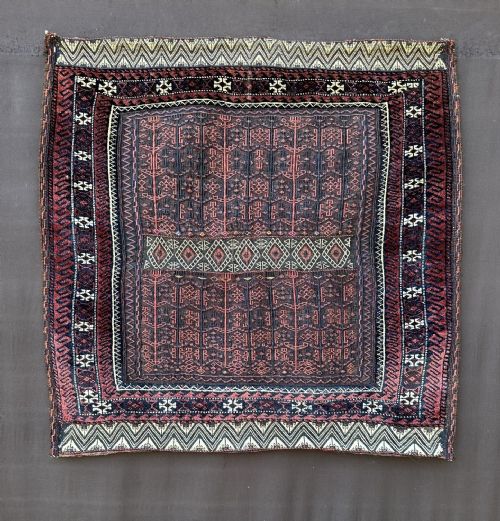
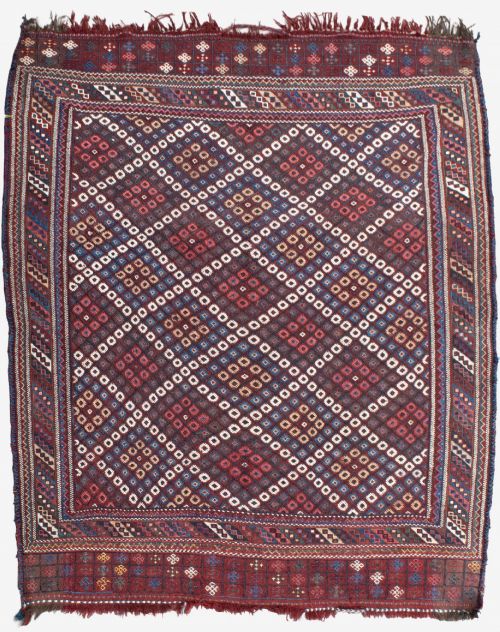
The dominant examples on this page are Baluch and Turkmen tribal pieces woven between eighteen-sixty and nineteen-twenty. These range from compact mats and saddlebag faces to substantial carpets, all carrying the deep crimson and madder hues characteristic of nineteenth-century regional dyeing traditions.
How they were made
These textiles rely on hand-spun wool and cotton foundations, occasionally incorporating goat hair for structural durability along the selvedges. The characteristic dark red and madder grounds are achieved using natural dyes derived from local plants and roots.
Weavers employed traditional warp-faced and pile-weaving techniques on portable horizontal looms. The resulting structures range from dense, fine wool pile to flat-woven kilim and storage bag faces.
Many storage bag faces retain their original hanging loops, ready to resume service after a century or two of wandering.
What varies in quality
Quality in these tribal pieces rests on the handling of the wool and the clarity of the natural dye palette. Finer examples display tightly packed knots, supple hand-spun wool, and deep, saturated madder tones that retain their vibrancy.
Structural integrity and the precision of geometric motifs also distinguish superior examples. Pieces with complete original borders, sound foundations, and well-executed regional designs represent the higher end of the range.
The Dark Red Woven Rug Glossary
- Sofreh
- A flat-woven textile used traditionally for dining, kneading bread, or serving meals. These utilitarian cloths often feature striking geometric borders.
- Torba
- A small Turkmen storage bag face designed for tent hanging. They typically display distinctive gul medallions and careful wool pile.
- Gul
- A repeating primary medallion motif found in Turkmen and Central Asian weaving. Each tribal group utilised specific forms of these octagonal designs.
- Madder
- A natural red dye extracted from the roots of the Rubia plant. It provides the deep, enduring crimson grounds seen across nineteenth-century tribal weaving.
Dark Red Woven Rug: Frequently Asked Questions
How do I care for an old tribal rug?
Vacuum gently without a rotating brush to protect the hand-spun wool pile and delicate edges. Keep the textile away from direct sunlight to preserve the natural madder dyes.
Professional cleaning should happen infrequently and only by specialists familiar with antique village textiles. Ensure the rug rests on a breathable underlay to prevent sliding and moisture accumulation.
Where were these tribal rugs woven?
The pieces originate primarily from nomadic and village communities across Persia, Afghanistan, and Central Asia. Tribal groups such as the Baluch, Ersari, and Tekke created them for daily domestic use.
Production took place on portable looms set up in camps or rural settlements. Each region utilised specific wool preparation and geometric vocabulary unique to their tribe.
What makes a rug tribal rather than city-made?
Tribal rugs feature spontaneous geometric designs, asymmetrical layouts, and regional motifs passed down through families rather than drawn by professional urban cartographers. The weavers worked from memory within specific tribal traditions.
The materials also reflect local resources, utilising hand-spun wool and natural dyes rather than commercial yarns. Irregularities in dimensions and abrasch in the red wool highlight the nomadic method of production.
How can I tell the age of a woven piece?
Age is determined by examining the handle of the wool, the palette of the natural dyes, and structural construction details. Nineteenth-century examples typically show softer wool, deep madder reds, and natural abrash variations.
Edge finishes, structural wear patterns, and specific regional design markers help narrow down the period. Comparing knot density and structural materials provides further clues to the decade of manufacture.