


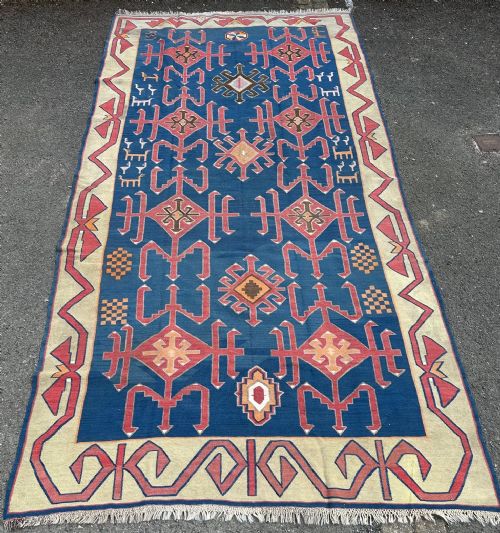


Traditional Flatweave Carpet
A traditional flatweave carpet brings architectural geometry and rich regional history to a floor through pileless textiles woven across the nineteenth and twentieth centuries.
Traditional Flatweave Carpet
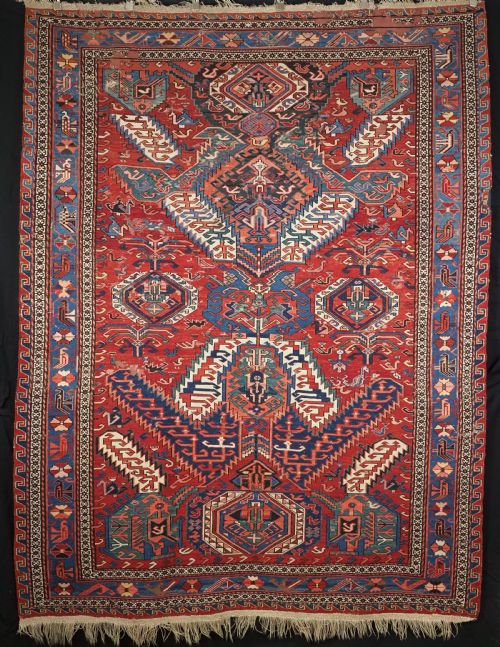
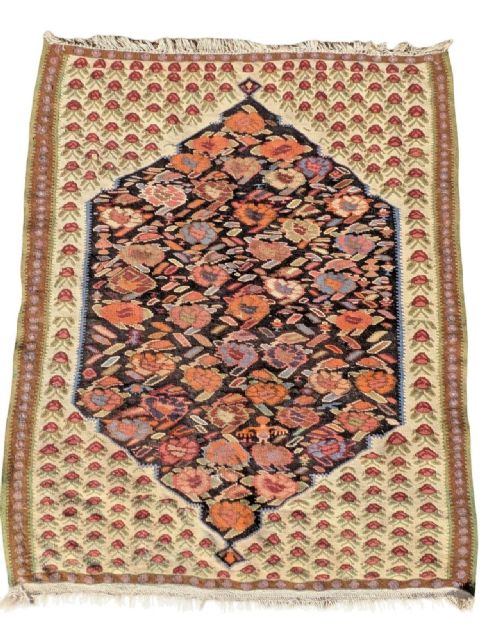
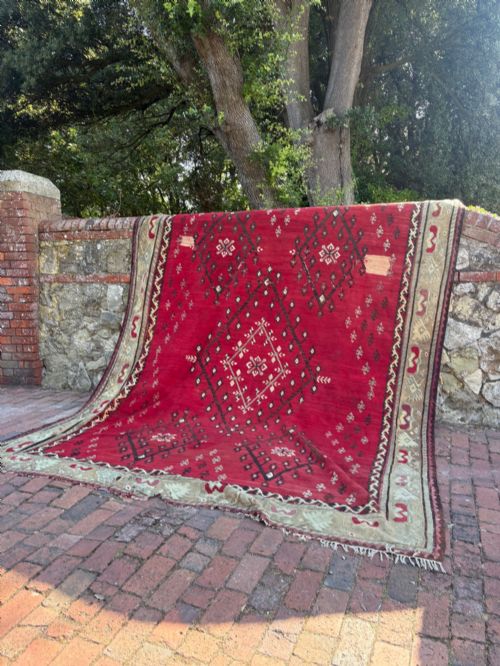
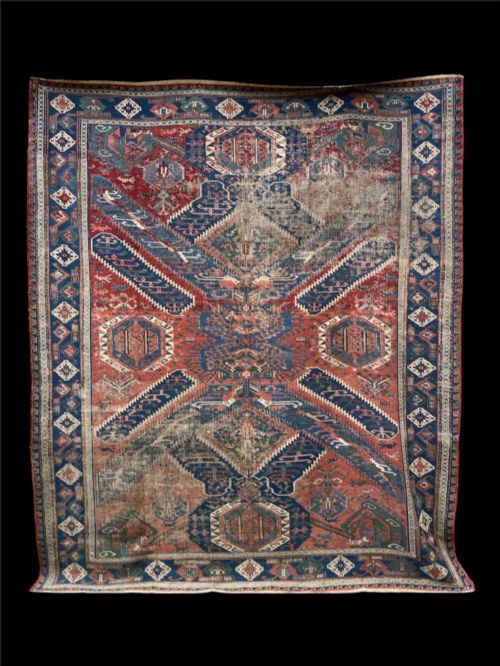
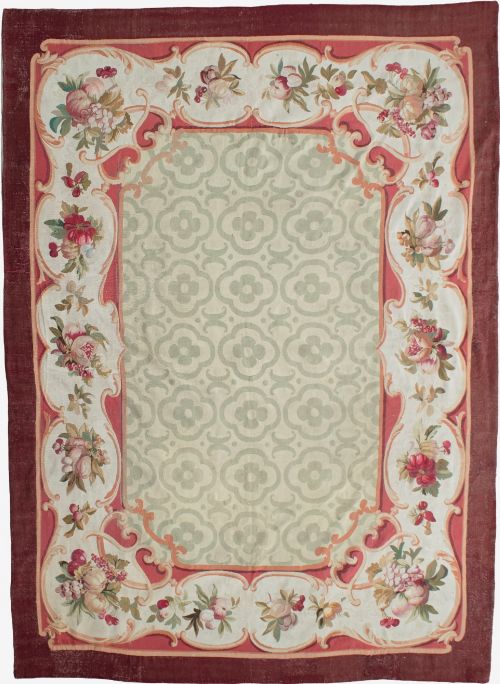
A traditional flatweave carpet encompasses pileless rugs, runners, and tapestries originating from regional tribal and village workshops across the Caucasus, Anatolia, Persia, Central Asia, and Eastern Europe. These floor coverings are primarily encountered as nineteenth and early twentieth-century kilims, soumaks, and needlepoint carpets.
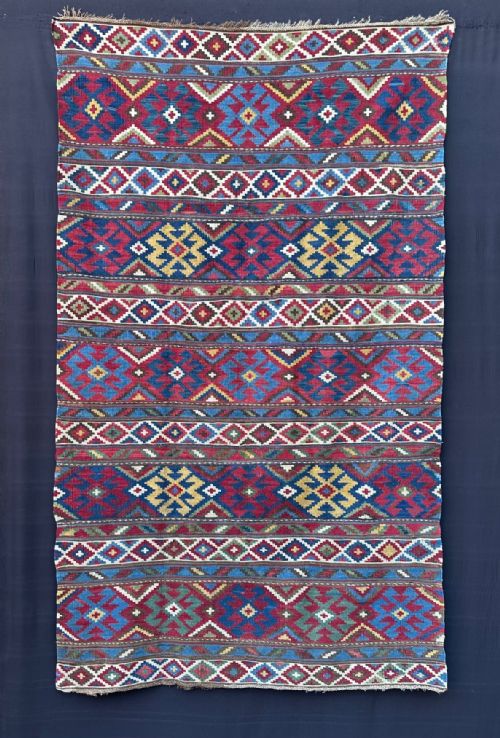
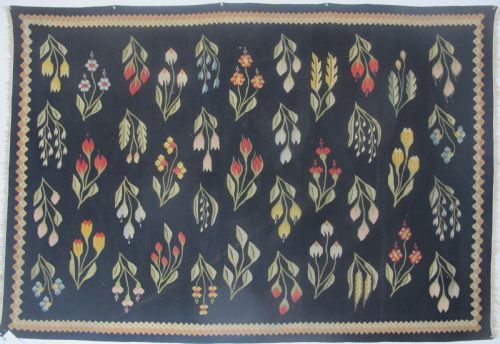
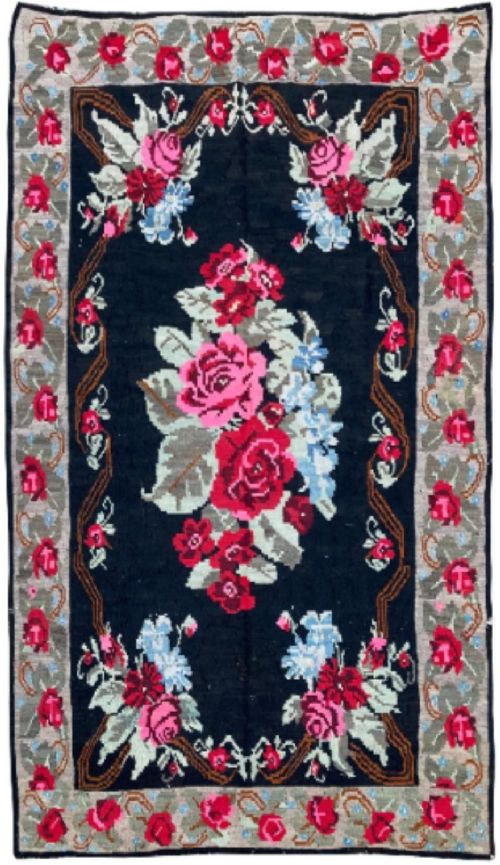
Makers utilised various regional weaving traditions, producing geometric Caucasian designs, banded Uzbek formats, and floral Bessarabian compositions. Buyers find everything from narrow runners to large room-size carpets.
The category spans diverse cultural origins, including Turkish Ushak and Malatya pieces, Persian Qashqai and Bijar examples, and Ukrainian and Romanian flatweaves.
Materials and construction
The pieces rely on wool, hand-spun wool, and cotton foundations, often dyed using natural colours to achieve distinct regional palettes.
Weavers employed flat-weaving techniques, tapestry structures, soumak wrapping, and needlepoint stitching on canvas to build sturdy, pileless textiles.
Many larger carpets were constructed by joining multiple narrow strips together, particularly evident in certain Uzbek and regional formats.
Traditional Flatweave Carpet Retail Price Guide 2026
Typical asking prices for traditional flatweave carpet among the pieces listed under this phrase on Sellingantiques today, from the lower quarter to the upper quarter. They describe what is for sale here now, not the wider market.
Listings feature wool, cotton, and canvas materials across pieces dated from the 1880s through the 1940s.
Judging quality in flatweave carpets
Quality rests in the tightness of the weave and the precision of the geometric or floral design execution. Finer weaves and complex structural techniques like soumak wrapping require greater artisan skill.
The integrity of the natural dyes and the balance of the composition distinguish superior examples. Pieces with clear, saturated colour palettes and well-preserved structural bands hold greater distinction.
The Traditional Flatweave Carpet Glossary
- Kilim
- A pileless textile produced by tightly interweaving warp and weft strands to create a flat surface. This technique forms the foundation of many regional rugs.
- Soumak
- A flat-weaving technique involving wrapping weft threads over and under warp threads to produce a textured, braided effect on the face. It typically adds durability and weight to Caucasian carpets.
- Warp
- The vertical foundation threads stretched lengthwise on a loom before weaving begins. Weft threads are passed through these stationary strands.
- Weft
- The horizontal threads passed back and forth through the warp strands to form the pattern and fabric of the carpet.
- Natural Dyes
- Colourants derived from plant, insect, and mineral sources utilised before synthetic alternatives became widespread. They produce rich, nuanced tones that age gracefully.
Traditional Flatweave Carpet: Frequently Asked Questions
How do I clean a flatweave carpet?
Gentle surface vacuuming without a rotating brush helps remove embedded dust and grit from the tight weave. Professional specialist cleaning is recommended for heavier maintenance.
Avoiding excessive moisture and direct sunlight preserves the natural dyes and wool fibres. Proper care ensures the flat structure remains stable over decades of use.
Can I place these carpets in high traffic areas?
The sturdy construction of traditional flatweave carpets makes them well suited for hallways, living rooms, and dining spaces. Their lack of pile prevents crushing under heavy furniture legs.
Utilising a quality underlay prevents slipping and cushions the textile against hard flooring. This adds longevity to nineteenth and twentieth-century examples.
How do I distinguish regional styles?
Caucasian pieces typically display sharp geometric medallions and striking tribal motifs. Anatolian and Persian examples often incorporate distinct border arrangements and characteristic floral or lattice patterns.
European flatweaves like Bessarabian carpets frequently feature naturalistic floral bouquets on dark grounds. Comparing knotting, strip construction, and palette helps identify the specific origin.
Are flatweave carpets reversible?
Many traditional flatweaves present a nearly identical pattern on the reverse side due to the interlocking tapestry technique. This structural characteristic allows the rug to be flipped to distribute wear evenly.
Inspect the reverse side to understand the construction method and the initial quality of the weaving. Finishing details on the edges generally indicate the primary face.