





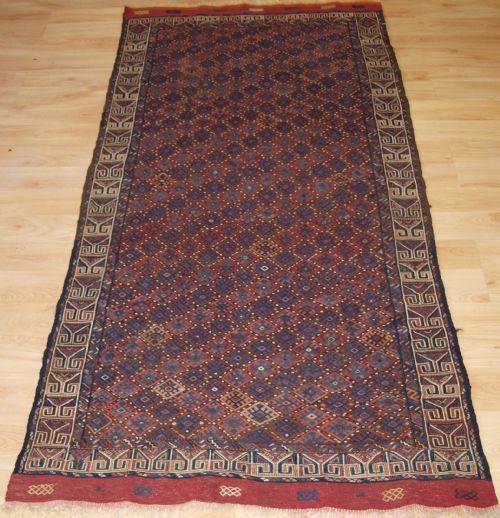
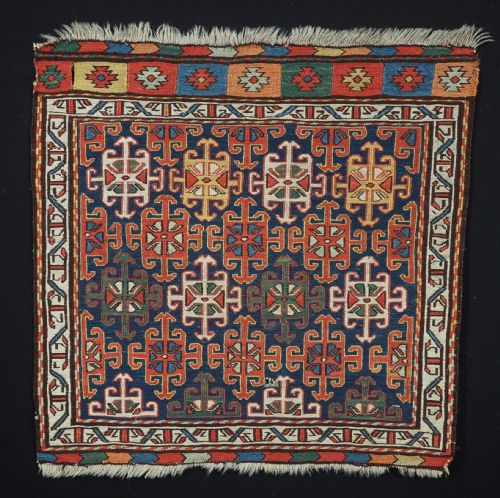
Antique Persian Soumak Rug
An antique Persian soumak rug brings flat-woven tribal geometry and rich natural dye palettes straight into modern interiors.
Antique Persian Soumak Rug
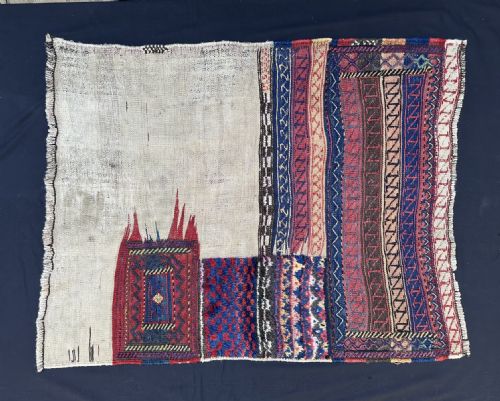
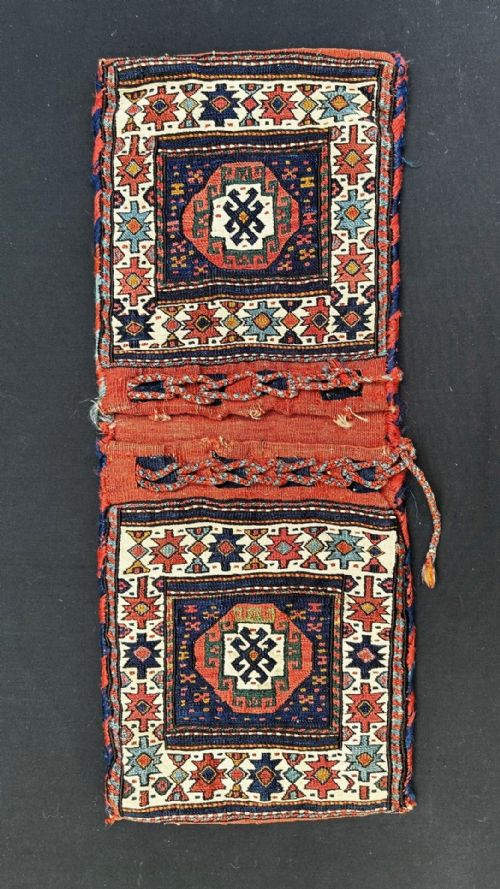
When buyers search for an antique persian soumak rug, they encounter flat-woven tribal textiles and utilitarian bags created by nomadic confederacies across Persia. These pieces include storage bags, saddle bags, salt bags, panels, and khorjin fragments originating from communities such as the Shahsavan, Qashqa'i, Afshar, and Lori-Bakhtiari. The majority of surviving examples date from the nineteenth century, reflecting the vibrant tribal weaving traditions of regions ranging from Azerbaijan and Fars to Kerman.
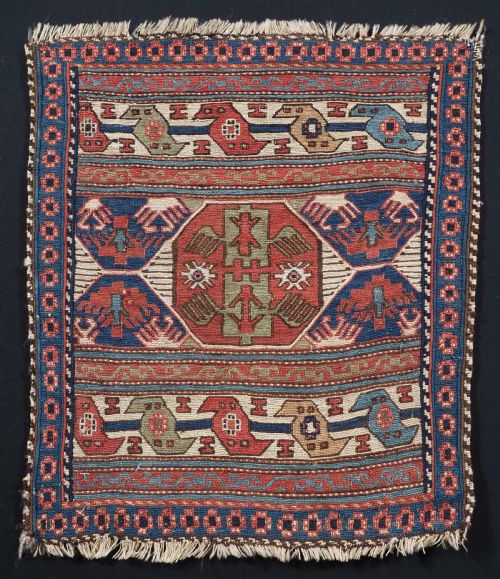
The format primarily manifests as bag faces and utilitarian storage containers rather than large floor coverings, showcasing intricate bird, dragon, and geometric motifs. These flat-woven textiles demonstrate the distinct regional aesthetics of nomadic makers who utilised durable structures for everyday nomadic life. Each piece carries the visual language of specific tribal groups, recorded through characteristic border patterns and field arrangements.
How they were made
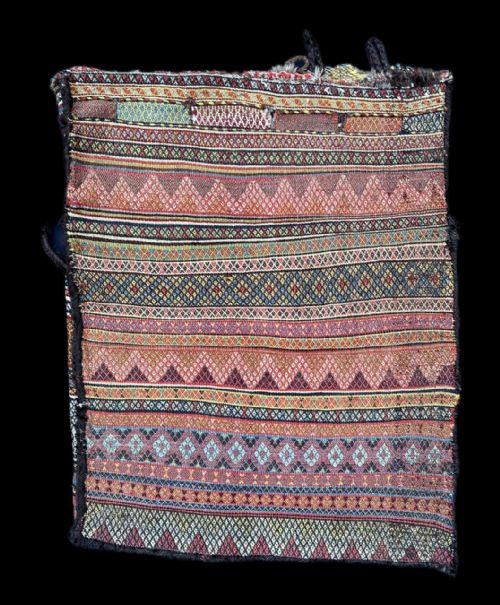
The construction relies on a supplementary weft-wrapping technique known as soumak, which creates a durable flat-woven textile with a ribbed surface texture on the front and loose floats on the reverse. Artisans employed hand-spun wool and cotton foundations, building complex patterns without the cut pile found in traditional knotted carpets. This specific weave allows for sharp diagonal lines and intricate geometric detailing that sets soumak work apart from standard kilims.
Colour derives from natural and vegetable dyes applied to hand-spun wool, producing deep tones that age gracefully over decades. The interplay of these organic colorants gives each tribal textile its characteristic depth, shifting subtly across the surface according to dye lots and yarn batches.
Antique Persian Soumak Rug Retail Price Guide 2026
Typical asking prices for persian soumak rug among the pieces listed under this phrase on Sellingantiques today, from the lower quarter to the upper quarter. They describe what is for sale here now, not the wider market.
Nomadic weavers frequently tucked stylised birds and protective dragons into the geometric borders of their daily storage bags.
What varies in quality
Quality in these tribal weavings rests upon the crispness of the draw, the complexity of the motifs such as birds and dragons, and the fineness of the soumak wrapping. Pieces with tightly packed rows and balanced proportions demonstrate superior technical execution by the weaver.
The handling of natural dyes and the preservation of the original wool or cotton structure significantly elevate an example. Superior pieces retain clear, saturated dye colours and intact borders, whereas lesser examples suffer from muddy tones or extensive structural loss.
The Antique Persian Soumak Rug Glossary
- Soumak
- A flat-weave technique where coloured weft threads wrap around the warp yarns in a continuous wrapping motion. This method produces a durable textile with a textured, ribbed face and unclipped floats on the reverse.
- Khorjin
- A traditional double saddle bag used by nomadic groups for transport and storage. These textile items are frequently separated into individual bag faces today.
- Shahsavan
- A confederation of nomadic tribes known for distinctive flat-woven soumak bags and panels featuring geometric designs, birds, and dragons. Their nineteenth-century output represents a cornerstone of Persian tribal weaving.
- Bag face
- The decorative front panel of a nomadic storage or transport bag, preserved as an independent textile art piece after the utilitarian back portion wore away.
- Supplementary weft
- Extra yarn introduced into the weave alongside ground wefts to create pattern and texture without forming a knotted pile.
Antique Persian Soumak Rug: Frequently Asked Questions
What is a soumak weave?
A soumak weave is a flat-woven textile technique where coloured wefts wrap around the warp threads in continuous rows. This method produces a durable fabric with a pronounced ribbed texture on the face.
Unlike standard kilims, soumak textiles feature loose floating threads on the reverse side. This construction method allows weavers to execute sharp diagonals and complex geometric patterns with high precision.
How were these bags used?
Nomadic groups utilised these bags for storage, transport, and domestic organisation inside tents. Items like khorjin served as saddle bags for animals during seasonal migrations.
Specialised containers such as salt bags and water-pipe bags held specific household goods. Their sturdy flat-woven construction protected contents during transit across rugged terrain.
How do I date an antique soumak?
Dating relies on material analysis, dye characteristics, and structural indicators specific to nineteenth-century nomadic production. The presence of hand-spun wool and early natural dye palettes points towards nineteenth-century origins.
Structural wear patterns and tribal attributions help narrow the timeframe. Experts examine the specific drawing style of motifs like birds and dragons to distinguish pieces from different decades.
Where did these pieces originate?
These textiles originated among nomadic tribes and confederacies operating across different regions of Persia. Groups like the Shahsavan worked in the northern territories near Azerbaijan.
Other communities such as the Qashqa'i and Afshar ranged through southern provinces like Fars and Kerman. Each region developed distinct stylistic vocabularies and weaving structures.
How do I care for a flat-weave textile?
Care requires gentle handling, regular low-suction vacuuming without a rotating brush, and protection from direct sunlight. Flat-weaves benefit from breathable underlays to prevent slipping and wear.
Professional textile conservationists should handle any cleaning or structural stabilization. Keeping the wool clean and dry preserves the natural lanolin and structural integrity.