

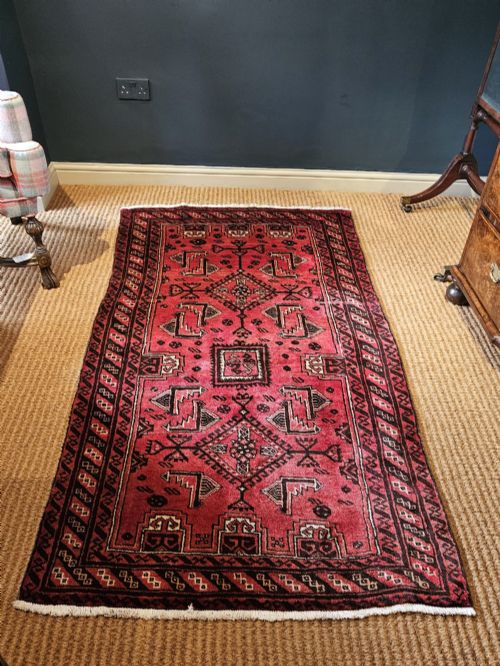
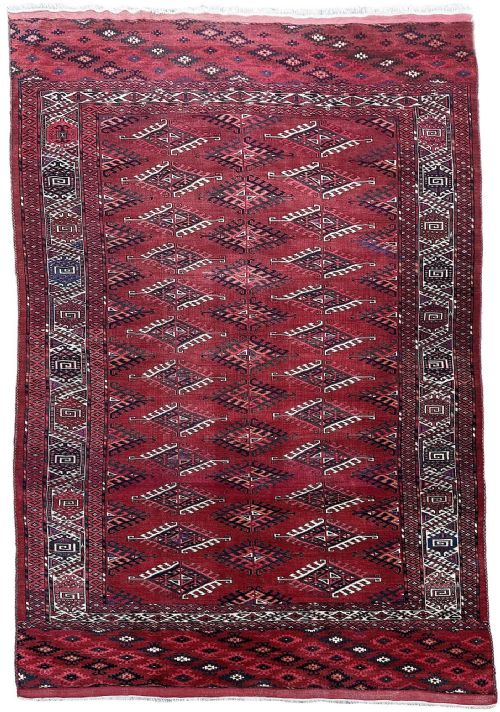
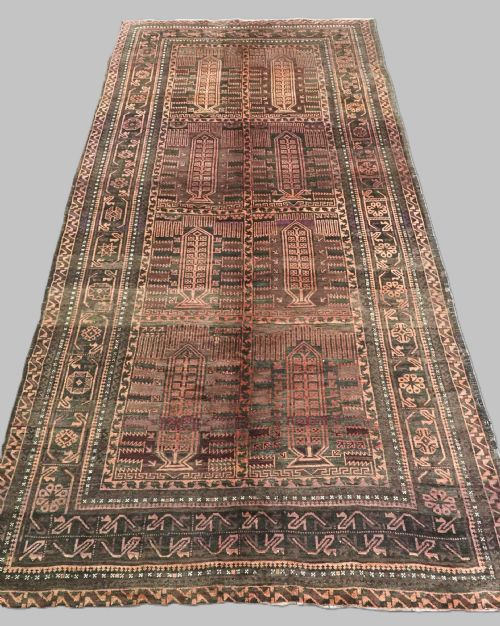
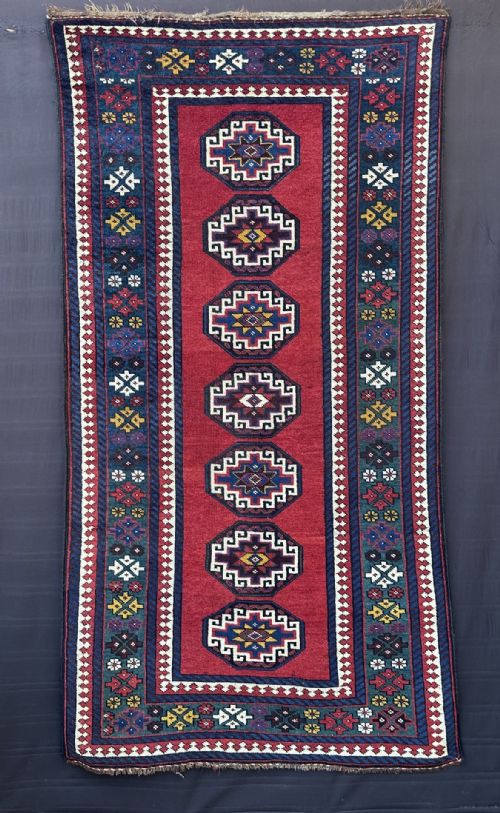



Dark Red Tribal Carpet
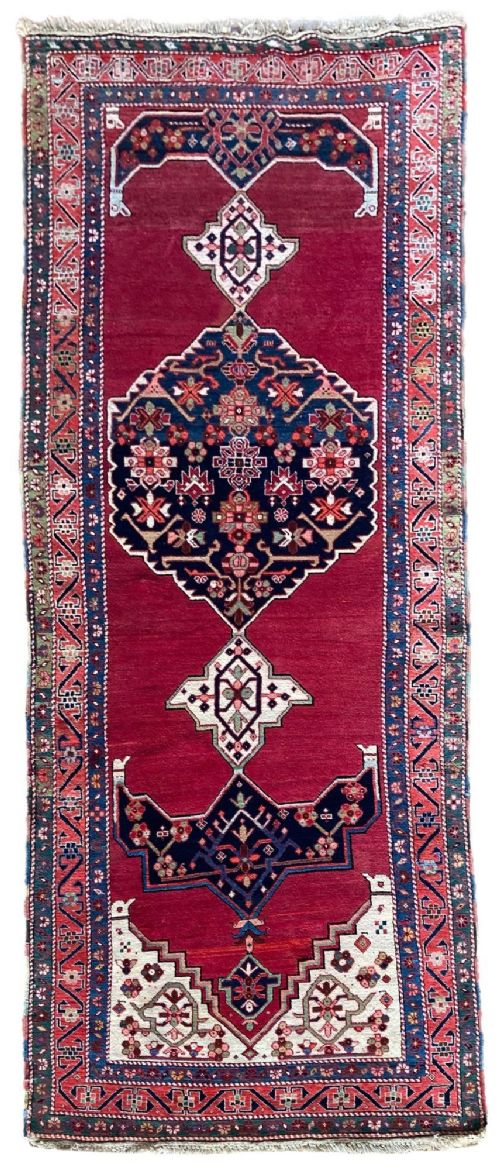
When you search for a dark red tribal carpet, you are looking at handwoven wool textiles made across Persia, Afghanistan, and Central Asia.
Dark Red Tribal Carpet
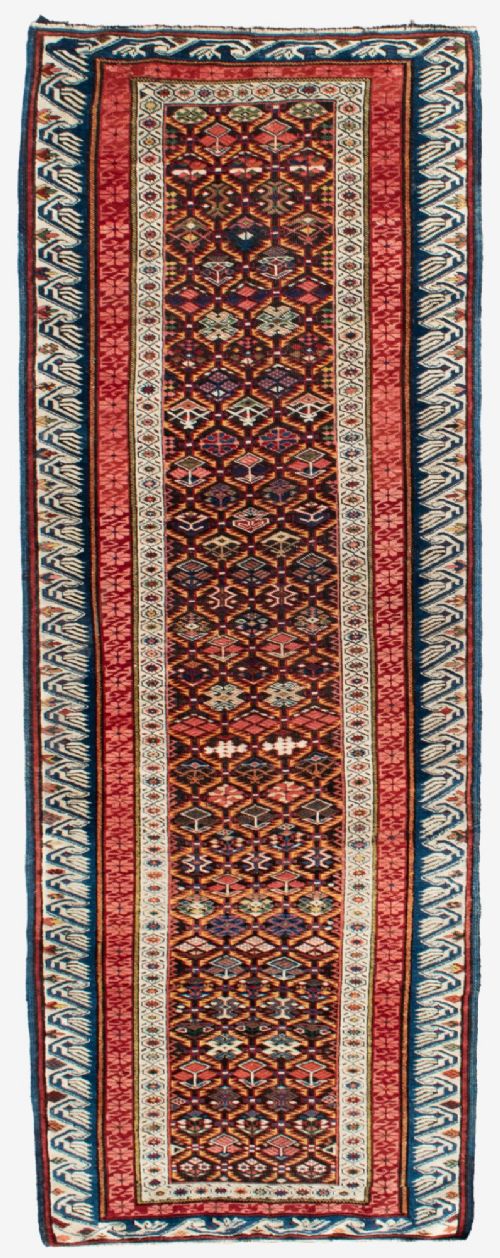
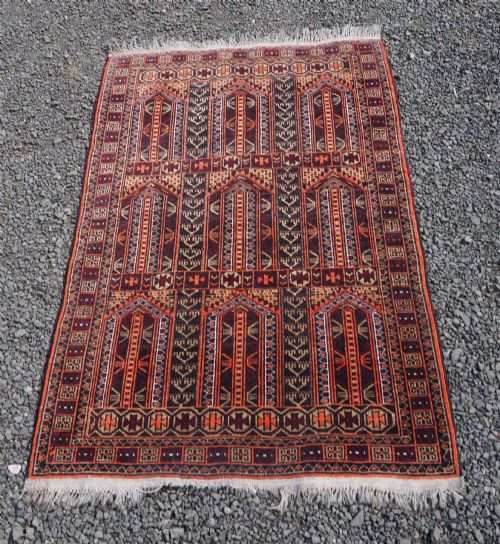
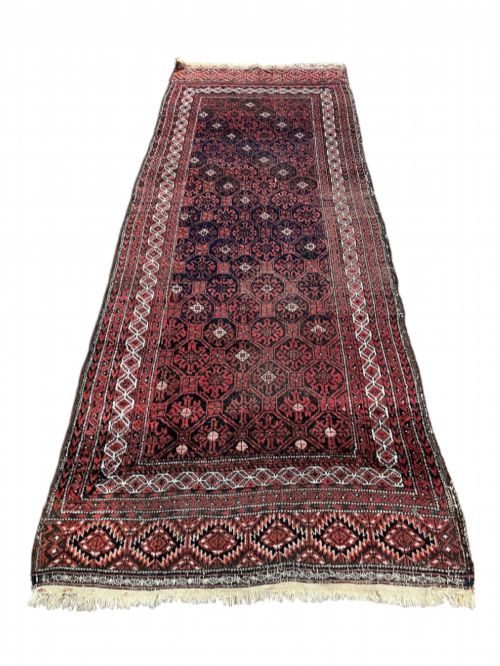
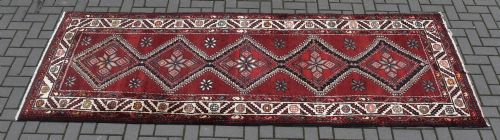
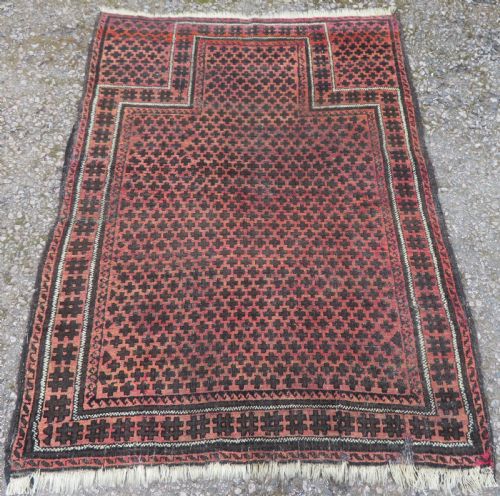
A dark red tribal carpet represents the weaving traditions of nomadic and village groups, including Baluch, Turkmen, Kurdish, and Qashqai makers. These pieces span formats from small prayer rugs and torba face pieces to long runners and main carpets.
The version most commonly encountered on this page is the nineteenth or early twentieth century Baluch rug or carpet, often featuring deep madder red tones and geometric motifs. Other frequent forms include Yomut, Ersari, and Tekke Turkmen pieces alongside West Persian Kurdish and Khamseh examples.
The primary forms listed range from compact area rugs to substantial floor coverings and narrow runners, woven for functional use within tribal tents and village homes. Each piece reflects the specific visual vocabulary and cultural heritage of its region of origin.
Materials and construction
The structure relies on hand-spun wool and pure wool foundations and piles, occasionally incorporating cotton or goat hair for added durability in the warps and wefts. Natural dyes provide the characteristic deep red colour palette, derived from sources such as madder root.
Weaving techniques vary from standard pile knots to flatwoven torba faces and detailed prayer rugs, demonstrating the technical skill of weavers working on portable vertical or horizontal looms. The handling of natural dyes results in subtle tonal shifts across the surface of the wool.
Some Baluch weavers hid tiny protective amulets directly inside the dense wool pile to ward off the evil eye.
Differences in quality
Quality rests on the density and fineness of the weave, the clarity of the design motifs, and the depth achieved through natural dyes. Tighter knotting and precise execution of complex patterns elevate certain pieces above standard utility grades.
Condition and integrity of the original wool pile also shape the standing of a carpet, alongside the artistic success of unusual designs such as pencil box or kalam donneh patterns. The handling of the dark red ground colour and secondary shades dictates visual balance.
The Dark Red Tribal Carpet Glossary
- Madder
- A natural dye derived from the root of the Rubia plant, used to achieve rich red tones in traditional textiles. It yields the deep hues characteristic of many antique nomadic carpets.
- Torba
- A small storage bag face produced by Turkmen weavers, often featuring guls and geometric ornamentation. These pieces were historically hung inside tents for household storage.
- Gul
- A medallion or repeating primary motif found in Turkmen and Central Asian carpet designs. Different tribal groups utilised distinct gul patterns to signal their lineage.
- Mihrab
- An arch-shaped design element in prayer rugs, representing the direction of Mecca. Weavers oriented these niches to direct the user during daily devotions.
- Warp
- The vertical foundation threads stretched tightly on the loom before weaving begins. The pile knots are tied around these stationary parallel strands.
Dark Red Tribal Carpet: Frequently Asked Questions
How do I clean an antique tribal carpet?
Gentle surface brushing and professional specialist cleaning are recommended to protect the natural wool fibres and dyes. Avoid harsh chemical agents and excessive water.
Regular light vacuuming without a rotating power brush helps prevent dust accumulation in the pile. Specialist textile conservators should handle any deep washing requirements.
Where were these carpets originally woven?
Nomadic and village weavers produced these textiles across regions spanning modern-day Iran, Afghanistan, Turkmenistan, and the Caucasus. Tribal groups moved seasonally, carrying their looms with them.
Specific workshops and clans developed distinct patterns tied to their geographic origins. This local heritage shaped the palette of dark red grounds and geometric borders.
Can I use these runners in hallways?
These runner formats suit hallways and corridors provided they experience moderate foot traffic and are laid with a suitable non-slip underlay. The durable wool construction handles daily domestic passage.
Rotating the runner periodically ensures even wear across the length of the pile. Protecting the piece from direct continuous sunlight preserves the natural dyed colours.
What is a prayer rug?
A prayer rug is a portable textile featuring a mihrab arch design that indicates the orientation for daily worship. Individuals rolled them out for ritual use and stored them when not required.
These pieces often display compact dimensions suited to personal use. The iconography focuses on spiritual symbols and protective geometric borders.