




Vintage Baluch Area Rug
When you search for a vintage baluch area rug, you enter a world of nomadic craftsmanship defined by rich wools and geometric patterns.
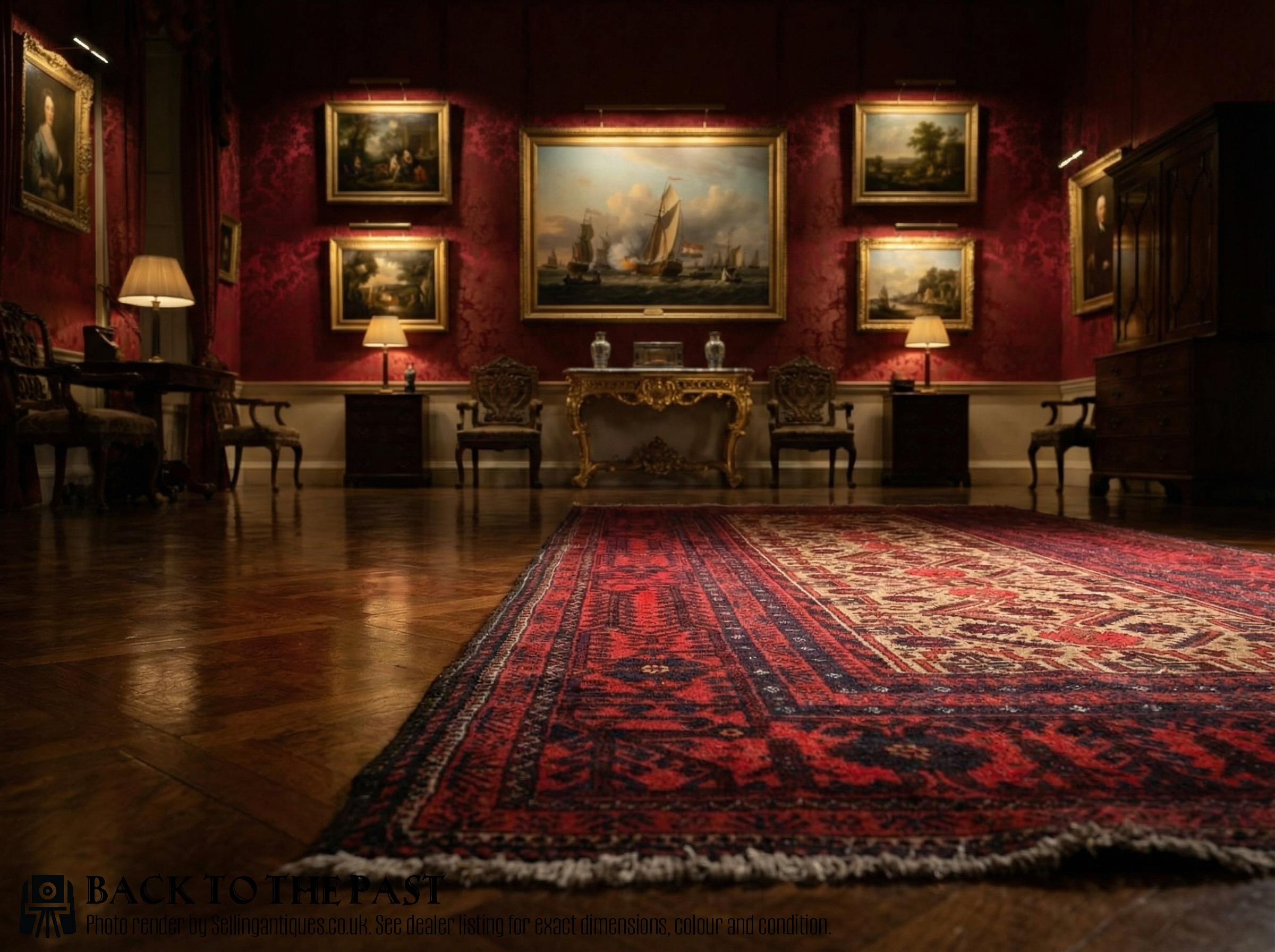
Vintage Baluch Area Rug
A vintage baluch area rug is a nomadic textile originating from the borderlands of Persia, Afghanistan, and Khorasan, woven by tribal groups. These floor coverings span prayer formats, main carpets, and flatweave kilims produced across the nineteenth and early twentieth centuries.
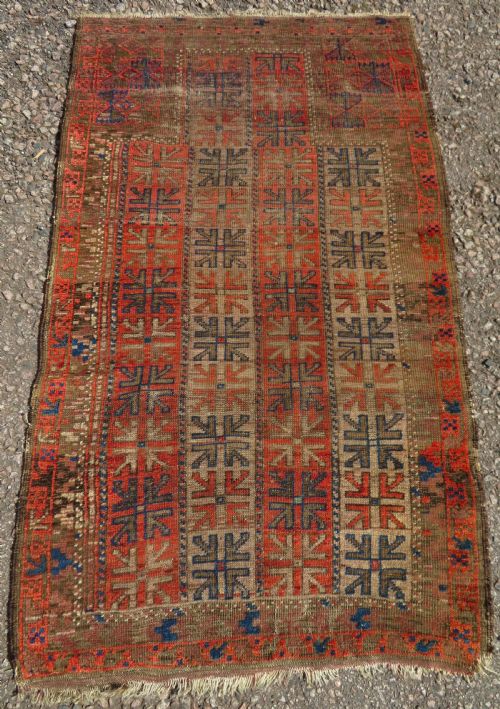
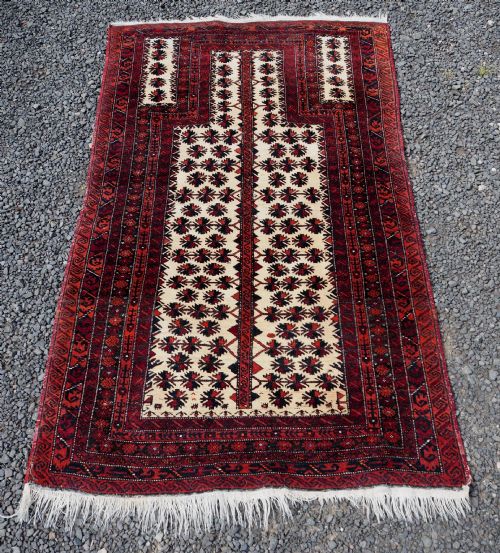
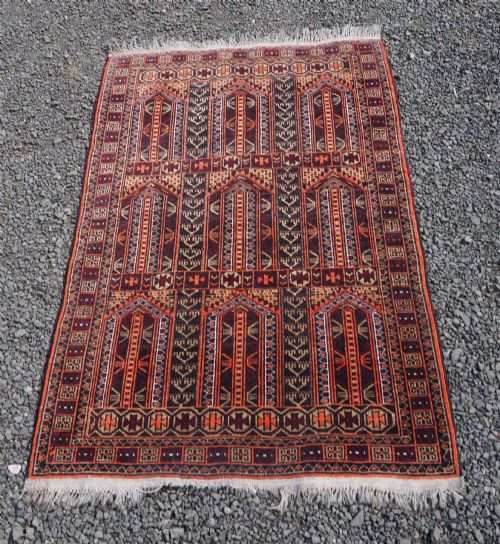
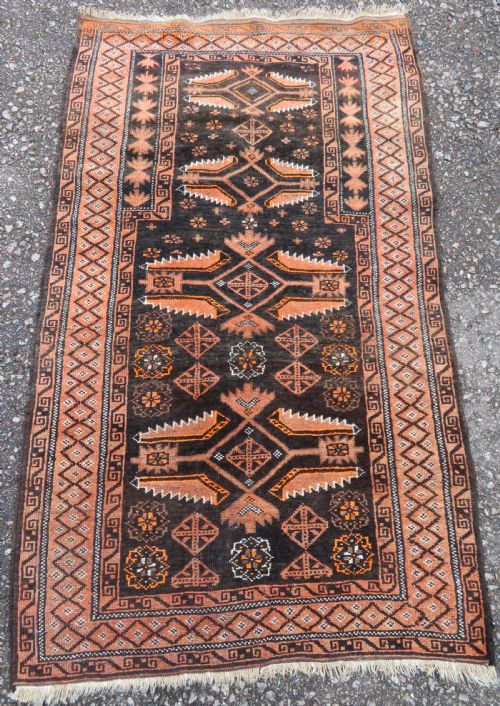
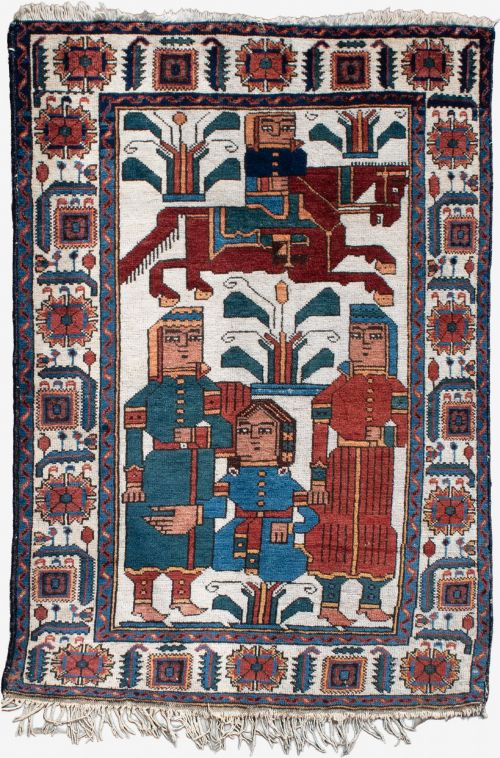
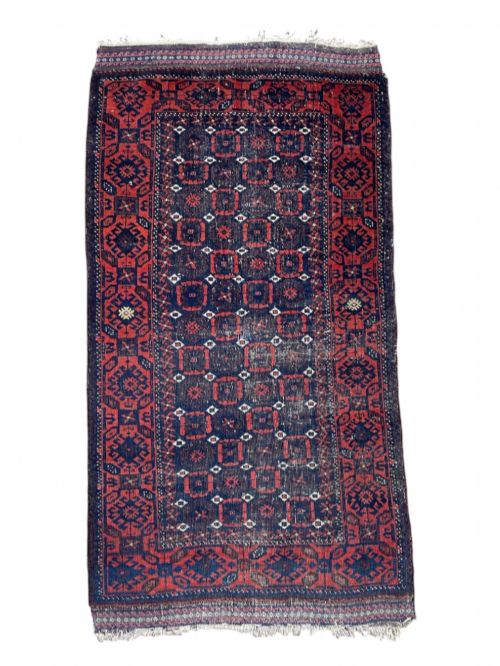
The most common formats on this page feature geometric motifs, prayer mihrabs, and camel ground fields created by weavers working in village and tribal settings. Such pieces serve as functional floor art that brings deep earthy tones and traditional iconography into domestic spaces.
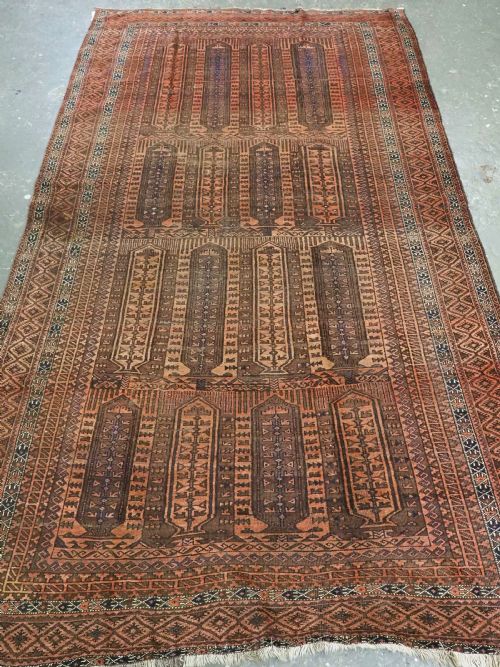
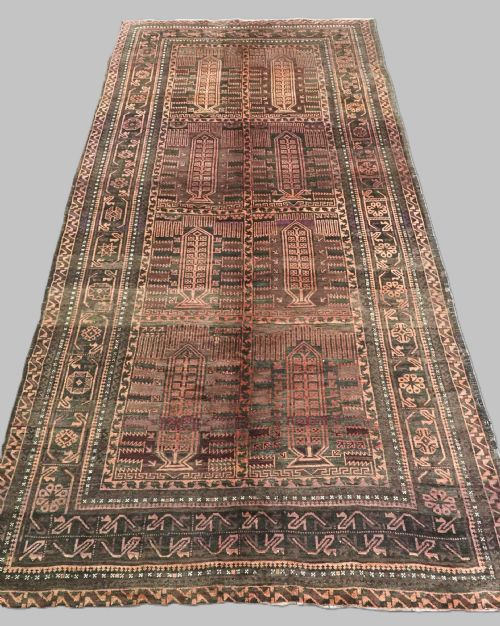
Makers utilised distinct regional designs like the Kalam Donneh pencil box pattern, repeat stars, and shrub motifs to identify their specific tribal heritage. Each surviving specimen reflects the practical domestic traditions of pastoral communities rather than urban court workshops.
Materials and construction
Weavers constructed these textiles using hand-spun wool foundations paired with natural dyes sourced from local plants and minerals. Some examples incorporate camel hair or goat hair highlights to add contrasting texture and un-dyed colour depth to the pile.
The technique relies on dense hand-knotting or flatweaving methods that produced sturdy rugs capable of withstanding rigorous nomadic camp life. Artisans tied symmetrical or asymmetrical knots on wool warp and weft threads, securing the edges with overcast selvedges.
Nomadic weavers occasionally hid tiny talismanic amulets within the pile to ward off the evil eye.
Judging the weave
Knot density and the precision of the geometric layout dictate the technical tier of each textile. Tighter knotting allows complex patterns like the Mina Khani or lattice designs to render with sharp clarity.
The depth and saturation of the natural dyes separate standard examples from superior works. Purity in the hand-spun wool and stable colour retention over generations elevate a piece within the surviving spectrum.
The Vintage Baluch Area Rug Glossary
- Kalam Donneh
- A repeating motif resembling a pencil box or small cylinder, frequently seen in Baluch and Timuri weaving.
- Mihrab
- The arched niche found on prayer rugs, designed to be pointed toward Mecca during Islamic daily worship.
- Kilim
- A flatweave textile produced without a pile, utilising tightly packed horizontal wefts pulled across vertical warps.
- Gul
- A medallion or floral guls emblem used extensively in tribal carpet designs to denote specific clan lineages.
Vintage Baluch Area Rug: Frequently Asked Questions
Where were these rugs made?
These textiles originate from nomadic and village workshops across the borderlands of Persia, Afghanistan, and the Khorasan region. Artisans produced them within tribal camps and rural settlements using locally sourced materials.
The weavers belonged to distinct groups including Baluch and Timuri tribes whose traditional territories spanned multiple modern national borders. Their geographical isolation preserved unique regional design vocabularies across generations.
How do I use a prayer rug?
Prayer rugs feature a distinctive architectural niche called a mihrab, historically utilised to direct the focus of daily devotions. Their smaller dimensions suit placement in compact residential areas.
Today, collectors frequently display these format pieces as wall hangings or accent floor coverings in low-traffic zones to protect the antique pile. Their symbolic iconography adds focused focal points to interior design schemes.
How do I care for antique wool?
Gentle vacuuming without a rotating power brush helps remove abrasive dust from the wool pile without damaging the hand-spun foundation threads. Professional antique textile cleaning is recommended for deep maintenance.
Keeping the rug away from prolonged direct sunlight prevents natural dyes from fading over time. Using a breathable underlay protects the historical weave from friction against hard flooring.
What is a Timuri Baluch design?
Timuri Baluch designs reflect the stylistic overlap between Timuri tribal groups and their Baluch neighbours in the border regions. These patterns often incorporate specific shrub motifs and pencil box arrangements.
Such crossovers occur because nomadic groups shared aesthetic traditions, materials, and geographical pastures. Identifying these hybrid styles requires examining specific knotting structures and colour palettes.