

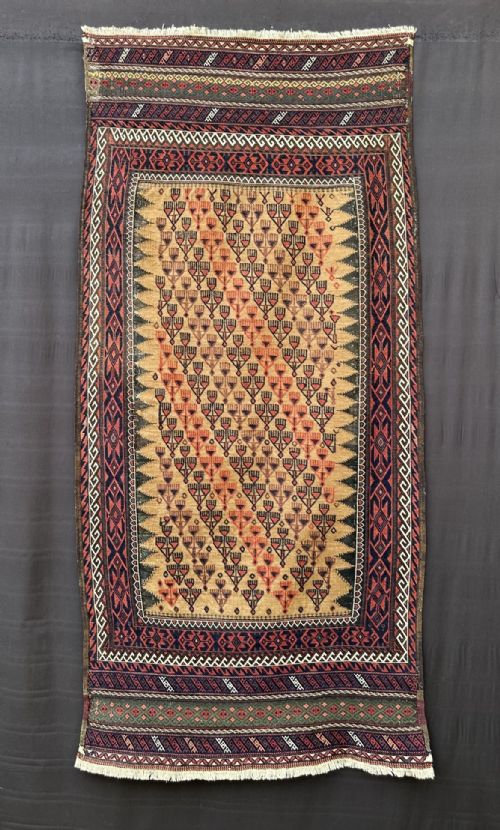


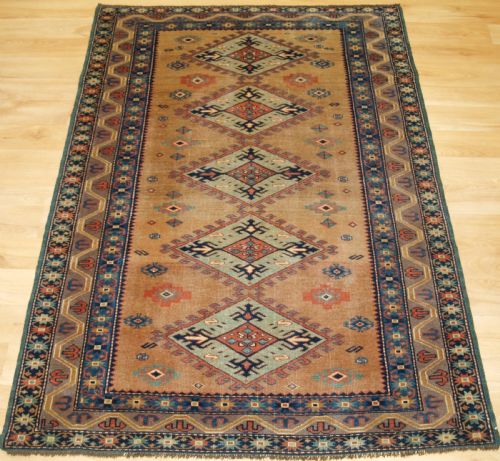


Tan Wool Tribal Rug
These tan wool tribal rug examples bring rich nomadic heritage and tactile warmth directly to your floor.
Tan Wool Tribal Rug
When you search for a tan wool tribal rug, you encounter handwoven floor coverings originating from nomadic and village traditions across Persia, the Caucasus, Anatolia, and Central Asia. These pieces range from nineteenth-century village productions to early twentieth-century tribal runners and prayer rugs, reflecting diverse regional weaving practices.
The objects appearing on this page include Baluch, Hamadan, Sarab, and Caucasian pieces, alongside specific tribal formats like Sofreh dining kilims. They typically display earthy colour palettes dominated by camel hair, natural wool tones, and subdued village dyes rather than bright urban workshop hues.
You will most frequently meet nineteenth-century and early twentieth-century examples rendered in durable wool and camel hair. These textiles served practical purposes in nomadic tents and village homes before entering the antique market.
Materials and construction
Weavers constructed these pieces using hand-spun wool and camel hair for the pile and foundation yarns, often combined with cotton for structural stability in specific regional workshops. These natural animal fibres provide the dense, resilient texture characteristic of nomadic floor coverings.
Makers utilised traditional upright and horizontal loom setups, employing symmetrical and asymmetrical knotting alongside flatweave techniques for Sofreh dining cloths. The inclusion of mixed technique elements, such as pile combined with flatweave sections, reflects the resourceful methods of tribes like the Taimani and Baluch.
Tan Wool Tribal Rug Retail Price Guide 2026
Typical asking prices for tan wool tribal rug among the pieces listed under this phrase on Sellingantiques today, from the lower quarter to the upper quarter. They describe what is for sale here now, not the wider market.
Listings feature pieces spanning from the mid-nineteenth century through the 1930s, utilising wool, cotton, and camel hair.
What determines quality
The standard of a piece depends heavily on the integrity of the hand-spun materials and the finesse of the weave. Finer knot counts and carefully prepared natural dyes create greater durability and visual depth across the surface.
Balance in design and preservation of the original borders and selvedges separate exceptional examples from heavily worn pieces. The subtlety of the natural colour palette and the tightness of the foundation contribute significantly to the enduring character of the textile.
The Tan Wool Tribal Rug Glossary
- Sofreh
- A woven spread or cloth used for dining or food preparation among nomadic tribes. These textiles often feature kilim or mixed flatweave structures.
- Baluch
- A designation for rugs produced by nomadic and semi-nomadic groups inhabiting the borderlands of Persia and Afghanistan. They frequently incorporate dark wools and camel hair.
- Prayer rug
- A small format textile designed with a mihrab or niche motif indicating the direction of prayer. These pieces served personal devotional use.
- Pile
- The cut or uncut loops of yarn that form the soft upper surface of a rug. In these pieces, it is typically composed of hand-spun sheep wool or camel hair.
- Runner
- A long, narrow carpet format traditionally suited for hallways, corridors, or narrow spaces. Sarab village examples often follow this elongated proportion.
Tan Wool Tribal Rug: Frequently Asked Questions
How do I clean a wool rug?
Gently vacuum without a rotating brush bar to remove surface dust and loose debris without pulling the fibres.
For deeper cleaning, consult a specialist experienced in antique vegetable-dyed textiles rather than attempting wet cleaning at home.
Where were these tribal rugs made?
These textiles originate from nomadic and village communities across Persia, the Caucasus, Anatolia, and Central Asia. Weavers worked within specific tribal groups such as the Baluch, Kurd, and Lor.
Production often took place in remote encampments or rural settlements rather than large urban manufactories.
What is camel hair used for?
Undyed camel wool and hair provide a naturally durable, warm brown tone that requires no artificial dyeing. Weavers utilised this fibre to create resilient fields and borders in desert and steppe environments.
Over time, camel hair develops a soft, lustrous patina with handling.
How do I date an antique rug?
Dating relies on assessing the structural materials, hand-spun yarn characteristics, and natural dye palettes typical of nineteenth and early twentieth-century production. Specific tribal motifs and regional weaving structures also offer clues to the period.
Comparisons with documented archival pieces help narrow the timeframe.