
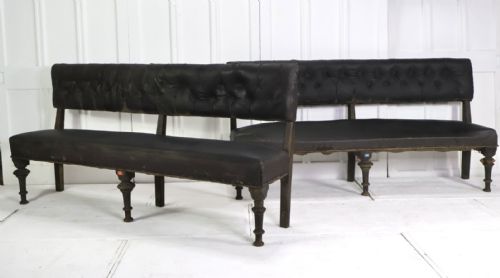
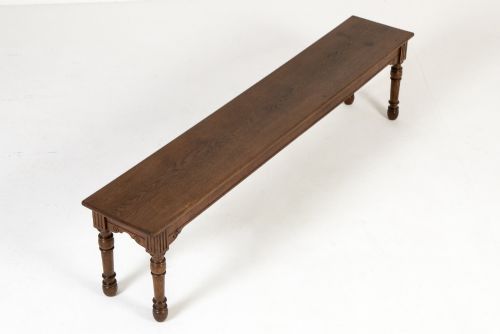
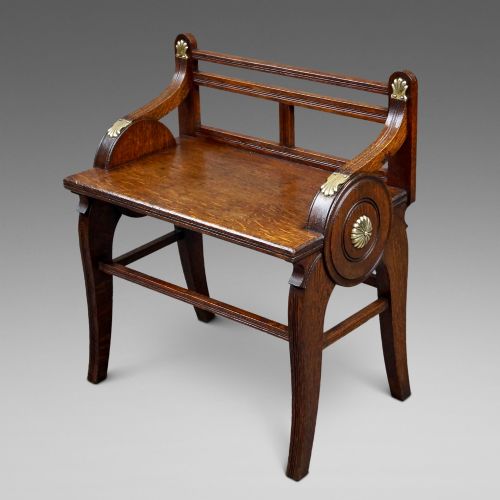
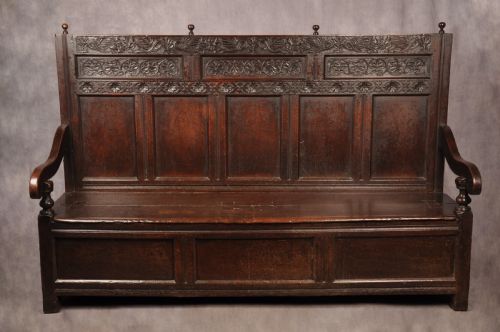
Dark Oak Entryway Bench
A dark oak entryway bench grounds a hallway with timber authority, offering guests a seat while concealing hats, coats, or boots within its storage base.
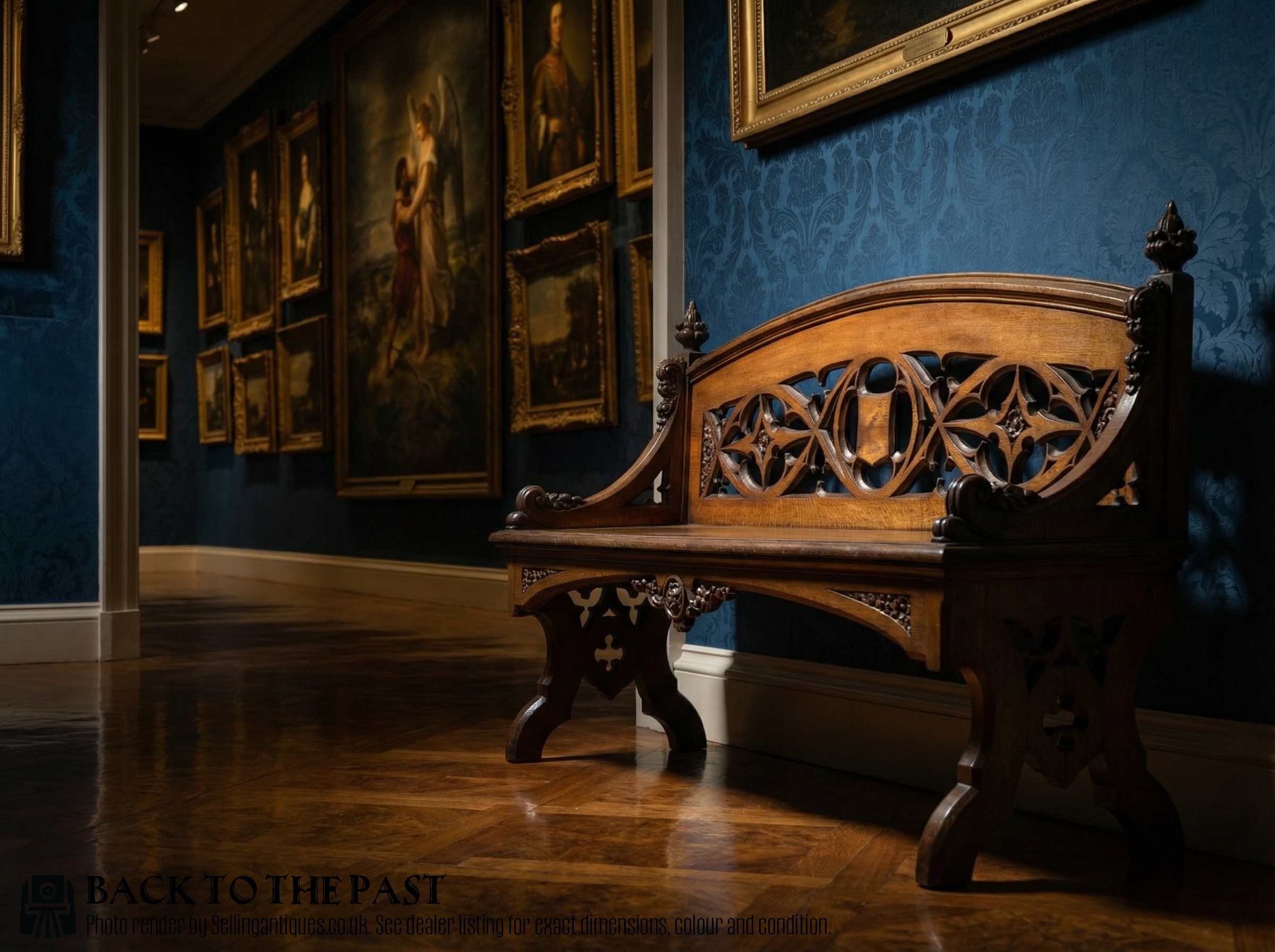
Dark Oak Entryway Bench
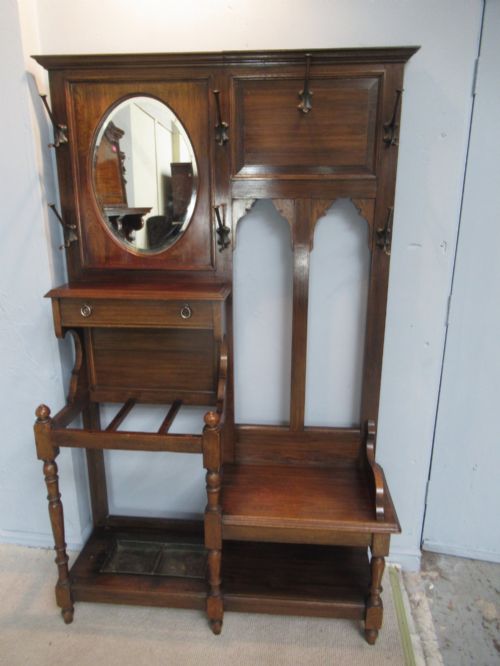
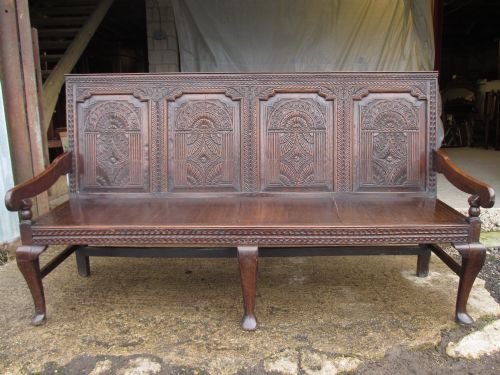
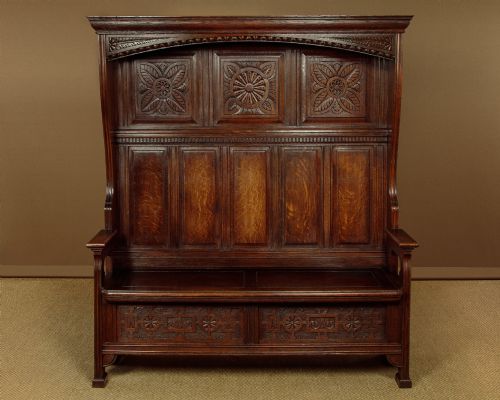
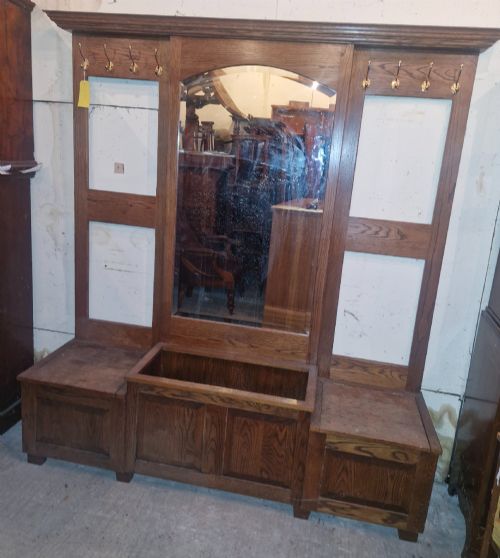
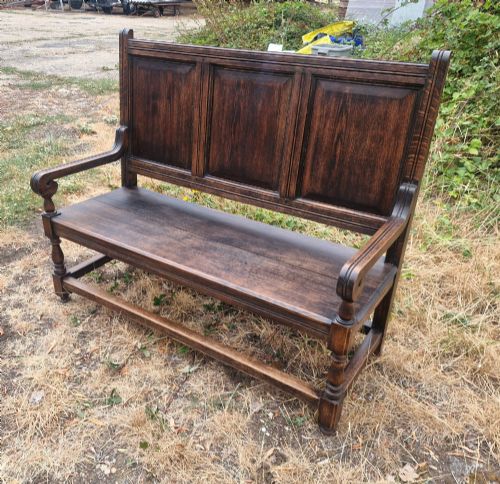
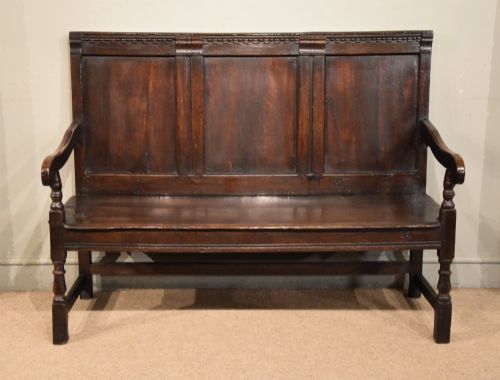
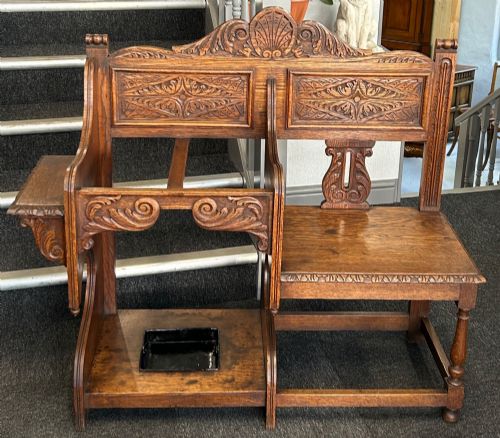
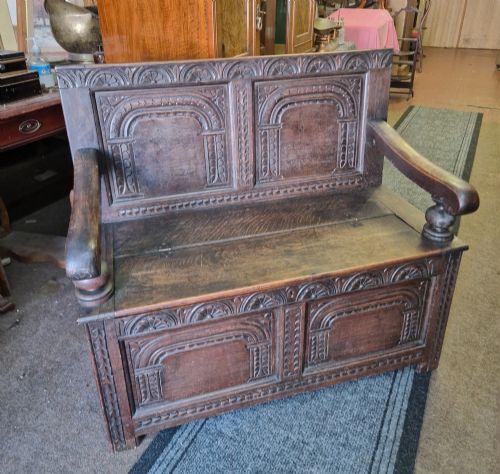
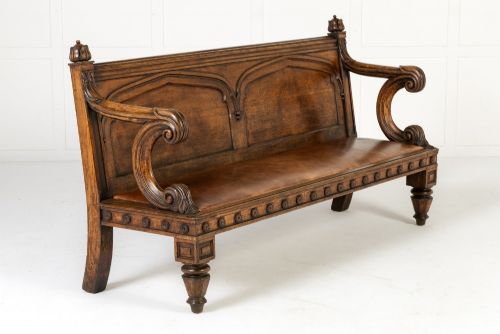
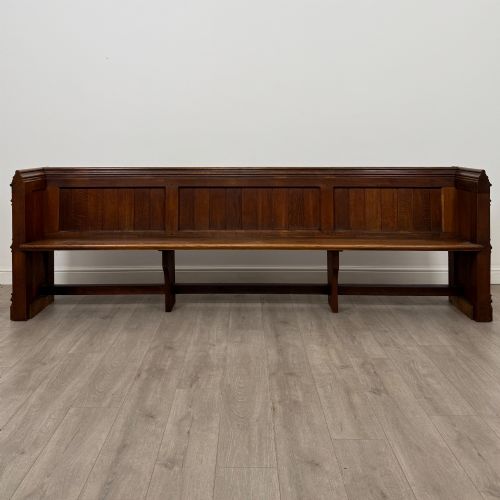
A dark oak entryway bench spans centuries of domestic hardware, appearing as tall-backed settles, lift-lid box seats, and combined hall stands equipped for hats and coats. The pieces originate from periods ranging through the eighteenth, nineteenth, and early twentieth centuries, reflecting changing domestic habits in hallways and vestibules.
Buyers most frequently encounter Victorian, Edwardian, and Georgian examples alongside revivalist interpretations such as Jacobean, Gothic, and Renaissance styles. Regional pieces, including North Country and Irish country house variants, sit alongside panelled settles and multifunctional storage seats.
The primary function remains consistent across these iterations: to provide a sturdy timber seat near the door while integrating practical storage compartments or integrated stick and coat stands.
Materials and Construction
Makers built these pieces primarily from solid oak and timber, often augmenting the heavy wooden frames with functional hardware in brass, iron, and occasional glass or fabric elements. Structural integrity relied on traditional joinery, sturdy panel construction, and robust hinges for lift-up lids and storage compartments.
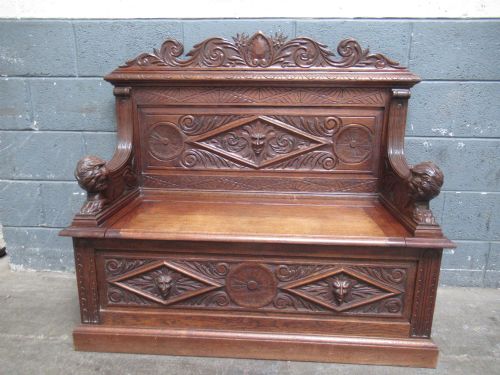
Carving serves as the principal decorative technique, manifesting as deep relief work, panelled backs, and architectural motifs typical of Gothic and Renaissance revivals. Secondary timbers such as elm occasionally appear in specific components like window seats, whilst brass mounting provides utilitarian strength on coat hooks and umbrella wells.
Materials recorded across the inventory include solid oak, elm, brass, iron, leather, fabric, and glass.
Distinctions in Execution
The distinction between standard utility items and finer examples rests upon the depth and crispness of the timber carving and the architectural ambition of the frame, such as canopy tops or integrated coat stands. Superior pieces demonstrate thoughtful proportion, balanced panelwork, and harmonious integration of storage compartments without appearing clumsy.
Originality of surface finish and hardware also separates the tiers, with untouched patination and matching brass mounts holding greater integrity than heavily restored or altered frames. The integration of multi-functional elements, such as combined stick stands and cupboards, requires precise carpentry to maintain stability under daily hallway use.
James Shoolbred & Co.
The Dark Oak Entryway Bench Glossary
- Settle
- A wooden bench with a high solid back, arms, and often a storage compartment beneath the seat. It shielded medieval and later inhabitants from draughts near the entrance.
- Box settle
- A form of seating featuring a hinged lid that transforms the base into a chest for blankets or boots. This dual purpose made it essential for hallway storage.
- Hall stand
- A piece of hallway furniture combining a seat with vertical panels, hooks for coats, and wells for sticks or umbrellas. These emerged strongly during the Victorian period.
- Canopy top
- An architectural overhanging cornice or roof structure mounted above the back of a bench or hall settle. It provides visual weight and references earlier furniture design.
- Gothic Revival
- A nineteenth-century style drawing inspiration from medieval architecture, characterised by pointed arches, tracery, and heavy carved oak panels.
Dark Oak Entryway Bench: Frequently Asked Questions
How do I use a hall bench today?
These pieces function well in modern hallways by providing a robust seat for putting on shoes. The built-in storage compartments conceal clutter like scarves and bags.
Open umbrella wells and coat hooks on combined stands keep daily outerwear organised near the front door. Their dark timber presence also establishes an immediate anchor for interior decor.
How do I distinguish an 18th century settle?
Eighteenth-century examples typically display pegged frame construction, simpler panel layouts, and deep natural patination acquired through generations of touch. Their proportions tend to be more rustic and utilitarian compared to later revival pieces.
Revival pieces from the nineteenth century often feature heavier, crisper machine-assisted carving and applied architectural details. Examining the underside and the joinery reveals the age of the timber assembly.
Are these benches suitable for small hallways?
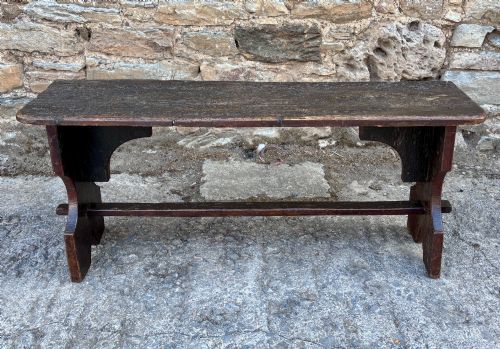
While many examples feature large proportions and high backs, simpler low benches and window seats offer compact alternatives. Measuring the depth of the seat and the swing of any lift-up lid ensures proper clearance.
Tall combined hall stands require adequate wall space and ceiling height to avoid dominating a narrow entryway. Choosing a panelled bench without attached coat stands reduces visual bulk.
What maintenance does dark oak require?
Dark oak benefits from occasional applications of beeswax to nourish the timber and preserve its rich patination. Avoiding direct placement near intense heat sources prevents the wood from drying and splitting.
Routine dusting with a soft cloth maintains the finish without stripping historical wax layers. Brass fittings can be cleaned gently if bright metalwork is preferred over aged tarnishing.