
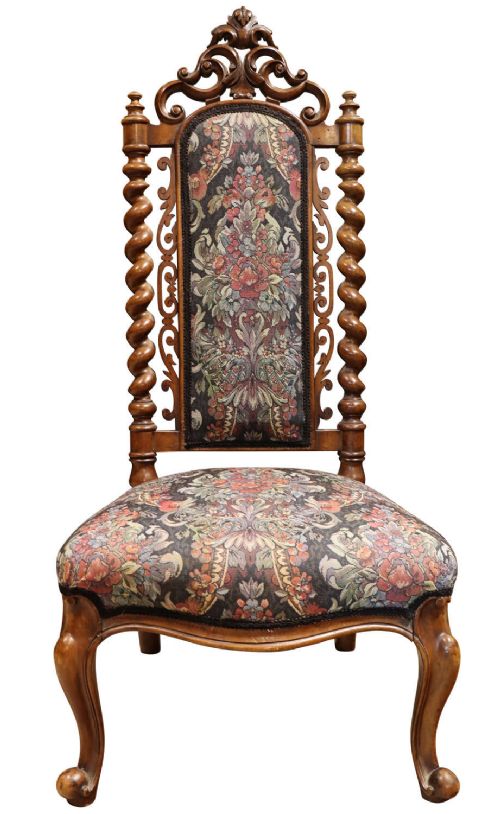
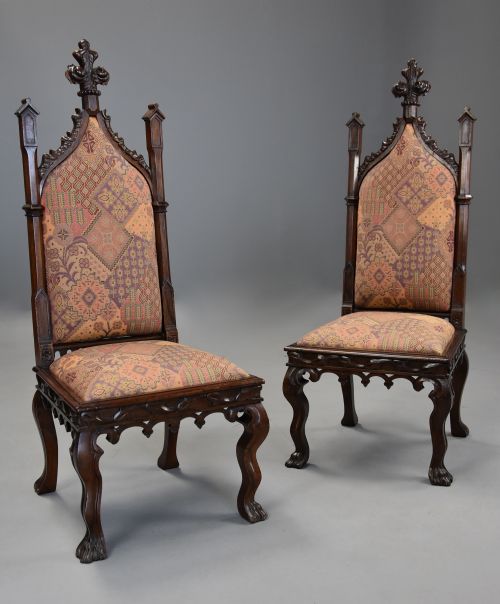
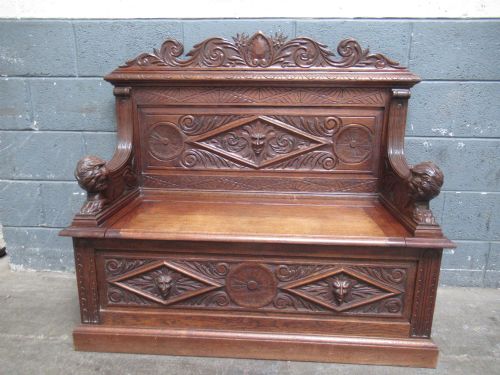
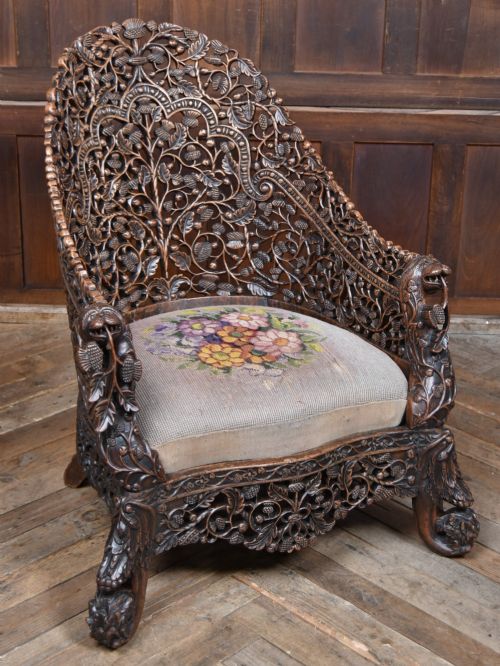
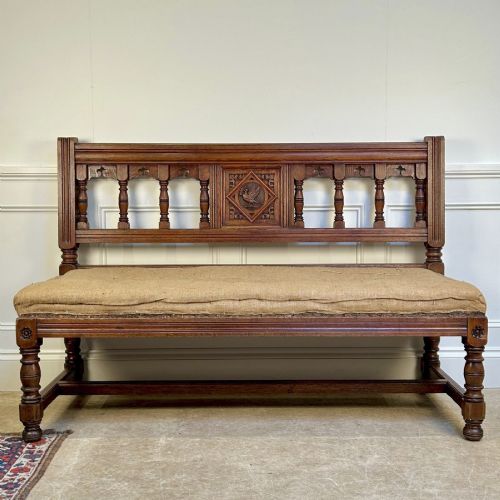
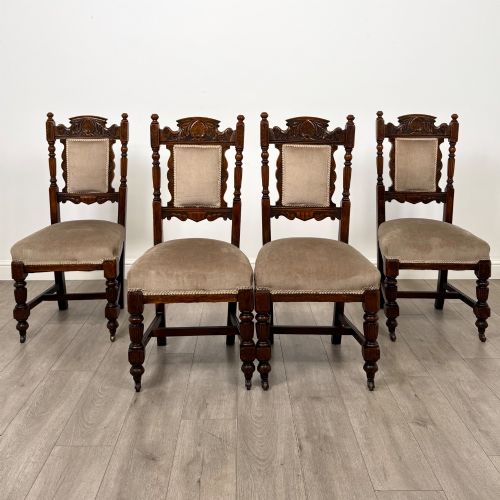
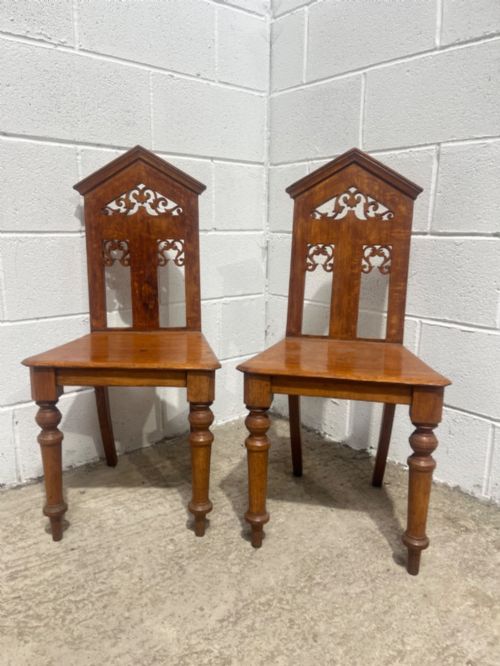
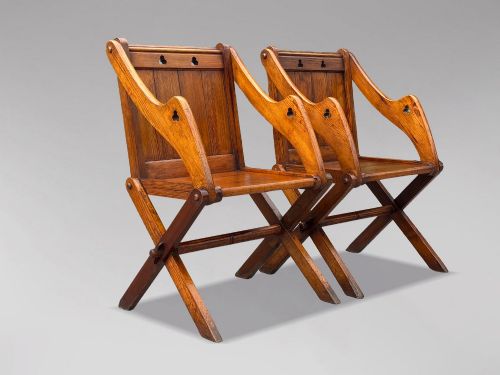
Gothic Revival Hall Seat
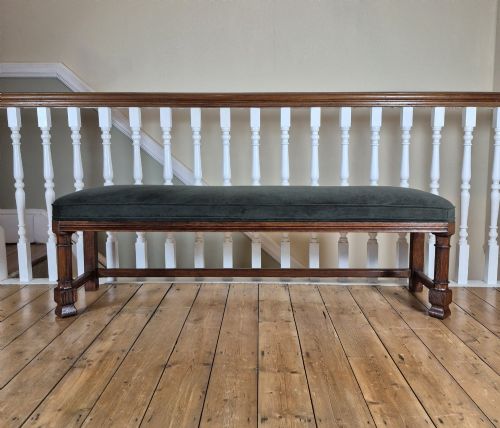
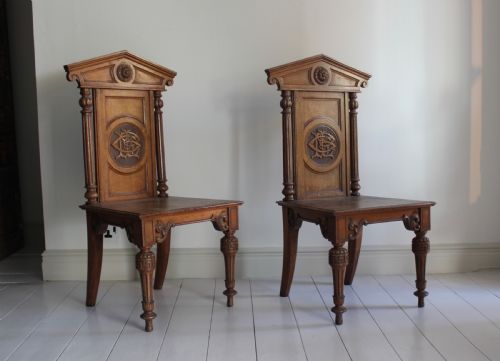
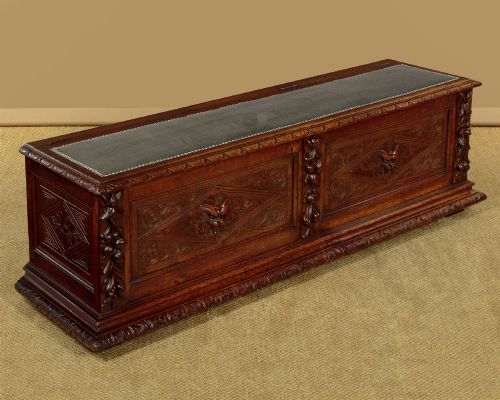
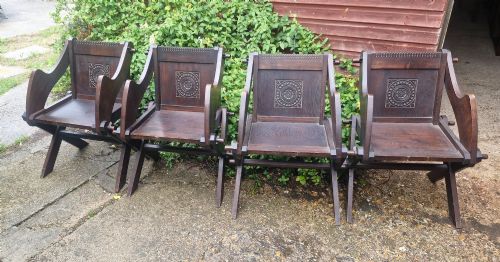
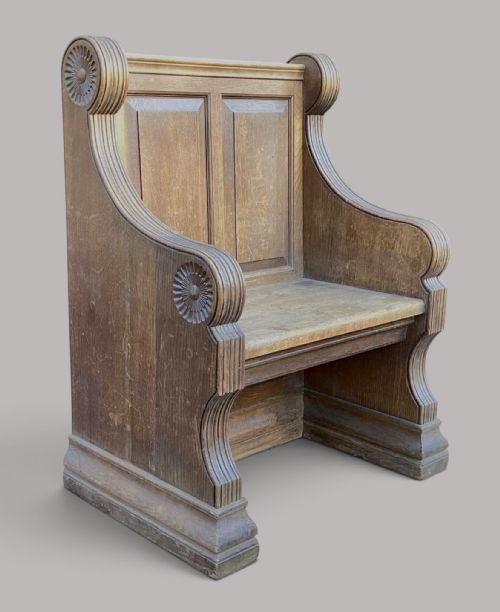
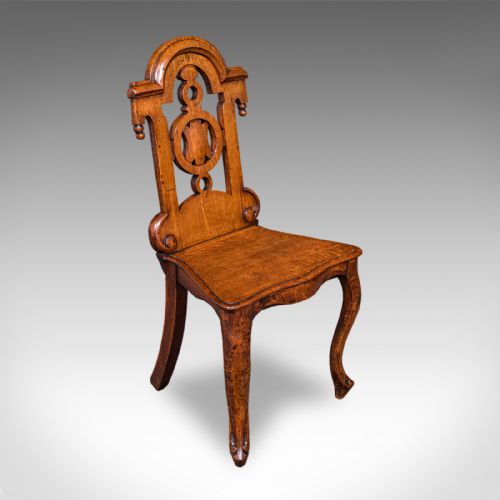
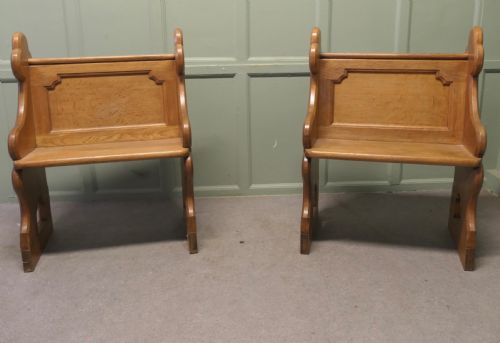
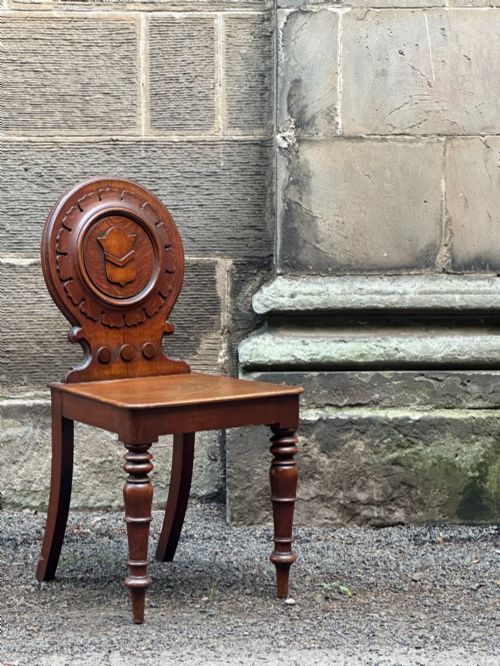
A gothic revival hall seat brings architectural drama and solid timber presence straight to your entranceway.
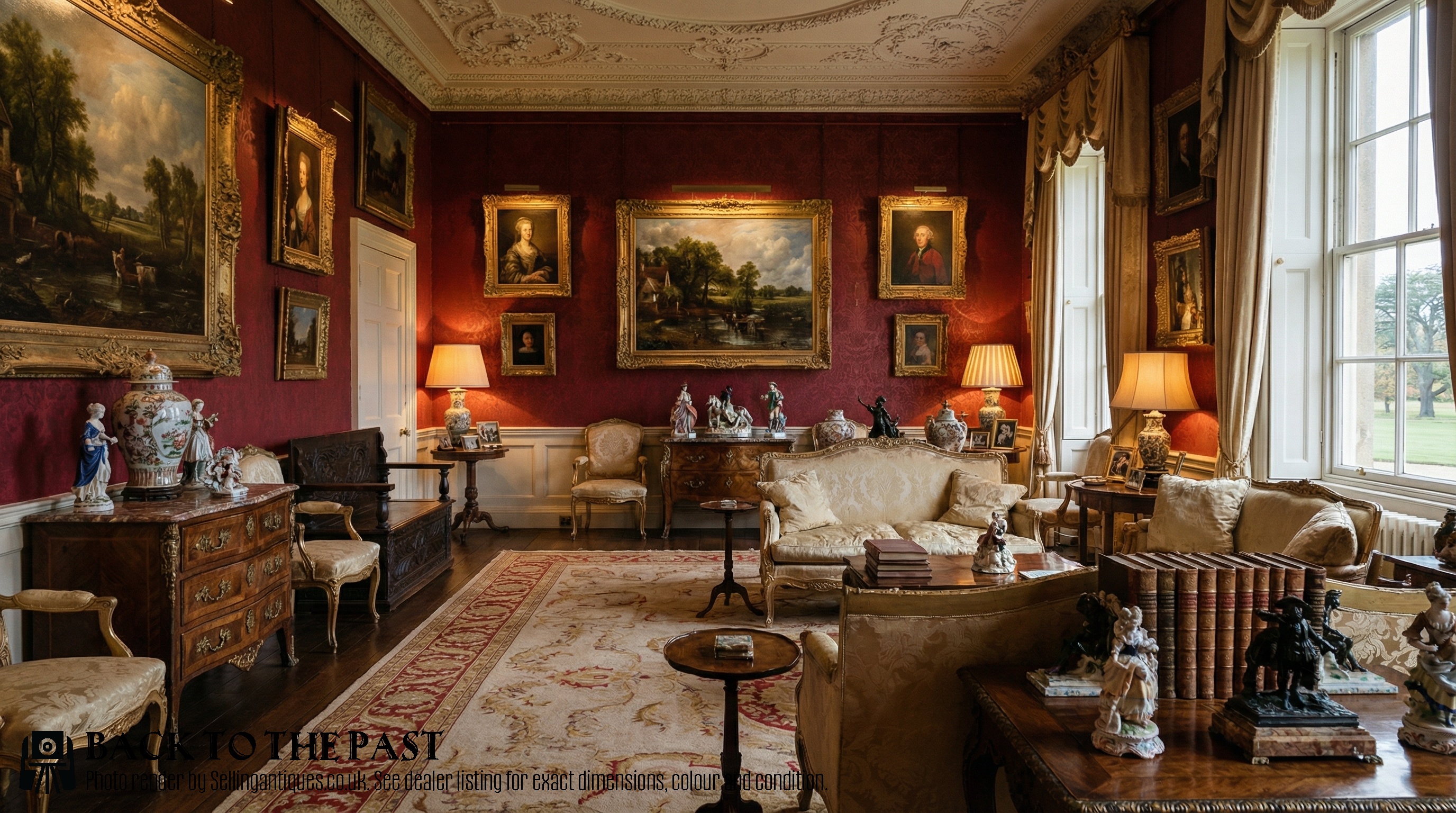
What a gothic revival hall seat is
When you search for a gothic revival hall seat, you encounter robust entrance furniture dating from the nineteenth century. These pieces draw directly from medieval ecclesiastical and domestic architecture.
You are most likely to meet substantial oak examples spanning the Victorian era and around eighteen eighty. The listings feature hall benches, settles and seat and a half benches with carved detailing.
Scottish and English origins appear in the record, establishing strong regional traditions of heavy timber construction. Many incorporate lift up seats or monk's seat configurations designed for practical storage.
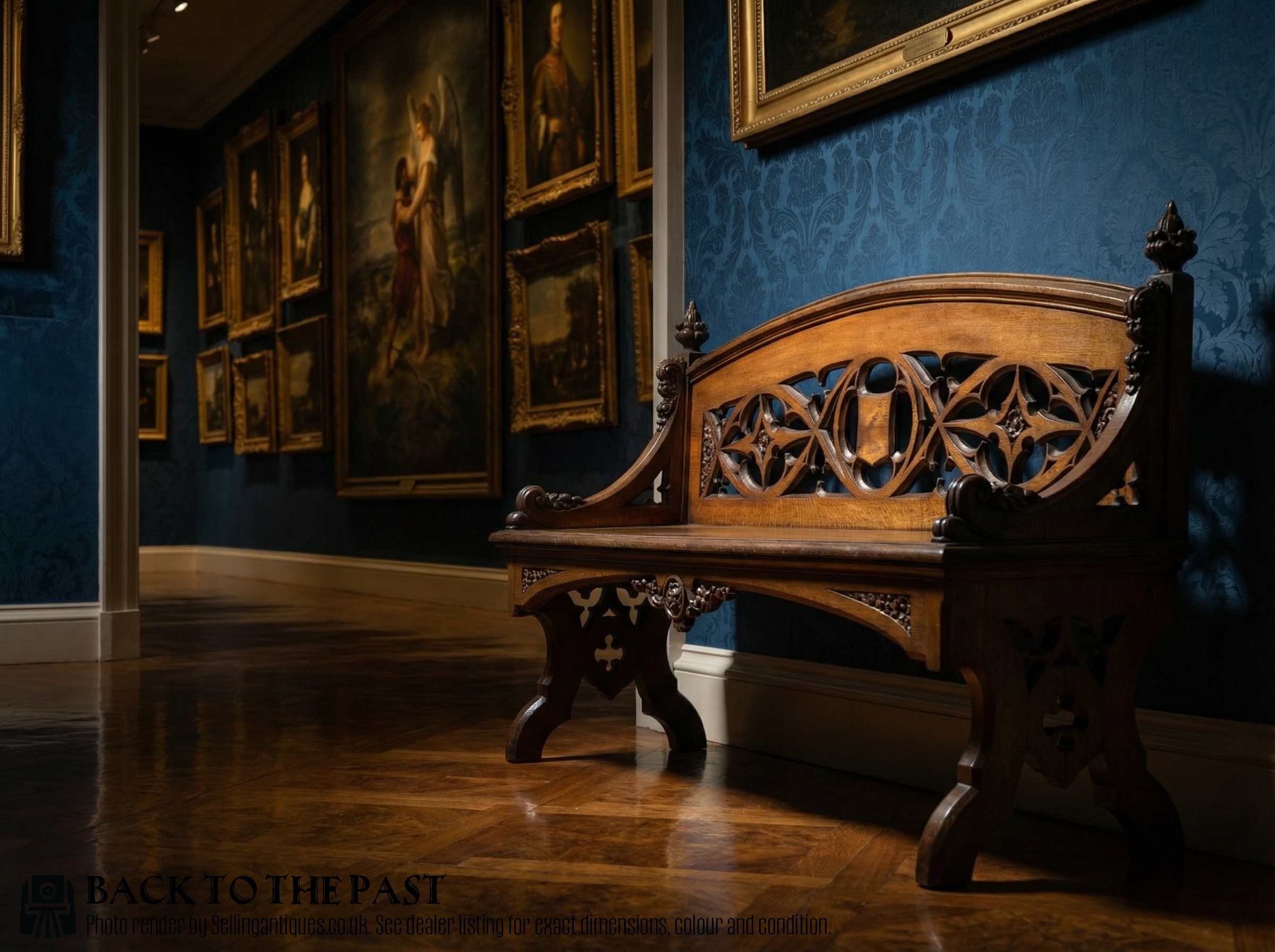
How they were made
Maker workshops utilised solid oak to build these heavy benches, relying on traditional joinery methods to ensure durability in busy entrance halls. Timber surfaces received deep carving to replicate medieval tracery and linenfold panels.
Metal fittings such as brass hardware secure structural joints and provide functional accents against the dark wood. Certain configurations also integrate textile fringe and velvet elements for upholstered comfort.
Retail Price Guide 2026
Typical UK retail prices for gothic revival hall seat, calculated from the Sellingantiques database of over a million retail prices indexed since 2003. This retail price guide relies exclusively on Sellingantiques data; no external sources or auction records are used, so the figures do not describe the wider market.
Every listed piece on this page utilises solid oak as the primary structural material.
What varies in quality
Depth and crispness of the carved ornamentation separate standard production from superior examples. Master carvers produced intricate architectural motifs with sharp undercut details rather than shallow surface scoring.
The choice of timber grain and the integrity of the original joints dictate structural longevity. Heavy oak boards with rich natural patination outrank pieces constructed from lesser or mismatched timber.
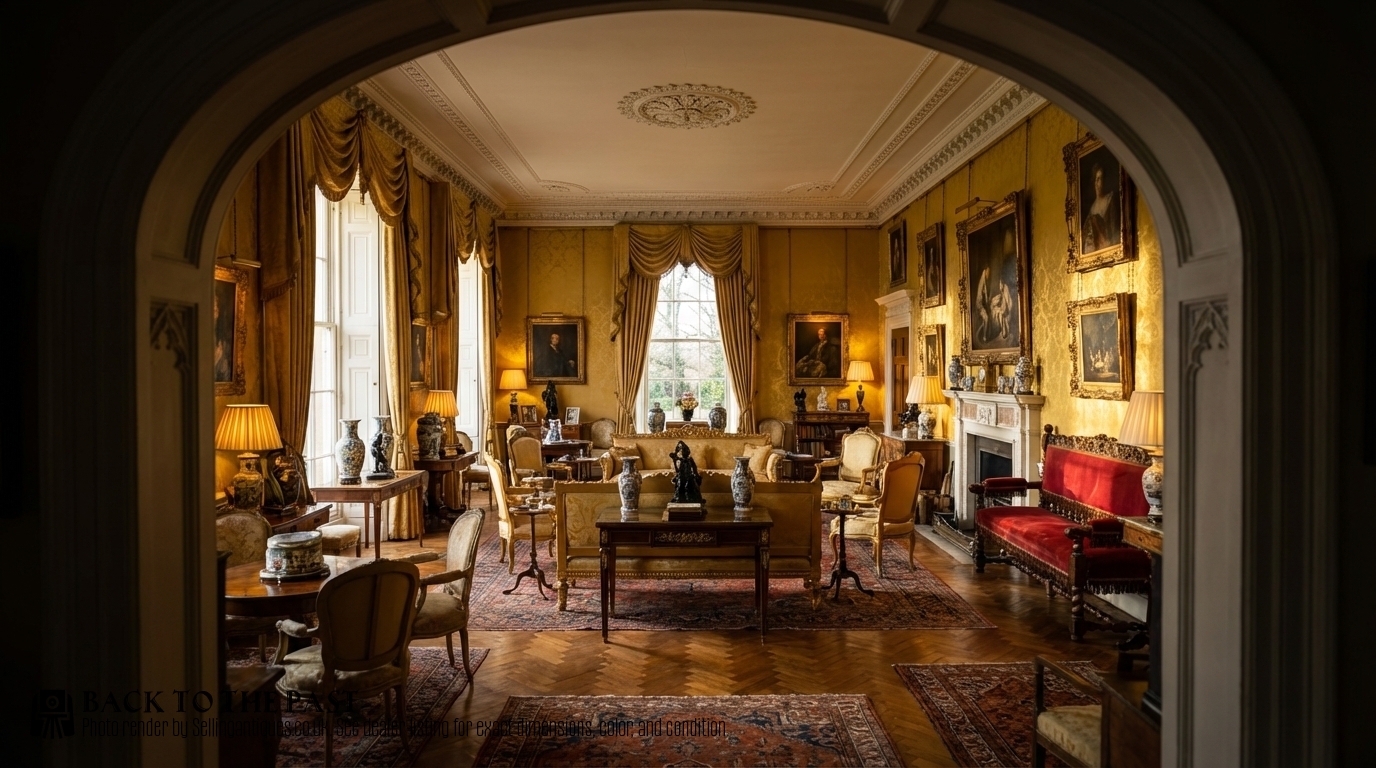
The Gothic Revival Hall Seat Glossary
- Gothic Revival
- An architectural and decorative style popular in the nineteenth century that revived medieval forms, pointed arches and heavy ornamentation. It dominates nineteenth century church and domestic interior design.
- Hall Bench
- A long wooden seat intended for an entranceway or hallway, often featuring a high back and integrated storage. These forms were essential furniture pieces in large Victorian homes.
- Monk's Seat
- A convertible bench featuring a hinged back that folds down over the seat to form a table surface. This dual purpose design dates back centuries and reappeared during the Victorian revival.
- Sett
- A traditional wooden bench with a high back and solid arms to block cold draughts in medieval and later halls. The record includes specific variations like seat and a half benches.
- Tracery
- Openwork stonework ornamentation adapted into wooden panel carving during the Gothic Revival period. It mimics the stone window patterns seen in medieval cathedrals.
Frequently Asked Questions
What is a gothic revival hall seat?
A gothic revival hall seat is a nineteenth century wooden bench built with medieval architectural motifs like pointed arches and heavy carving.
These pieces served as practical entrance furniture in Victorian homes, offering both seating and hidden storage beneath lift up lids.
How do I date a hall bench?
Dating relies on examining the timber species, joinery construction, and stylistic markers recorded during the Victorian period.
Nineteenth century pieces often display characteristic oak grain, hand cut joints, and specific revival design traits typical of workshops active around eighteen eighty.
Where were these benches placed?
These benches traditionally stood in entrance halls and vestibules where visitors removed outer garments and waited.
The solid high backs protected residents from cold draughts entering through the front door while providing a grand decorative statement.
Are these seats comfortable?
Original gothic revival hall seats prioritised architectural presence and rigid structural support over deep upholstery.
Some examples incorporate velvet elements or textile fringe, while others rely entirely on carved solid oak contours and proportions.