

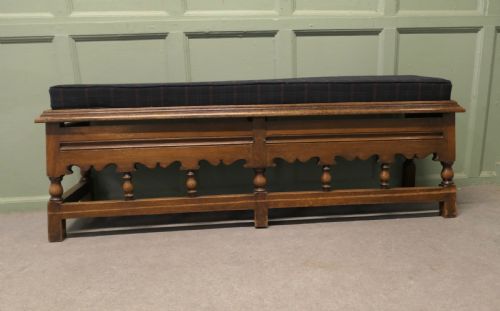


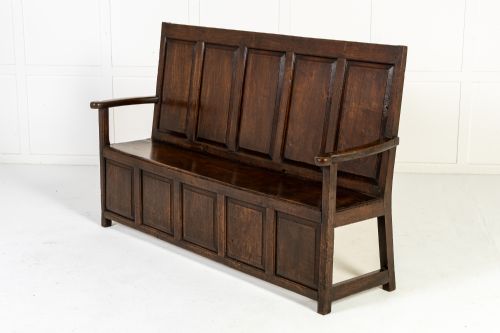
English Country Hall Bench
These heavy timber seats designed for passage and warmth are your english country hall bench, built to anchor an entrance hall.
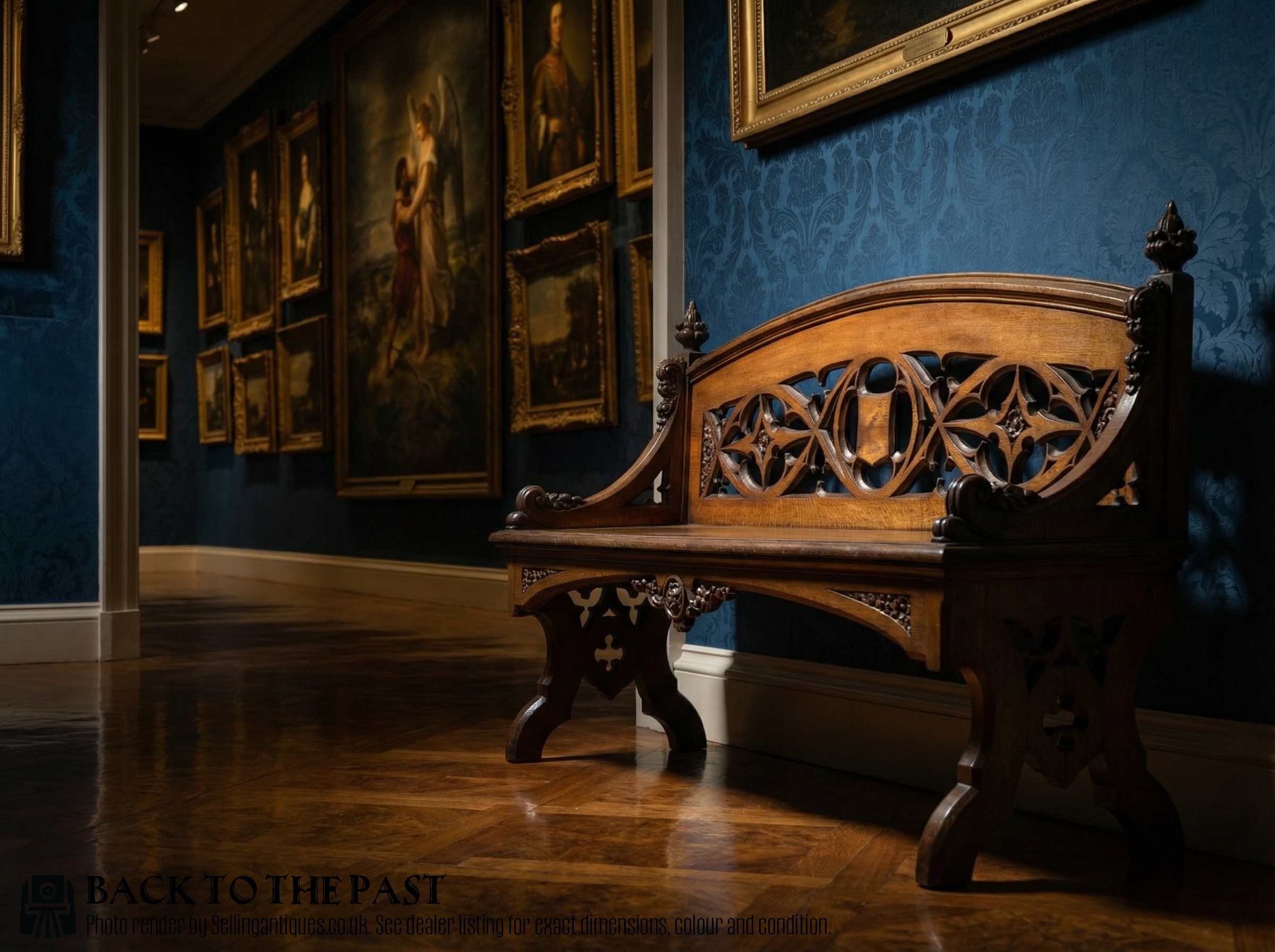
English Country Hall Bench
An english country hall bench encompasses high back settles and heavy timber seats designed for entryways and passages. These pieces provide sturdy seating while keeping drafts at bay in traditional hallways.
The versions most commonly met span from seventeenth century box settles to nineteenth century painted storage benches. They arrive in forms such as trestle tables, hall benches, and settle benches.
Makers shaped these items for practical domestic use across provincial English settings. Their origins stretch from robust seventeenth century oak constructions through to late nineteenth and early twentieth century examples.
How they were made
Carpenters utilised solid timber including oak, pine, and elm to construct these robust frames. Joinery relied on pegged mortise and tenon joints to withstand heavy daily use.
Some examples received coats of paint or incorporated iron hardware for added reinforcement and storage utility. Upholstery materials such as tweed, wool, and leather occasionally appear on seating surfaces.
Listings feature oak, pine, and elm across periods spanning the seventeenth, eighteenth, nineteenth, and early twentieth centuries.
What varies in quality
The selection of timber dictates the foundational character of each piece, with dense oak and figured elm offering superior presence compared to simpler pine. The integrity of the original construction and age of the wood govern the overall standing.
Proportion and surface patina distinguish simpler utilitarian items from more substantial provincial examples. Retained surface treatments and original structural elements elevate the character of the seating.
The English Country Hall Bench Glossary
- Settle
- A wooden bench with a high back and arms, often featuring a box compartment beneath the seat for storage. This form kept sitters warm by blocking cold drafts in unheated halls.
- Box settle
- A variation incorporating a hinged seat lid that opens to reveal a deep storage well. These utilitarian forms housed blankets, boots, and household goods.
- Provincial
- Description for items made in the regions outside London, often displaying local traditions and available materials. These pieces prioritise honest construction over metropolitan fashion.
- Trestle
- A structural support consisting of a horizontal beam fixed to two splayed legs. This framework underpins long tables and benches.
- Bleached oak
- Timber that has undergone a process to lighten its natural tone. This treatment highlights the grain while softening the dark appearance of older wood.
English Country Hall Bench: Frequently Asked Questions
What is an english country hall bench used for?
These pieces served as practical seating in drafty hallways and entryways of traditional houses. Their high backs helped block cold air while providing a sturdy place to sit when removing boots.
Many designs also incorporated built-in storage beneath the seat for household items. They functioned as functional furniture for busy domestic spaces.
How do I date an english country hall bench?
Dating relies on examining the timber species, joinery techniques, and overall form. Seventeenth and eighteenth century examples typically feature heavy oak construction with hand-planed surfaces.
Later nineteenth and twentieth century pieces often utilise pine, elm, or applied paint finishes. Construction methods reveal the period of manufacture.
Are these benches comfortable to sit on?
Original seating surfaces consist of solid wood planks without padding. Some examples accommodate cushions or squabs upholstered in tweed, wool, or leather.
The high wooden backs provide firm upright support rather than cushioned lounging comfort. They were built primarily for durability and utility.
How do I care for antique timber furniture?
Keep wooden furniture away from direct heat sources and dramatic humidity shifts to prevent timber splitting. Regular dusting with a dry cloth maintains the surface finish.
Apply traditional wax sparingly to nourish older wood surfaces. Avoid harsh chemical cleaners that strip the historic patina.