


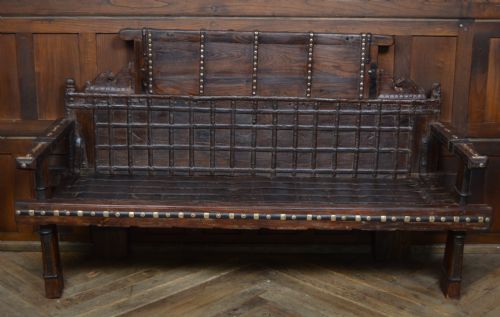


Carved Timber Hallway Bench
A carved timber hallway bench offers a practical seat with architectural presence, grounding an entrance with period character and robust construction.
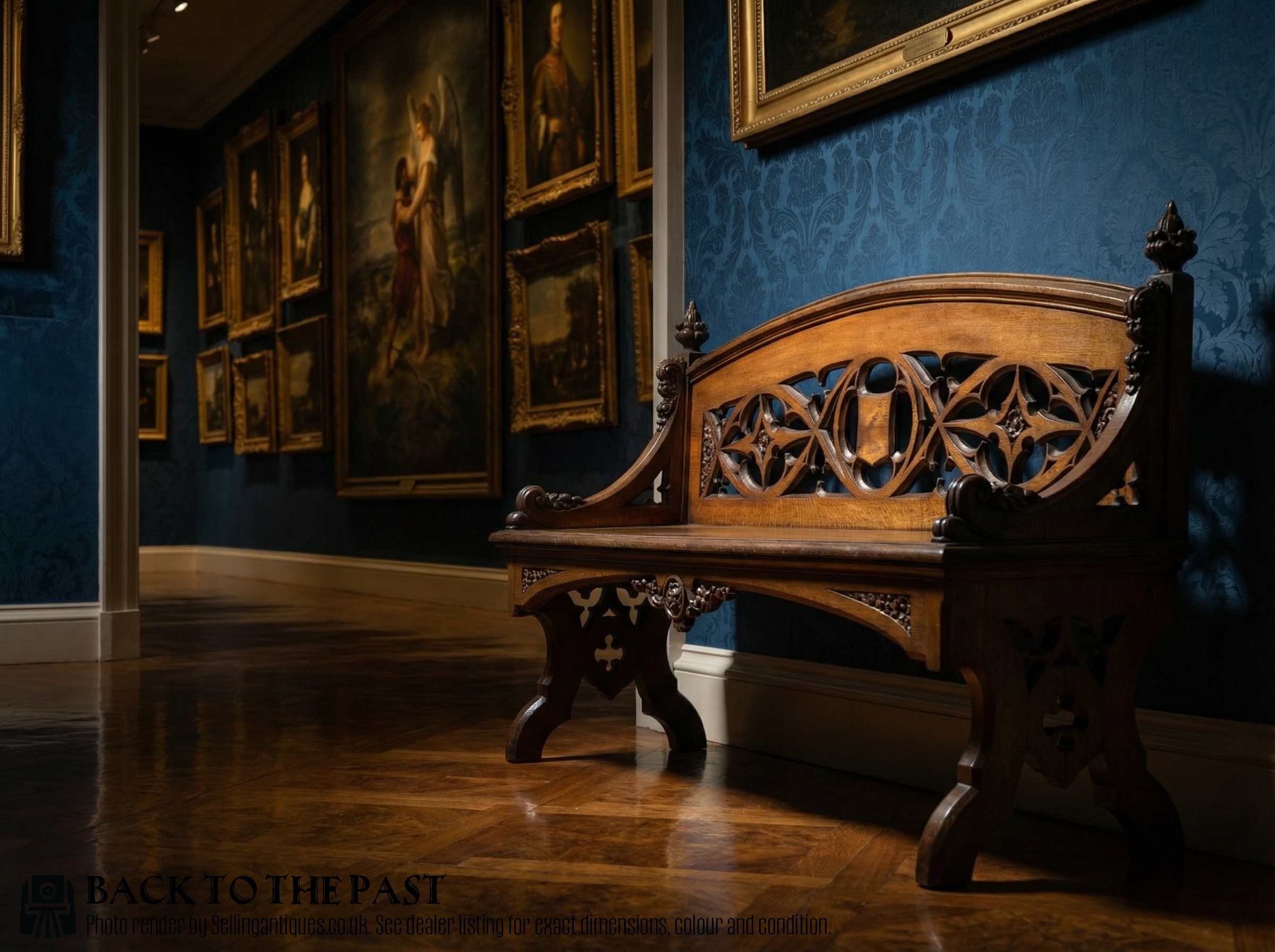
Carved Timber Hallway Bench
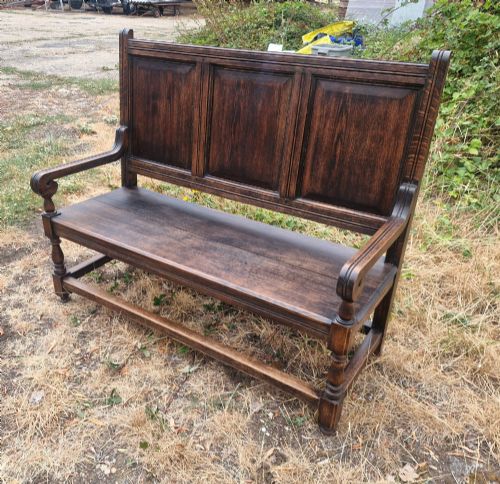
The pieces available span various historical periods including the nineteenth century, Edwardian era, and Victorian times. Buyers encounter forms ranging from high-backed settles and window seats to compact hallway chairs and carved oak benches.
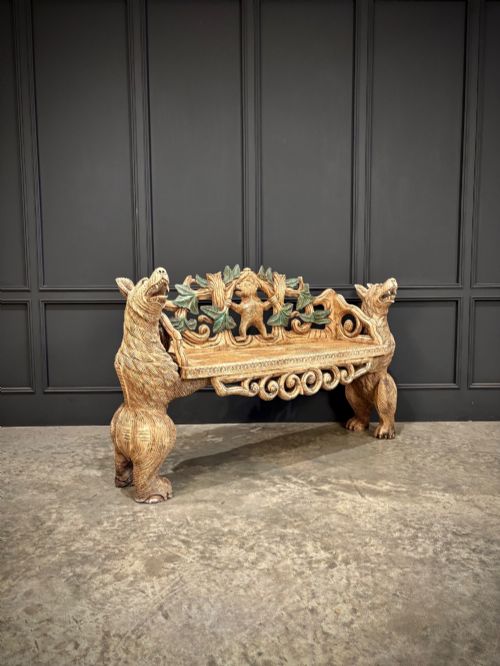
Origins and regional styles vary significantly across the selection, featuring Irish walnut, Welsh high back settles, Austrian fruitwood, and Black Forest bear benches. Oak and mahogany dominate the material selection, alongside linden wood and elm.
Materials and construction methods
Makers utilised solid timbers such as oak, mahogany, walnut, fruitwood, and elm to build these sturdy entrance seats. Joinery techniques involved traditional framing, panelling, and pegging to ensure structural integrity under daily use.
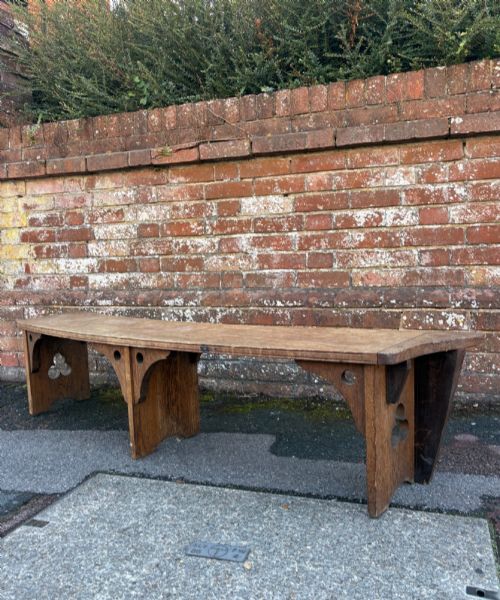
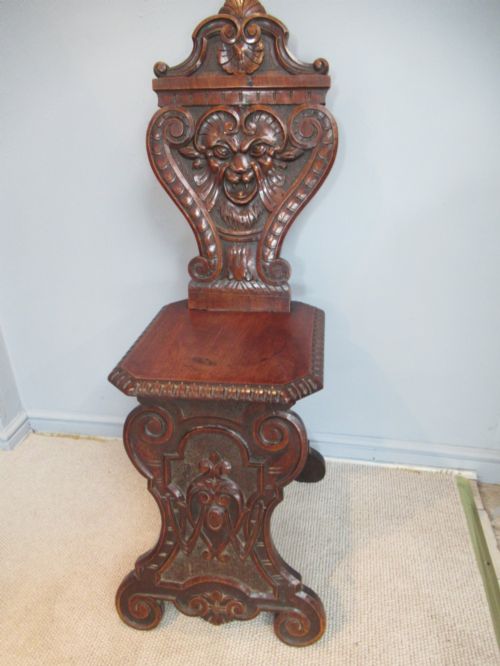
Carving serves as the primary ornamentation, displaying trefoil supports, Gothic revival motifs, and figurative Black Forest details. Surfaces are finished with natural timber patination or occasionally painted, while certain examples incorporate upholstered fabric elements.
Listings feature oak, mahogany, walnut, elm, and fruitwood across nineteenth-century, Edwardian, and Victorian periods.
Assessing quality in construction and design
The distinction between tiers rests upon the depth and precision of the carving, the selection of figured timber, and the integrity of the original joinery. Pieces featuring crisply executed Gothic tracery, figural work, or integral storage demonstrate superior craftsmanship.
Proportion and scale dictate the success of a piece within an entrance hall, ranging from small settles to large nineteenth-century examples. The preservation of original surface patination and uncompromised structural timbers further elevates the standing of individual benches.
The Carved Timber Hallway Bench Glossary
- Settle
- A wooden bench with a high back, solid arms, and often a box base for storage. This form protected inhabitants from draughts in traditional hallways.
- Gothic Revival
- An architectural and decorative style drawing inspiration from medieval buildings. Pieces display pointed arches, trefoils, and ecclesiastical ornamentation.
- Black Forest
- A nineteenth-century carving style originating from the wooded mountain region in Germany. These items are noted for naturalistic animal figures, particularly bears.
- Trefoil
- A graphic ornament composed of three overlapping rings or lobes. This shape frequently appears pierced through wooden supports in Gothic furniture designs.
Carved Timber Hallway Bench: Frequently Asked Questions
How do I choose the right size hallway bench?
Measure the available wall space and corridor width carefully before selecting a bench. Consider whether the piece includes protruding arms, high backs, or hinged storage lids that require clearance.
Compact options suit narrow entranceways, while substantial settles require deeper clearance and larger proportions to balance the room.
Where were these benches traditionally placed?
Hallway benches historically stood in entrance halls, corridors, and boot rooms of country houses and domestic dwellings. They provided a convenient spot to remove outdoor footwear and heavy garments.
Some variations also functioned as window seats or secondary seating in reception rooms depending on the household layout.
How do I care for antique timber furniture?
Maintain antique timber by keeping pieces away from direct heat sources and dramatic humidity fluctuations. Apply appropriate wax polishes sparingly to nourish the wood and preserve the surface patination.
Avoid placing damp items directly onto unsealed wooden surfaces to prevent water marks and staining.