
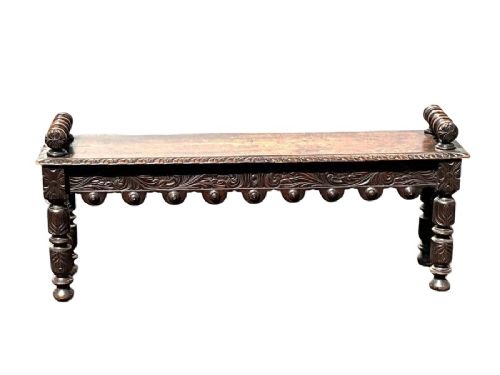
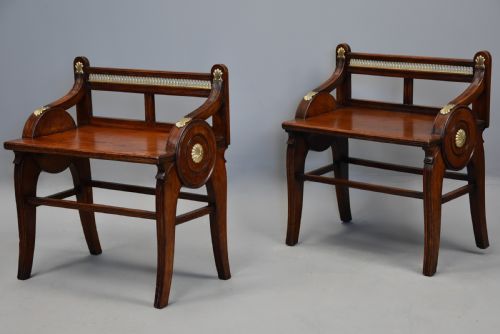
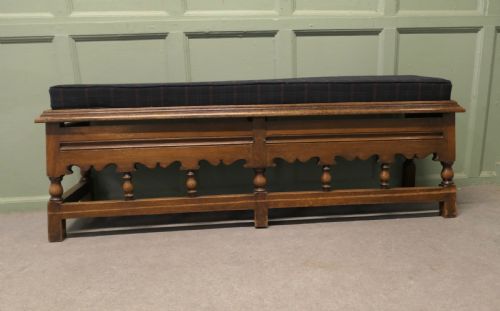


Brown Oak Window Seat
A brown oak window seat brings solid timber and architectural presence to a room, offering a long seat designed to fit beneath a bay or casement.
Brown Oak Window Seat
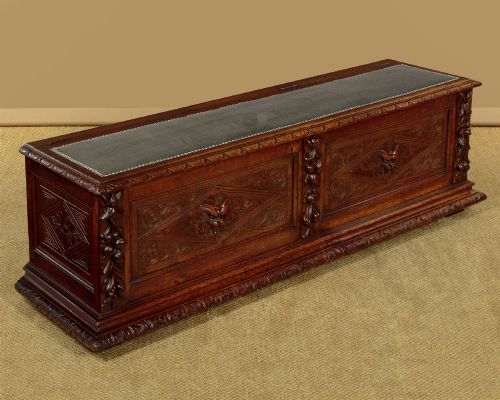
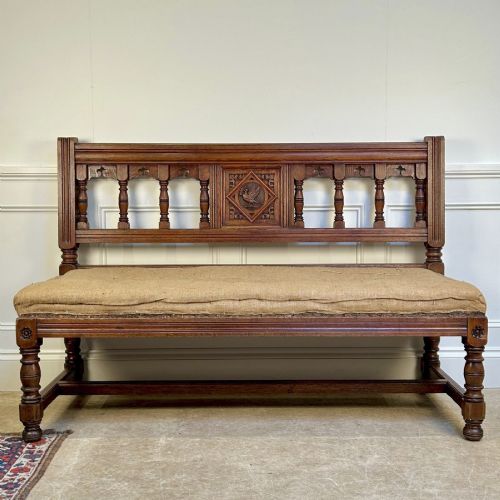
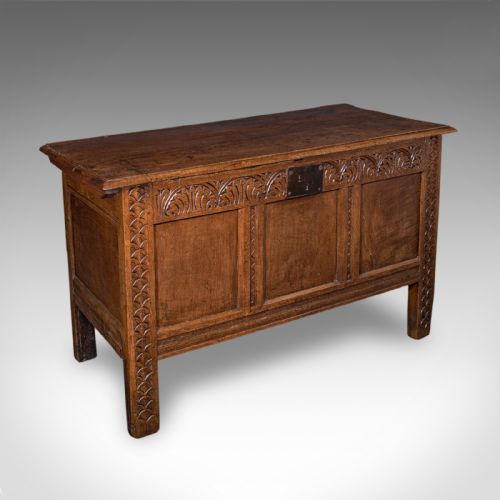
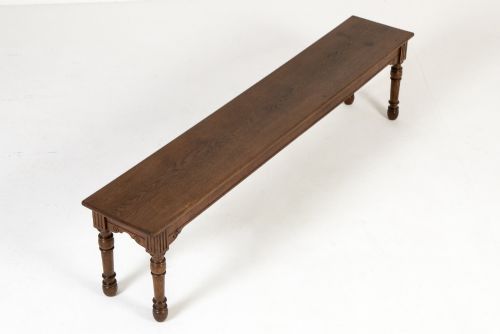
A brown oak window seat combines the function of a bench with the sturdy timber of oak, often featuring carved panels or turned supports. These pieces function equally well as hall benches, storage chests, or low stools positioned beneath windows.
The selections span from Early Georgian examples dating to the early eighteenth century through to late Victorian and early twentieth-century interpretations. Victorian and Gothic Revival styles predominate, alongside Jacobean revival pieces and Reformed Gothic designs.
Makers such as Gillows and James Shoolbred & Co. appear among the nineteenth-century examples, alongside simpler country pieces constructed in English oak. Forms range from long benches and storage ottomans to pairs of matching window seats.
Materials and construction
Construction relies heavily on solid oak, frequently augmented with burr elm, brass mounts, and iron fittings. Upholstered variants incorporate fabric, leather, hessian, tweed, and wool to create cushioned seats.
Joinery techniques span traditional panel construction, dovetail joints for storage boxes, and heavy carving executed across backs and aprons. Brass handles and mounts are pinned directly into the timber frame on specific Victorian examples.
Listings span the eighteenth, nineteenth, and early twentieth centuries, incorporating oak, brass, leather, and wool.
Assessing quality and proportion
The depth of carving and the crispness of architectural details separate standard production from superior workshop output. Pieces attributed to documented makers like James Shoolbred & Co. or Gillows display finer attention to structural proportion and timber selection.
The integration of secondary timbers, such as burr elm panels, and the retention of original brass hardware influence the character of individual pieces. Upholstery choices, from plain leather to patterned tweed, reflect the original commission level of the bench.
GIllows·James Shoolbred & Co.
The Brown Oak Window Seat Glossary
- Brown oak
- Timber taken from mature oak trees infected with the fistulina hepatica fungus, resulting in a rich, dark brown colour throughout the grain.
- Gothic Revival
- A nineteenth-century design movement utilising pointed arches, tracery, and heavy carved motifs drawn from medieval architecture.
- Reformed Gothic
- A later nineteenth-century aesthetic style prioritising structural honesty, flat surfaces, and geometric incised decoration over complex mouldings.
- Coffer
- A large wooden chest traditionally used for storing valuables or linen, which frequently doubles as a low seat.
- Burr elm
- A woody outgrowth on an elm tree that produces highly figured, swirling grain patterns used for decorative panel inserts.
Brown Oak Window Seat: Frequently Asked Questions
Where should I place a brown oak window seat?
These pieces suit long hallways, narrow corridors, and deep bay windows where low seating is practical. They also serve at the foot of a bed or against a living room wall.
Ensure the length matches the available wall space and that any lid or storage compartment has clearance to open fully.
How do I identify a Gothic Revival window seat?
Look for architectural details such as pointed arches, quatrefoils, heavy chamfered edges, and deep relief carving on the backrest. These design cues reflect medieval influences popular during the nineteenth century.
Oak timber in these pieces is often finished with a dark stain to emulate much older monastic furniture.
Can I use a hall bench as a window seat?
Many hall benches share identical dimensions with window seats and fit easily beneath low sills. Their shallow depth allows them to sit flush against walls without blocking natural light.
Check the overall height of the bench against the height of your window frame before placing it.