
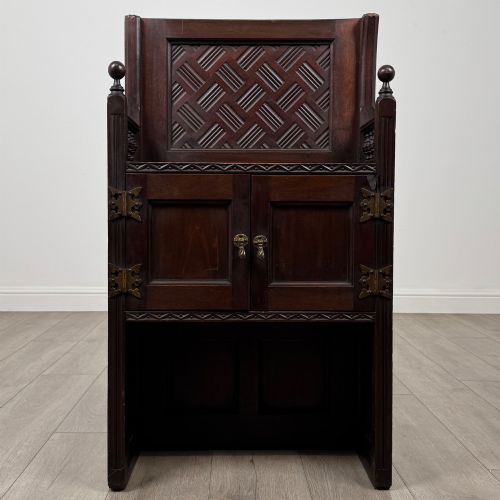
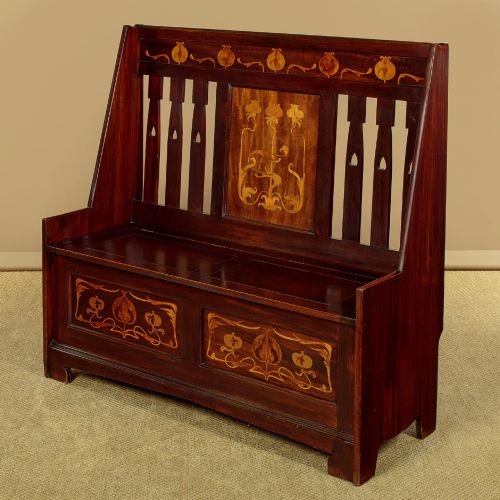
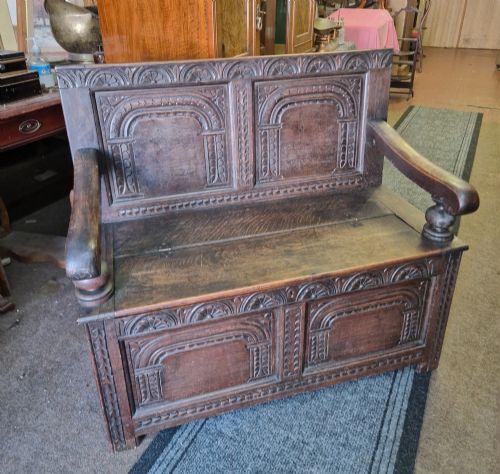
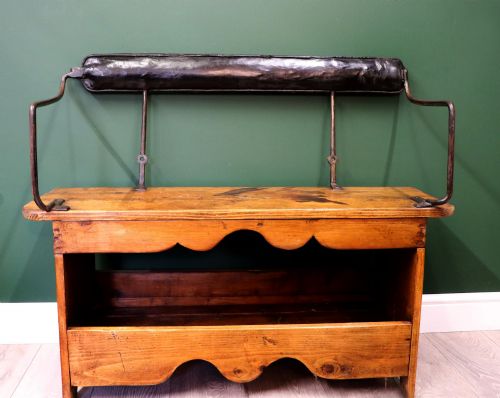
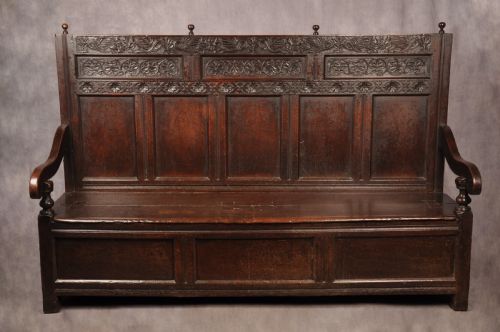
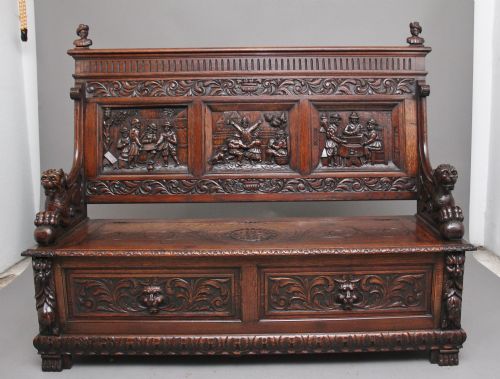

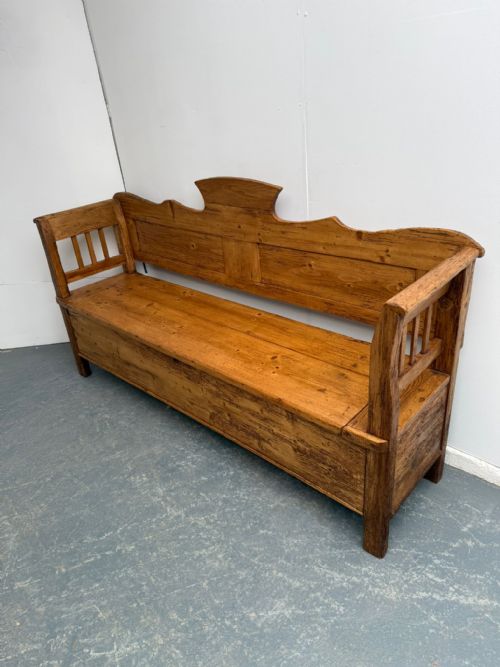

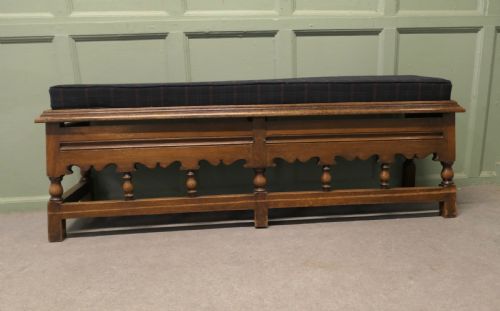
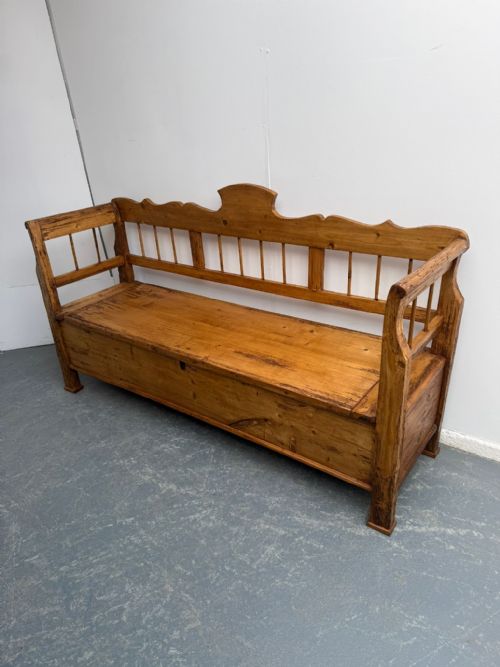

Entryway Storage Seat
An entryway storage seat provides a practical halt at the door, combining a place to sit with a concealed compartment for boots or coats.
Entryway Storage Seat
When searching for an entryway storage seat, buyers encounter a robust lineage of hall benches, settles, and box settles that have served hallways for centuries. These pieces appear frequently in oak, pine, and mahogany, spanning eras from the Georgian period through the Victorian age and into the early twentieth century.
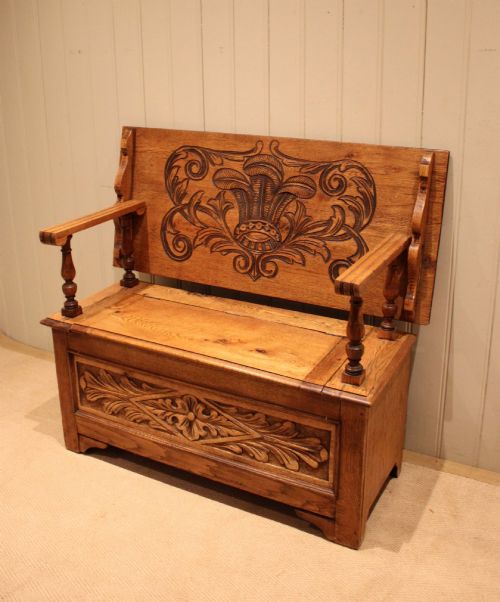
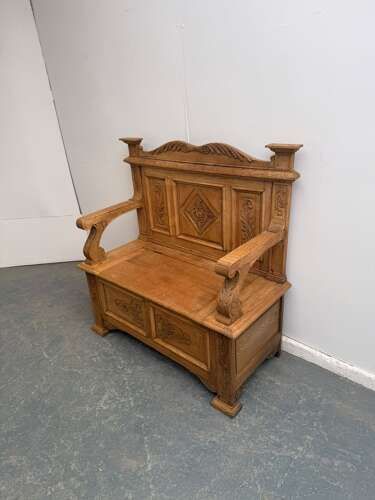
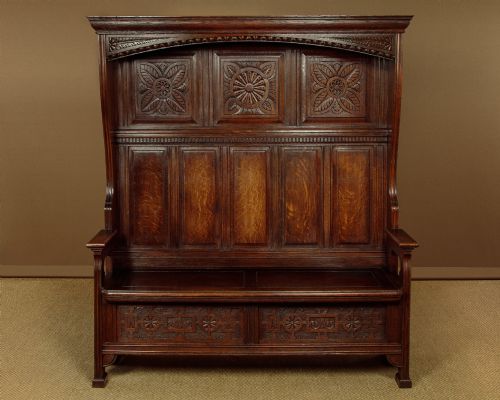
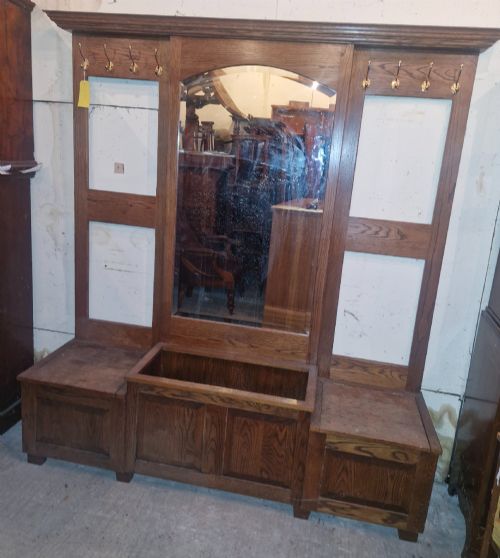
The most common form on this page is the oak box settle, often featuring a lift-up lid for storage, high panelled backs, and carved details such as the Green Man or Jacobean motifs. Alongside these traditional settles, buyers find hall stands, cabinet seats, and occasional walnut or pine variants designed to organise an entrance hall.
Materials and construction
Makers built these pieces primarily in solid oak, pine, and mahogany, utilising dense hardwoods and durable softwoods suited to heavy daily use in a hallway. Joinery relied on panelled construction, pegged joints, and solid timber lids that could double as seating.
Carving and wax finishes define the surface work, with craftsmen applying detailed relief patterns, canopy tops, and occasional brass fittings. Waxing brought out the golden or dark tones of the timber while protecting the wood from moisture brought in through the door.
Regional styles include North Country box settles, Hungarian pine examples, and Arts and Crafts pieces with carved details.
Judgments of quality
Quality rests upon the integrity of the timber and the depth of the carving, distinguishing heavy solid oak examples from lighter or later utility pieces. The best pieces display harmonious proportions, substantial panel work, and timber that has matured with an even, waxed patina.
Finer examples retain original hinges, authentic lift-up mechanisms, and crisp hand-carved details like canopy tops or regional motifs. Lesser pieces may show heavy later alterations or diminished structural soundness in the seat storage compartment.
James Shoolbred & Co.
The Entryway Storage Seat Glossary
- Settle
- A wooden bench with a high back, solid arms, and a box seat compartment beneath the cushion. It served to keep draughts away from the door in older halls.
- Monks Bench
- A convertible piece of furniture featuring a hinged back that folds down over the arms to form a table top above the storage box.
- Box Settle
- A bench fitted with a concealed storage cavity accessed via a lift-up seat lid. This compartment held boots, blankets, or outdoor wear.
- Canopy Top
- An overhead wooden hood projecting above the back of a hall bench or settle. It provided shelter from cold hallway drafts.
- Green Man
- A sculptural architectural ornament depicting a human face entwined with foliage and vines. It appears frequently in carved oak woodwork.
Entryway Storage Seat: Frequently Asked Questions
What is an entryway storage seat?
An entryway storage seat is a functional hall bench or box settle designed to provide seating while concealing boots, shoes, or outdoor gear within a lift-up compartment.
These pieces range from Georgian oak settles to Edwardian and Victorian hall cupboards, offering practical organisation for an entrance hall.
How were box settles used historically?
Historically, box settles stood in hallways, kitchens, or taverns to provide a sheltered seat away from cold draughts near exterior doors.
The lift-up seat allowed households to store heavy outer garments, boots, and everyday items out of sight.
What woods were used for hall benches?
Makers constructed hall benches primarily in solid oak, pine, and mahogany, occasionally using walnut or Brazilian mahogany for finer commissions.
Oak remains the most prevalent timber found across Georgian, Victorian, and early twentieth-century examples.