
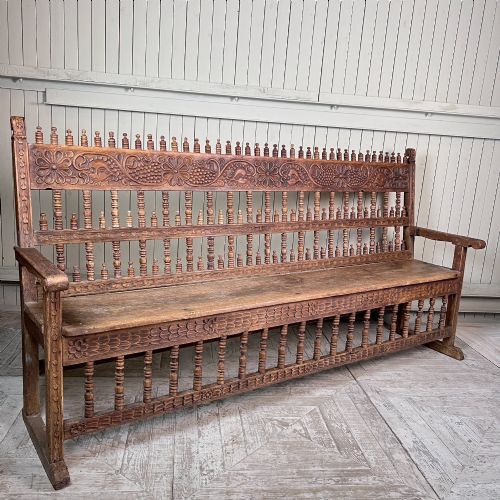
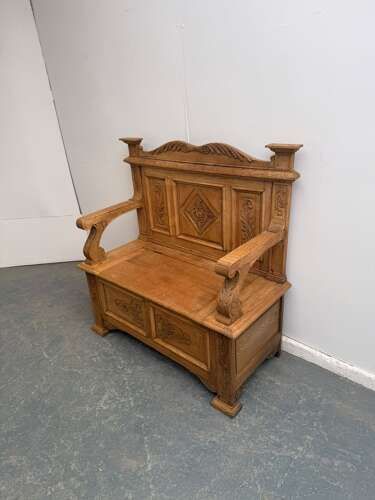
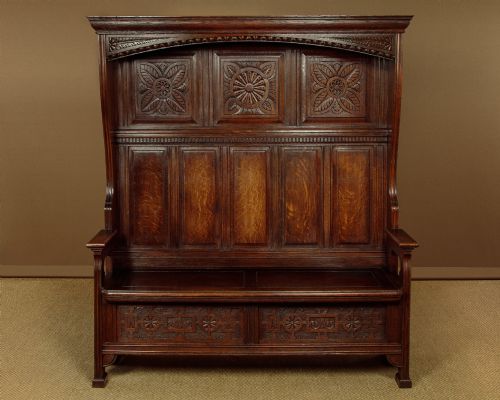
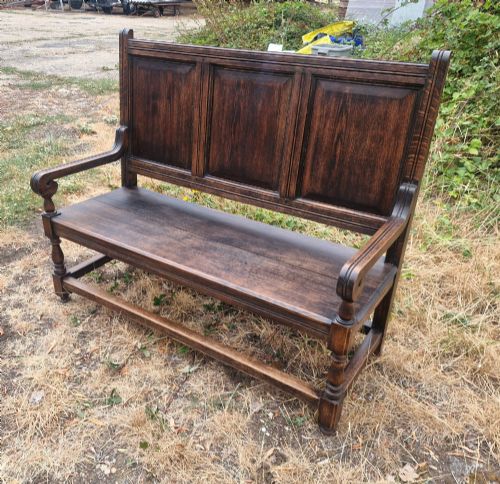
Carved Wooden Settle Bench
A carved wooden settle bench provides solid seating with high backs and storage, drawing from centuries of robust joinery.

Carved Wooden Settle Bench
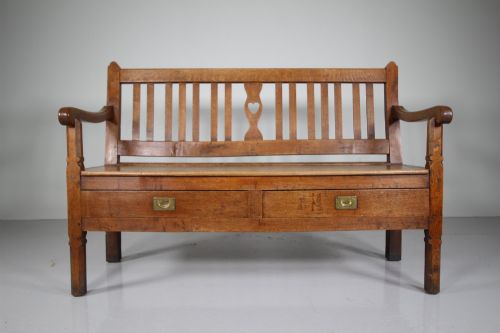
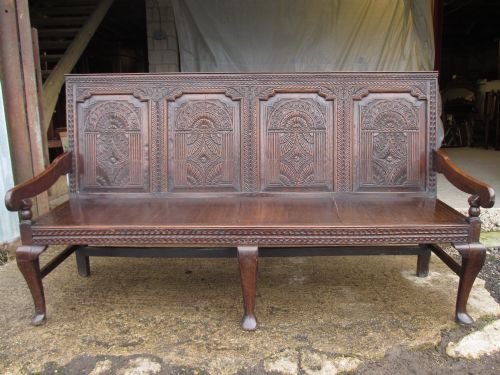
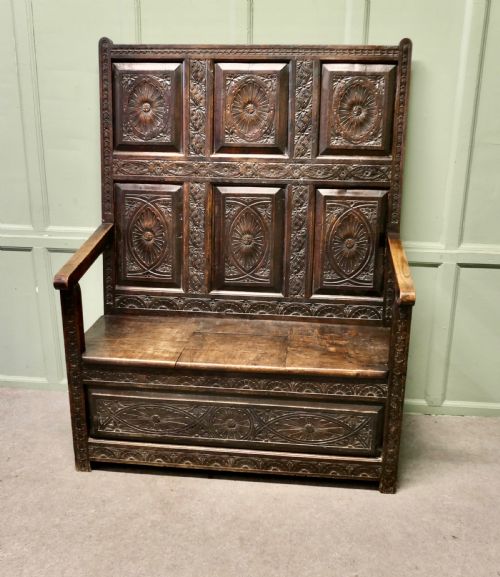
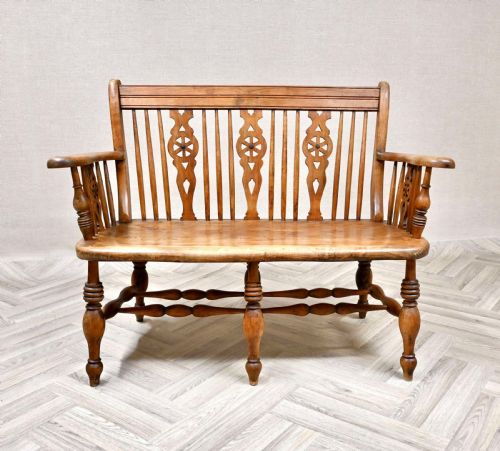
A carved wooden settle bench combines structural seating with high panelled backs designed to block draughts in hallways and living spaces. The examples you encounter on this page span several centuries, with particular emphasis on 18th century and 19th century variations.
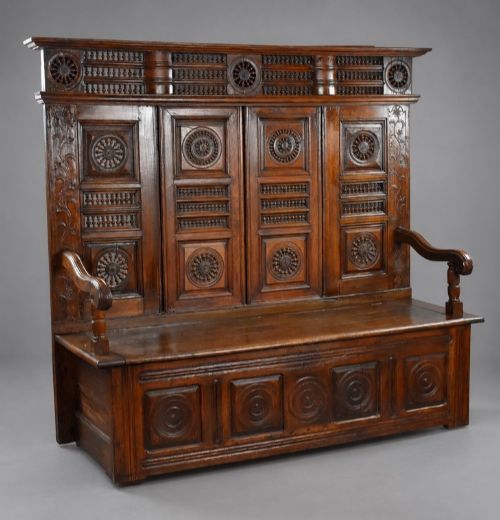
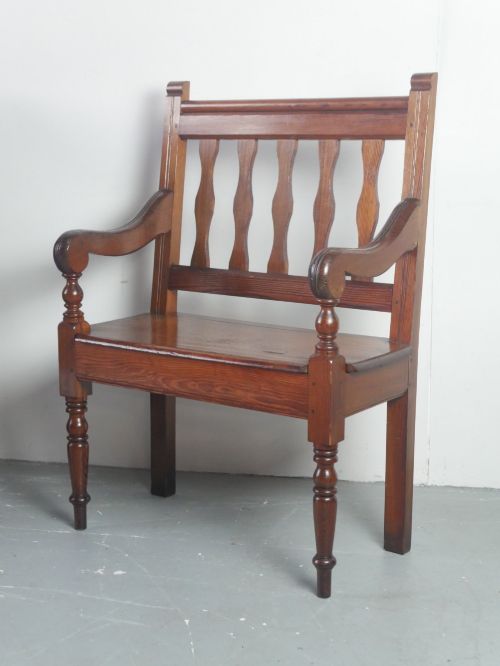
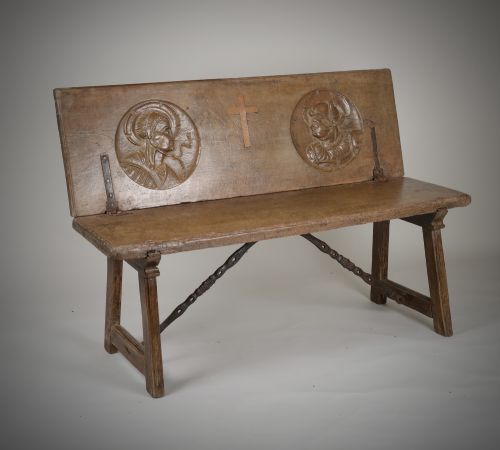
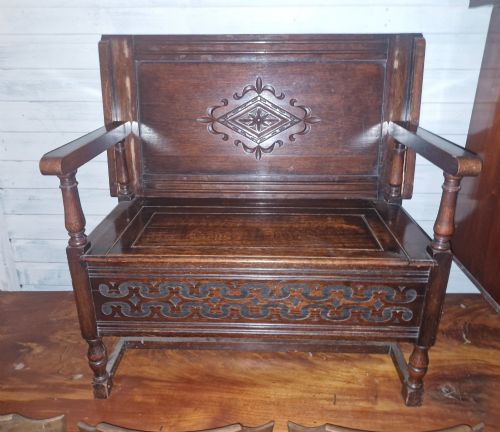
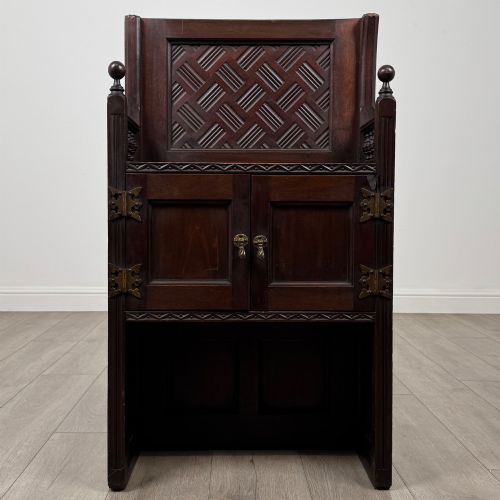
Forms range from simple straight-backed hall seats to large box settles featuring lift-up seats or integrated cabinets for storage. You will also find regional variations including English country pieces and Spanish colonial examples.
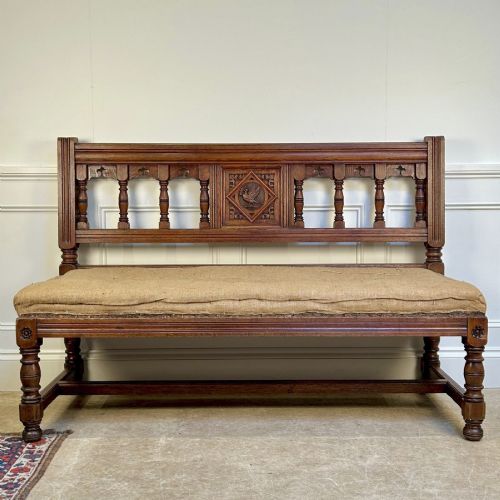
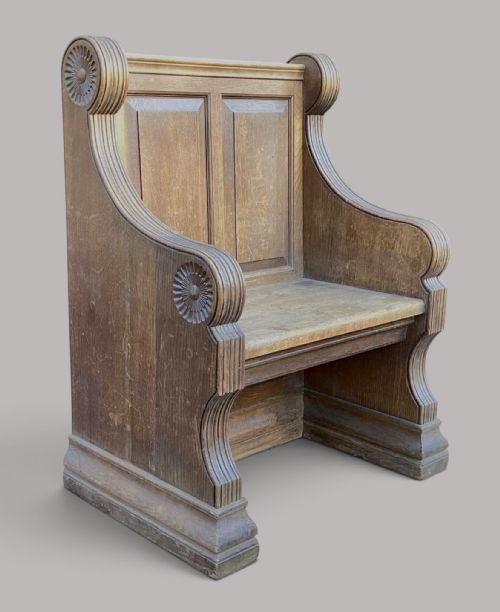
The dominant material throughout the selection is oak, though you will discover pieces fashioned from mahogany, pine, walnut and exotic hardwoods. Stylistic influences cross from Jacobean Revival and Gothic Revival into Arts and Crafts interpretations.
Materials and construction methods
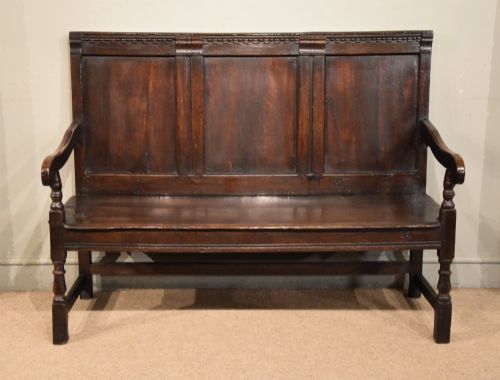
Carpenters relied primarily on solid oak, utilising traditional frame and panel construction to accommodate seasonal wood movement without splitting. Joints were typically pegged, creating rigid frameworks capable of withstanding heavy daily use.
Carving was executed directly into the timber using hand chisels and gouges, producing relief panels depicting floral motifs, tracery or geometric patterns. Surfaces were often finished with wax or polish to protect the timber while highlighting the grain.
Periods represented span from the 17th century through the Victorian era, Edwardian period, and into the 1930s.
Assessing craftsmanship and condition
Quality rests heavily on the depth and crispness of the hand carving, alongside the integrity of the original timber framing. Pieces retaining their early box seats and integrated storage compartments command greater attention from collectors.
Proportion and architectural presence separate standard utility items from exceptional examples. The survival of untouched surfaces, original fixings and authentic patination determines the standing of a piece within its period.
GIllows·Shapland and Petter·Liberty
The Carved Wooden Settle Bench Glossary
- Settle
- A wooden bench with a high back, solid arms, and often a closed base or box seat designed to keep out cold draughts.
- Box settle
- A variant featuring a hinged seat opening to a storage compartment beneath, serving dual purposes in domestic interiors.
- Tracery
- Openwork ornamentation resembling Gothic window patterns, frequently carved into the upper back panels of ecclesiastical or revival benches.
- Cassapanca
- An Italian chest-bench combining a seat with a large storage chest beneath, often rendered in walnut with architectural carving.
- Panelling
- Framework composed of stiles and rails fitted with thin wooden inserts, providing strength and decorative depth to the backrest.
Carved Wooden Settle Bench: Frequently Asked Questions
Where did people place settles historically?
Settles were traditionally positioned near hearths in entrance halls or farmhouse kitchens to block cold air currents.
The high wooden back acted as a windbreak while the enclosed base kept firewood or household items dry and organised.
How do I date a wooden settle?
Dating relies on examining construction techniques, tool marks left by joiners, and the specific style of carving present on the panels.
Early pieces from the 17th century often display pegged frames and simple stile construction, whereas 19th century revival pieces incorporate machinery marks and softer timbers.
Can I use a box settle for storage?
The hinged seat provides deep interior space suitable for blankets, boots, or bulky items.
Care should be taken not to overload antique hinges and internal timber floors when storing heavy objects.
Are these benches comfortable for daily seating?
Most antique settles feature upright wooden backs designed for posture rather than lounging.
Many owners add loose cushions or pads to the seat base for added comfort during extended sitting.