

Dark Oak Console
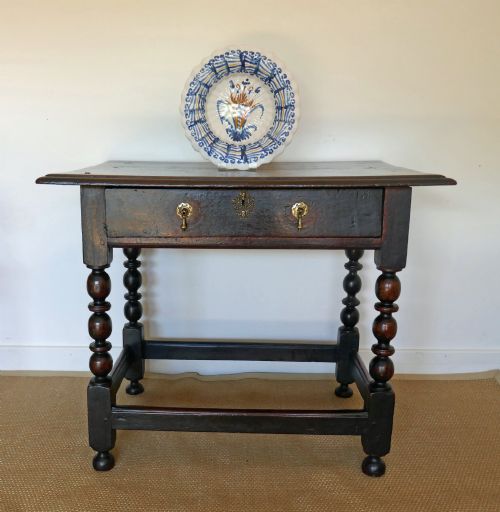
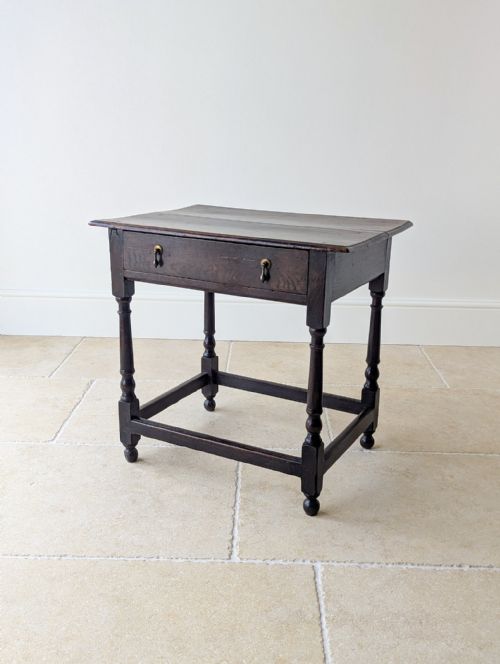
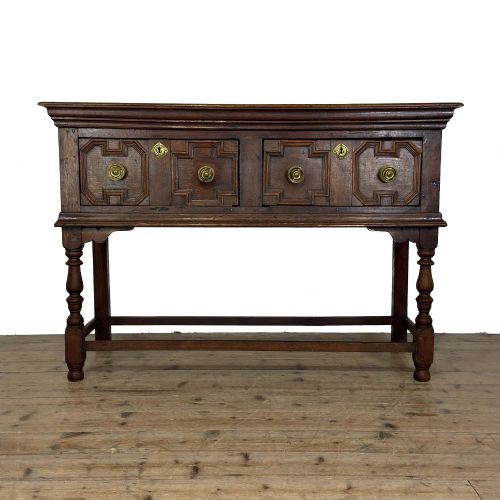
A dark oak console anchors a room with deep timber grain and enduring utility, offering surface space and period character.
Dark Oak Console
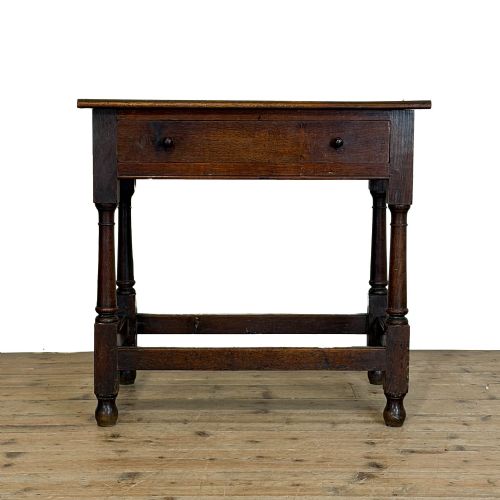
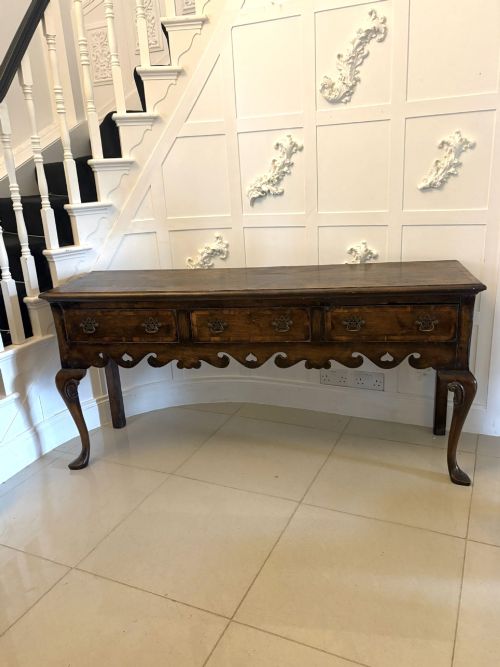
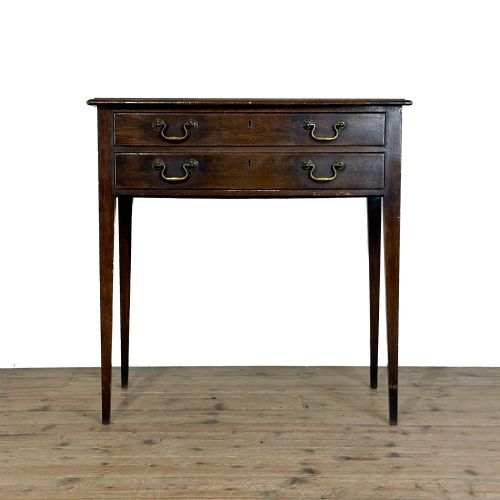
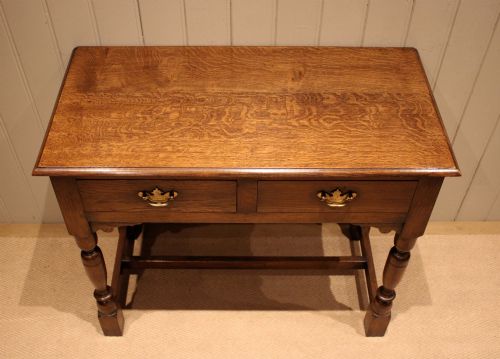
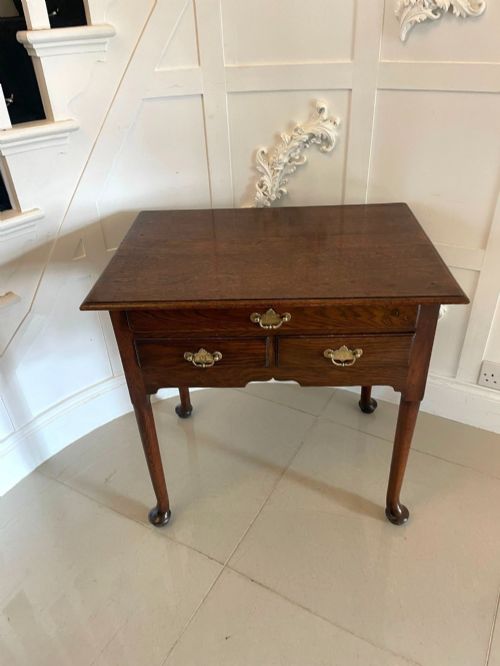
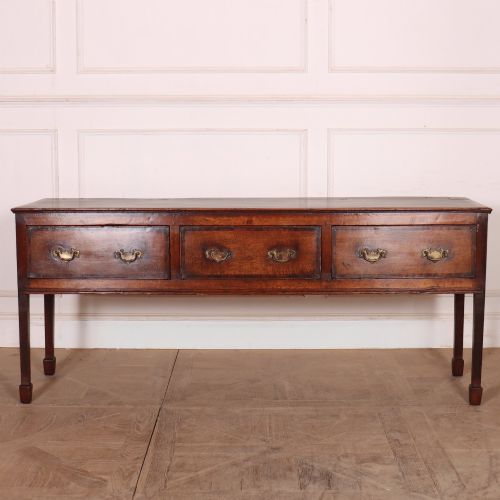
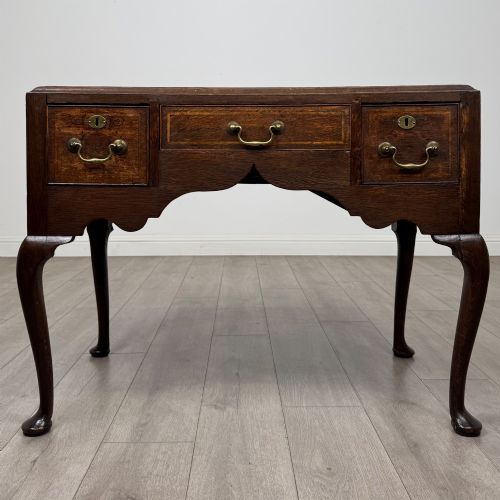
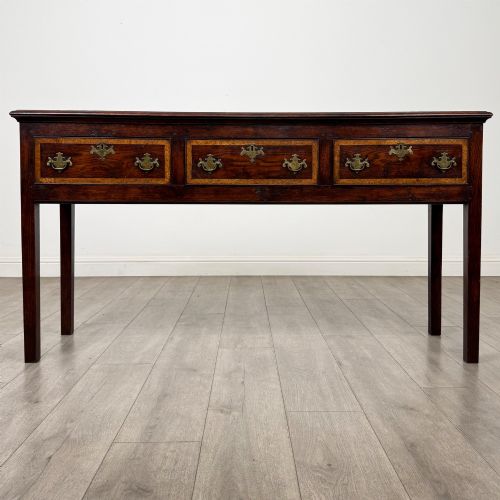
When you search for a dark oak console, you encounter a variety of forms including side tables, lowboys, dresser bases, and serving tables. These pieces span centuries of cabinetmaking, originating from 17th-century vernacular designs through to Edwardian revivals and early twentieth-century interpretations.
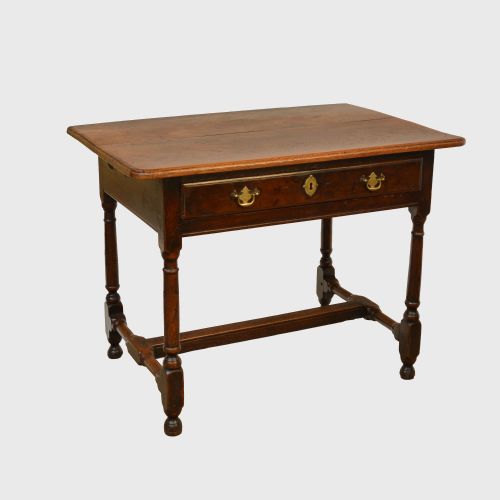
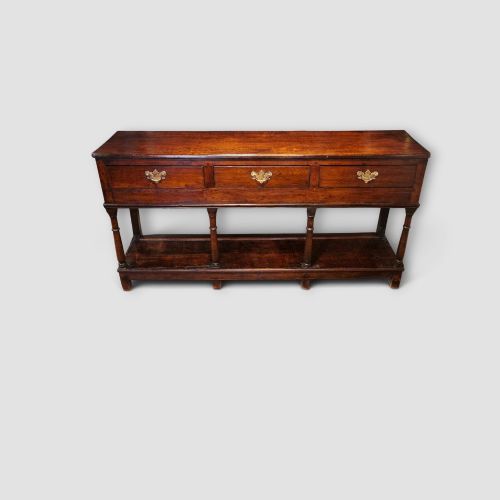
The most common examples on this page are Georgian lowboys and 18th-century dresser bases, alongside later Victorian and Edwardian side tables. Cabinetmakers built these items for domestic storage and display, utilising the substantial character of native and European hardwoods.
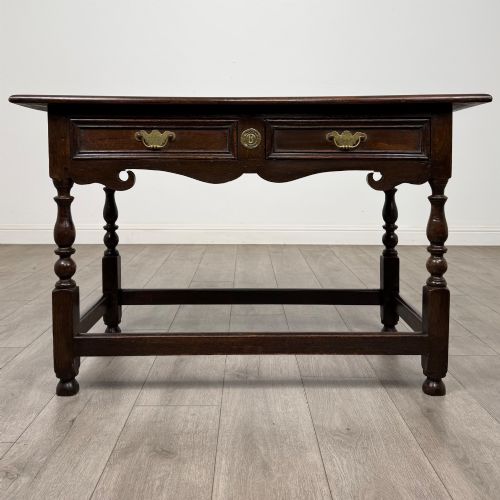
Regional variations appear across the selection, ranging from English country pieces to French provincial serving tables. Each form retains a functional surface and sturdy legs, whether shaped in cabriole style or turned with structural stretchers.
Materials and Construction Techniques
Makers relied primarily on solid oak, frequently augmented with secondary timbers such as yew, elm, or ebonised wood for contrast and structure. Joinery involved traditional mortise and tenon frames, pegged joints, and hand-cut drawer construction.
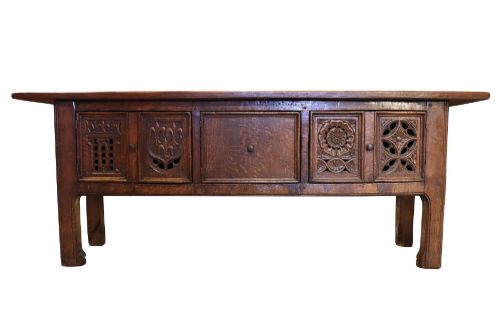
Surface treatments developed over time, moving from plain waxed finishes that highlighted the timber grain to decorative carving in Gothic Revival and Jacobean styles. Brass drop handles and escutcheons completed the hardware on drawers, while occasional marble inserts provided durable tops.
Styles represented across the inventory include Georgian, Jacobean Revival, Victorian, English Country, Gothic Revival, and French Provincial.
Distinctions in Craftsmanship and Preservation
The finest examples display crisp hand-carving, well-proportioned timber thickness, and minimal later alterations to the primary structure. Superior pieces retain their original surface patination, showing decades of natural wear without excessive modern restoration.
Lesser items may exhibit heavy replacement hardware, overly stripped timber surfaces, or mismatched secondary woods from later repairs. Structural integrity in the legs and stretchers distinguishes a robust daily table from one compromised by past dampness or loose joints.
The Dark Oak Console Glossary
- Lowboy
- A small table with one or more drawers, typically standing on four legs and used as a dressing or side table during the 18th century. These pieces offer compact storage beneath a flat top.
- Dresser base
- A sturdy lower cabinet featuring drawers or cupboards, often used in kitchens or dining rooms for serving and storage. They form a substantial foundation beneath open plate racks.
- Credence table
- A folding or multi-legged side table originating in the medieval and 17th-century periods for holding liturgical vessels or domestic objects. Their hinged tops reveal clever mechanical supports.
- Cabriole leg
- A furniture leg that curves outward at the knee and tapers inward toward the ankle, often ending in a pad or hoof foot. This design gained popularity during the Georgian era.
- Potboard
- An open slatted shelf fitted near the floor between the legs of a dresser base. It provided practical storage for heavy pots and pans in early households.
Dark Oak Console: Frequently Asked Questions
What is a lowboy?
A lowboy is a small, waist-height table featuring a set of drawers beneath the top surface. Makers originally produced them as dressing tables or side servers in the 18th century.
They sit comfortably in modern hallways or living spaces where surface area is needed without a large footprint.
How do I date an oak table?
Dating relies on observing construction marks, joint types, hardware styles, and the overall wear of the timber. Hand-cut dovetails and pegged frame joints generally point to earlier centuries.
Comparing the piece to documented examples from the Georgian or 17th-century eras helps confirm its period of origin.
Where should I place a console?
These tables suit hallways, dining rooms, and living areas where they provide a sturdy surface for lamps and decorative objects. Their narrow proportions allow them to fit against walls without blocking walkways.
Peculiar regional styles, such as French serving tables, also function effectively in modern dining spaces.
Are these tables solid wood?
The pieces listed utilise solid timber construction, primarily oak alongside occasional contrasting woods like elm and yew. This heavy material ensures long-term stability and deep grain character.
Surfaces often display natural patination accrued from centuries of use and maintenance.