


Victorian Gong Stand
These Victorian gong stand pieces bring striking acoustic presence and rich woodwork into a hallway.
Victorian Gong Stand
A victorian gong stand serves to suspend a resonant metal disc for summoning guests to meals in country houses and large domestic halls. When searching for a victorian gong stand, buyers encounter frameworks designed to hold swinging bronze or brass discs securely while displaying distinct period character.
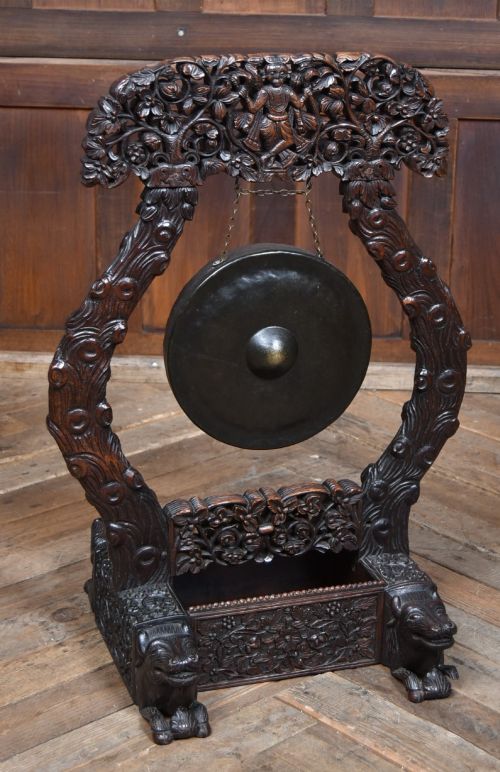
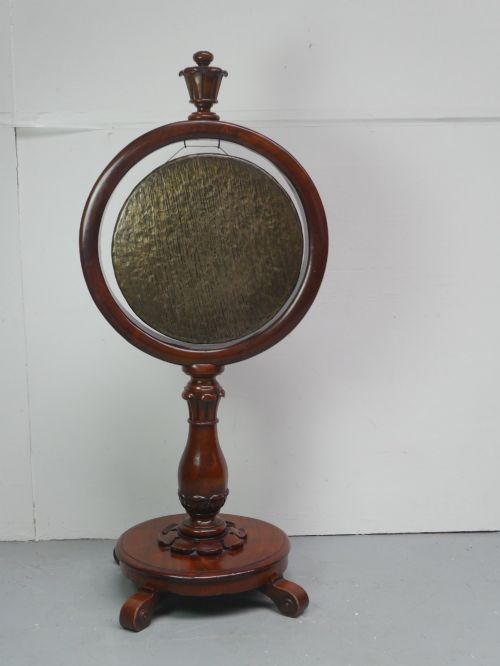
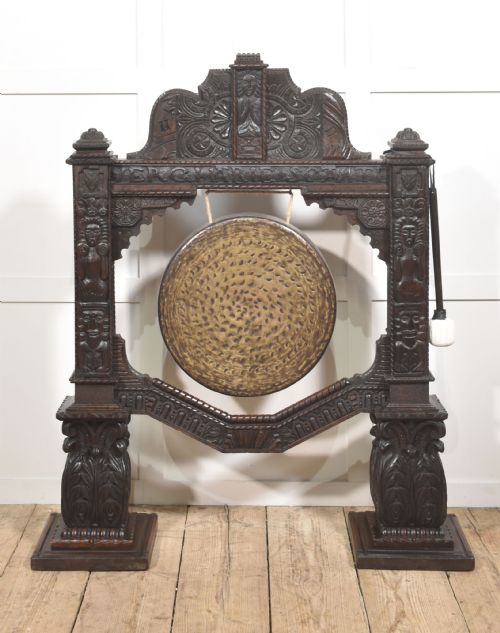
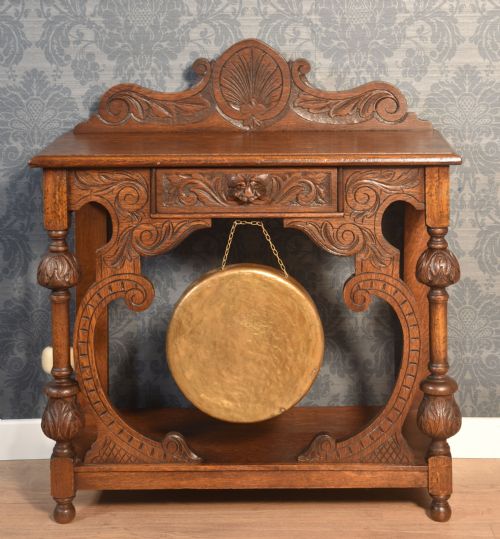
The most common examples on this page are oak and walnut dinner gongs from the nineteenth century, often showing Gothic revival or Arts and Crafts influence. Forms range from compact table gong arrangements to monumental floorstanding pieces and carved hall tables adapted for suspension.
Origins vary across British country houses and workshops, alongside imported Burmese, Chinese and Anglo-Indian items brought back during the period. Each victorian gong stand reflects the domestic ceremony and taste of its era, combining functional metalwork with substantial timber framing.
Materials and construction
Makers utilised solid timbers such as oak, mahogany, walnut and ebonised teak to build sturdy upright frames and hanging rails. Joinery techniques ranged from simple pegged joints to elaborate Gothic revival carving and Arts and Crafts hand-working.
Metal components included heavy cast bronze, brass, wrought iron and silver plating, fashioned into striking discs, fixings and decorative suspension cord. These materials were chosen for their structural strength and acoustic resonance when struck with a mallet.
Keep a padded mallet nearby, though your neighbours might object when you summon them for tea.
Assessing quality and craftsmanship
Quality rests in the depth of timber carving, the choice of dense hardwoods, and the harmony between the wooden stand and the metal gong. Finer examples display crisp mouldings, secure joints and substantial bronze or brass discs that produce a clear, sustained tone.
Simpler workshop pieces rely on plain turned framing and standard brass fixings, whilst top-tier items feature sculptural wrought iron work, intricate Burmese or Chinese carving, and integrated hall table elements that demonstrate superior design ambition.
The Victorian Gong Stand Glossary
- Dinner Gong
- A resonant metal disc suspended from a stand, used historically to announce meal times in large houses.
- Gothic Revival
- A nineteenth-century architectural and decorative style drawing inspiration from medieval forms, often seen in pointed arches and heavy timber tracery.
- Arts and Crafts
- A design movement valuing traditional craftsmanship, simple utility, and visible hand-working in wood and metal.
- Table Gong
- A smaller scale version of a suspended gong designed to sit upon a surface rather than stand directly on the floor.
- Anglo-Indian
- Furniture and decorative objects made in India by local artisans using British colonial forms and traditional eastern carving techniques.
Victorian Gong Stand: Frequently Asked Questions
What is a victorian gong stand?
A victorian gong stand is a wooden or metal frame designed to hold a suspended metal disc for calling people to dine. These pieces combined practical household signaling with decorative furniture design in nineteenth-century homes.
Most examples use sturdy timbers like oak or walnut, holding bronze or brass gongs that are struck with a padded mallet to produce a deep, resonant tone.
How were dinner gongs used?
In large country houses, the master or butler struck the gong to notify residents and guests that dinner was served. The rich sound carried across multiple rooms and corridors.
They served as both a domestic timepiece for meals and a striking decorative feature in entrance halls, welcoming visitors with acoustic presence.
How do I style a gong stand at home?
These stands fit naturally into spacious entrance halls, landings, or large living rooms where their timber frames and metal discs act as sculptural focal points. They pair well with traditional period interiors and eclectic spaces alike.
Ensure the stand has adequate clearance around it so the gong can swing freely and resonate properly without hitting surrounding furniture.
How can I tell periods apart?
Periods are identified through decorative motifs and construction details, such as the pointed arches of Gothic revival pieces or the honest joinery of Arts and Crafts items. Materials also offer clues, from nineteenth-century oak and brass to imported teak and carved Burmese elements.
Archive records and listed dates help anchor specific pieces within the broader Victorian era, spanning from the 1880s through to the early 1900s.