




Carved Brass Gong
A carved brass gong brings rich resonance and striking focal presence to a room, uniting sonorous metal with elaborate woodwork.
Carved Brass Gong
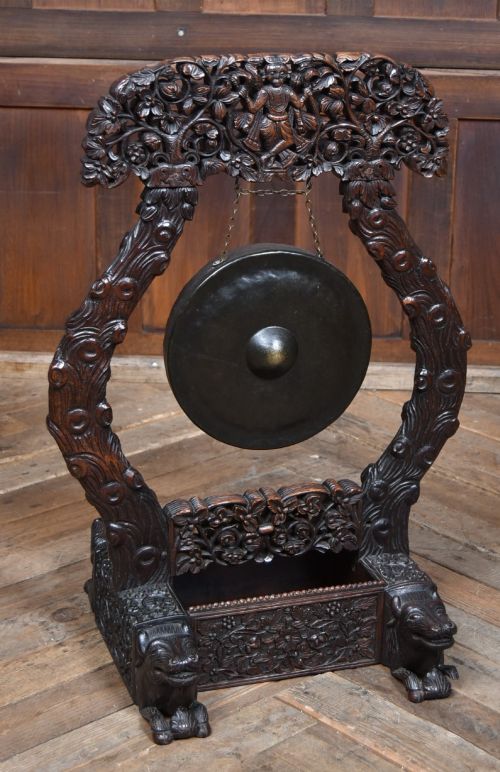
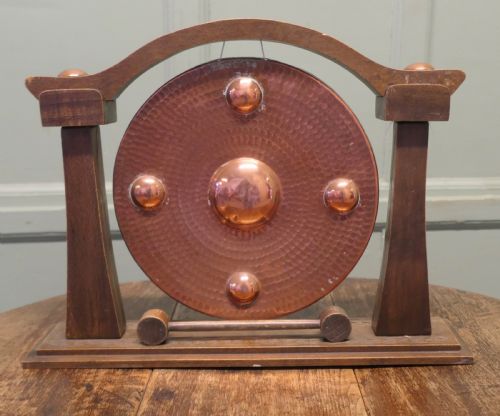
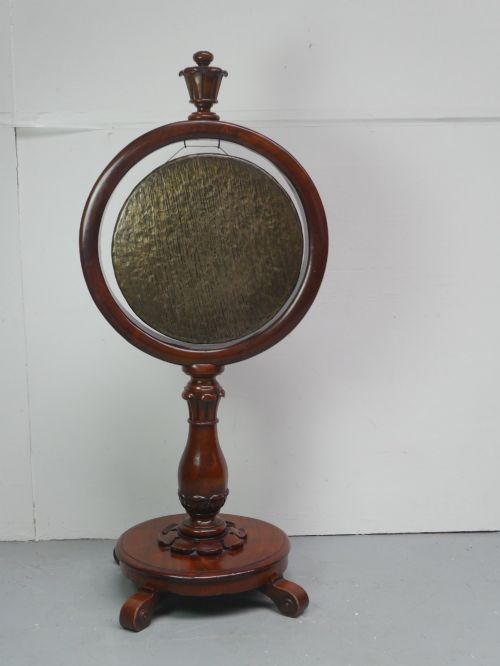
A carved brass gong combines a resonant suspended metal disc or bell with an elaborate timber frame, serving historically to summon household members to meals. When you search for a carved brass gong, you are looking at items primarily originating from the nineteenth century and the early twentieth century, spanning Victorian, Edwardian, and Arts and Crafts periods. These pieces range from substantial hallway furniture items to compact table versions designed for domestic interiors.
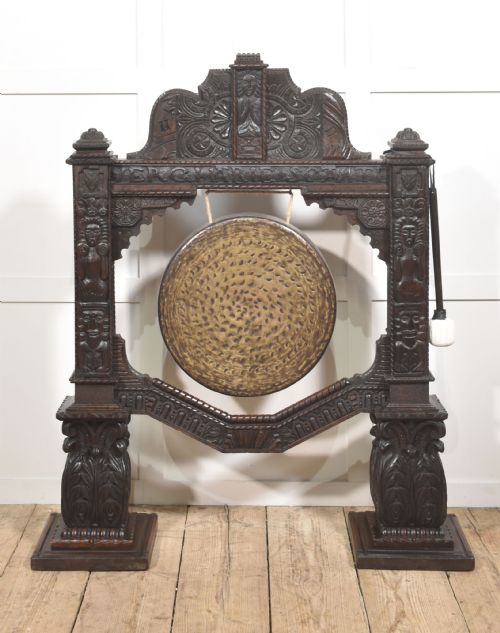
The most common versions on this page pair a polished brass bell or disc with carved oak frames, often displaying Gothic Revival motifs or intricate Oriental dragon carving. You will also encounter mahogany, rosewood, and hardwood stands alongside bronze bells, reflecting diverse global influences from Chinese export styles to Anglo-Indian craftsmanship. The fundamental purpose remains acoustic and decorative, presenting a bold visual anchor for a hallway or dining space.
How they were made
Makers fashioned the striking elements from cast or beaten brass and bronze, sometimes choosing chased surfaces to catch the light. The hanging mechanism typically relies on sturdy cord threaded through mounts to allow the metal to vibrate freely when struck.
Support frames combine dense timbers such as oak, mahogany, rosewood, and walnut with hand carving, mortise and tenon joinery, and turned wooden components. Artisans applied relief carving to the wooden uprights and bases, depicting foliage, geometric tracery, or mythical dragons.
Listings feature pieces spanning the Victorian, Edwardian, and Arts and Crafts periods, constructed from brass, oak, mahogany, and carved hardwood.
What varies in quality
Quality rests in the depth and crispness of the hand carving on the wooden framework, where deeply undercut foliage or sharply defined dragon motifs elevate a piece well above simple machine shaping. Timber selection also dictates grade, with dense, figured oak, mahogany, or rosewood providing both structural stability and a richer visual texture.
The thickness and alloy composition of the brass or bronze bell determine its acoustic purity and the sustain of its tone, distinguishing a resonant musical instrument from a dull metal plate. Furthermore, the integration between the suspended gong and its supporting architectural or figurative stand shows the care taken by the original workshop.
Winterhalder and Hofmeier
The Carved Brass Gong Glossary
- Gothic Revival
- An architectural and decorative style drawing inspiration from medieval design, frequently featuring pointed arches, trefoils, and heavy carved oak framework. This style dominates many nineteenth-century dinner gongs.
- Chased brass
- Metal decorated by hammering or indenting patterns directly onto the surface from the front rather than cutting away material. It adds texture and catch-lights to the bell.
- Japonisme
- The influence of Japanese art and design on Western decorative arts during the late nineteenth century. It appears in the clean lines and exotic motifs of certain stands.
- Chinese Export
- Objects manufactured in China specifically for Western markets, often incorporating traditional dragon carvings and motifs tailored to European interior tastes.
- Cord
- The braided line used to suspend the heavy metal bell from its wooden crossbar, allowing optimal vibration and acoustic resonance when struck with a mallet.
Carved Brass Gong: Frequently Asked Questions
How do you hang the brass gong?
The metal disc hangs by a durable cord threaded through dedicated holes or brackets at the top of the bell, looping securely over the horizontal wooden crossbar of the frame. This suspension method ensures the metal remains free to vibrate without dampening its acoustic resonance against the timber.
Inspect the cord periodically to ensure it shows no signs of fraying under the weight of the heavy brass or bronze disc. Replacement cords should match the original gauge and material strength to maintain the correct hanging height and tonal quality.
What wood types were used?
Workshop makers predominantly utilised sturdy domestic timbers like oak, alongside exotic hardwoods including mahogany, rosewood, and walnut. These dense woods provided the necessary structural rigidity to support heavy metal bells without warping under tension.
Carved details were applied directly to these solid timbers, while backing panels occasionally incorporated simpler woods. The grain and finish of the wood typically matched the prevailing furniture styles of the Victorian and Edwardian periods.
Where were gongs placed?
Dinner gongs traditionally stood in large hallways, landings, or dining rooms where their resonant sound could travel throughout the house to announce meals. Smaller table versions sat upon sideboards or hall tables for domestic use.
Positioning the piece against a stable wall or on a level surface ensures the heavy framework remains secure when the bell is struck. The decorative carving also allowed these functional objects to serve as prominent aesthetic focal points in domestic interiors.
How do I clean the brass?
Maintain the brass bell by dusting it regularly with a soft, dry cloth to prevent the accumulation of grime in chased recesses. Avoid harsh abrasive cleaners that can strip the historic patina accumulated over decades of age.
Keep moisture away from the carved wooden frame while attending to the metal component, using a separate cloth for any timber maintenance. Gentle care preserves both the reflective sheen of the brass and the polished surface of the antique wood.