



Victorian Floor Gong
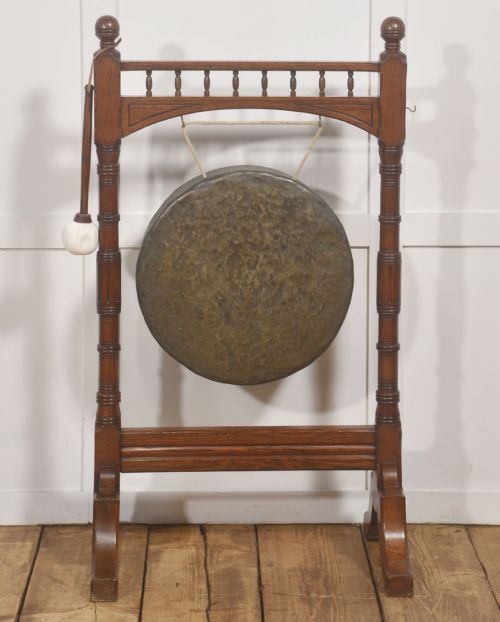
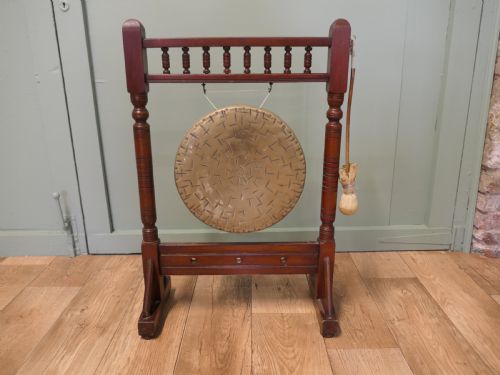
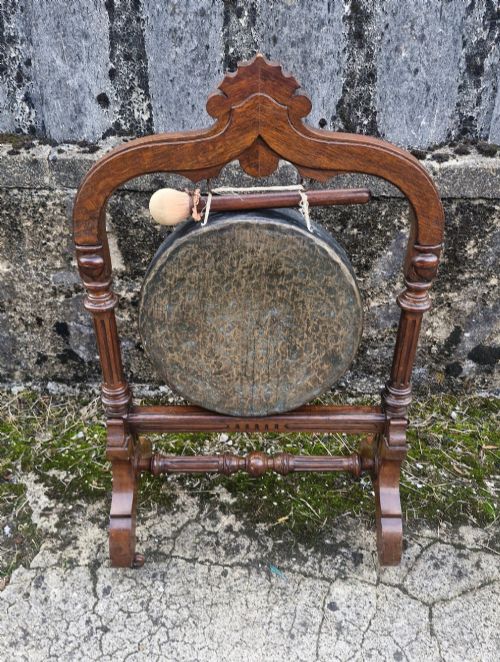
These Victorian floor gong pieces are substantial striking instruments housed in timber frames, designed to summon households to dinner with resonant authority.
Victorian Floor Gong
A victorian floor gong is a striking instrument housed in a sturdy wooden or iron frame, designed to stand directly upon the floor in a hallway or dining room. The form combines a resonant metallic disc or tube suspended by cord with a substantial architectural support structure.
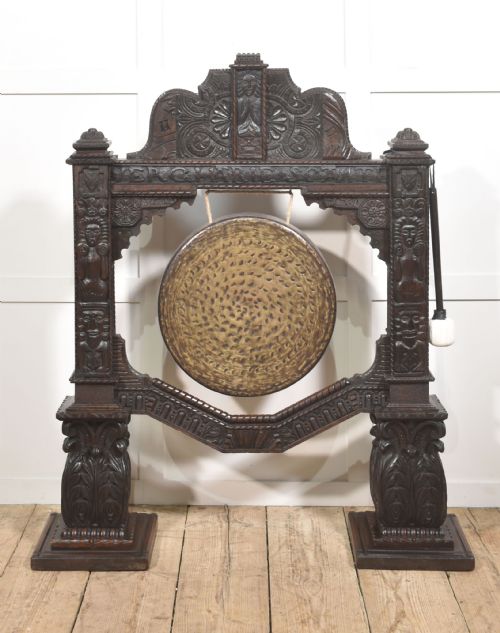
Most examples encountered on this page date from the nineteenth century or around nineteen hundred, reflecting the height of the domestic summoning ritual. These pieces range from simple timber framings to monumental Gothic revival creations.
The primary woods utilised in these frames include oak, walnut, and mahogany, often paired with brass or bronze elements. Collectors encounter both straightforward domestic versions and heavier ecclesiastical or architectural interpretations.
How they were made
Craftsmen built these frameworks using solid timbers such as oak and walnut, employing traditional joinery to support the swinging weight of the metal disc. Wrought iron also appears as a structural framing material, providing a starker aesthetic.
The metallic gong itself hangs from sturdy rope, cord, or fabric straps, allowing the resonance to vibrate freely without dampening against the frame. Wood carving frequently decorates the structural uprights, particularly within Gothic revival designs.
Victorian Floor Gong Retail Price Guide 2026
Typical asking prices for victorian floor gong among the pieces listed under this phrase on Sellingantiques today, from the lower quarter to the upper quarter. They describe what is for sale here now, not the wider market.
Victorian households relied on these deep tones because shouting down a long hallway was considered entirely unacceptable.
What varies in quality
Quality rests in the architectural ambition of the woodwork and the purity of the metal casting. Monumental carved oak or walnut frames show a higher degree of artisan effort than plain mahogany or straightforward oak framings.
The acoustic resonance of the bronze or brass disc separates fine examples from ordinary ones. A well-cast gong sustains a deep, clear tone, whilst lesser pieces produce a dull thud.
The Victorian Floor Gong Glossary
- Gong
- A resonant percussion instrument typically cast in brass or bronze and suspended within a frame. It produces a deep tone when struck with a mallet.
- Gothic Revival
- An architectural and decorative style drawing inspiration from medieval forms. Pieces in this style often feature pointed arches, tracery, and heavy carved woodwork.
- Dinner Gong
- A domestic striking instrument used in large households to announce meals. They became prominent fixtures in Victorian and Edwardian hallways.
- Arts and Crafts
- A design movement valuing handcraftsmanship and simple materials over industrial mass production. Walnut and oak pieces from this tradition show restrained, honest construction.
Victorian Floor Gong: Frequently Asked Questions
How loud is a floor gong?
These instruments produce a surprisingly deep and carrying tone designed to resonate through a large Victorian house. The sound projects well across multiple rooms without requiring excessive force on the mallet.
Heavier bronze discs produce a richer sustain compared to thinner metal plates. Owners generally adjust their striking force to suit modern domestic spaces.
Where should I place a floor gong?
Historically, these pieces stood in entrance halls or near dining room doorways to gather the household. Their substantial frames require floor space rather than tabletop placement.
Placing the frame against a stable wall prevents unnecessary shifting when the instrument is struck. The piece acts as both a functional noisemaker and a striking architectural furniture item.
How do I identify Gothic revival pieces?
Gothic revival frames display distinct architectural motifs such as pointed arches, chamfered edges, and heavy carved tracery. These details mimic medieval stone structures translated into domestic oak or walnut.
Plain framed versions lack these ecclesiastical flourishes, relying instead on simple turned spindles or straightforward rectangular timber construction.
What materials make up the frames?
Timber frames dominate the selection, with solid oak, walnut, and mahogany being the most prevalent woods. Wrought iron also appears as a primary structural material in certain examples.
Cord, rope, and fabric straps suspend the metal disc within these frames, allowing the sound to vibrate clearly. Brass and bronze form the actual striking surfaces.