

Dark Oak Commode
A dark oak commode brings heavy timber and centuries of domestic utility straight into a room.
Dark Oak Commode
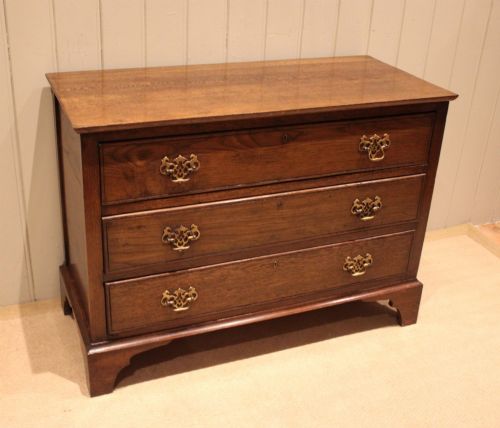
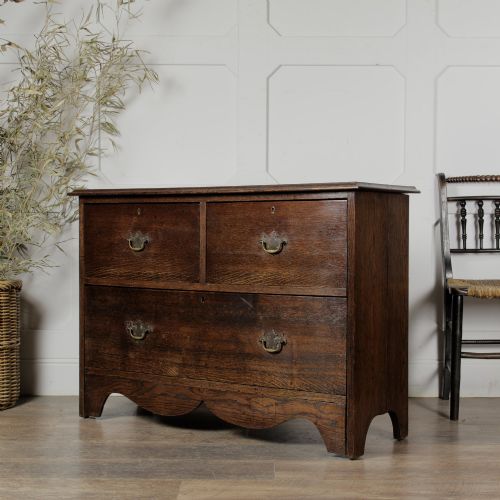
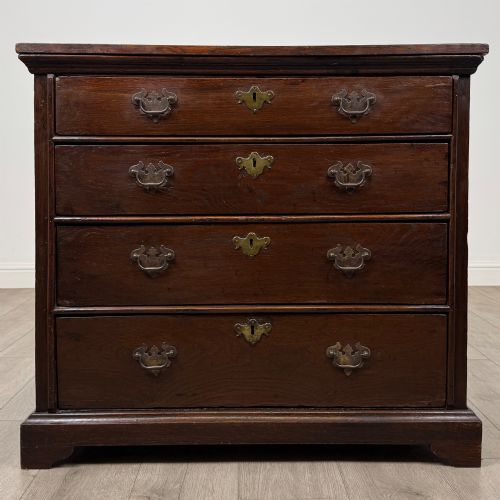
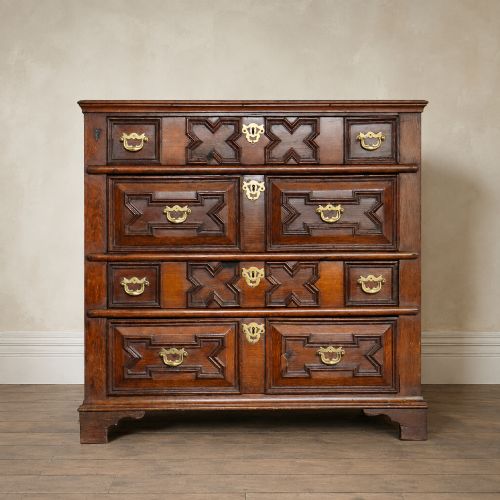
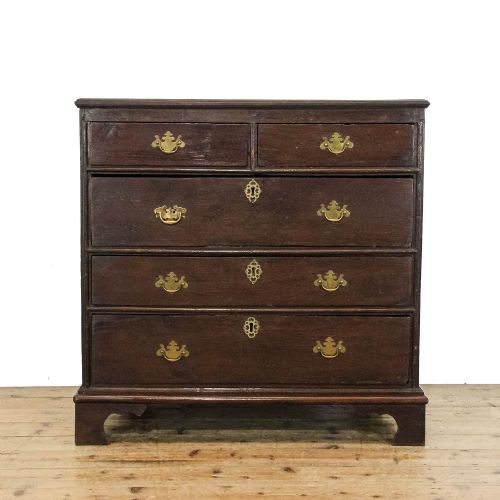
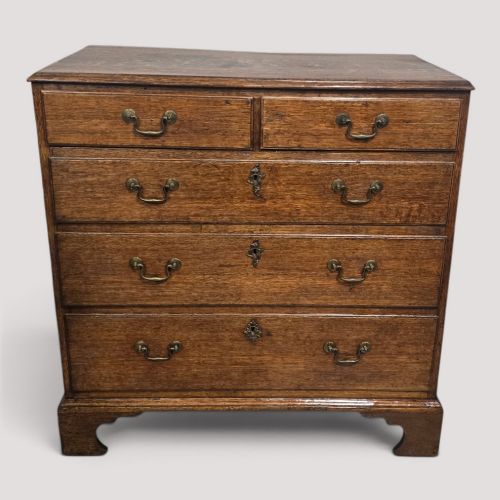
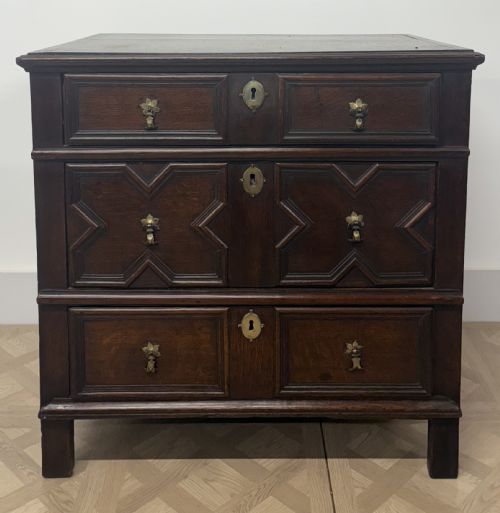
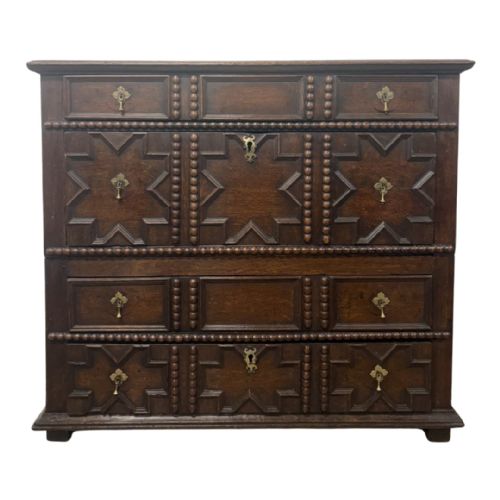
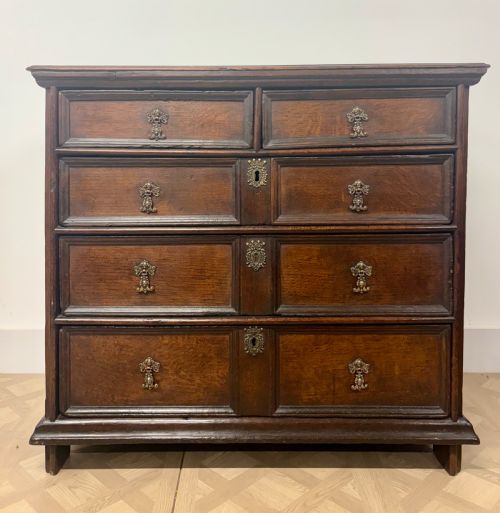
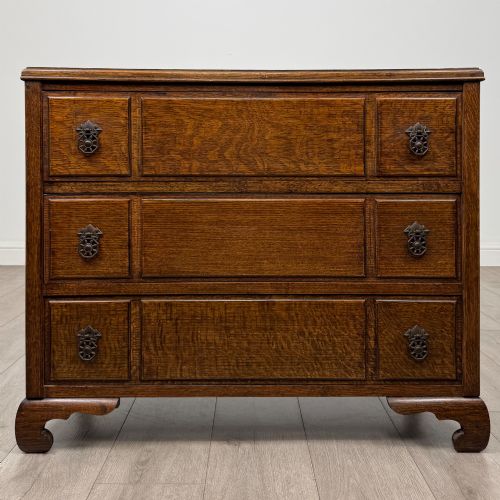
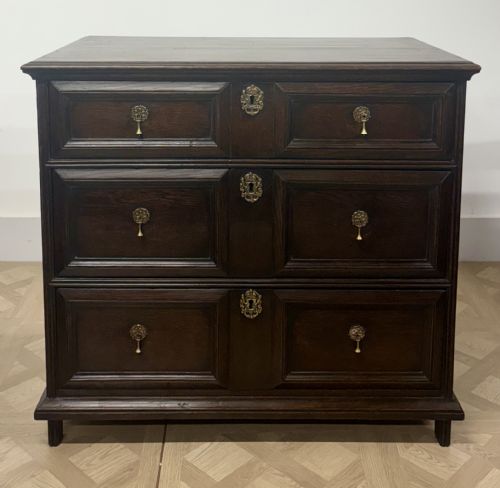
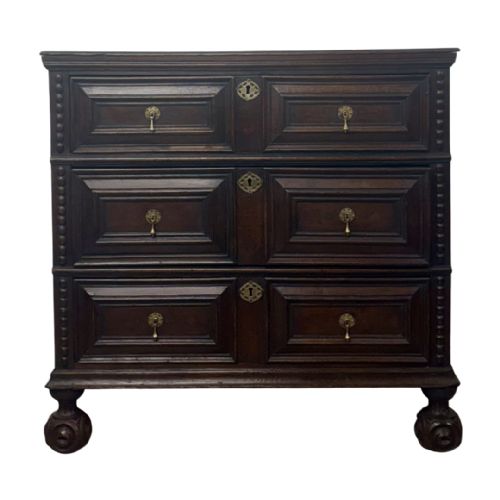
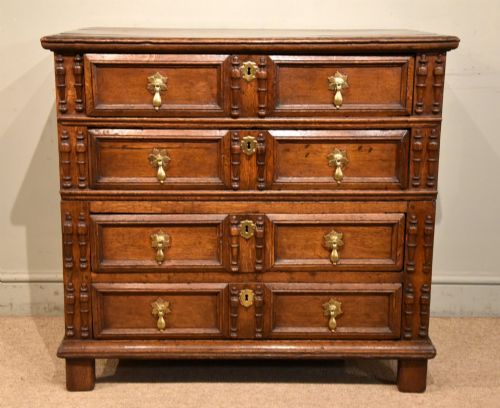
A dark oak commode encompasses pieces built as chests of drawers, close stools, and box stools from periods ranging from the seventeenth century through to the Edwardian era. When searching for a dark oak commode, buyers encounter sturdy forms originally designed for bedroom or chamber use, finished in deep, rich wood tones.
Evaluating quality and execution
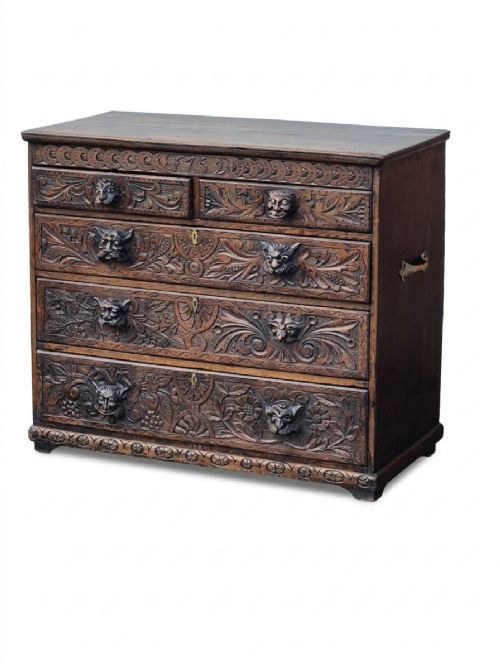
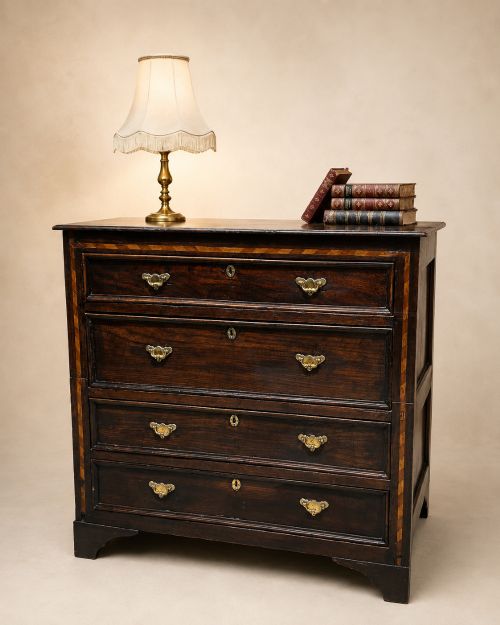
Quality rests in the crispness of carved details, such as geometric mouldings, applied decorations, and the depth of the carved Green Man motifs seen on certain Victorian examples. Finer pieces demonstrate precise timber selection and careful crossbanding that align harmoniously with the primary dark oak structure.
The integrity of the original hardware and the crispness of the drawer construction distinguish higher tier examples from utilitarian workshop output. Surface patination achieved through centuries of polishing alters the visual depth, separating pieces with continuous history from later reproductions.
Dark Oak Commode Retail Price Guide 2026
Typical asking prices for dark oak commode among the pieces listed under this phrase on Sellingantiques today, from the lower quarter to the upper quarter. They describe what is for sale here now, not the wider market.
Several pieces double as disguised seating, proving that historic cabinetmakers enjoyed hiding a chamber pot inside a respectable armchair.
The Dark Oak Commode Glossary
- Commode
- A historic term covering furniture pieces such as chests of drawers, bedside cabinets, and enclosed stools. In early contexts, it frequently refers to chambers used for sanitary purposes or low storage chests.
- Close stool
- A piece of furniture enclosing a chamber pot, often built to resemble a small cabinet, box stool, or armchair. These items disguised domestic utility behind fine woodworking.
- Crossbanding
- A strip of veneer running border-to-border along the edges of a drawer front or tabletop, with the grain running perpendicular to the surrounding wood.
- Geometric moulding
- Raised wooden profiling arranged in rectilinear or octagonal patterns upon drawer fronts, characteristic of seventeenth-century joinery. This technique adds architectural relief to flat timber surfaces.
- Bombe
- A swelling, outward-curving contour found on continental furniture forms like French commodes. This curved profile requires advanced mastery of timber shaping.
Dark Oak Commode: Frequently Asked Questions
What is a dark oak commode used for today?
These pieces function primarily as bedside storage, hallway chests, or decorative focal points in living spaces. Their historic compartment layouts accommodate modern household items while maintaining period character.
Buyers utilise the surface space for lamps and display, while the drawers or internal compartments provide hidden storage for everyday objects.
How do I date an antique oak commode?
Dating relies on examining construction methods, hardware types, and stylistic indicators such as geometric mouldings or carved panels. Seventeenth-century pieces display heavier framing and pegged joints, whereas eighteenth-century examples adopt cleaner Georgian proportions.
Secondary woods like walnut or mahogany crossbanding can also point toward specific transitional periods between the late seventeenth and early eighteenth centuries.
Are these pieces made of solid oak?
The primary structural components and external surfaces utilise solid oak timber, often paired with secondary woods for internal drawer linings. Some variants incorporate fruitwood or walnut inlay to create decorative contrast against the dark background.
Hardware components such as brass drop handles or iron hinges further support the authenticity of the period construction.
What is the difference between a chest and a close stool?
A standard chest provides multiple horizontal drawers intended for general garment or linen storage. A close stool is designed as a box or armchair enclosure that originally housed a chamber pot.
While both share dark oak construction and similar historic eras, their internal cavity arrangements serve entirely distinct domestic functions.