


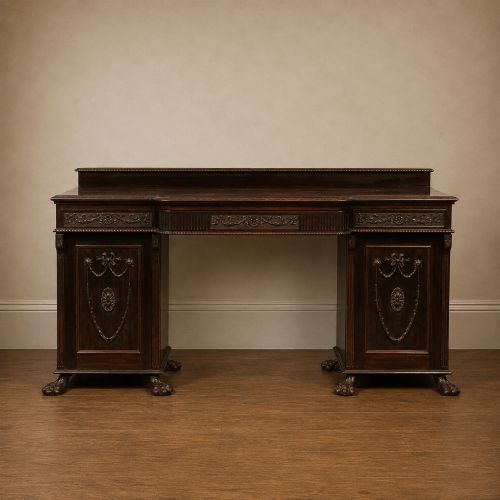
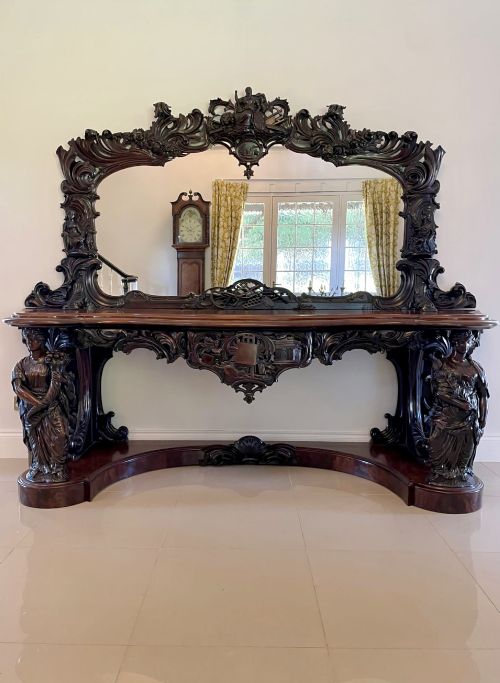
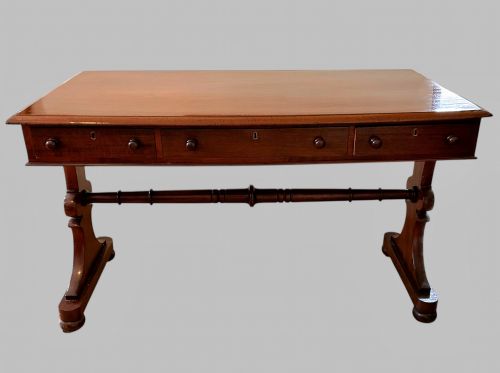
Dark Mahogany Serving Table
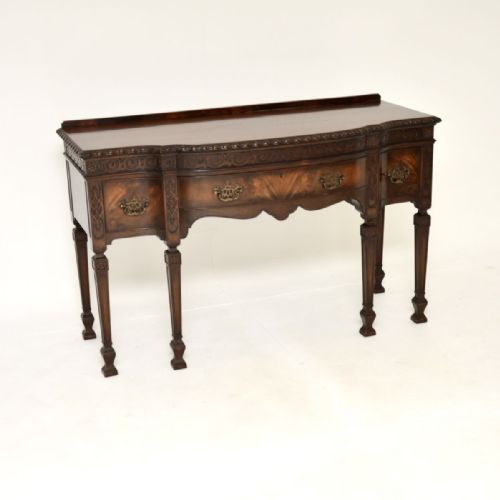
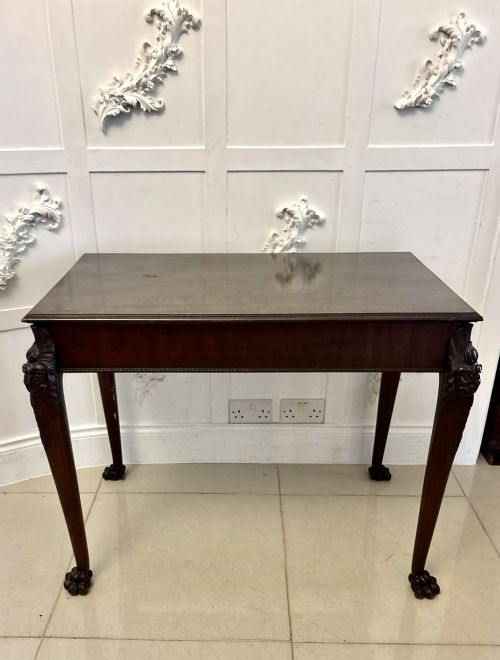
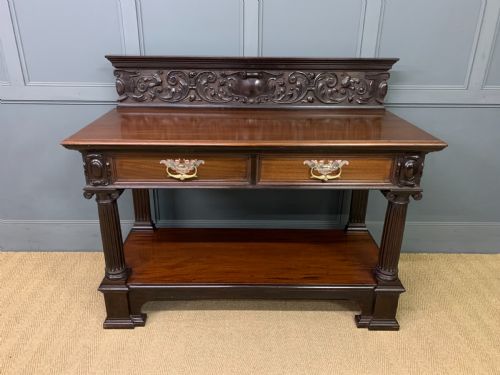
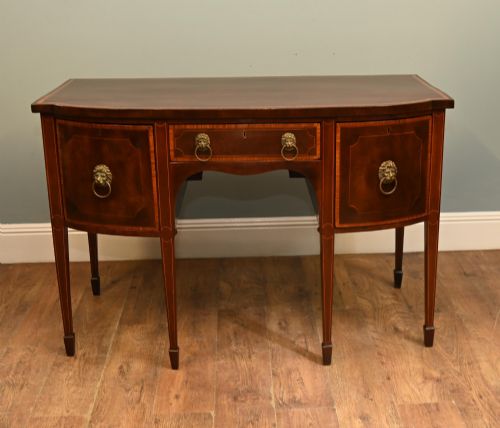
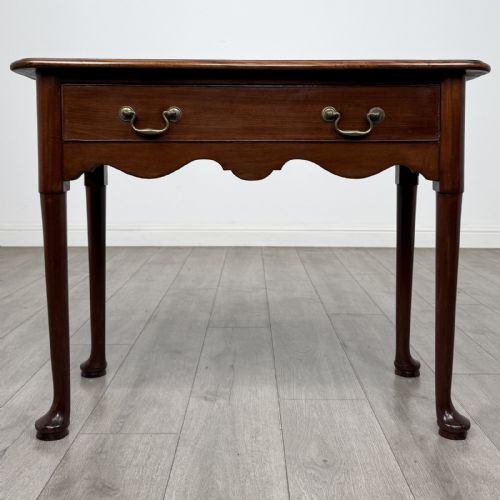
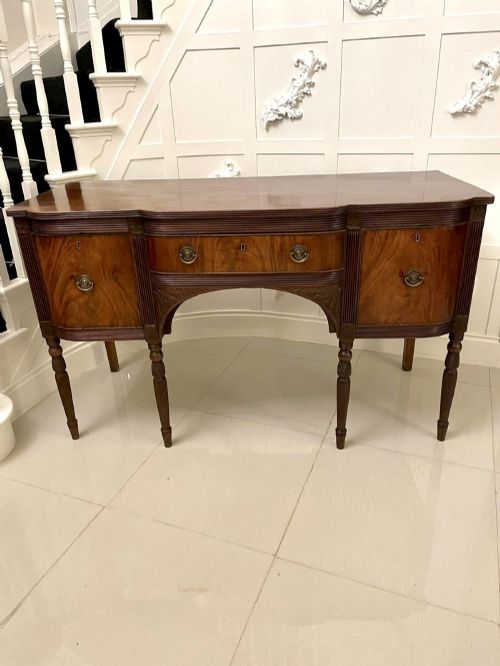
These heavy timbers and deep finishes define a dark mahogany serving table, built to anchor a dining room with proportion and utility.
Dark Mahogany Serving Table
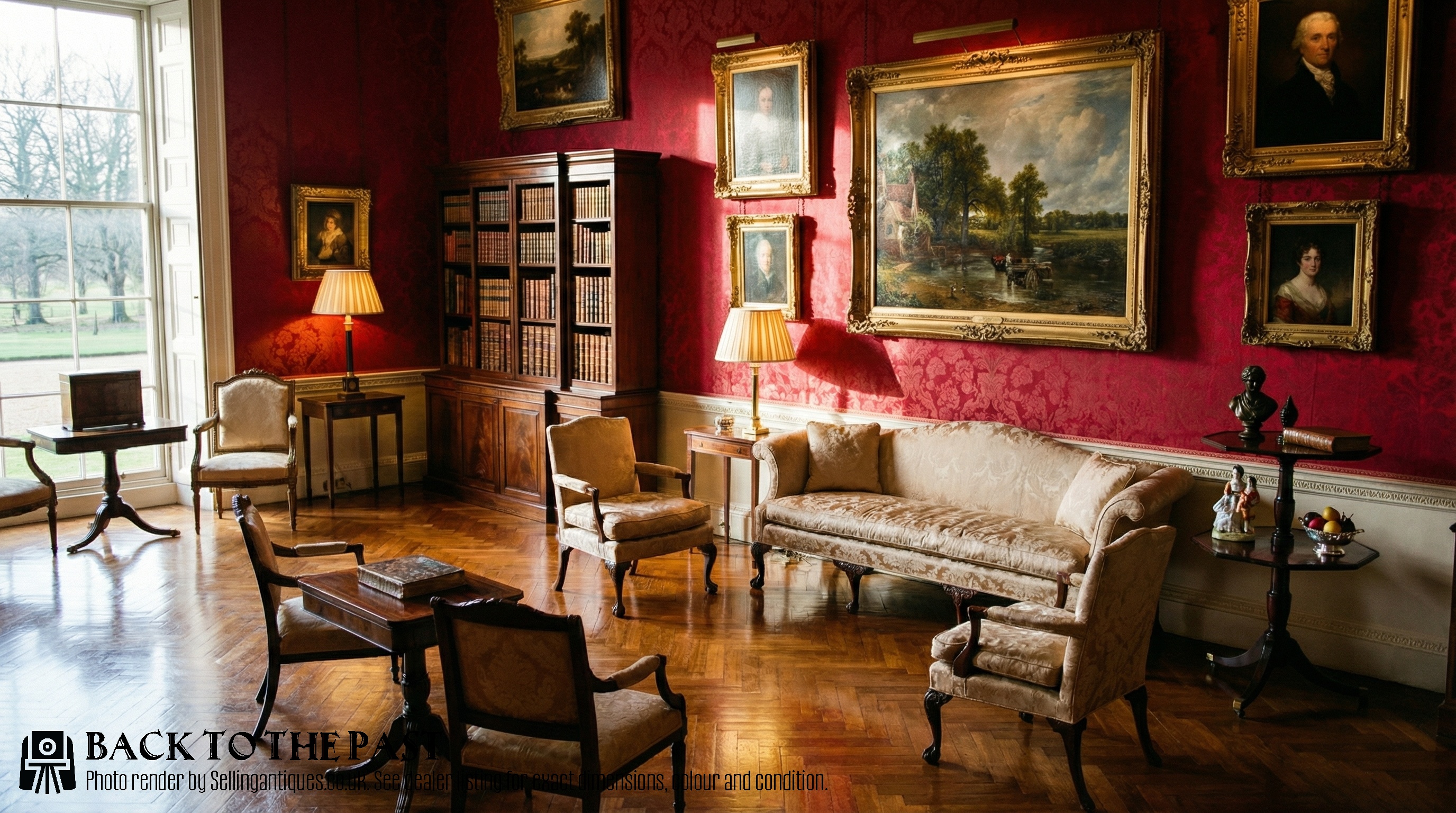
A dark mahogany serving table is a substantial piece of dining furniture designed to hold dishes, silver, or wine during a meal. The pieces available here span the eighteenth, nineteenth, and early twentieth centuries, covering Georgian, Regency, and Victorian periods.
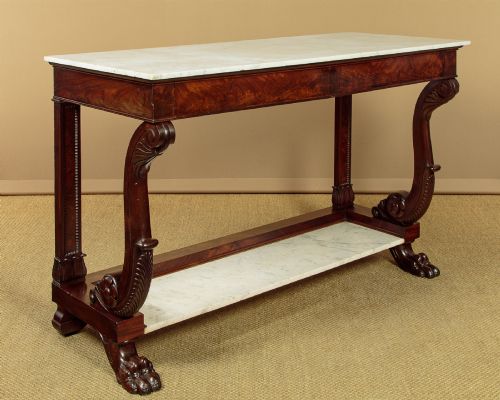
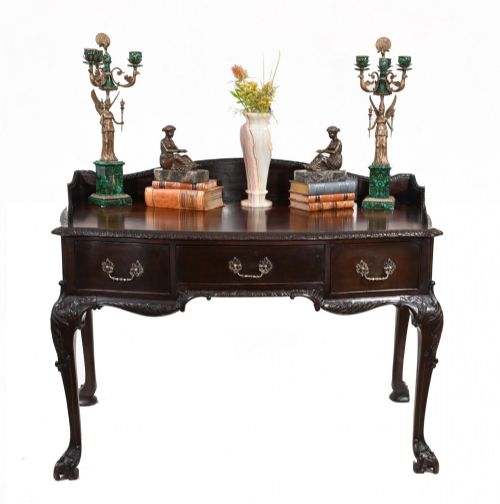
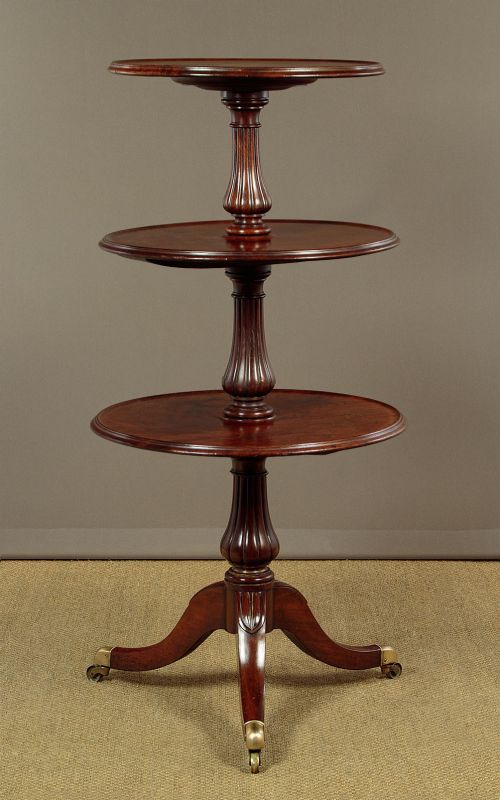
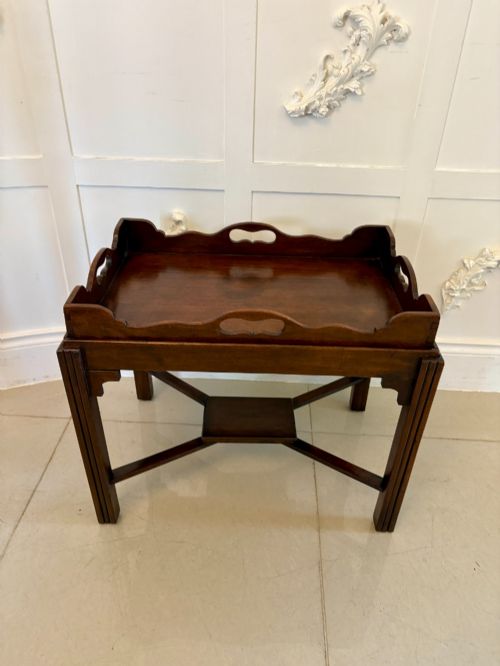
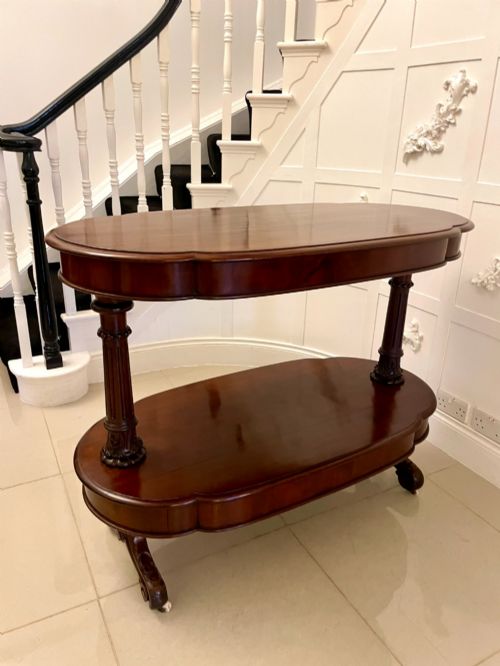
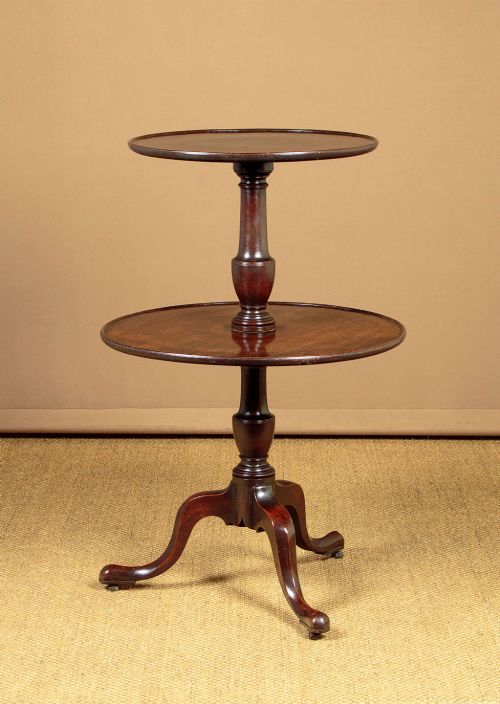
Buyers will encounter several variations in this search, ranging from large breakfront sideboards and console tables to tiered dumb waiters and butlers trays on stands. The form adapts from formal dining room servers to portable tray tables and revolving stands.
Origins stretch across English workshops, with distinct pieces reflecting Georgian elegance, Regency boldness, or Victorian scale. The primary function remains the same across these forms: surface area for serving food and drink.
Materials and Construction
Solid mahogany and flame mahogany veneer provide the dominant dark surfaces, frequently paired with secondary timbers like oak for drawer linings and internal structure. Craftsmanship relies on traditional joinery, creating rigid frames capable of supporting heavy silver and ceramic platters.
Details emerge through contrasting inlays of satinwood and structural accents in brass, cast iron, and glass. Carved elements appear on specific styles, while polished timber finishes highlight the natural grain of the wood without obscuring the dark tone.
Dark Mahogany Serving Table Retail Price Guide 2026
Typical asking prices for dark mahogany serving table among the pieces listed under this phrase on Sellingantiques today, from the lower quarter to the upper quarter. They describe what is for sale here now, not the wider market.
Several listings include rotating lazy-susan mechanisms and folding garden party tables, proving that historical hosts also appreciated convenient portable refreshments.
Assessing Quality and Execution
Quality rests upon the selection of timber, particularly where figured mahogany veneer or solid stock displays depth and rich grain movement. Superior examples exhibit precise proportions, restrained carving, and integration of secondary woods like oak within the carcass.
Execution of secondary details, such as brass fittings, inlaid satinwood borders, and the stability of tiered or folding mechanisms, separates standard workshop output from exhibition pieces. The integrity of the original polish and the crispness of edge mouldings further distinguish the better items.
The Dark Mahogany Serving Table Glossary
- Breakfront
- A piece of furniture where the central section projects forward from the flanking outer sections. This architectural arrangement creates depth and visual weight.
- Dumb Waiter
- A tiered stand with revolving or fixed circular trays used to hold dishes and glasses near a dining table. These pieces allowed diners to serve themselves without servants present.
- Console Table
- A table fixed against a wall, frequently supported by legs or brackets at the front. These serve decorative and functional roles in hallways and dining rooms.
- Satinwood Inlay
- Contrasting light wood veneer inserted into the darker mahogany surface to form geometric or floral patterns. This decorative technique highlights borders and drawer fronts.
- Flame Mahogany
- Wood veneer cut from the fork of the mahogany tree where the branch meets the trunk. The resulting grain pattern resembles flickering flames across the surface.
Dark Mahogany Serving Table: Frequently Asked Questions
What is a dark mahogany serving table used for?
These tables provide a sturdy surface for holding food, serving dishes, and silverware during meals. They also function as sideboards or console tables for displaying decorative objects.
In period settings, they supplemented the main dining table by keeping heavy platters and wine service within reach.
How do I identify a Georgian serving table?
Georgian pieces typically display restrained classical proportions, solid mahogany construction, and minimal carving focused on legs or edges. Look for straight or cabriole legs and traditional brass drawer pulls.
Later Victorian versions often introduce heavier carving, mirror backs, or more elaborate veneered surfaces.
What is the difference between a sideboard and a serving table?
Serving tables are generally lighter in construction, occasionally featuring folding legs or tiered surfaces like dumb waiters for flexible dining use. Sideboards are fixed, heavier pieces equipped with multiple drawers and cupboards for storage.
Both serve the dining room but occupy different points on the spectrum between portable utility and permanent architecture.
How do I care for antique mahogany furniture?
Keep mahogany pieces away from direct sunlight and extreme temperature fluctuations to prevent the wood from drying or splitting. Dust regularly with a soft, dry cloth and apply occasional high-quality beeswax to nourish the finish.
Avoid silicone-based sprays, which can penetrate old finishes and attract dust.