


Two Tier Buffet Table
A two tier buffet table provides multi-level surface space for serving and display, offering period character and practical utility in dining rooms.
Two Tier Buffet Table
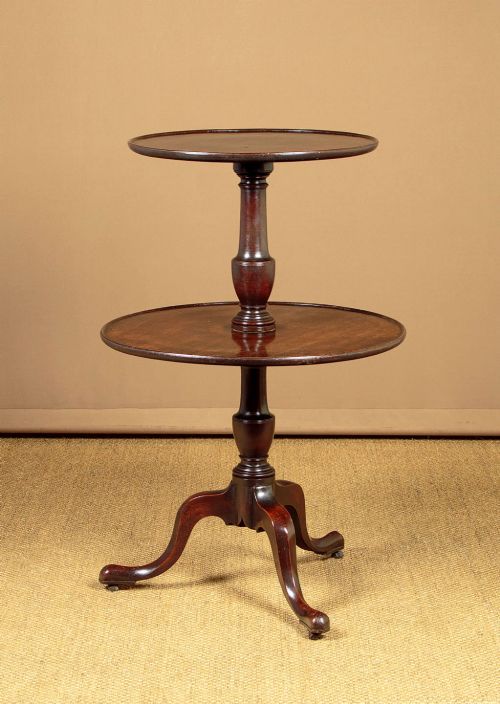
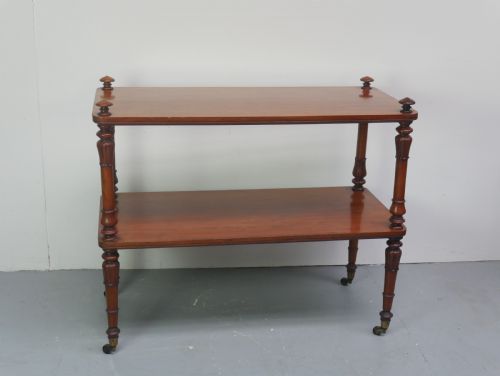
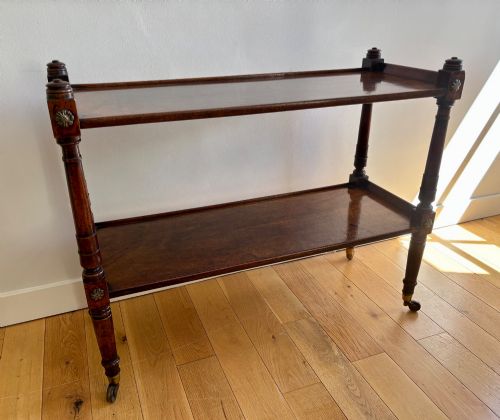
When searching for a two tier buffet table, a buyer encounters forms spanning the 18th, 19th, and early 20th centuries, including dumb waiters, serving tables, and sideboards. These pieces provide stacked tiers designed for holding dishes, drinks, or books.
The version most commonly met on this page is the Georgian or Regency mahogany dumb waiter, often featuring circular or folding tiers supported on a tripod or pillar base. Victorian examples in oak and amboyna also appear frequently, alongside server stands and side tables.
Originating in English country houses and formal dining rooms, these tables served to assist dining by holding food and tableware close at hand. Today, they function as versatile display and serving surfaces in modern interiors.
How they were made
Makers utilised solid timbers and veneers, predominantly mahogany, alongside oak, ebonised wood, and pollard oak. These woods were selected for strength and decorative grain.
Construction techniques included precise joinery for folding shelves, tripod bases, and revolving mechanisms. Brass castors and mounts frequently secured the legs and added mobility.
Surface decoration relied on natural wood figuring, parcel gilt accents, and carved detailing such as the Green Man motifs seen on Victorian oak pieces.
Two Tier Buffet Table Retail Price Guide 2026
Typical asking prices for two tier buffet table among the pieces listed under this phrase on Sellingantiques today, from the lower quarter to the upper quarter. They describe what is for sale here now, not the wider market.
Listings feature 18th-century, Regency, and Victorian periods, with mahogany and oak as the predominant materials.
What varies in quality
The standard of a two tier buffet table rests on the quality of the timber selection and the crispness of any carved or turned elements. Dense, well-figured mahogany or pollard oak indicates a higher grade of manufacture.
Mechanical integrity defines the better examples, particularly in pieces with folding flaps or revolving tiers. Smooth operation of hinges and stability in the central pillar or tripod base separate superior items from standard domestic furniture.
Gillows of Lancaster and London·James Shoolbred and Co
The Two Tier Buffet Table Glossary
- Dumb waiter
- A multi-tiered freestanding table used in dining rooms to hold food and utensils without the aid of servants. They often feature revolving or folding shelves.
- Tripod base
- A three-legged support structure commonly found beneath the central pillar of round tables and dumb waiters. This design ensures stability on uneven floors.
- Amboyna veneer
- A highly decorative, mottled wood veneer applied to furniture surfaces. It provides a rich, warm tone valued in Victorian pieces.
- Parcel gilt
- A decorative technique where specific carved or moulded portions of a wooden piece are partially covered in gold leaf. It highlights architectural details.
- Drop-leaf
- A table design featuring hinged side flaps that fold down when not in use. This allowed furniture to save space in crowded rooms.
Two Tier Buffet Table: Frequently Asked Questions
What is a two tier buffet table used for?
These tables served primarily in dining rooms to hold serving dishes, bottles, and glasses during meals. They allowed diners to help themselves without relying constantly on household staff.
Today, buyers use them as side tables, serving stations for drinks, or display surfaces for books and decorative objects in living spaces.
How do I date a wooden buffet table?
Dating relies on identifying timber choices, construction methods, and prevailing styles across different centuries. Georgian and Regency pieces typically show lighter mahogany with refined turnings, while Victorian examples often feature heavier oak, elaborate carving, or amboyna veneer.
Hardware such as brass castors and the presence of folding mechanisms also help narrow down the period of manufacture.
Are the shelves on these tables adjustable?
Most antique two tier buffet tables have fixed shelves secured to a central column or upright supports. However, many period examples feature folding drop-leaf sides that allow the user to lower the perimeter of the top tier when space is limited.
Certain variations, known as revolving dumb waiters, include tiers that spin around the central shaft for easy access.
Where should I place a dumb waiter table at home?
These pieces fit naturally in dining rooms, serving their original function as a surface for tableware or serving platters. Their compact footprint also suits hallways, corners, or behind seating arrangements in drawing rooms.
Because many feature circular tiers or tripod bases, they occupy minimal floor space while offering two levels of display.