
Dark Mahogany Secretaire
These dark mahogany secretaire pieces are writing furniture that conceals a fitted desk drawer within tall bookcases, chests, and cabinets, prized for practical storage and refined woodwork.
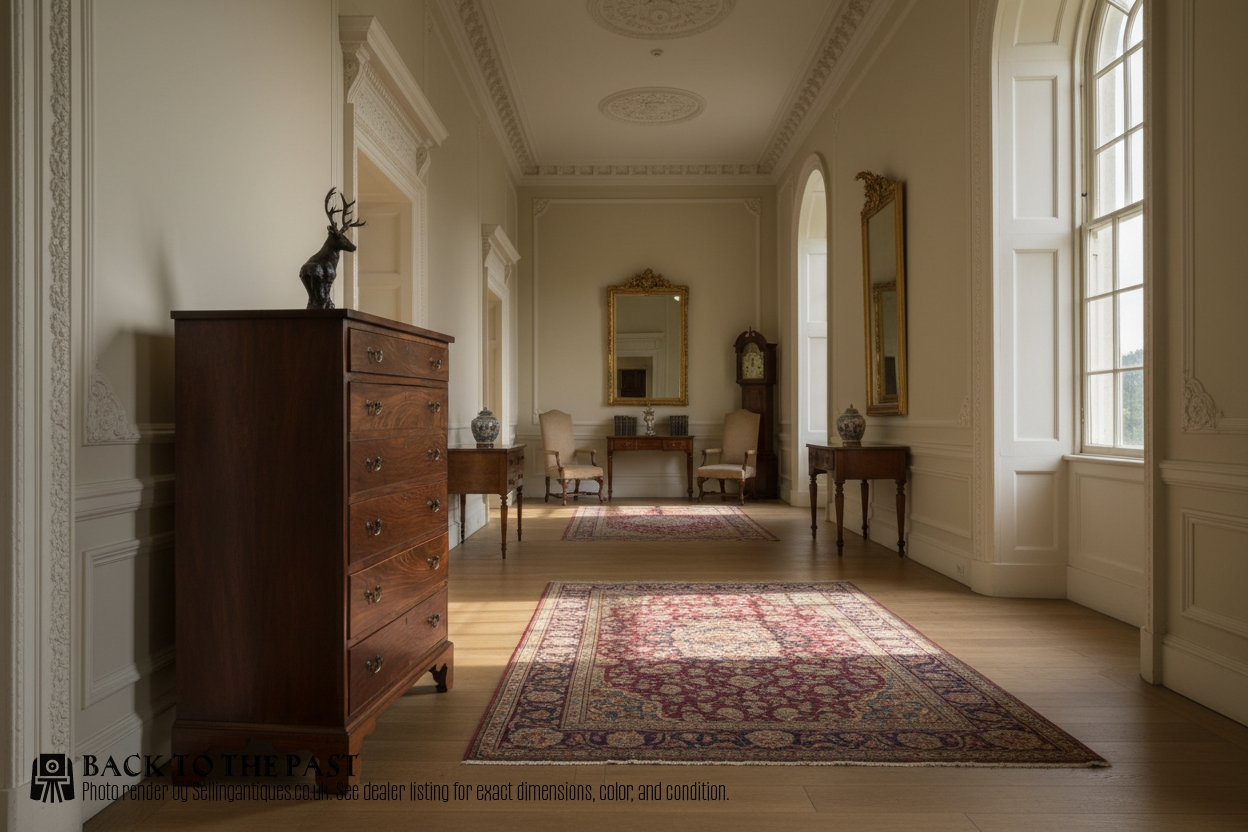
Dark Mahogany Secretaire
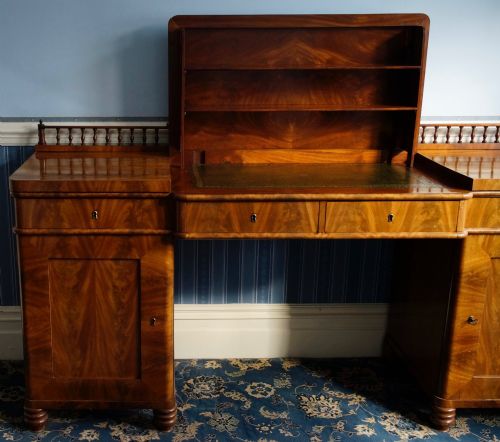
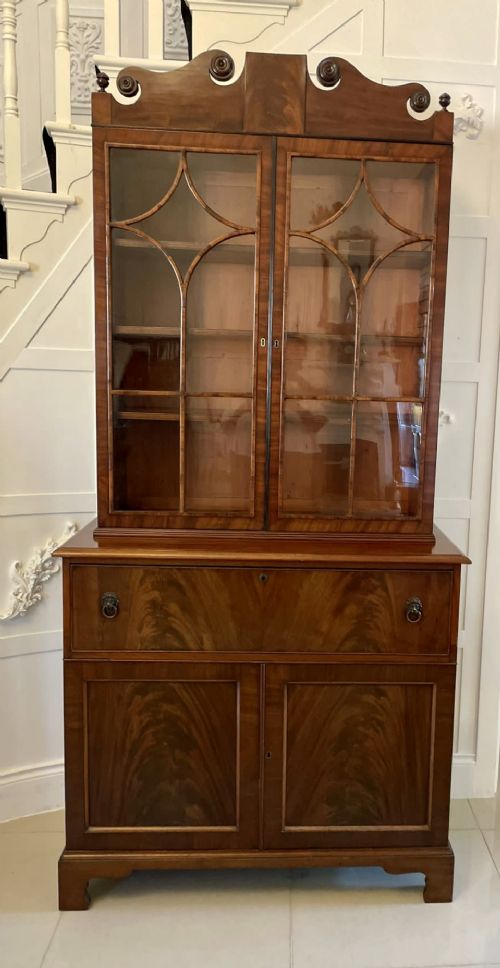
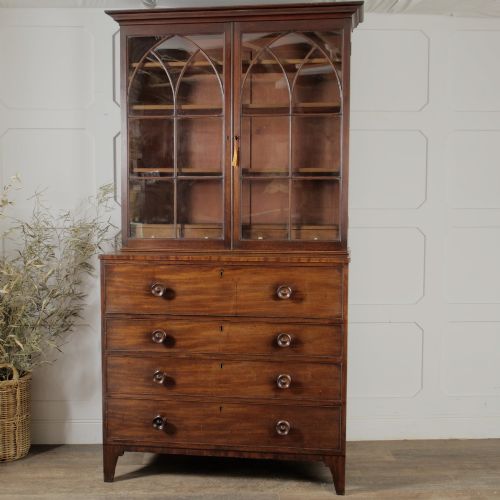
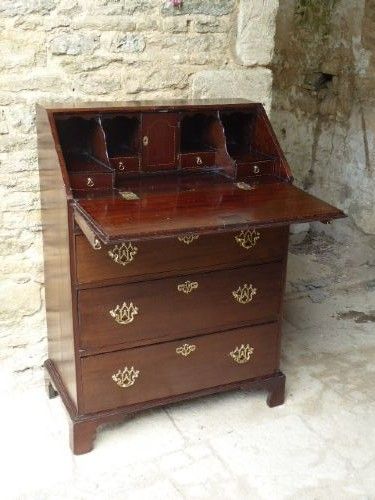
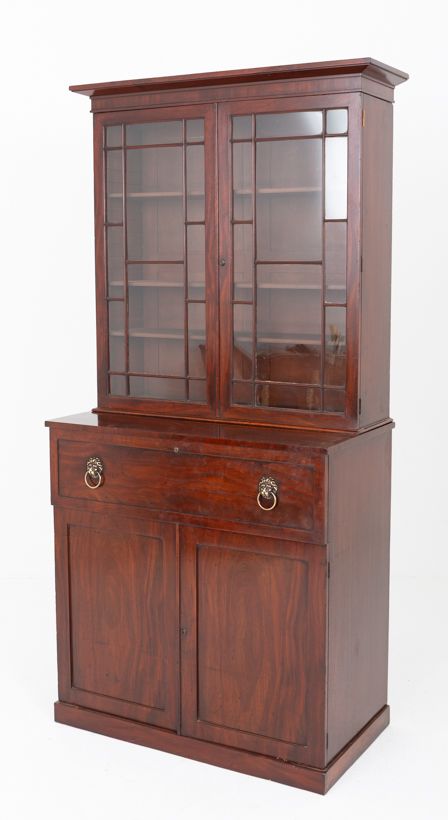
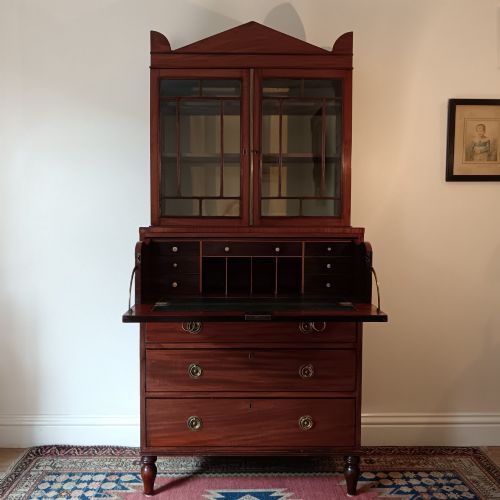
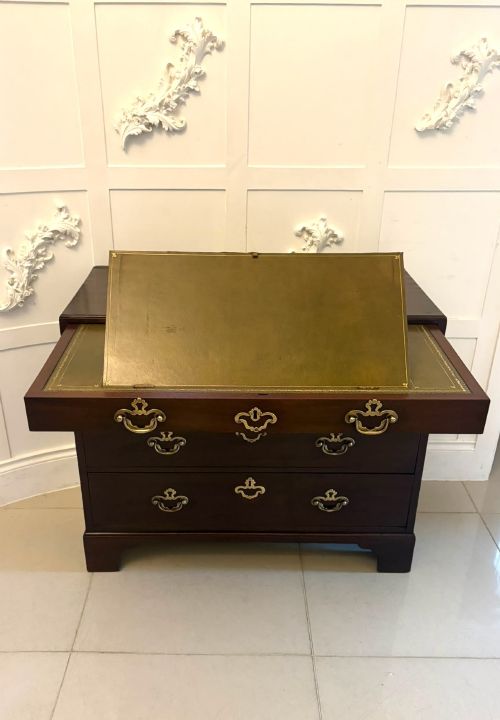
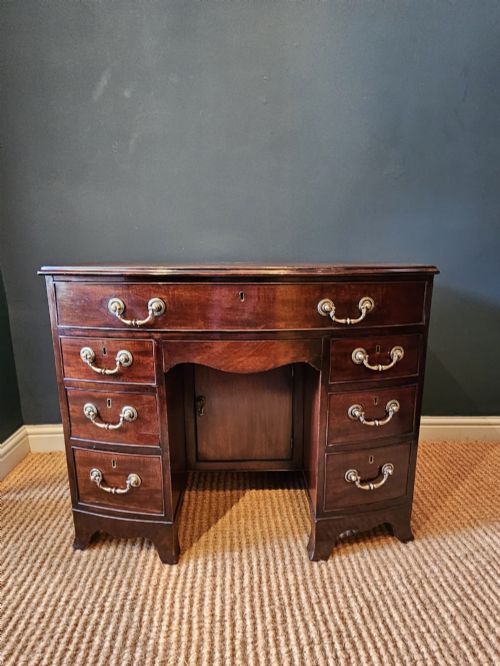
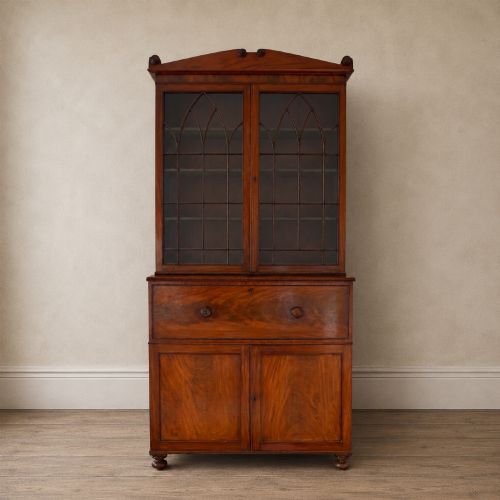
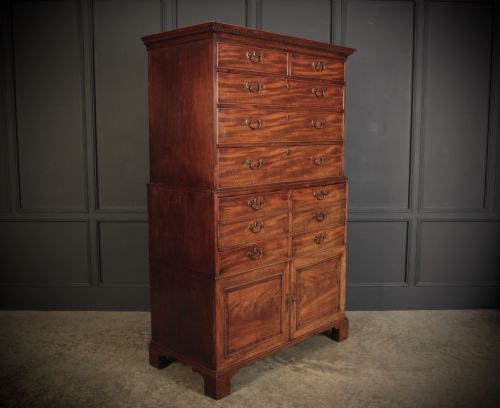
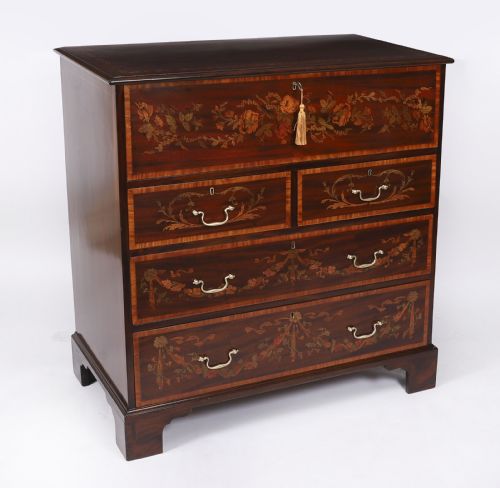
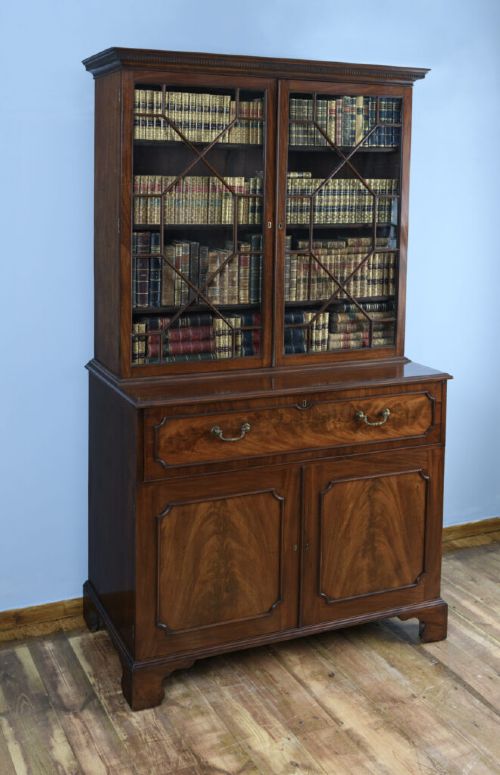
A dark mahogany secretaire combines a standard storage cabinet or bookcase with a drop-front or pull-out drawer that opens to reveal a fitted writing surface, small pigeonholes, and tiny drawers. These sophisticated items span the Georgian, Regency, and Victorian eras, taking the form of tall bookcases, chests on chests, bureaus, and dwarf cabinets.
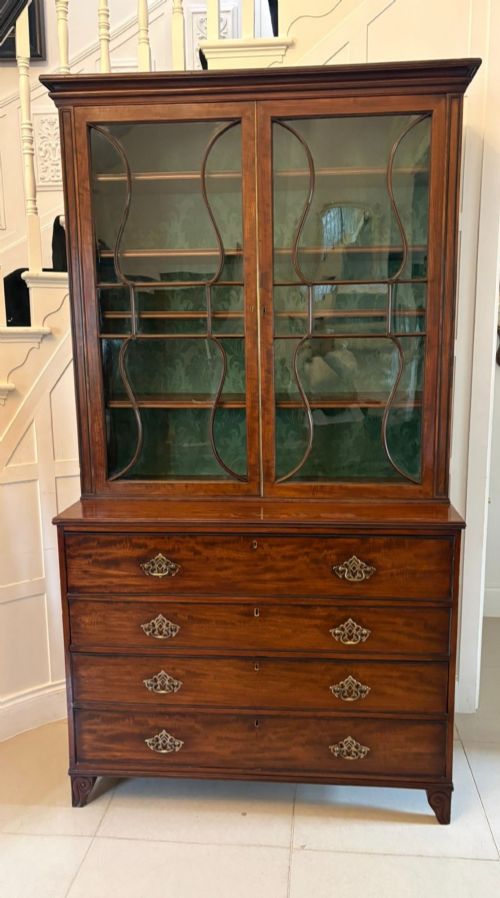
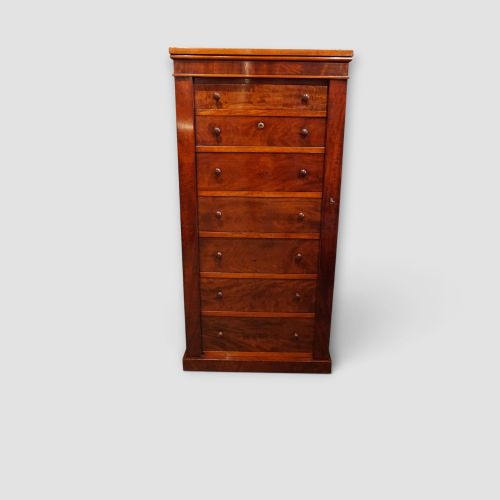
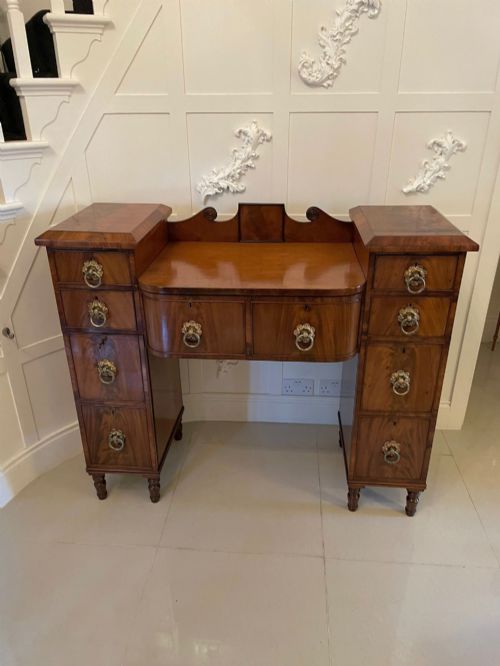
The most common version met on this page is the large secretaire bookcase featuring glazed upper doors and lower drawer units. Alongside these, buyers find compact Wellington chests, Pembroke work tables, sideboards, and tallboys equipped with concealed writing compartments.
Originating predominantly from eighteenth and nineteenth-century English workshops, these items served the domestic study and library. They reflect shifts in period tastes from early George II proportions through the decorative flourish of the Regency and William IV periods.
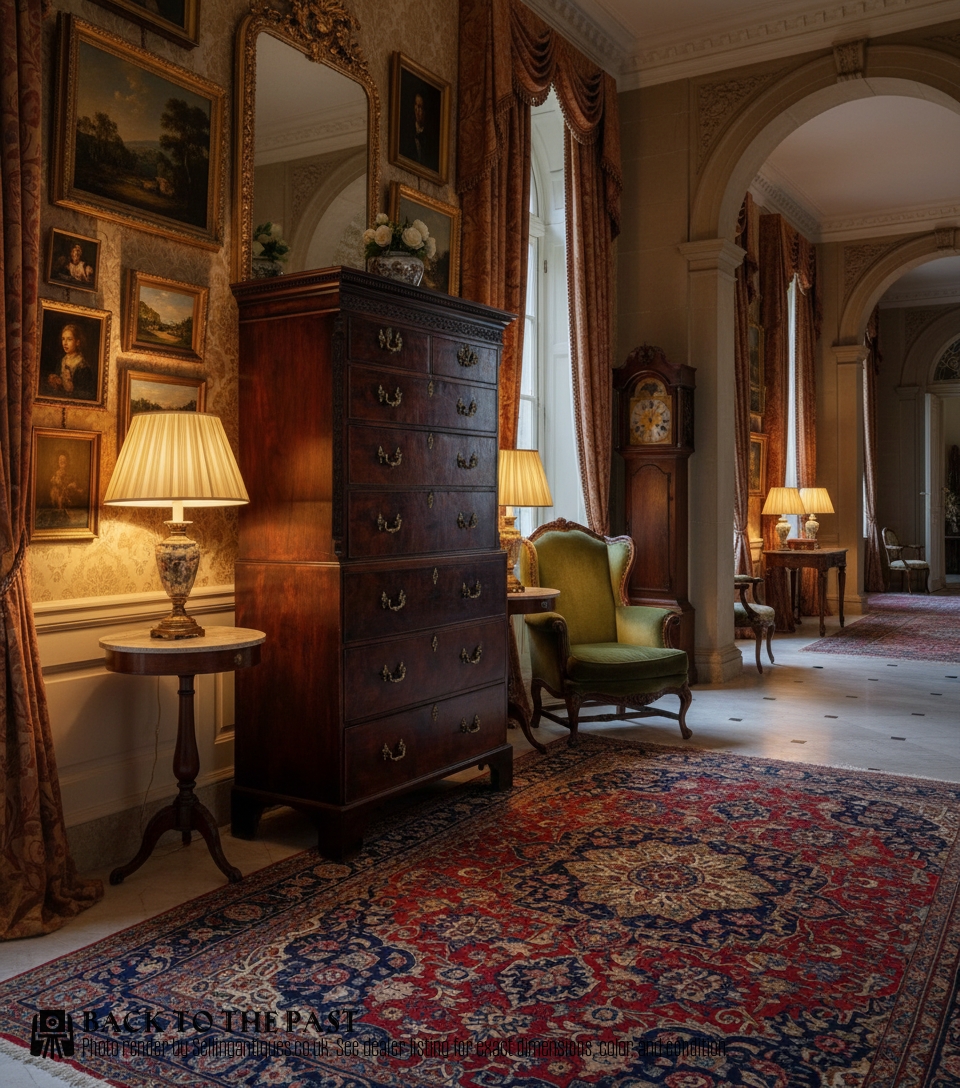
Materials and construction methods
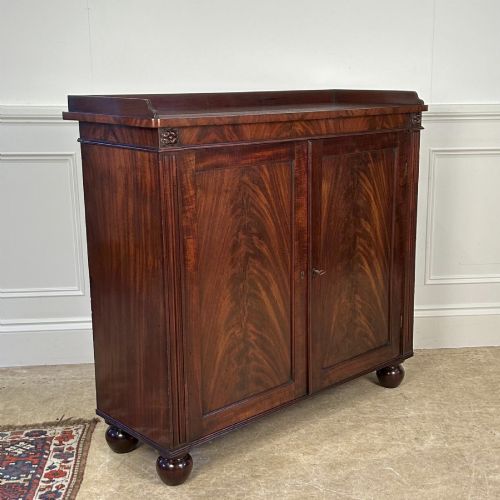
Cabinetmakers built these pieces using solid mahogany and oak for structural carcasses and drawer linings, frequently applying figured or flame mahogany veneer to create rich, dark grain patterns on external surfaces. Brass handles, escutcheons, and hinges provide functional hardware, while glass panels feature in the upper bookcase doors.
The secretaire drawer incorporates specialised internal mechanisms, such as locking flaps, folding writing surfaces inset with leather, and intricate sets of miniature drawers and pigeonholes. Joinery relies on traditional dovetail techniques for drawers and mortise and tenon frames to support heavy glass-fronted upper sections.
Listings feature periods spanning from the seventeenth century through the Georgian, Regency, and Victorian eras, constructed primarily in mahogany with brass and glass.
Distinctions in craftsmanship
Quality rests in the selection of timber figure, such as mirrored flame mahogany veneer matched carefully across drawer fronts, compared against plain or heavily restored surfaces. The intricacy of the internal fittings within the secretaire drawer also marks superior pieces, showing fine subsidiary woods like rosewood and precise miniature pigeonholes.
Structural integrity and original hardware define the higher tiers of surviving items. Pieces retaining their matching glazed astragal doors, original brasses, and smooth-running internal mechanisms demonstrate the enduring hand of skilled period joiners.
George Oakley·Gillows
The Dark Mahogany Secretaire Glossary
- Secretaire
- A piece of furniture containing a drawer or compartment designed for writing, typically featuring a drop-front flap that conceals small drawers and pigeonholes.
- Astragal
- A moulding used to hold glass panes within a frame, frequently seen in intersecting grid patterns on bookcase doors.
- Tallboy
- A tall chest of drawers made in two sections, often taking the form of a chest on chest where a smaller upper chest sits upon a larger base.
- Dovetail
- A traditional interlocking joint used in drawer construction that provides high tensile strength and longevity.
- Flame mahogany
- A veneer cut from timber fork sections where branches join the trunk, producing a distinctive flickering flame-like grain pattern.
Dark Mahogany Secretaire: Frequently Asked Questions
What is a secretaire bookcase?
A secretaire bookcase combines a shelved upper cabinet with a lower section featuring a dedicated writing drawer. The pull-down front conceals a fitted interior designed for correspondence.
These combination items saved floor space in period libraries and drawing rooms while keeping writing materials neatly organised out of sight.
How do I identify a Georgian secretaire?
Georgian examples display classic proportions, architectural cornices, and hand-cut dovetailing in the drawer construction. They often feature astragal glazed doors and bracket feet.
Woods tend towards rich dark mahogany, sometimes accented with subtle inlay work or brass handles characteristic of the eighteenth century.
Where were secretaire cabinets used?
These cabinets belonged in private studies, libraries, and principal bedrooms of grand houses. They served as personal workstations for managing estate accounts and writing letters.
The locking mechanism on the main writing drawer ensured private documents remained secure when not in use.
How do I care for dark mahogany?
Keep mahogany furniture away from direct sunlight and strong heat sources to prevent the wood from drying out and the polish from fading. Dust gently with a dry, soft cloth.
Occasional light waxing helps maintain the deep lustre of the dark polish without building up a heavy residue.