
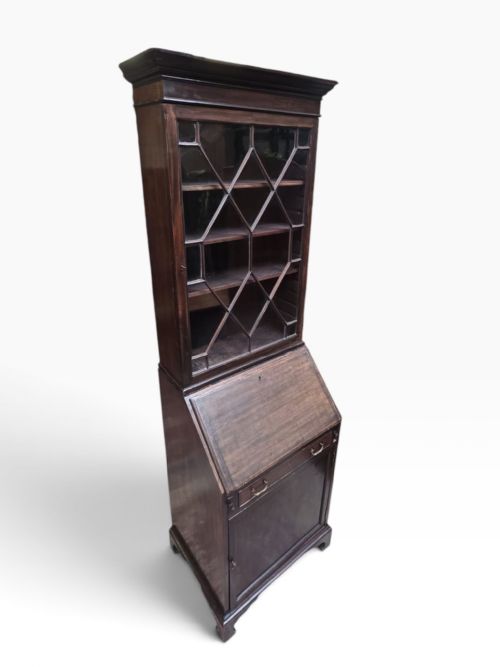
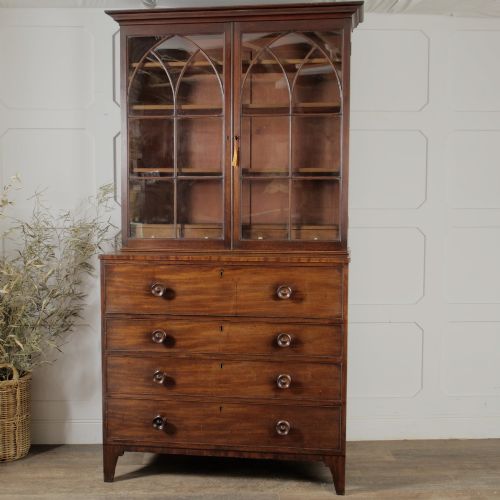
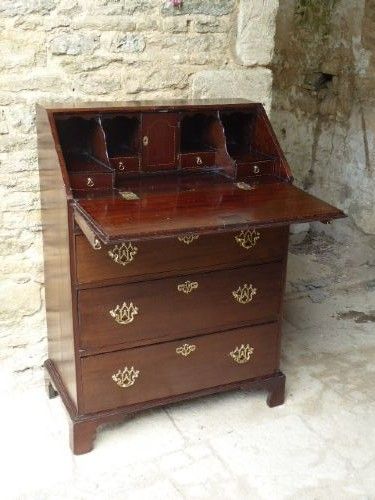
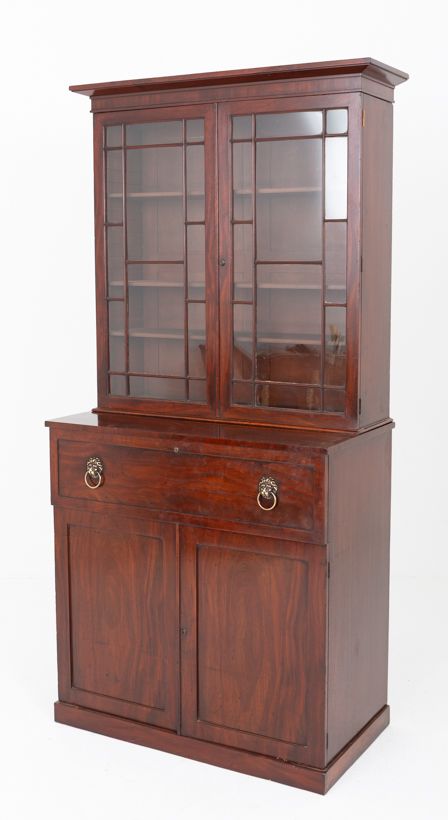
Dark Mahogany Bureau Desk
A dark mahogany bureau desk brings traditional writing furniture into a room with rich timber figure and practical fitted compartments.
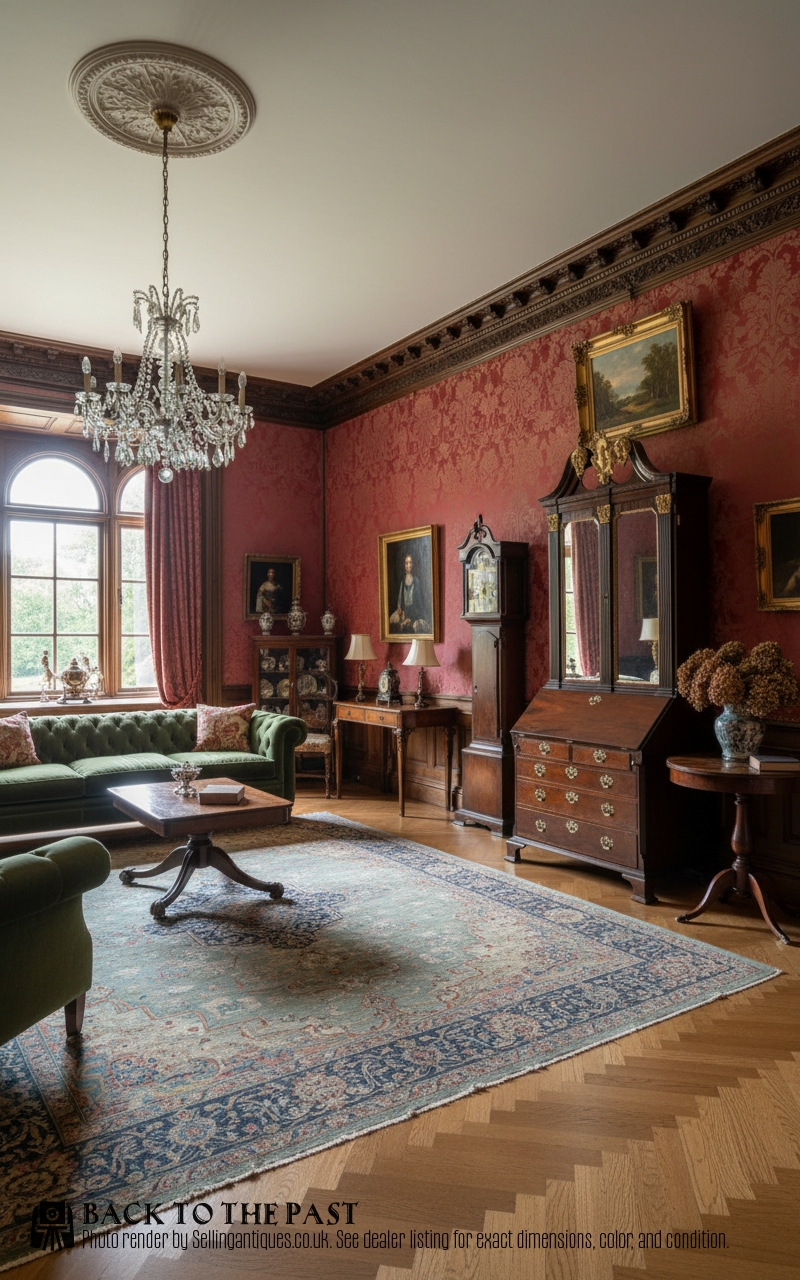
Dark Mahogany Bureau Desk
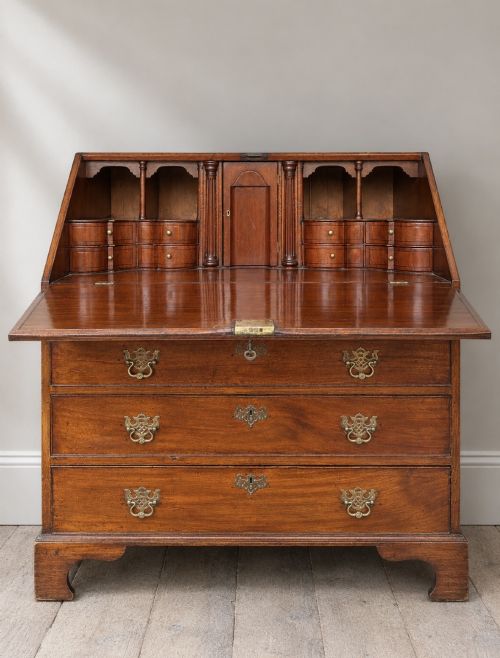
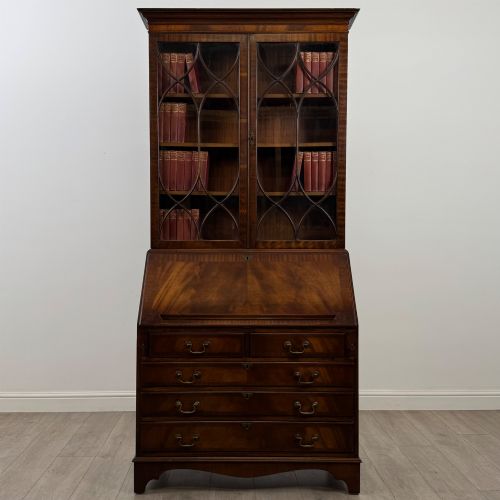
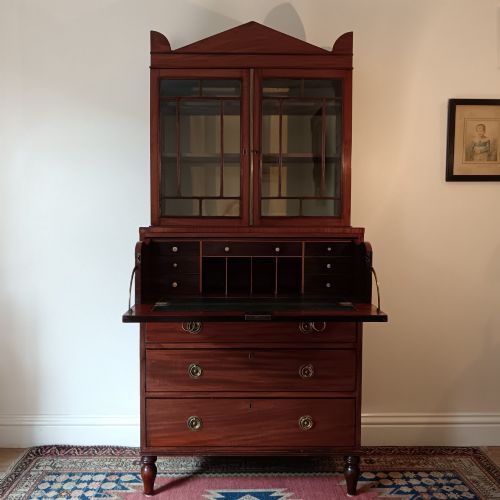
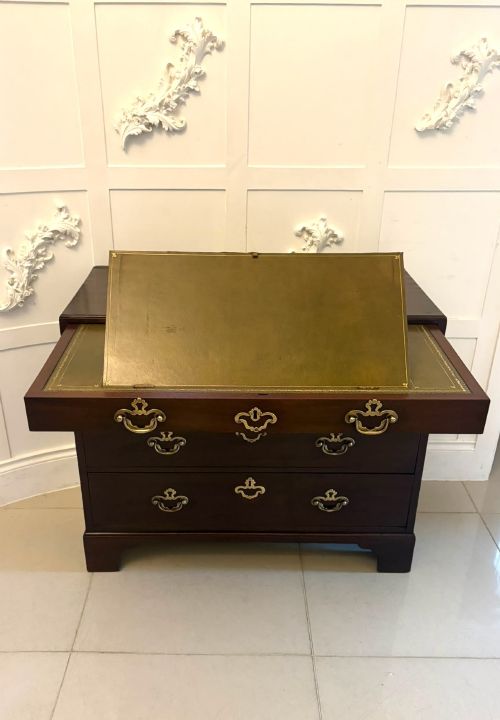
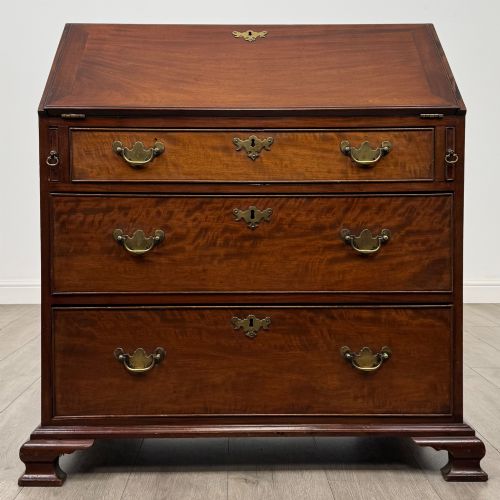
A dark mahogany bureau desk combines a sloping fall-front writing surface with internal pigeonholes and drawers, often rising into a tall bookcase or standing on compact bracket feet. These writing pieces emerge across the Georgian, Regency, Victorian and Edwardian eras, spanning simple kneehole forms to grand secretaire cabinets.
The version most frequently met on this page is the 18th-century Georgian bureau or the taller bureau bookcase, built in deep brown timbers with fitted stationery interiors. Buyers select these items for daily study use as well as for the architectural presence they lend to a study or drawing room.
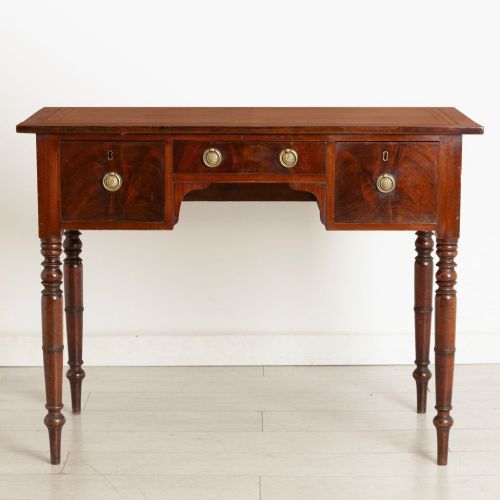
Makers utilised various formats including cylinder desks, tambour tops, and Davenport writing boxes, all sharing the dense reddish-brown grain of mahogany. Each piece offers a dedicated writing surface that conceals correspondence when closed.
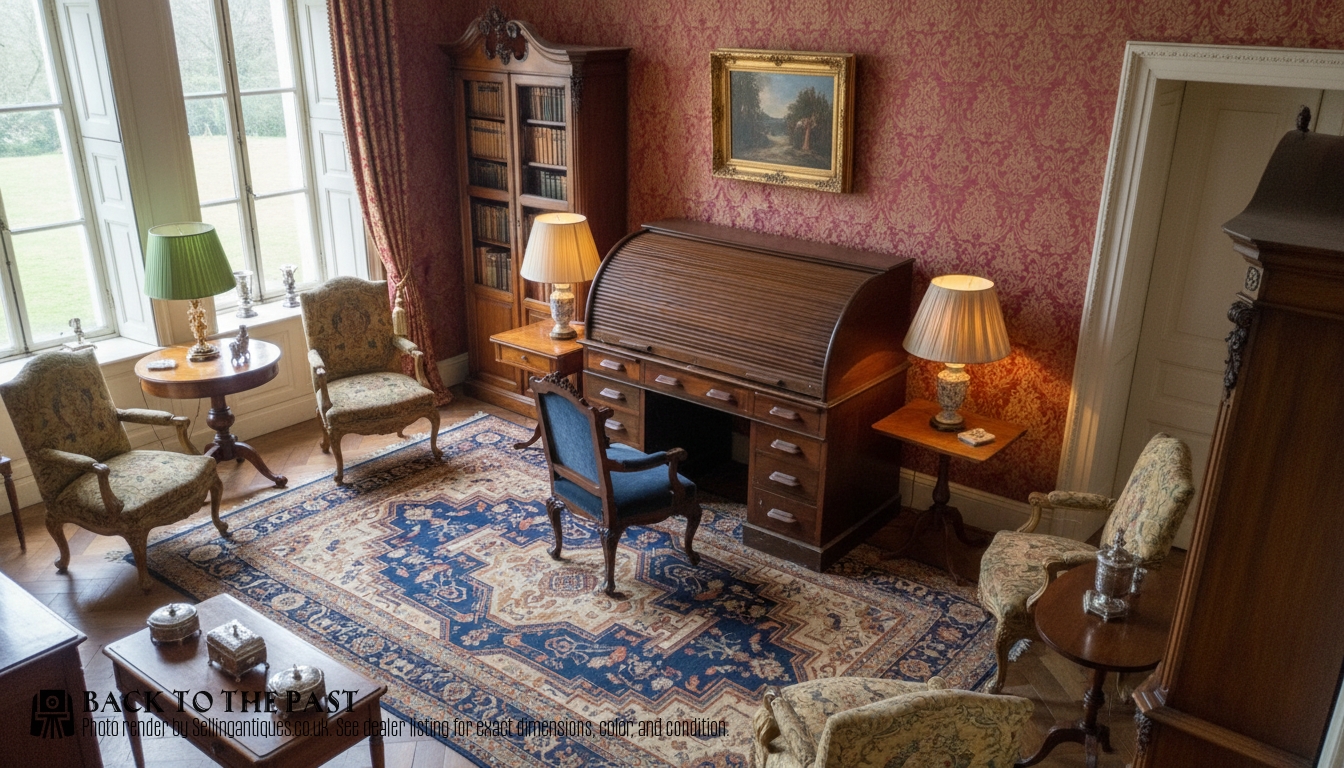
Materials and construction methods
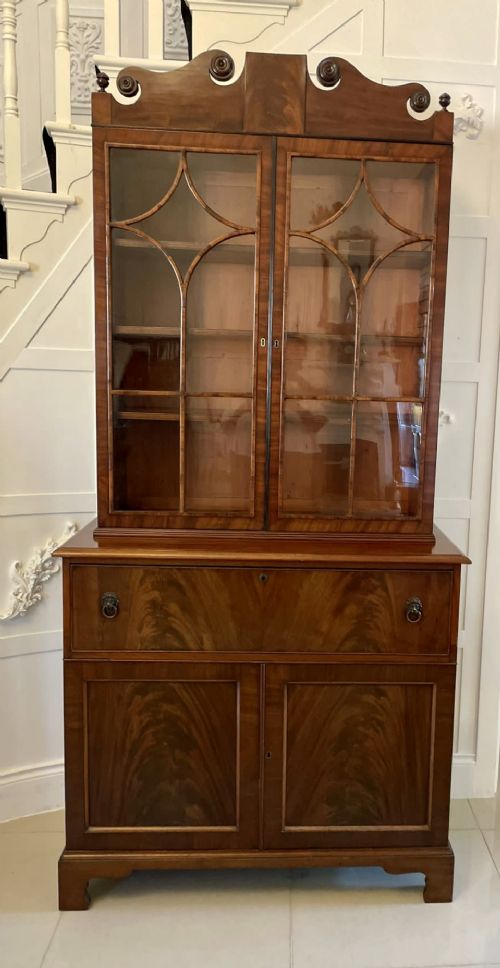
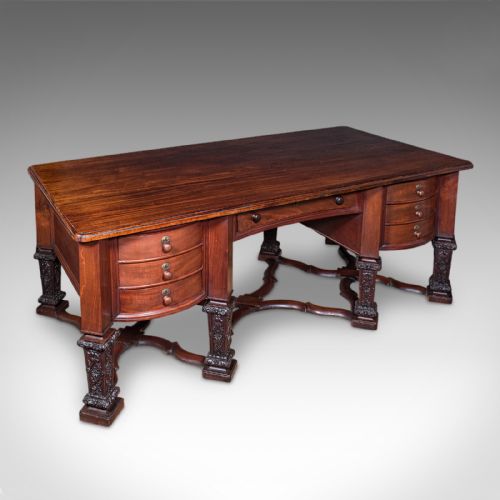
Cabinetmakers constructed these writing pieces primarily from solid and veneered mahogany, frequently selecting flame mahogany or figured stock for the fall-fronts and drawer faces to highlight the wood grain. Secondary timbers such as oak support the internal drawer linings and carcass frames.
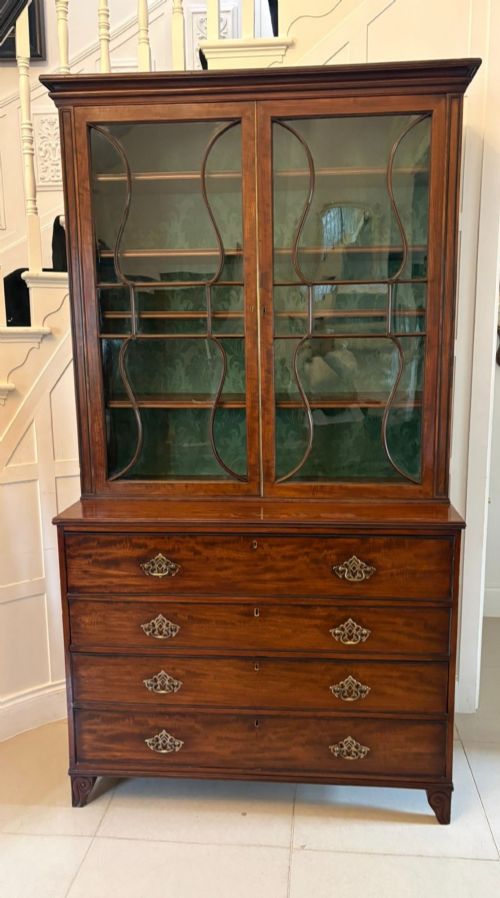
Brass hardware, including bracket feet, escutcheons and drop handles, secures the structural corners and operates the drawers. Glass panels appear in the upper bookcase sections, often held within astragal glazing bars.
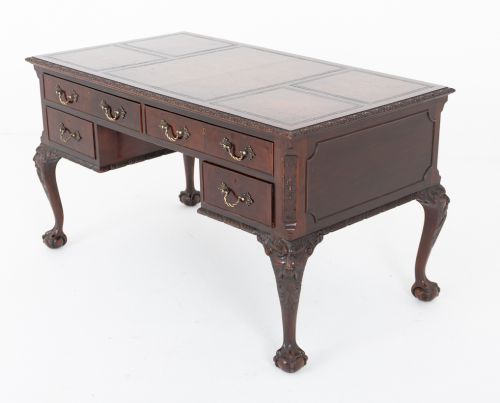
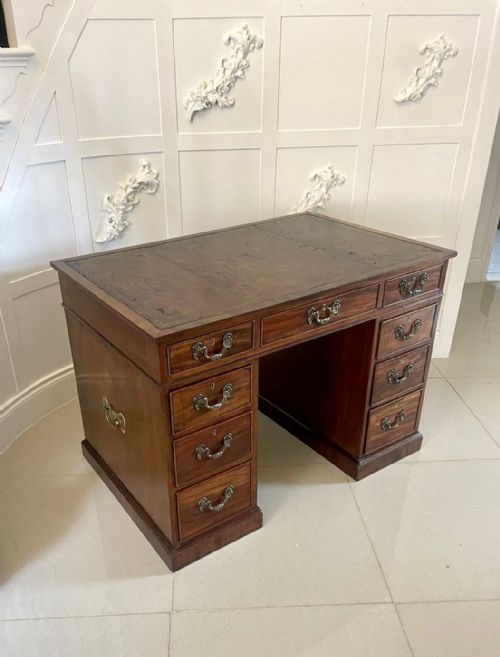
Leather inserts occasionally surface on the writing slides and tabletops, while specialised desks incorporate ebonised wood or satinwood stringing to accent the primary mahogany surfaces.
Dark Mahogany Bureau Desk Retail Price Guide 2026
Typical asking prices for dark mahogany bureau desk among the pieces listed under this phrase on Sellingantiques today, from the lower quarter to the upper quarter. They describe what is for sale here now, not the wider market.
Several desks conceal tiny secret drawers behind their pigeonholes, designed for hiding private letters and coins.
Distinguishing quality across periods
Quality separates through the selection of timber figure, such as highly flamed mahogany veneers matched across drawer fronts, compared against plain straight-grained boards. The complexity of the internal pigeonholes, secret compartments and small drawers dictates the standard of the original cabinetmaking.
Structural integrity relies on the retention of original brass handles, functional locks, and undamaged bracket feet or plinth bases. Superior examples maintain crisp carving details on mouldings and clean dovetail joints within the internal drawers.
George Oakley·Gillows
The Dark Mahogany Bureau Desk Glossary
- Bureau
- A desk featuring a sloping hinged flap that opens to reveal a fitted interior of small drawers and pigeonholes.
- Secretaire
- A cabinet or bookcase incorporating a pull-out writing drawer or fall-front desk compartment.
- Tambour
- A sliding surface made of narrow vertical strips of wood glued to a canvas backing, used to enclose desk compartments.
- Kneehole desk
- A compact desk design featuring a central recessed space for the user's legs, flanked by pedestals of small drawers.
- Astragal glazed
- A glass door divided into panes by small wooden bars, common on upper bookcase sections.
Dark Mahogany Bureau Desk: Frequently Asked Questions
How do I use a bureau desk daily?
Lower the hinged fall-front panel to create a stable writing surface above the fitted pigeonholes and small internal drawers.
Close the flap when finished to conceal correspondence and maintain a tidy appearance in the room.
What is a secretaire bookcase?
This form combines a lower writing desk section with an upper bookcase enclosed by wooden or glass doors.
The writing compartment pulls out or folds down, allowing the piece to serve dual functions for storage and study.
What maintenance does mahogany require?
Keep the wood away from direct heat sources and strong sunlight to prevent the deep brown polish from fading or drying.
Apply a traditional wax polish occasionally to nourish the grain and protect the surface from minor scuffs.