
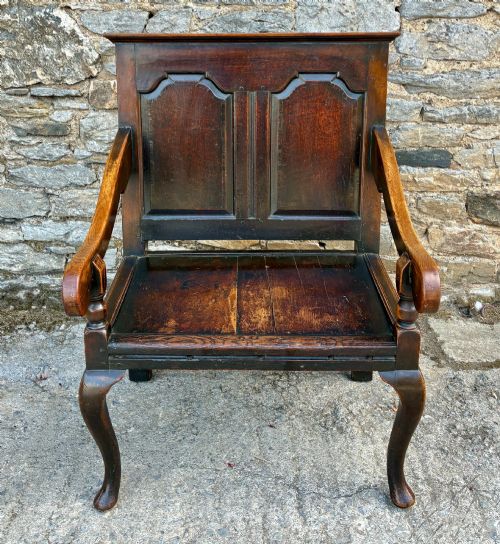
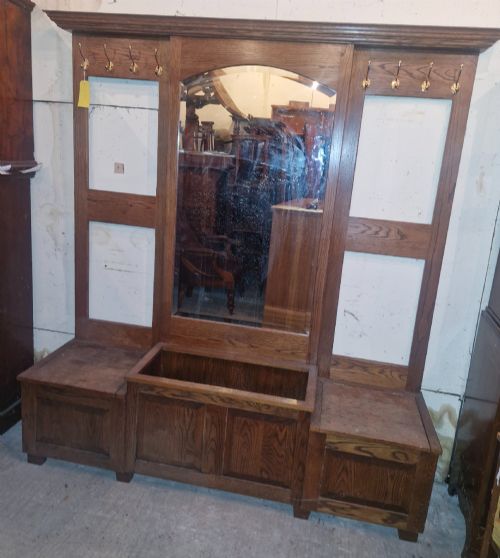
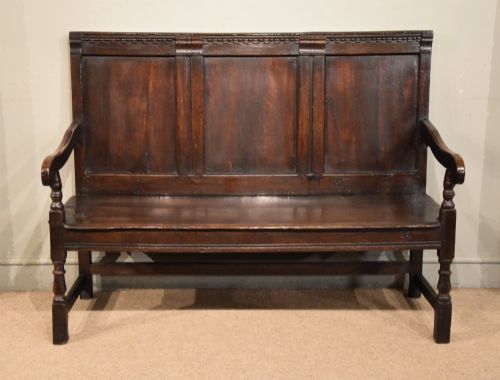
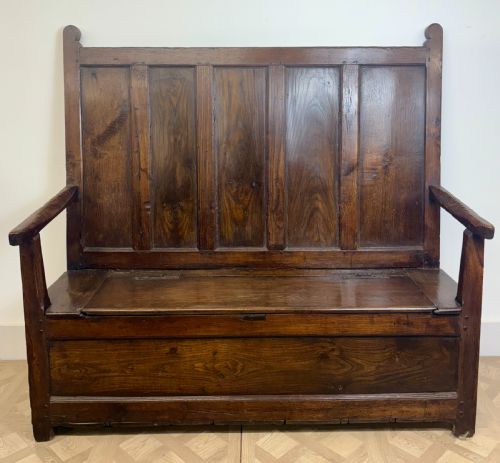
Dark Brown Bench
A dark brown bench brings heavy timber grain and grounded proportion to a hallway or living space.
Dark Brown Bench
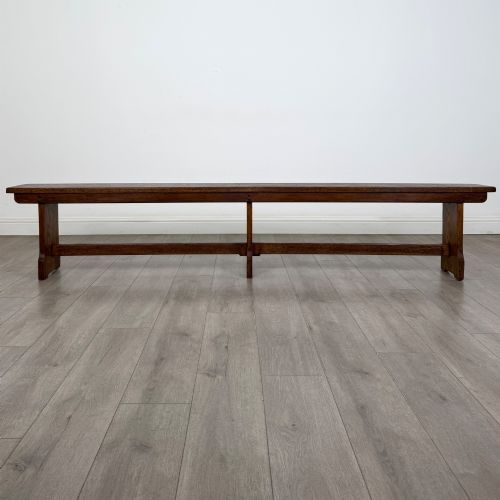
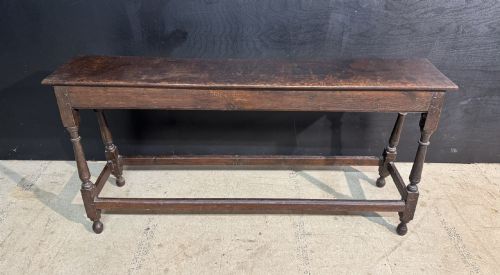
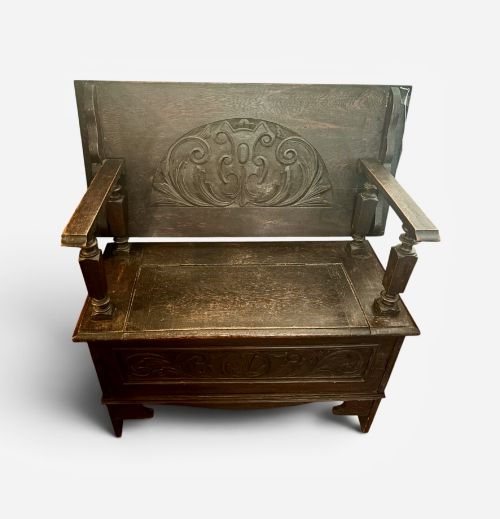
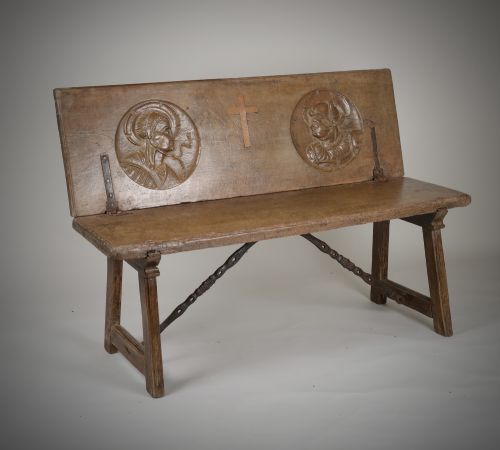
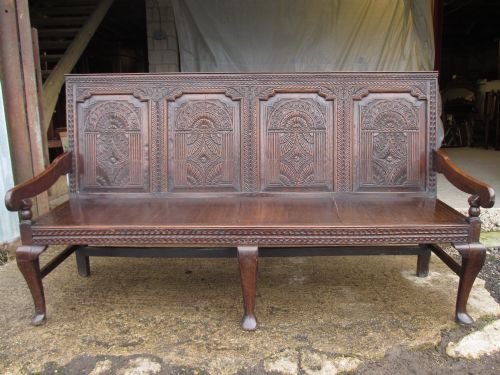
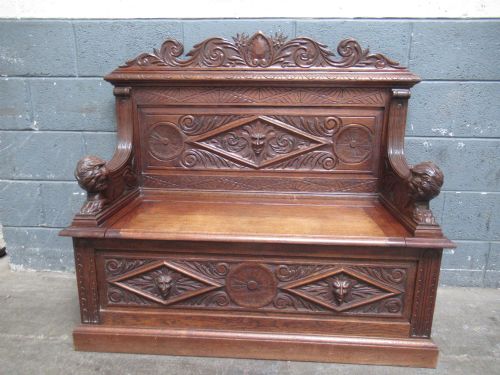
A dark brown bench encompasses a variety of substantial seating forms, ranging from high-back settles and hall benches to luggage stands and window seats. The selection draws heavily upon oak, walnut, and mahogany, reflecting centuries of woodworking traditions from Georgian, Victorian, and Edwardian periods.
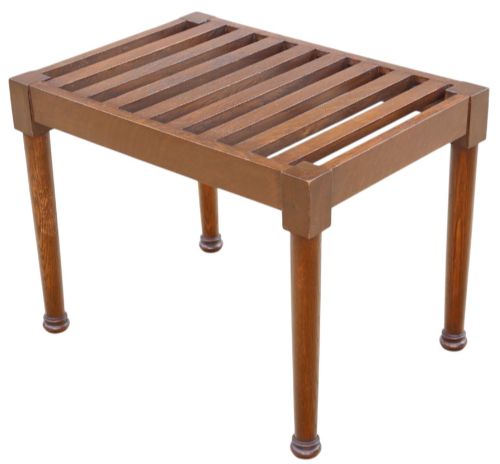
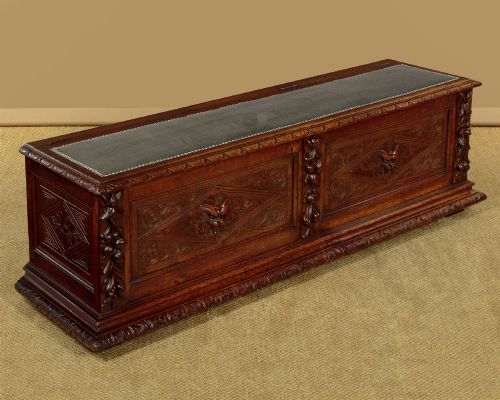
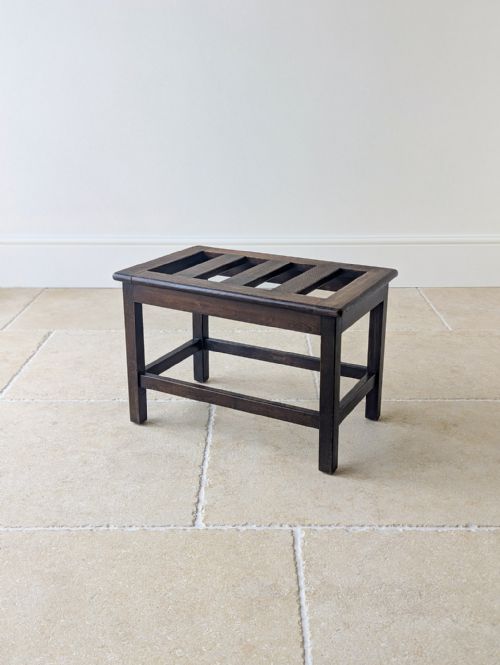
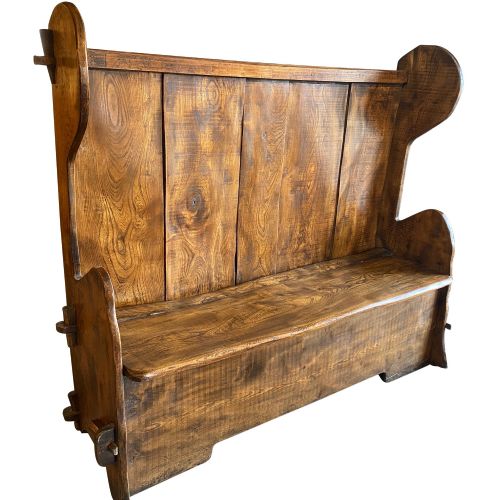
Buyers searching for a dark brown bench typically encounter heavy timber box settles with storage compartments, alongside slatted luggage racks and panel-back hall seating. These pieces originate from country houses, taverns, and domestic vernacular settings, often finished in deep, aged tones of brown wood.
How they were made
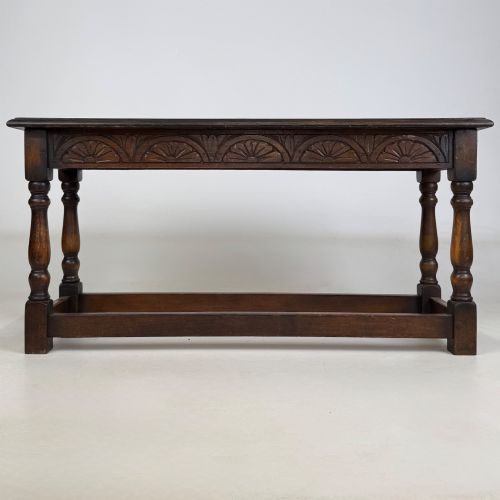
Construction relies primarily on sturdy hardwoods such as oak, elm, and mahogany, frequently joined using traditional methods like mortise and tenon. Carved details, panel backs, and turned supports demonstrate the hand of the cabinetmaker or regional joiner.
Secondary materials including brass hardware, iron fittings, leather, and woven fabric appear on specific forms like luggage stands and upholstered window seats. The wood surfaces show the accumulated polish and dark patination of long use.
Some nineteenth-century travellers required dedicated luggage stands just to unpack their trunks properly.
What varies in quality
The standard of a dark brown bench rests on the integrity of the timber selection and the depth of its original patination. Heavy oak settles with crisp, hand-carved panels or integrated box storage sit at the higher end of craftsmanship compared to plain utility boards.
Proportion and structural survival dictate desirability, particularly in regional pieces where untouched surfaces and original joints remain intact. Pieces retaining their early hardware and uncompromised timber thickness demonstrate superior historical worth.
The Dark Brown Bench Glossary
- Settle
- A wooden bench with a high back, solid arms, and often a box base intended to keep out draughts. These seats anchor large hallways and country interiors.
- Luggage stand
- A low rack with a slatted top designed for supporting trunks or cases at a convenient height. Edwardian and Victorian examples often incorporate folding legs and lower shelves.
- Joint stool
- An early form of wooden stool constructed with pegged mortise and tenon joints rather than turned legs. They served as sturdy seating before chairs became common.
- Box settle
- A settle featuring a hinged seat lifting to reveal a storage compartment beneath. This practical design maximises utility in domestic spaces.
Dark Brown Bench: Frequently Asked Questions
Where should I place a dark brown bench?
These benches suit spacious hallways, boot rooms, or living areas where substantial timber furniture provides a grounded focal point.
High-back settles work well against blank walls to block draughts, while low luggage stands function effectively as bedroom or dressing room accessories.
How do I care for antique dark brown wood?
Maintain the surface by applying natural beeswax sparingly and buffing with a soft cloth to preserve the aged sheen.
Keep wooden seating away from direct heat sources and radiators to prevent timber splitting and shrinkage.
How can I tell a Victorian bench from a Georgian one?
Georgian pieces often display restrained classical proportions, plain panels, and early vernacular construction details.
Victorian and revival examples frequently exhibit heavier, more elaborate carvings and darker applied finishes characteristic of nineteenth-century taste.