
Cylinder Top Writing Bureau
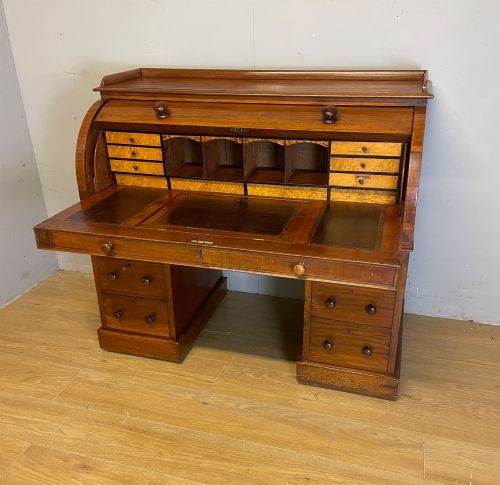
A cylinder top writing bureau conceals papers beneath a curved wooden shell that rolls away as the writing slide pulls forward.
Cylinder Top Writing Bureau
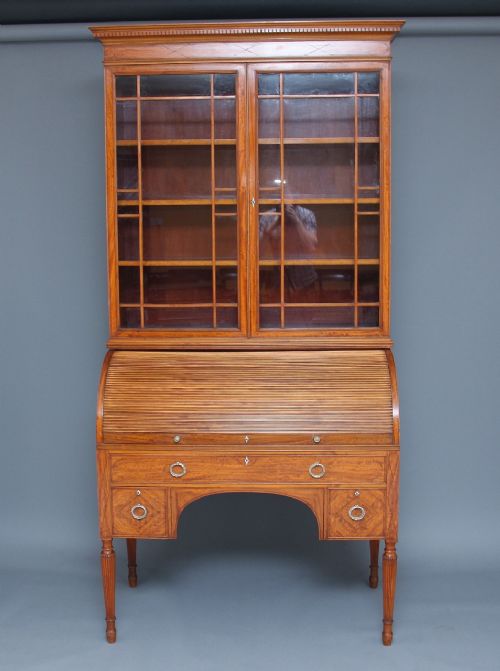
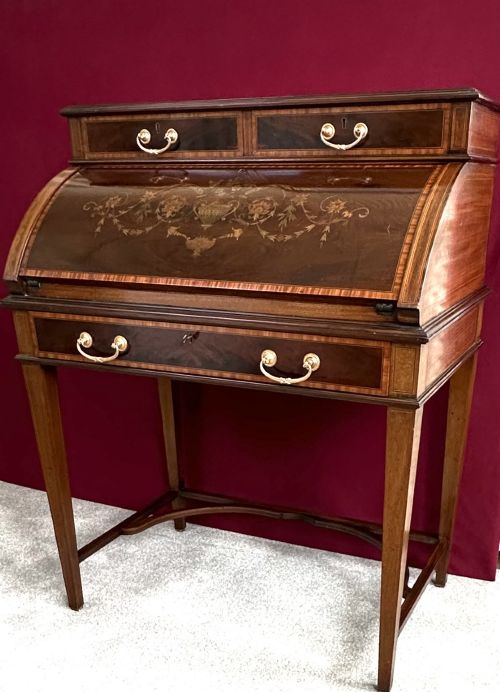
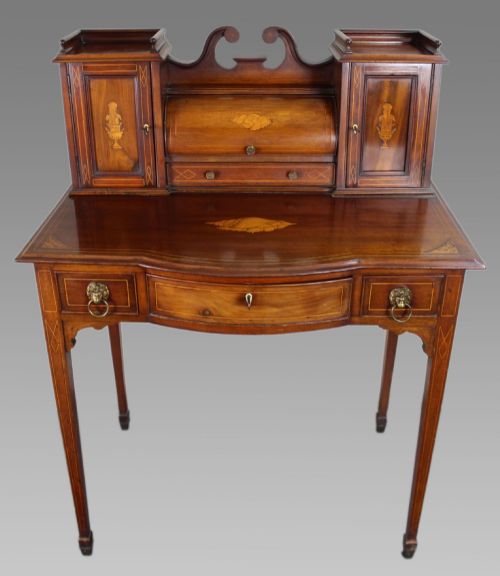
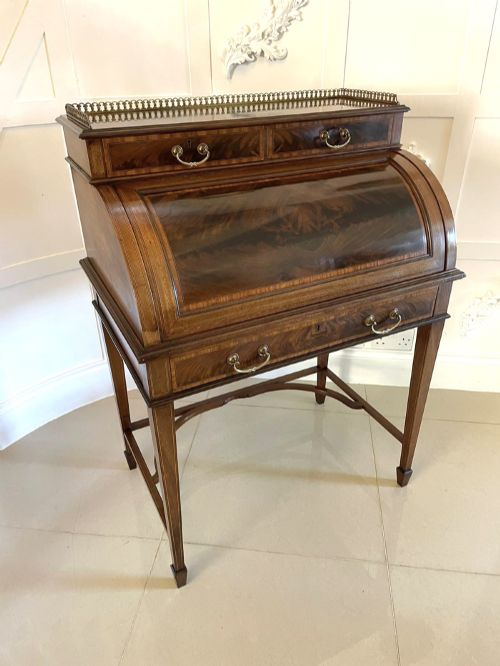
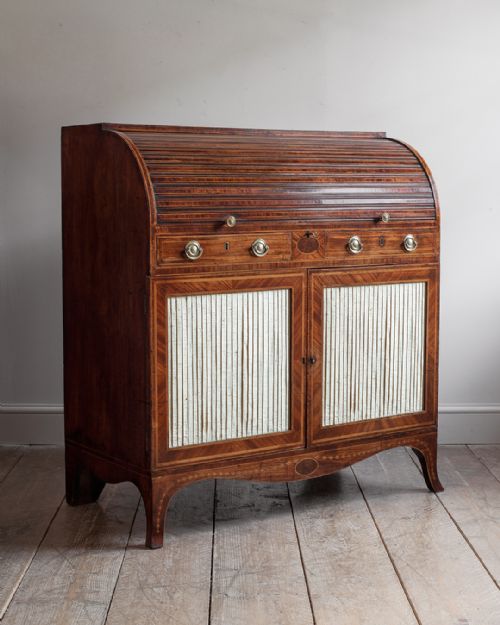
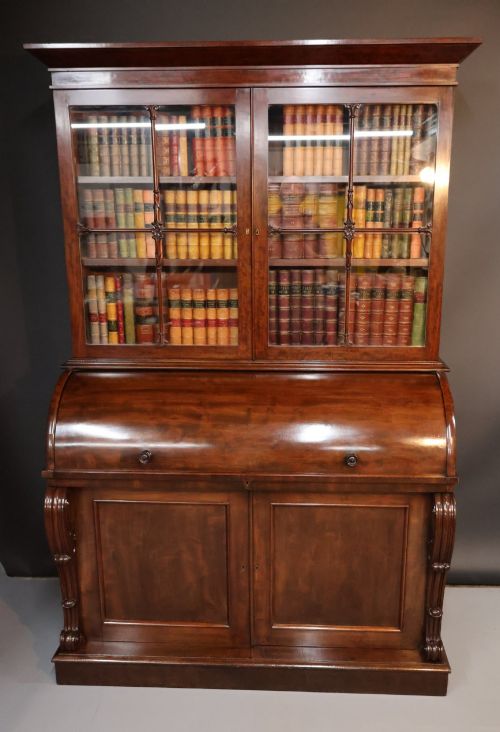
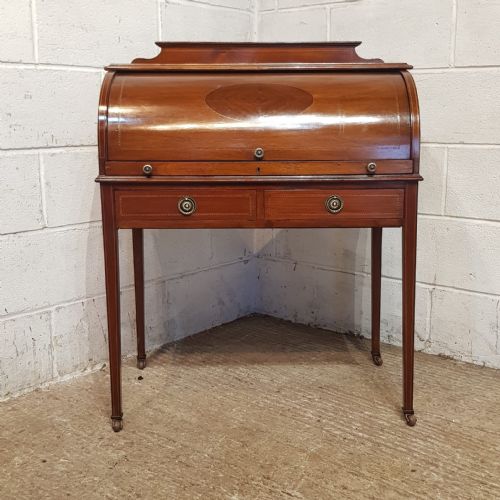
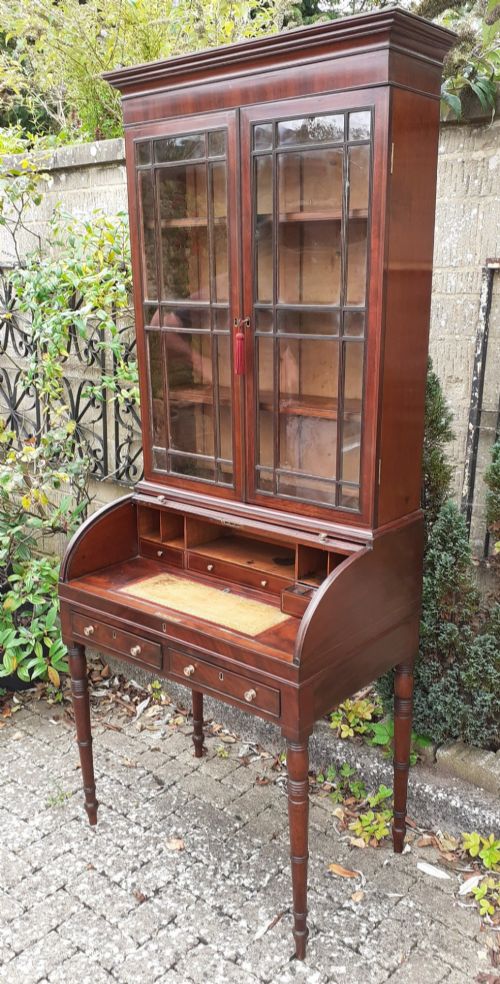
When searching for a cylinder top writing bureau, a buyer looks at sophisticated desks where a curved shutter encloses the stationery fittings and writing surface. The pieces appearing here range from compact Edwardian ladies' writing desks to large Georgian and Victorian bookcase variants extending upwards with glazed shelving.
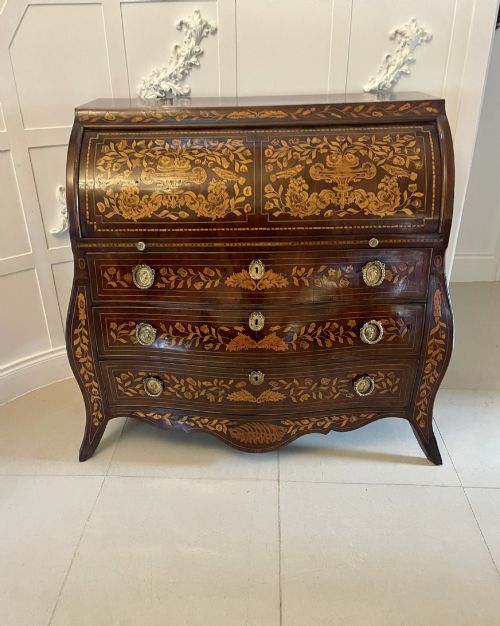
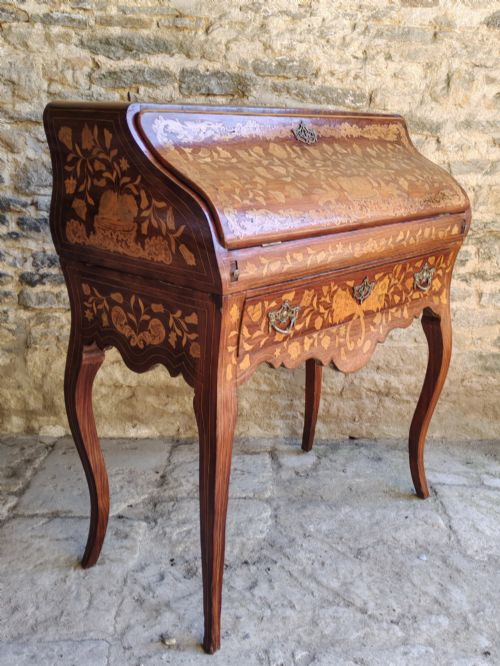
Mahogany predominates among the materials, often enriched with satinwood or walnut veneers, floral marquetry, and brass hardware. Cabinetmakers constructed these desks across the eighteenth, nineteenth, and early twentieth centuries, drawing on English, French, and Dutch traditions.
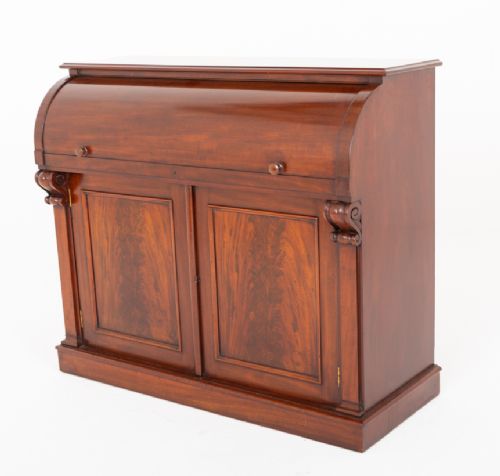
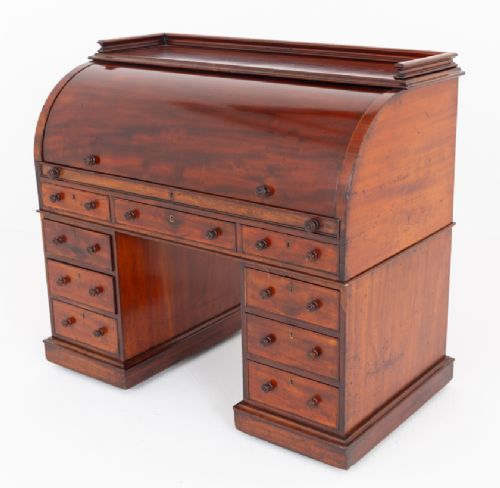
The most common format on this page is the freestanding mahogany cylinder desk from the Victorian and Edwardian eras, frequently featuring inlaid details and internal drawer configurations. Bureau bookcases also appear, combining the rolling writing compartment with upper shelving enclosed by glass doors.
Materials and construction methods
Cabinetmakers built the curved cylinder fronts from parallel slats of timber glued to a flexible canvas backing or channeled tracks, allowing the shutter to glide smoothly along a recessed groove. Solid mahogany and walnut served as primary framing timbers, while delicate satinwood, partridgewood, and fruitwood provided contrasting veneers for geometric or floral marquetry.
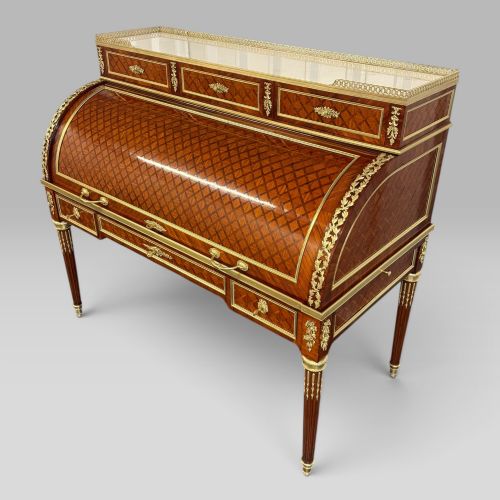
Brass handles, ring pulls, and cast ormolu mounts punctuated the exterior design, particularly on French revival and Regency pieces. Writing surfaces frequently incorporated inset panels of leather, providing a durable plane for correspondence while complementing the rich tones of the surrounding polished wood.
Some nineteenth-century French models hid secret spring-loaded compartments behind the stationary wells for truly private correspondence.
Distinctions in construction and finish
Quality rests upon the precision of the rolling cylinder mechanism and the integrity of the internal pigeonholes and small drawers. Superior examples operate with effortless fluidity, where the mechanical linkage between the rolling top and the extending writing slide functions without binding or resistance.
The refinement of the surface decoration marks the distinction between standard production and masterwork pieces. Finely executed floral marquetry, matched flame mahogany veneers, and hand-chased ormolu mounts elevate the visual depth of the cabinetwork significantly.
Maple & Co. London·Edwards & Roberts·Tudor & Burrey Shrewsbury
The Cylinder Top Writing Bureau Glossary
- Cylinder top
- A curved wooden shutter that rolls back into the body of the desk to reveal the interior writing surface and pigeonholes.
- Tambour
- A flexible sliding shutter formed of narrow vertical strips of wood glued to a fabric backing, similar to a cylinder front.
- Marquetry
- Decorative patterns formed by fitting together thin veneers of different coloured woods, ivory, or metal onto a structural carcase.
- Ormolu
- Gilt-bronze mounts applied to furniture for decorative enrichment, common in French styles.
- Secretaire
- A writing cabinet featuring a fall-front or cylinder drawer that pulls out to form a desk surface.
Cylinder Top Writing Bureau: Frequently Asked Questions
How does a cylinder top desk work?
The curved wooden shutter slides backward into the body of the desk along curved internal tracks. Pulling the writing slide forward often coordinates with the movement of the cylinder to open the writing compartment simultaneously.
Internal mechanisms rely on weighted counterweights or geared linkages hidden within the framework. This engineering allows the curved slats to travel smoothly from a vertical closure to a horizontal recess.
What is the difference between a roll top and a cylinder top?
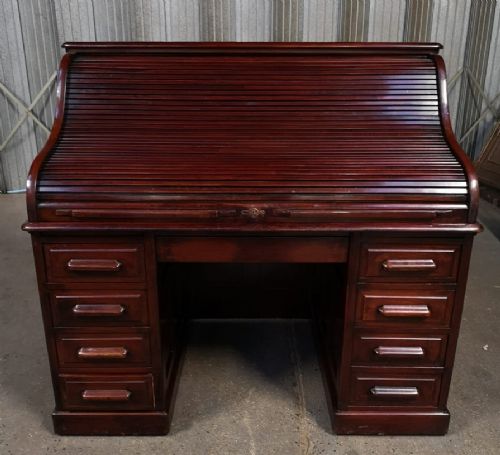
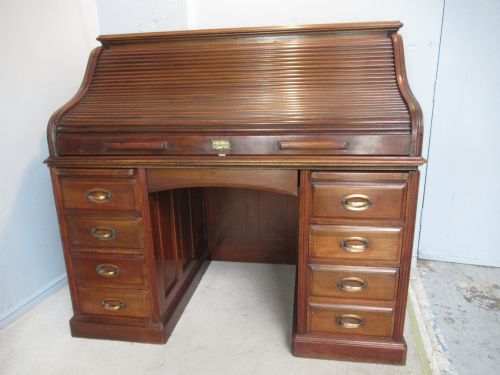
A cylinder top utilises a solid curved wooden panel formed of slatted timber or a single shaped segment that slides smoothly in a precise radius track. A roll top typically employs smaller tambour slats that are more flexible and common in later nineteenth and twentieth-century office desks.
Cylinder fronts generally present a cleaner, continuous curve when closed, favoured in formal Georgian and Victorian domestic interiors. Tambour fronts offer greater flexibility around tighter curves but break the wood grain into visible parallel ribs.
Where were cylinder bureaus used in the home?
These desks served primarily in private libraries, drawing rooms, and studies for managing correspondence and personal accounts. The lockable rolling shutter allowed owners to secure confidential documents without clearing the writing surface.
Smaller satinwood and mahogany variants also stood in ladies' boudoirs or reception rooms as elegant writing stations. Their finished backs often allowed them to sit freestanding in the middle of a room rather than against a wall.
How do I date an antique cylinder bureau?
Stylistic details and secondary woods provide the clearest indicators of age. Georgian and Regency examples exhibit clean lines with brass ring handles, whereas Victorian and Edwardian pieces often incorporate heavier proportions or revival marquetry.
Construction methods inside the small drawers, such as hand-cut dovetails and the choice of oak or pine drawer linings, help confirm the period of manufacture. Maker stamps or labels applied inside the drawers offer definitive chronological evidence.