
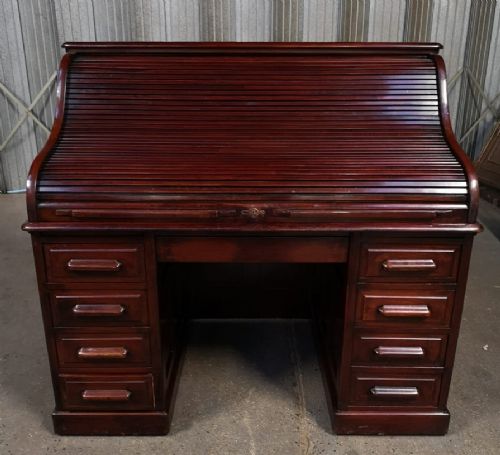
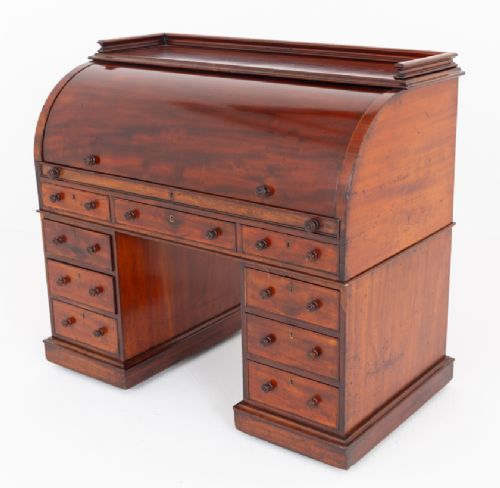
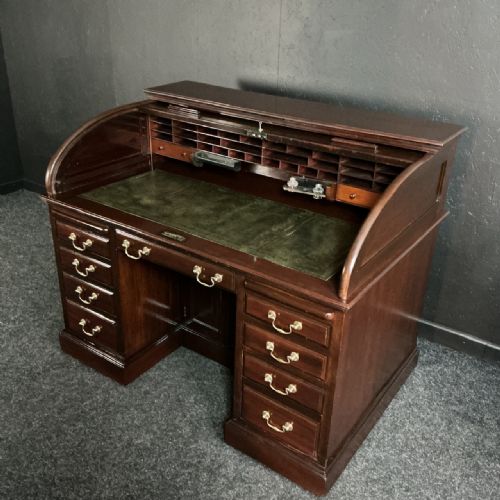


Executive Roll Top Bureau
An executive roll top bureau offers a private, secure workspace that hides the clutter of the day behind a rolling tambour.
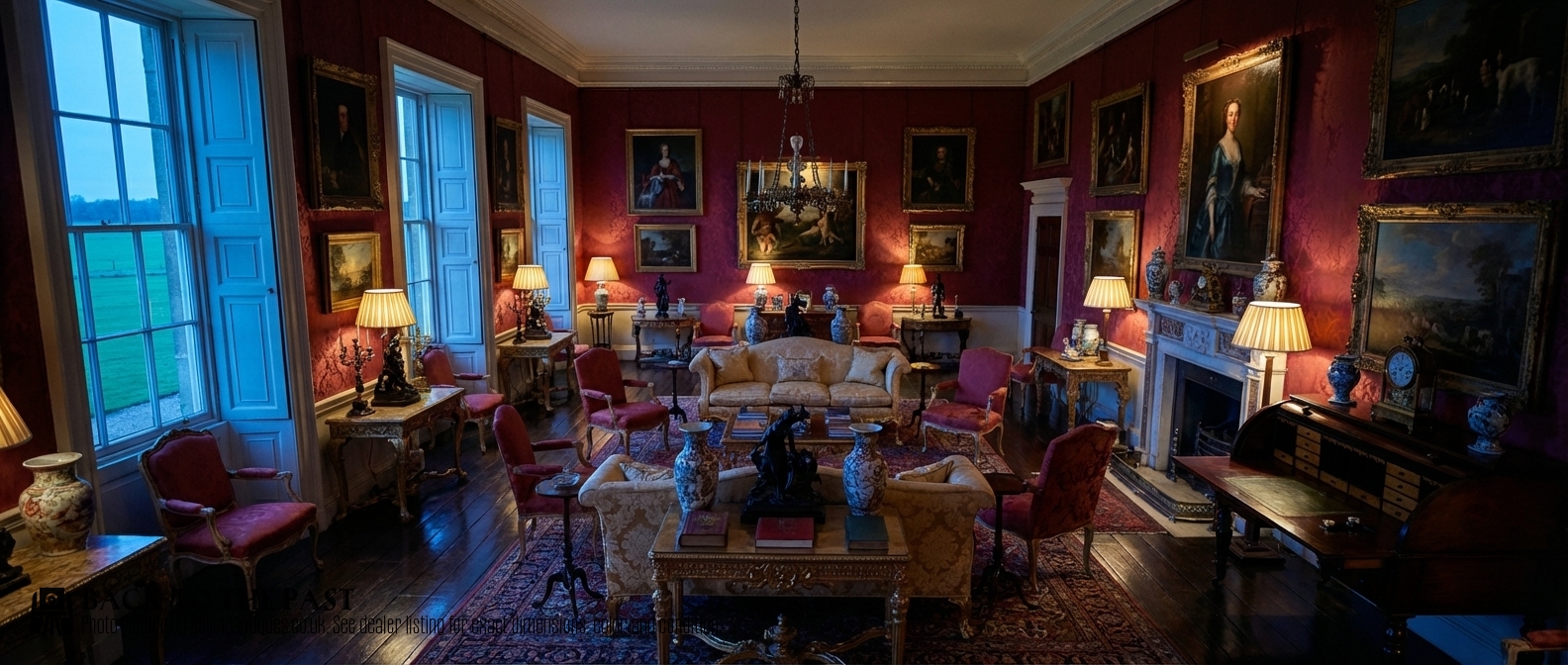
Executive Roll Top Bureau
When you search for an executive roll top bureau, you are looking at substantial writing furniture designed for serious correspondence and document storage. The listings here span the Victorian, Edwardian, and William IV periods, alongside specific dates from eighteen sixty to nineteen ten, showing both standard desks and specific cylinder desk forms.
You are most likely to meet mahogany examples on this page, though walnut, burr walnut, and oak also appear. These pieces range from standard proportions to large and impressive desks, including an antique Wells Fargo Wooton desk and an American piece by the Boston Chair Company.
The primary function centres on the roll top or cylinder mechanism, which encloses an internal arrangement of pigeonholes and small drawers. These desks serve as both functional workstations and commanding focal points in a traditional study or office.
Construction and materials
Cabinetmakers built these desks using solid timbers and veneers, predominantly relying on mahogany, walnut, and burr walnut. Oak and general wood construction also provide structural integrity for the larger carcases.
Fittings and hardware incorporated brass elements, while writing surfaces frequently utilised inset leather. Selected pieces also integrated canvas within their construction details.
Listings feature pieces spanning from the mid-nineteenth century through the Edwardian era, incorporating mahogany, walnut, burr walnut, and oak.
Assessing quality in executive desks
Quality in these desks rests upon the precision of the tambour or cylinder mechanism and the selection of timber veneers. Finely figured burr walnut or rich mahogany displays superior cabinetmaking skill compared to plain timber surfaces.
The complexity and completeness of the internal fittings, including secret compartments and pigeonhole banks, distinguish standard utilitarian models from exceptional pieces. The overall scale and presence of the desk also dictate its standing, with large proportions requiring robust internal engineering to maintain smooth operation.
Boston Chair Company·Wells Fargo Wooton
The Executive Roll Top Bureau Glossary
- Tambour
- A flexible shutter made of narrow vertical strips of wood glued to canvas or leather backing. This allows the curtain to slide smoothly around a curved track to enclose the desk interior.
- Cylinder desk
- A form of writing desk featuring a quarter-circle solid or panelled cylinder that rolls back to reveal the writing surface and pigeonholes. It differs from the slat-based tambour.
- Pigeonhole
- A small, open compartment fitted within the upper interior of a bureau for sorting letters and papers. These compartments often sit above small accessory drawers.
- Carcase
- The main structural body or framework of a piece of furniture before drawers, doors, and hardware are fitted. In large desks, the carcase requires substantial framing to support heavy writing tops.
Executive Roll Top Bureau: Frequently Asked Questions
How do I operate the roll top?
The slatted wooden tambour slides smoothly along concealed tracks within the desk carcase. Pulling the handle downward guides the slats around the curve to lock the contents away.
Ensure the internal writing slide is pushed fully in before attempting to close the mechanism. Forcing the tambour against an obstruction can damage the fine wooden strips.
What is the difference between a roll top and cylinder desk?
A roll top uses a flexible tambour made of many narrow strips of wood attached to a backing fabric. This allows the shutter to curve around a track and disappear into the desk body.
A cylinder desk uses a solid curved panel of wood that rotates on pivots or slides in a circular groove. This solid form represents an earlier and often more rigid method of enclosing the writing surface.
How do I care for the leather writing surface?
Keep the inset leather clean by dusting it regularly with a dry, soft cloth. Avoid using harsh chemical cleaners or excessive water, which can stain or warp the hide.
Apply a specialist leather balm periodically to maintain suppleness and prevent cracking. Genuine leather benefits from occasional light conditioning to preserve its finish against daily wear.
Where should I place a large bureau in a room?
These substantial desks require adequate wall space and clearance for the chair and user. Because many period examples feature finished backs, they can also stand away from the wall as a central room feature.
Position the desk away from direct sunlight and heat sources to protect timber veneers and leather surfaces from fading or drying out. Stable room humidity preserves the joints and prevents the tambour mechanism from sticking.