
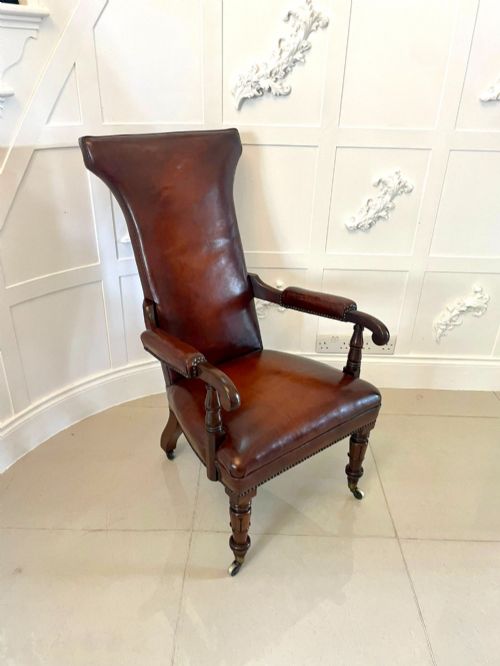
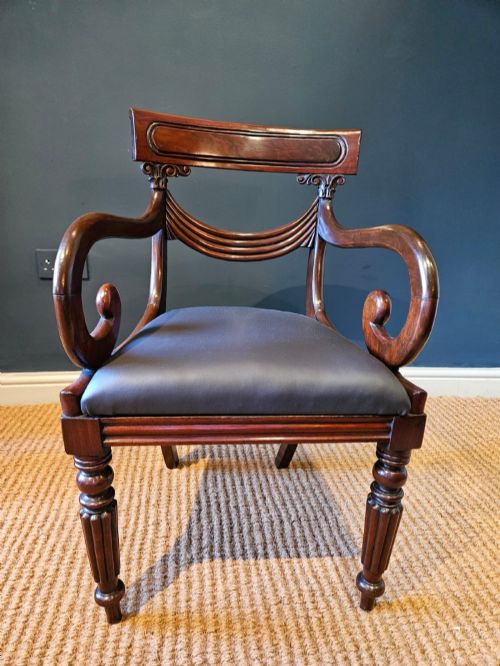
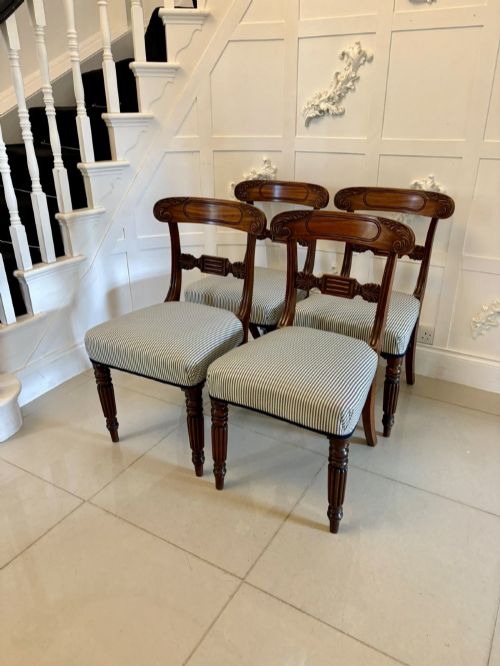
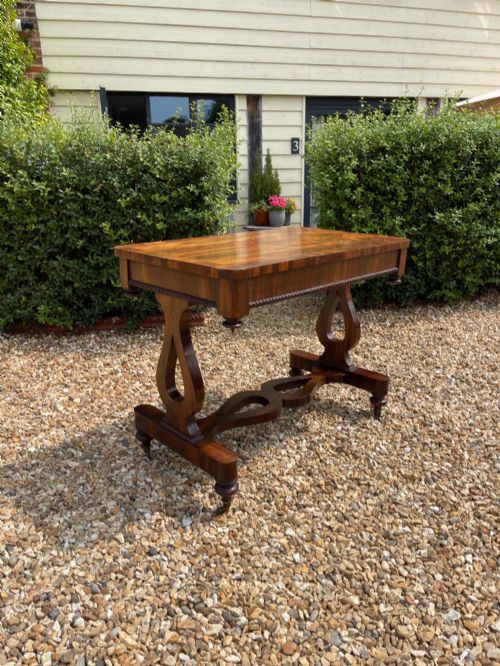
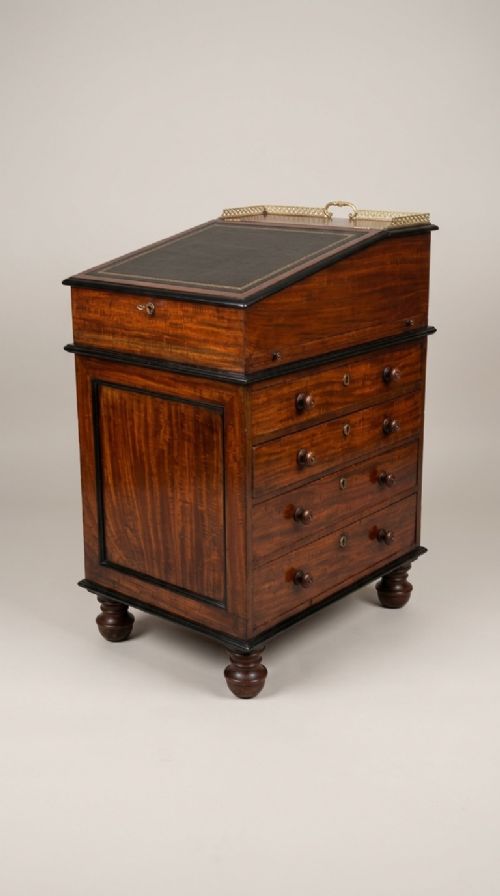

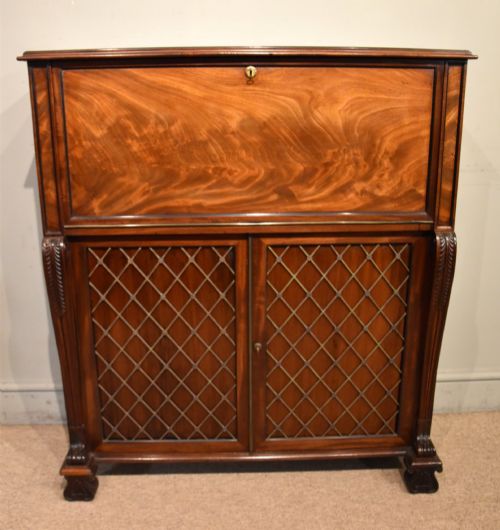
William IV Mahogany Desk
When you search for a william iv mahogany desk, you find sturdy timber workspaces defined by heavy proportions, warm grain, and sensible drawers built for serious daily correspondence.
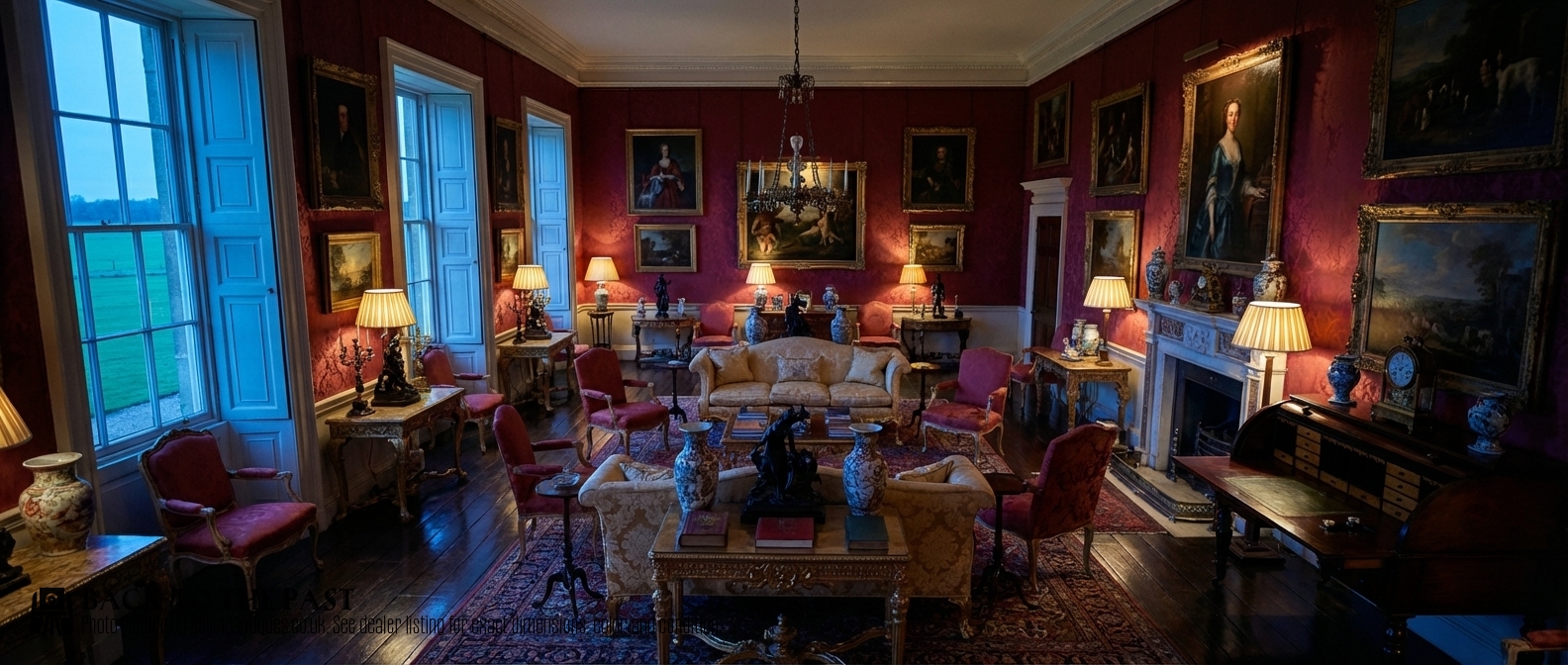
William IV Mahogany Desk
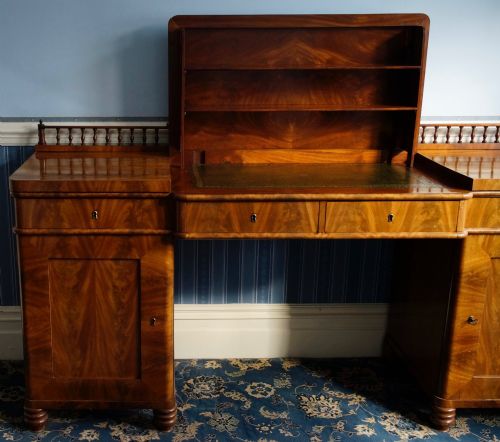
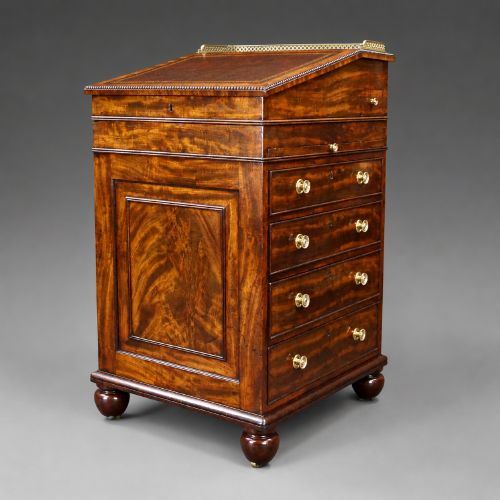
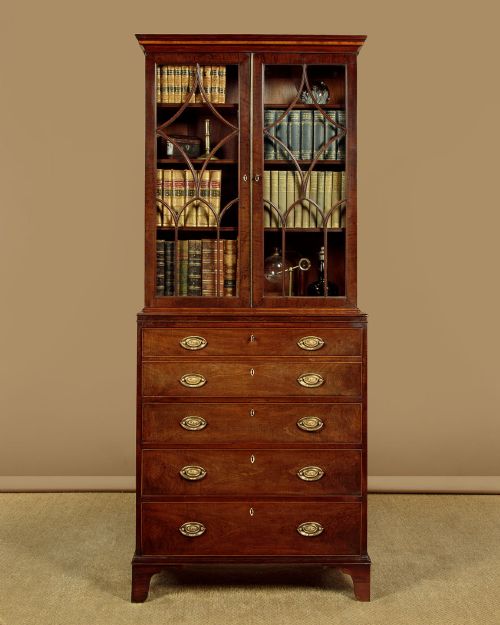
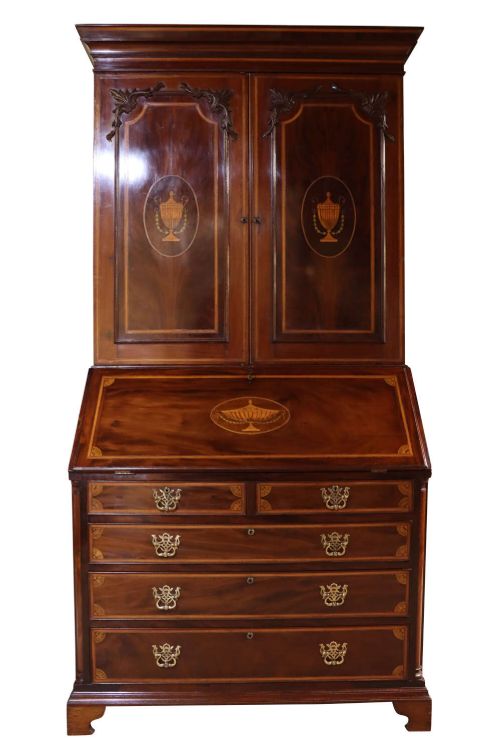
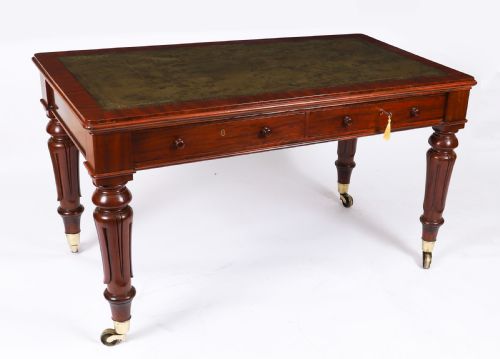
A william iv mahogany desk brings the heavy timber construction and substantial proportions of the nineteenth century directly into a modern room. Buyers encounter freestanding pedestal writing tables, leather-topped library writing desks, and cylinder or bureau bookcases designed for practical organisation.
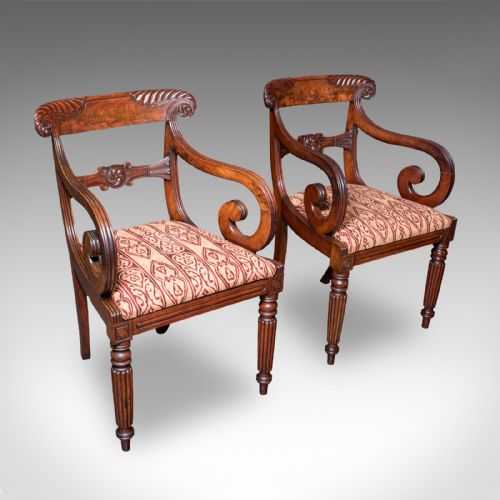
The aesthetic bridges late Georgian refinement and early Victorian utility, often showing robust scrollwork, reeded legs, and substantial brass castors. These workspace solutions range from compact Davenport writing boxes to twin pedestal partners desks built to accommodate two writers face to face.
Most examples date firmly from the nineteenth century, relying on native or imported tropical timbers selected for deep reddish-brown warmth. The form serves as both a functional writing surface and a focal point for studies, libraries, and reception spaces.

Materials and Construction Techniques
Cabinet makers relied heavily on solid mahogany and flame mahogany veneers, applying heat and hand-rubbed polishes to bring out the natural figure of the timber. Secondary woods like oak or pine often formed the interior drawer linings and internal carcases.
Writing surfaces were frequently inset with tooled leather, sometimes bordered in gold leaf, providing a durable matte writing plane. Brass hardware, including drop handles, escutcheons, and heavy wheel castors, added both structural utility and restrained contrast against the dark timber.
William IV Mahogany Desk Retail Price Guide 2026
Typical asking prices for william iv mahogany desk among the pieces listed under this phrase on Sellingantiques today, from the lower quarter to the upper quarter. They describe what is for sale here now, not the wider market.
Listings feature mahogany, brass, leather, and flame mahogany across 19th-century and Regency periods.
Distinctions in Craft and Condition
The hierarchy of quality rests primarily on the choice of timber and the restraint of the carving. Finely figured flame mahogany veneers and crisp, hand-carved scrolling details distinguish top-tier workshop output from utilitarian office furniture.
Proportion and structural integrity separate exceptional library and partners desks from standard provincial pieces. Maker attribution, particularly to established cabinet makers of the period, elevates the standing of a desk within any collection.
Gillows·Williams and Gibton
The William IV Mahogany Desk Glossary
- Flame mahogany
- A timber veneer displaying a dramatic, flickering grain pattern resembling flames. Cabinet makers used this on prominent drawer fronts and writing surfaces to catch the light.
- Partners desk
- A large freestanding writing table with matching drawers on both sides. This allowed two individuals to sit and work opposite each other in a library or study.
- Pedestal desk
- A writing table supported by two separate stacks of drawers rather than four legs. The top section typically rests on these pedestals for stability and storage.
- Davenport
- A compact small writing desk featuring a sloped, leather-inset desktop that lifts to reveal storage. Drawers usually open to one side while the back may hold stationary compartments.
- Escutcheon
- A protective plate surrounding a keyhole. These were typically cast in brass and countersunk into the drawer fronts of quality desks.
William IV Mahogany Desk: Frequently Asked Questions
What is a partners desk?
A partners desk is a large freestanding writing table built with drawers and cupboards accessible from both sides. This symmetrical design allowed two people to work facing each other.
Such pieces were traditionally used in offices, libraries, and stately homes where business required two occupants to share a single workspace.
How do I care for a leather desk top?
Leather writing surfaces require gentle cleaning with a damp cloth followed by a neutral leather cream to keep the material supple. Avoid harsh chemical cleaners and excessive moisture.
Protecting the surface from direct sunlight prevents the leather from drying out and maintains the gold tooling along the borders.
Are these desks suitable for daily computer use?
These nineteenth-century writing tables offer generous surface areas that easily accommodate modern laptops and desktop accessories. The sturdy pedestal construction provides reliable support for daily tasks.
Drawer configurations also assist with cable management and the storage of modern stationery alongside traditional writing implements.
How do I distinguish William IV from Georgian furniture?
William IV pieces generally feature heavier proportions, bolder scrollwork, and less delicate carving than earlier Georgian items. The timber choice also leans towards darker mahogany and distinctive flame veneers.
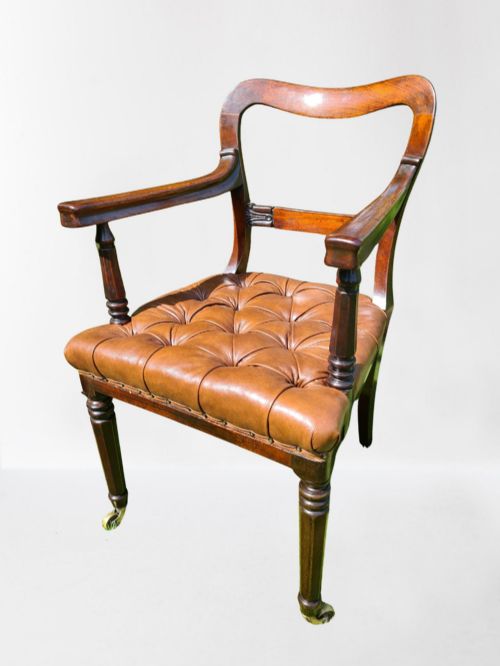
Legs on William IV desks are frequently turned and reeded, often fitted with robust brass wheel castors designed to support heavier pedestal weights.