
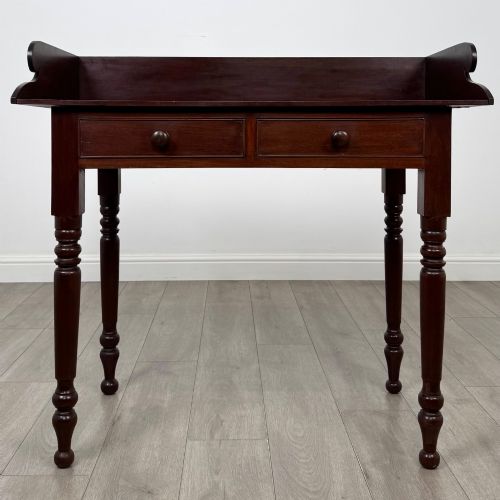
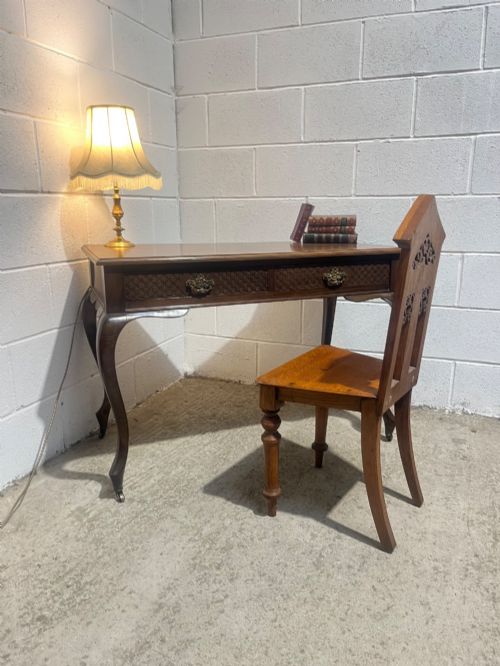
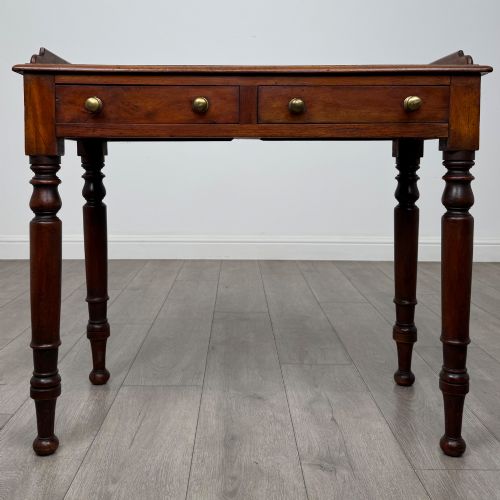
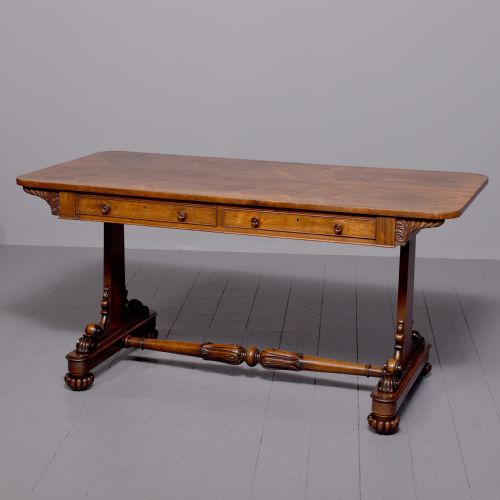
Two Drawer Study Desk
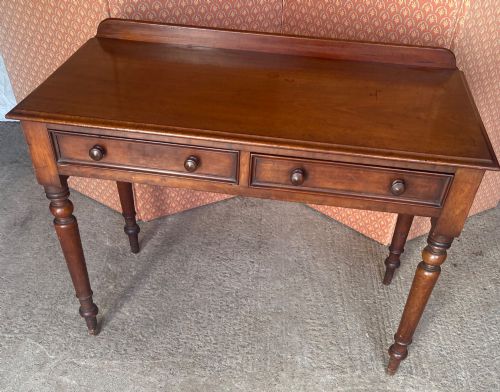
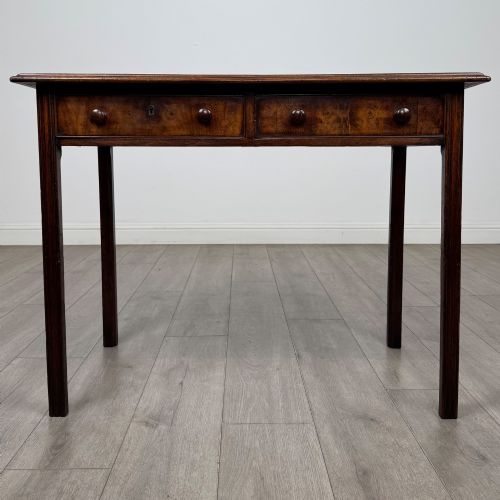
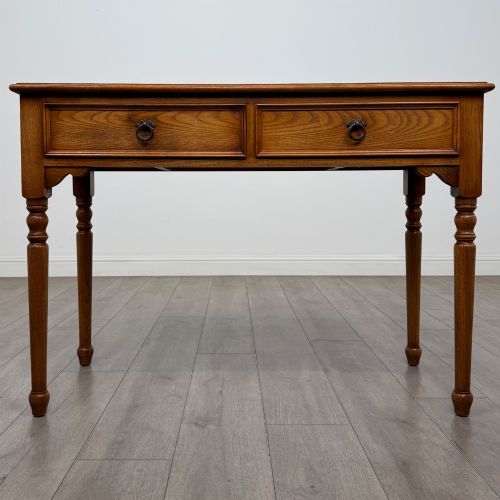
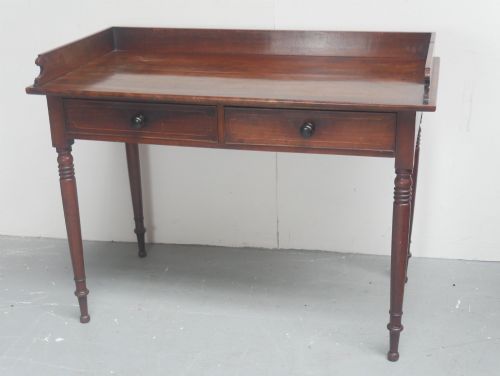
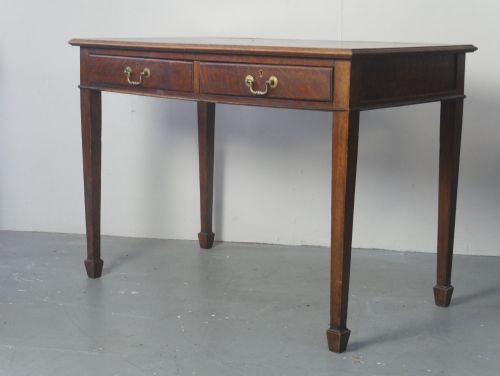
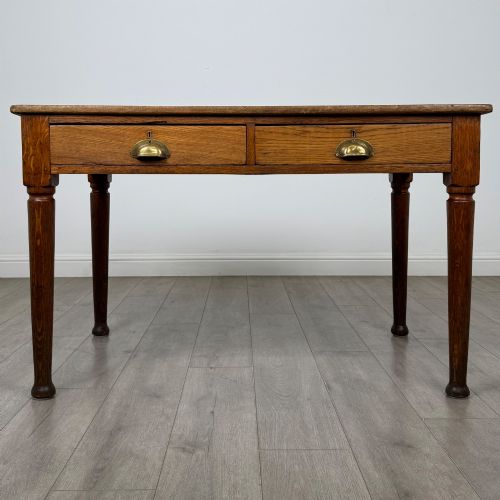
A two drawer study desk offers practical writing space in timber, spanning periods from the Regency era through to the Edwardian period.
Two Drawer Study Desk
When searching for a two drawer study desk, buyers encounter functional writing surfaces designed for domestic and library use. These pieces often appear under various historical designations such as writing tables, library tables, and writing desks.
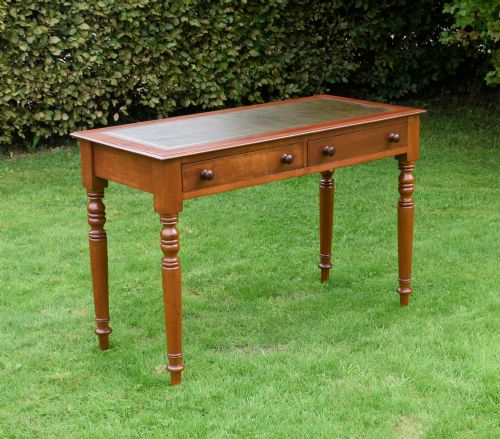
The most common examples on this page date from the nineteenth century and the Victorian period, constructed in practical timber forms. They serve as compact workstations that combine storage drawers with a usable top surface for reading and correspondence.
Makers and manufacturers varied across regions, resulting in pieces utilising local and imported hardwoods. The selection spans straightforward utilitarian designs alongside more decorative examples featuring inlaid timbers and turned supports.
How they were made
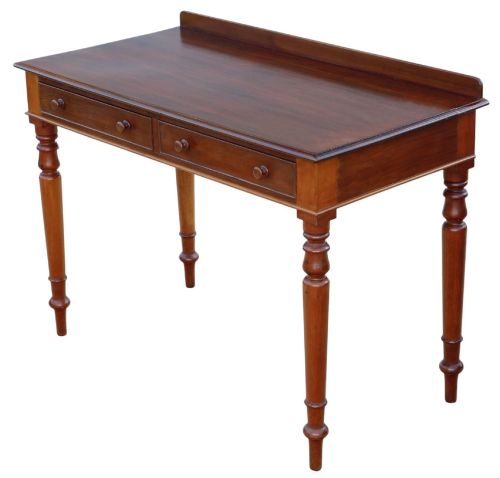
Construction relies heavily on traditional cabinet timbers, predominantly mahogany, oak, and walnut, frequently complemented by secondary woods for drawer linings. Timber selection dictated the weight and durability of each piece, whether finished in a plain polish or ebonised.
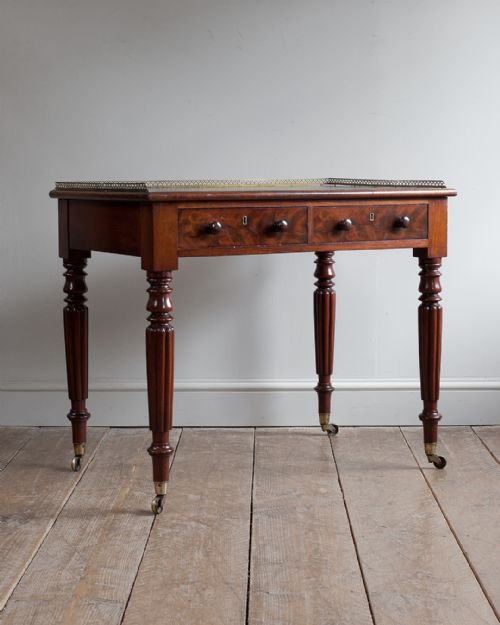
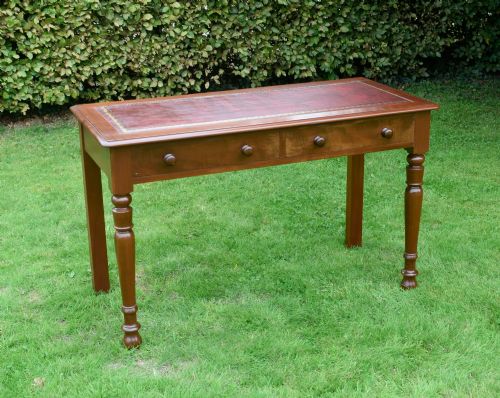
Writing surfaces frequently incorporate inset panels of tooled leather to provide a suitable texture for pen and paper work. Joinery techniques from the period ensured stability in the legs and frame, supporting the weight of the drawers without sacrificing legroom.
Desks occasionally retain traces of old ink spills inside the drawers, recording past correspondence.
What varies in quality
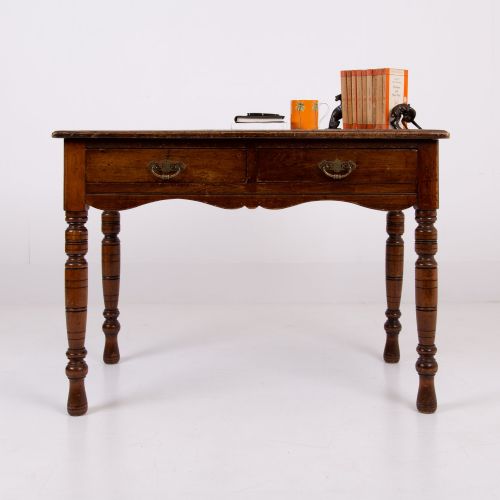
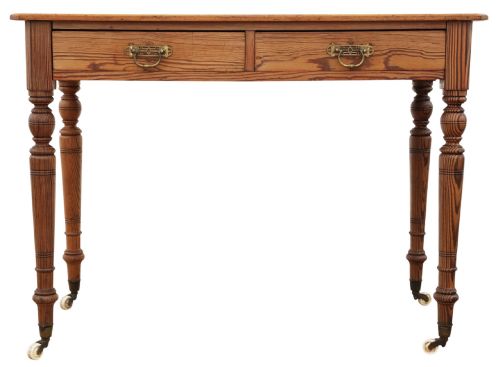
Quality reveals itself in the selection of figured veneers and solid timber grains, alongside the precision of the joinery in the drawer construction. Better examples display careful attention to secondary details such as turned legs, reeded moulding, and original brass hardware.
The choice of secondary materials, such as finely tooled leather inserts and durable drawer linings, separates standard utility pieces from finer workshop productions. Proportion and structural balance further distinguish superior desks from simpler utilitarian variants.
Heal and Son·Mein of Kelso·Gillows·Jenners
The Two Drawer Study Desk Glossary
- Writing table
- A freestanding desk with a finished back, designed to sit away from a wall rather than against it. These tables typically feature one or more drawers beneath the writing surface.
- Library table
- A large sturdy table used in studies and libraries for sorting books and papers. They often share similar proportions and drawer configurations with writing desks.
- Ebonised wood
- Timber treated with a dark finish to imitate expensive ebony. This technique was popular during the Victorian period for achieving a dramatic black surface.
- Tooled leather
- Leather decorated with pressed gold leaf or blind stamp patterns around the perimeter. It provides a durable and traditional writing surface on antique desks.
- Reeded legs
- Vertical rounded ridges carved into the legs of furniture. This decorative feature appears frequently on Regency and Victorian tables.
Two Drawer Study Desk: Frequently Asked Questions
What is a two drawer study desk?
A two drawer study desk is a compact writing table featuring a surface for paperwork and a pair of integrated drawers beneath. These tables were designed for domestic studies, libraries, and bedrooms.
They appear in various nineteenth-century and early twentieth-century styles, utilising timbers such as mahogany, oak, and walnut.
How do I identify a Victorian desk?
Victorian desks are typically constructed from heavy timbers like mahogany or burr walnut, often featuring turned legs or detailed brass handles. The construction reflects industrial-era cabinet making standards with robust joinery.
Many examples include tooled leather top inserts and functional drawer configurations designed for daily correspondence.
Where should I place a writing table?
Writing tables are traditionally freestanding pieces with finished backs, making them suitable for positioning in the centre of a room rather than flat against a wall. This allows access to the drawers from a seated position.
Ensure the height of the desk aligns with your seating to maintain a comfortable posture during daily use.
What woods were used for desks?
Mahogany is the most frequent timber found in these desks, prized for its stability and rich reddish-brown grain. Oak and walnut also appear regularly, especially in Edwardian and Arts and Crafts examples.
Alternative materials include satinwood, birch, and ebonised wood for decorative surface finishes.