
Cut Crystal Spirit Decanter
A cut crystal spirit decanter brings weight and brilliant refraction to a sideboard, holding liquor in vessels shaped across the Victorian and Edwardian decades.
Cut Crystal Spirit Decanter
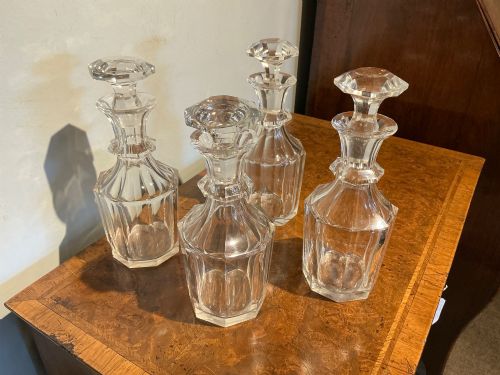
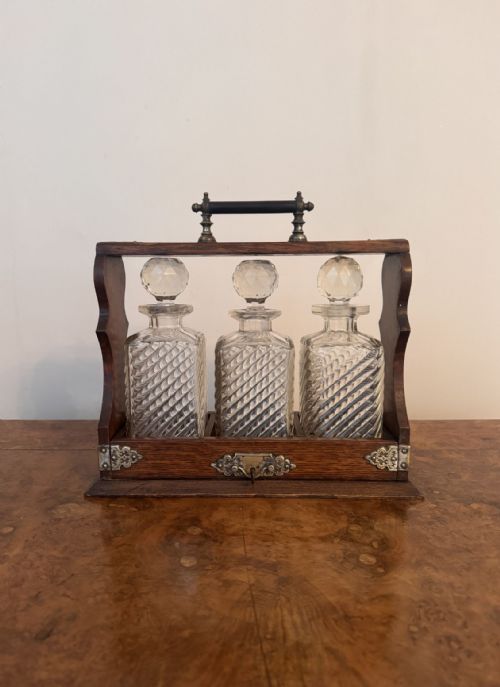
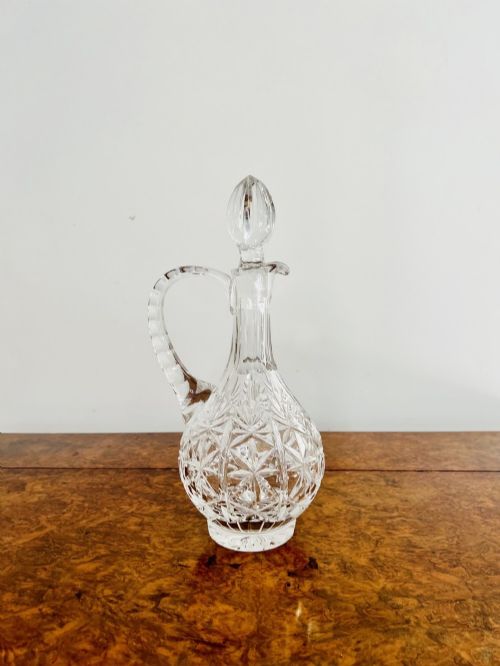
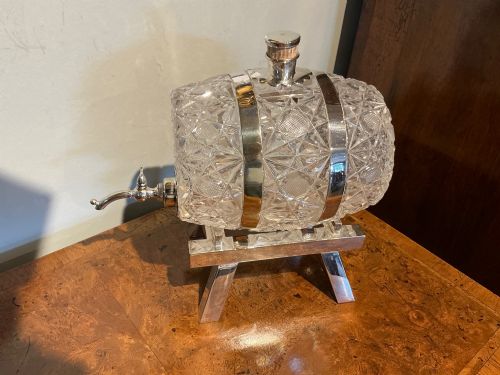
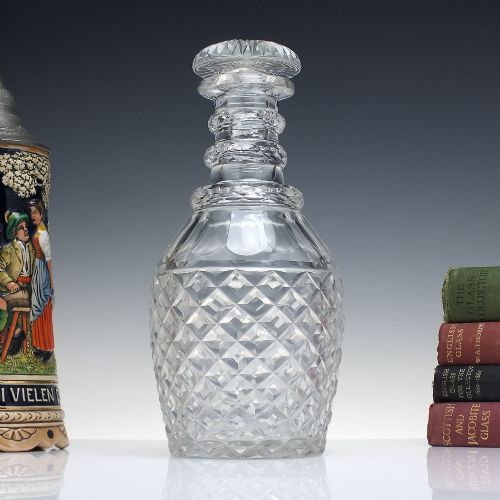
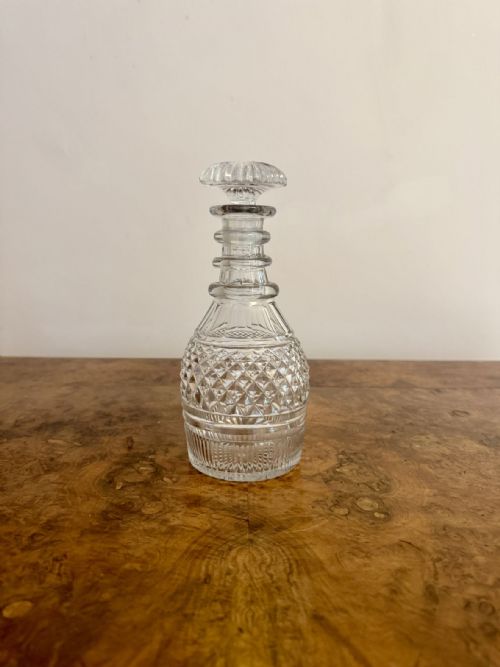
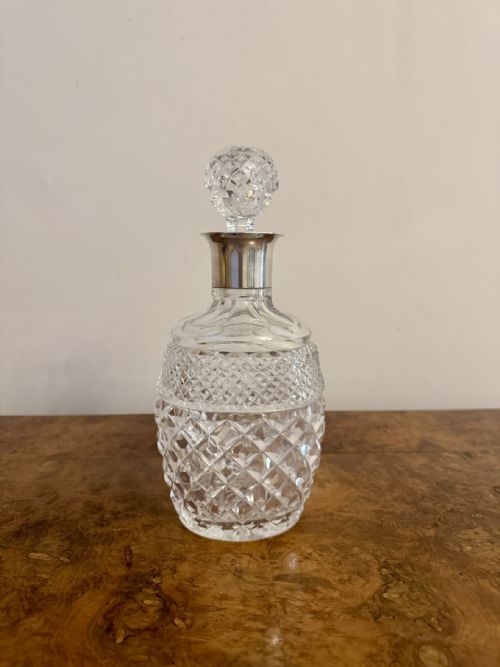
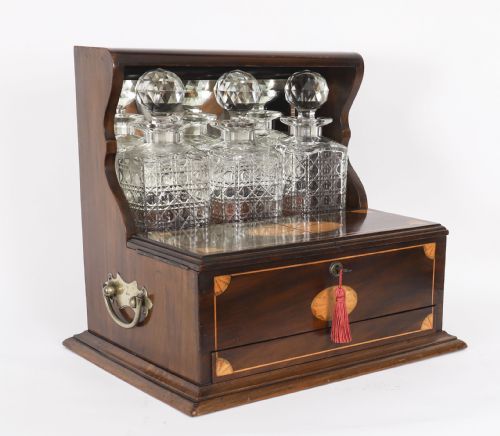
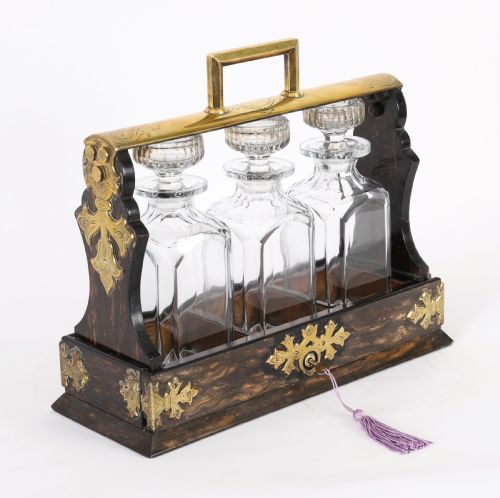
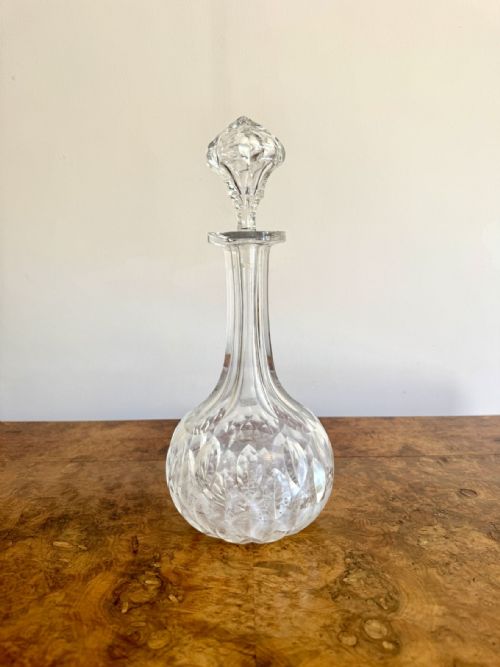
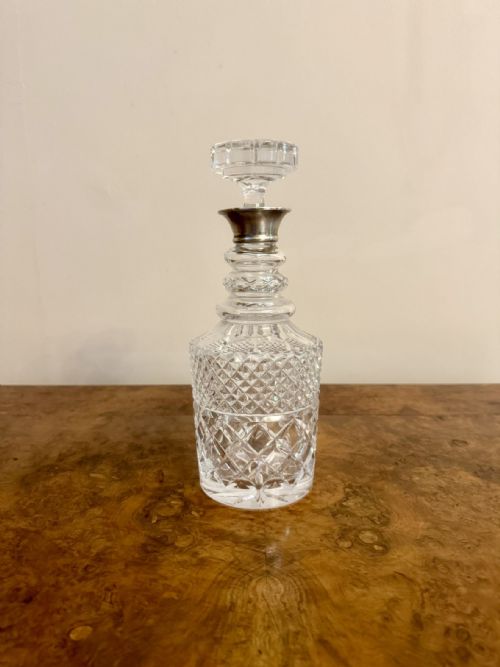
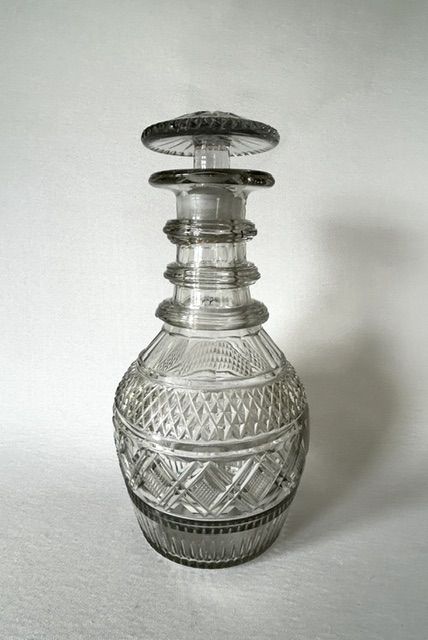
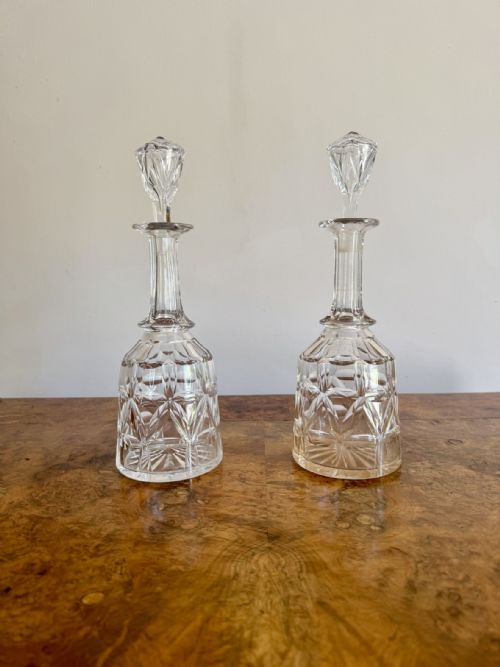
A cut crystal spirit decanter is a heavy vessel designed for holding and serving spirits, appearing frequently on this page in Edwardian and Victorian forms. These pieces include single bottles, pairs, and multi-bottle sets housed within locking tantalus frames.
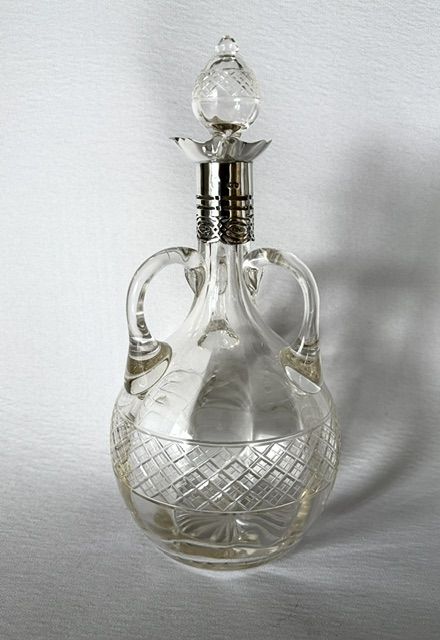
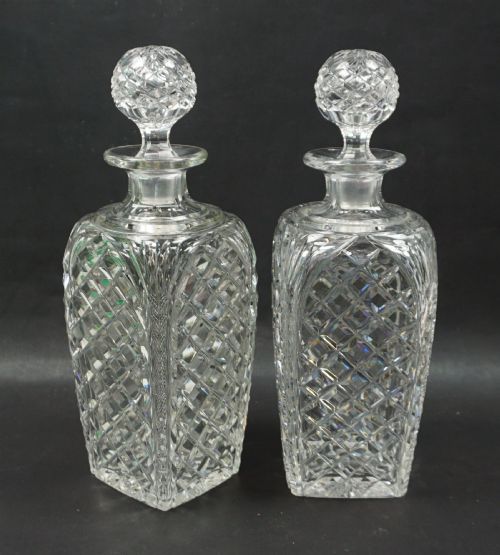
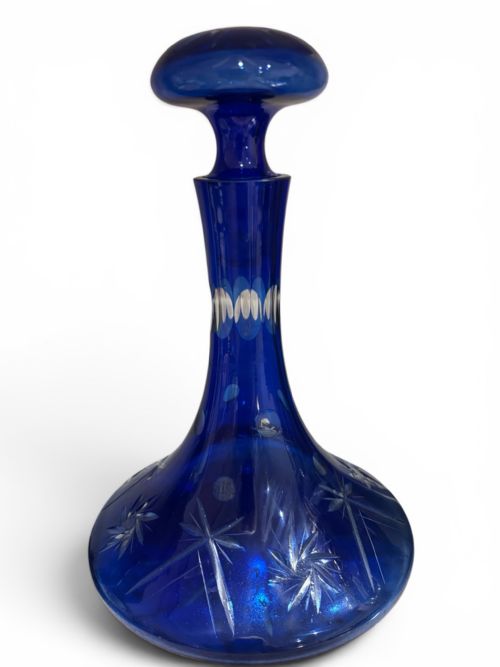
Buyers encounter standard spirit bottles alongside square section tapered decanters, bell shaped profiles, and ewer forms. Materials span lead crystal, cut glass, and coloured glass paired with silver plate, oak, brass, and coromandel.
How They Were Made
Makers shaped these vessels through glassblowing before applying deep wheel cuts and engraved decoration to the heavy walls. The resulting facets catch light from every angle while providing a secure grip in the hand.
Mounts in silver plate, sterling silver collars, brass, and fitted wood frames complete the construction. Timber boxes such as oak, satinwood, and coromandel house secure locking mechanisms for spirit sets.
Tantalus frames were named after the mythical figure Tantalus, keeping drinks visible yet frustratingly out of reach.
What Varies in Quality
The clarity and weight of the crystal establish the baseline, with high grade lead metal offering sharper facet edges and deeper resonance. Superior examples display precise, crisp geometric cutting rather than soft or shallow impressions.
The integration of metal mounts and fitted cabinetry defines the upper tier of pieces. Solid silver collars, robust brass hardware, and fine timber joinery on tantalus frames separate standard production from exceptional work.
The Cut Crystal Spirit Decanter Glossary
- Tantalus
- A locking wooden frame that holds spirit decanters securely while displaying their contents. The locking bar prevents removal of the bottles until unlocked with a key.
- Lead crystal
- Glass containing metal oxides that increase density, brilliance, and weight. This material allows for deep, sharp wheel cutting.
- Square section
- A bottle body shape with flat sides and corners that taper toward the neck. This geometric form sits steadily within fitted trays and frames.
- Silver plate
- A thin layer of silver bonded to a base metal foundation. It appears frequently on the collars, mounts, and handles of Edwardian decanters.
- Ewer
- A large jug with a wide spout and looped handle used for pouring liquids. In glassware, this form provides an alternative silhouette to standard spirit bottles.
Cut Crystal Spirit Decanter: Frequently Asked Questions
What is a tantalus?
A tantalus is a locking cabinet or frame designed to secure spirit decanters away from unauthorized drinkers. The wooden frame holds the bottles upright while a metal bar across the stoppers prevents them from being lifted out.
Most examples use oak, coromandel, or satinwood fitted with brass mounts and a working lock and key. They became popular in the Victorian and Edwardian periods for home entertaining.
How do I date a decanter?
Dating relies on combining the shape of the bottle, the style of the cutting, and the materials used for any collars or frames. Victorian and Edwardian pieces often show deep prismatic cutting and heavy lead crystal composition.
Collar metals and fitted box styles provide further clues to the decade of manufacture. Earlier Regency and Georgian examples tend to feature heavier ringed necks and distinct pontil marks on the base.
Are stoppers original to the decanter?
Original stoppers are ground to fit the specific neck of each individual bottle during manufacture. Collectors look for matching cut patterns and similar age wear across both the stopper and the body.
Replacement stoppers often fit loosely or display mismatched glass clarity and cutting styles. Examining the ground glass joint reveals whether the pieces have stayed together over time.
How should I clean antique crystal?
Cleaning requires warm water and mild detergent combined with soft cloths to protect the exterior facets. Harsh scrubbing and sudden temperature changes can damage historic glass and metal collars.
Residue inside old bottles is best cleared using specialised cleaning beads or gentle soaking rather than abrasive tools. Metal mounts should be kept dry to preserve silver plate and brass surfaces.